Global warming, climate change, all these things are just a dream come true for politicians. I deal with evidence and not with frightening computer models because the seeker after truth does not put his faith in any consensus. The road to the truth is long and hard, but this is the road we must follow. People who describe the unprecedented comfort and ease of modern life as a climate disaster, in my opinion have no idea what a real problem is.
I wonder how these predictions worked out? (Answers tomorrow!!)
Scientists in the US have presented one of the most dramatic forecasts yet for the disappearance of Arctic sea ice.
Their latest modelling studies indicate northern polar waters could be ice-free in summers within just 5-6 years.
Professor Wieslaw Maslowski told an American Geophysical Union meeting that previous projections had underestimated the processes now driving ice loss.
Summer melting this year reduced the ice cover to 4.13 million sq km, the smallest ever extent in modern times.
Remarkably, this stunning low point was not even incorporated into the model runs of Professor Maslowski and his team, which used data sets from 1979 to 2004 to constrain their future projections. “Our projection of 2013 for the removal of ice in summer is not accounting for the last two minima, in 2005 and 2007,” the researcher from the Naval Postgraduate School, Monterey, California, explained to the BBC.
“So given that fact, you can argue that may be our projection of 2013 is already too conservative.”
Artificial intelligence (AI) is taking the world by storm. New AI applications are announced daily. Amazon, Apple, Google, Meta, Microsoft, and many companies tout plans for artificial intelligence capabilities. But the AI revolution is bad news for global efforts to achieve net-zero emissions.
Artificial intelligence (AI) is taking the world by storm. New AI applications are announced daily. Amazon, Apple, Google, Meta, Microsoft, and many companies tout plans for artificial intelligence capabilities. But the AI revolution is bad news for global efforts to achieve net-zero emissions.
The AI revolution is based on high-performance AI chips, which are capable of revolutionary levels of computer processing power and capable of sorting through vast amounts of stored data. Multiple AI chips reside on each of dozens of boards, housed in endless racks of servers, which are sited in warehouse-sized AI data centers. While the rack of a conventional server of a data center draws roughly seven kilowatts of electricity, an AI server rack can use up to 50 kilowatts of power.
Spending on artificial intelligence infrastructure is projected to grow at a compound annual rate of 44% over the next six years. Total data center power requirements will increase by at least a factor of six and maybe by as much as 10 times by 2029. Greenhouse gas emissions from AI data centers will increase by similar amount.
The International Energy Agency estimates that data centers account for 1-1.5 percent of world electricity use and are responsible for about one percent of energy-related greenhouse gas emissions. But the rapid growth of AI infrastructure, coupled with a jump in electricity consumption as power-hungry AI server racks replace conventional server racks, will cause carbon dioxide (CO2) emissions from data centers to skyrocket. Artificial intelligence will become a major contributor to global CO2 emissions by 2030, contrary to Net Zero goals.
Proponents define Net Zero as a zero balance between the amount of greenhouse gases emitted from human industrial processes and the amount removed from the atmosphere. They claim that Net Zero must be attained by 2050 to limit the rise in global temperatures to 1.5oC above the background temperature level of the 1800s. Wind turbines, solar panels, heat pumps, biofuels, hydrogen fuel, and carbon dioxide capture and storage are all promoted as vehicles to get to Net Zero.
But virtually nothing that our modern society does is “zero emissions.” If you build a house, sizeable greenhouse gases are emitted by cutting down trees for producing lumber, mining materials and manufacturing wire and components for electricity, producing plastic or copper for pipes, manufacturing drywall, roofing, brick, glass, concrete, and many other materials. Manufacturing of household furnishings, such as furniture, appliances, and computers, also emits large quantities of CO2. Transportation of all these materials emits greenhouse gases. Even a grass hut isn’t Net Zero. CO2 is released when you cut down grass and wood to build the hut.
Net Zero is fundamentally a zero-growth ideology. The United Nations, the International Energy Agency, and green leaders call for an eight percent reduction in world energy consumption by 2050. But energy consumption increased 47 percent from 2000 to 2021. They call for a 40 percent reduction in carbon dioxide emissions by 2030. But global CO2 emissions increased by 44 percent from 2000 to 2021. The AI revolution and other programs for societal development run contrary to the zero-growth plans of Net Zero.
Today, about 700 million people do not have access to electricity. Another two billion people suffer from daily electrical power blackouts. If your home in the United States has an air conditioner, you consume triple the electricity that is used by people in one-third of Earth’s population. Net Zero demands for a global reduction in energy use run counter to history and common sense.
Far away from artificial intelligence, the residents of developing nations lack many things that we take for granted in wealthy nations. People in the US and Europe enjoy at least one vehicle for every two residents, compared to fewer than four vehicles per 100 people in India and Africa. In sub-Saharan Africa, where daily temperatures often exceed 86oF (30oC), only one in sixteen people has air conditioning. Forty percent of these people don’t even own a fan. As another example, residents in wealthy countries use about 20 times as much plastic as residents in undeveloped countries. The people of developing nations will choose economic growth over the no-growth policies of Net Zero.
Driven by the expansion of new technologies such as artificial intelligence and the need for economic growth in developing countries, there is zero chance that Net Zero will be achieved by 2050. Energy consumption and CO2 emissions will continue to rise for decades to come.
Steve Goreham is a speaker on energy, the environment, and public policy and the author of the new bestselling bookGreen Breakdown: The Coming Renewable Energy Failure.
Whatever the cause of declining river salmon in Hokkaido, the explanations seem to be complex and multi-faceted, and the simple blaming of climate change is perhaps just too convenient. By the way, the bears are hungry, not just because of a shortage of salmon, but also because a shortage of acorns, another of their staple foods.
I posted a comment on Open Mic yesterday, based on an article in the Guardian with the heading “Brown bear cubs in Japan die of starvation amid salmon shortage” and sub-heading “Experts blame rising sea temperatures caused by climate crisis for cub deaths at Unesco heritage site”. The Guardian is not alone in reporting on the story in this way. Sky News has a very similar article with a very similar title: “Brown bear cubs starving to death in Japan due to salmon shortage” and a very similar sub-title: “As many as eight in ten brown bears cubs born this year in Japan’s Shiretoko area have died, with experts blaming rising sea temperatures for dwindling salmon numbers.”
The suspiciously similar titles, sub-titles (and narratives) might suggest that once more news pieces are being generated by press releases, and regurgitated by journalists who are all too happy to play this game, especially if they support the “climate crisis” narrative. Nevertheless, to the credulous, it might look like “case closed”, with climate change obviously being the culprit. For instance, the Guardian tells us:
Pink salmon that hatch in rivers in Hokkaido spend the winter in the sea, before returning to streams in Shiretoko between August and October to lay eggs. Brown bears typically lie in wait for the salmon as they make their way upstream, but have been forced to swim in the sea because of the shortage of river fish….
…Experts said sea surface temperatures off Hokkaido remained above 20C from mid-July to early August 2021, 5C higher than average for that time of the year…
…Fishers caught 482,775 pink salmon in rivers in Hokkaido, Japan’s northernmost main island, between 25 July and 5 September in 2020, but only 23,298 last year, according to the Hokkaido Salmon Propagation Association. Given statistical evidence showing that good catches occur every other year, the 2022 haul was surprisingly small.
Bang to rights then – a devastatingly small salmon harvest in 2022 compared to previous years. Except that it’s possible the reason so few salmon made it into Hokkaido’s rivers in 2022 is because so many were caught at sea before they could get there.
According to the Tradex Foods website reporting on 21st November 2022 on the 2022 salmon harvest:
Japan is set to see the largest harvest of Hokkaido Chum Salmon since 2016 – however the country is still in need of more Salmon.
Preliminary catch totals as of November show 166 million pounds harvested – already surpassing 2016’s total.
This year’s harvest equates to about 57 million pounds more Chum Salmon than the past 5-year average.
And although Hokkaido Chum Salmon is mostly consumed domestically, our sources have advised Japan is still trying to source more Salmon.
Japan typically buys a lot of their Salmon requirements from Russia, however due to war imposed sanctions and Russia’s container shortages – imports of Russian Salmon into Japan have been strained this year.
Imports of Russian Sockeye into Japan for 2020 and 2021 were upwards of 40 million pounds annually, however preliminary data shows Russian Sockeye imports into Japan this year are hovering around only 15 million pounds.
Japan’s sanctions against Russia mean that Japan’s previously substantial salmon purchases from Russia had declined by over 60%, and so Japan is fishing more salmon (at sea) than for many a long year. Politicians and “green” campaigners are quick to blame the Russian invasion of Ukraine for many domestic woes, including high energy prices, but I’ve never heard anyone blame it for the problems encountered by Russia’s starving bears. And yet it just might be part of the explanation. Who knows?
Other articles are available. Teller Report informs us that not only Hokkaido autumn salmon but also sea urchins were dying in large numbers in 2021. This was blamed on the “largest ever” “red tide” in Hokkaido. This is a large plankton swarm that is not normally found in the area. Some speculation is to the effect that this is due to warming ocean temperatures as Karenia Mikimotoi plankton moved north (so climate change again), but that claim sits more than a little uneasily with another suggestion that the red tide also consists of Karenia Brevis plankton, which has moved south from colder seas to the north (in which case, presumably, not climate change).
Conclusion
Whatever the cause of declining river salmon in Hokkaido, the explanations seem to be complex and multi-faceted, and the simple blaming of climate change is perhaps just too convenient. By the way, the bears are hungry, not just because of a shortage of salmon, but also because a shortage of acorns, another of their staple foods. Acorn shortages seem to be a regular problem, unfortunately, but not because of warm weather – quite the contrary. An online article which appears to date back to 2010, when another acorn shortage led (as now) to hungry bears wandering into areas of human habitation with unfortunate bear/human consequences tells us that in that case oak trees didn’t grow enough buds due to unusually low temperatures in spring, though admittedly a hot summer also exacerbated the situation. None of the articles I have looked at in connection with Hokkaido’s currently hungry bears bother to discuss why there is an acorn shortage. I don’t know the answer, but perhaps last year was a mast year? As the Tree Council website tells us:
A mast year occurs roughly once every 5-10 years, and is where a tree species such as oak drastically increase the number of acorns they produce. The oak trees put so much energy into this bumper crop of acorns that they leave themselves little energy to continue producing the following years. So, since last year was a mast year, this year our beloved oaks are recovering resulting in far fewer acorns for wildlife and nature-lovers to enjoy.
Why do oak trees do this?
We do not know for sure why oak trees do this. But one theory is that there is an evolutionary advantage to producing an unreliable number of acorns each year. If it were too reliable, the theory goes, surrounding wildlife populations like that of squirrels, deer and birds would adjust and learn to eat the entire yearly crop. Mast years stop this from happening. In these years, oak trees flood the ecosystem and produce too many acorns for local wildlife to consume, meaning more will have the chance to grow into saplings come spring. And in the several years that follow a mast year where we see far fewer acorns, like this one, the cut to the food supply helps to control these wildlife populations so that there are fewer animals to gobble up acorns when the mast year comes back around.
If that is the explanation in Hokkaido, then again it’s nothing to do with climate change, but it’s unfortunate for the bears that a dearth year following an acorn mast year might have occurred at the same time as Japanese humans have eaten many of the salmon that would otherwise have been destined for Hokkaido’s rivers and for its bears, due to a war in Europe. Or maybe a butterfly beat its wings somewhere….
Footnote
Three years ago the Guardian reported on another Japanese acorn shortage leading to bears attacking humans. Again there seemed to be a lack of curiosity as to the reason for the shortage, but then we were told:
“There is less to eat in the mountains and that is why they are coming down into villages…”
Rural depopulation and the resulting abandonment of farmland is also a factor, as it has blurred the once-distinct borders between forests and villages.
Conservationists have warned that encounters between bears and humans – a traumatic experience for both parties – will continue unless more is done to ensure an adequate supply of acorns and other foods to sustain them in the summer and early autumn.
The rise in the number of attacks in recent years has left officials struggling to strike a balance between protecting Japan’s dwindling bear population and keeping the public safe. Possible solutions include establishing safe feeding spaces to prevent bears from venturing into populated areas or leaving supplies of acorns on higher ground.
Whatever the reason for the problem, nobody was then blaming climate change. Nor were they doing so in 1915 when there were serious problems with marauding bears during a series of incidents so dramatic that they even have their own Wikipedia page.
A $4 billion Panasonic electric vehicle battery factory in De Soto, Kansas, will help satisfy the Biden administration’s efforts to get everyone into an EV.
Panasonic Breaks Ground On EV Battery Factory In Kansas
A $4 billion Panasonic electric vehicle battery factory in De Soto, Kansas, will help satisfy the Biden administration’s efforts to get everyone into an EV.
It also will help extend the life of a coal-fired power plant.
Panasonic broke ground on the facility last year. The Japanese company was slated to receive $6.8 billion from the Inflation Reduction Act, which has been pouring billions into electric vehicles and battery factories as part of its effort to transition America away from fossil fuels.
The Kansas City Star reports that the factory will require between 200 and 250 megawatts of electricity to operate. That’s roughly the amount of power needed for a small city.
In testimony to the Kansas City Corporation Commission, which is the state’s equivalent of the Wyoming Public Service Commission, a representative of Evergy, the utility serving the factory, said that the 4 million-square-foot Panasonic facility creates “near term challenges from a resource adequacy perspective,” according to the newspaper.
As a result, the utility will continue to burn coal at a power plant near Lawrence, Kansas, and it will delay plants to transition units at the plant to natural gas.
And environmentalists are not happy about that.
The situation reflects an ignored fact about EVs — they require enormous amounts of energy to produce.
A 15-pound lithium-ion battery holds about the same amount of energy as a pound of oil. To make that battery requires 7,000 pounds of rock and dirt to get the minerals that go into that battery. The average EV battery weighs around 1,000 pounds.
All of that mining and factory processing produces a lot more carbon dioxide emissions than a gas-powered car, so EVs have to be driven around 50,000 to 60,000 miles before there’s a net reduction in carbon dioxide emissions.
So, as more factories are built in the U.S. to supply EV manufacturers, there will be higher demands on the grid for power.
Emily Arthun, CEO of the American Coal Council, was in Washington, D.C., this week speaking with federal lawmakers and members of the Federal Energy Regulatory Commission.
Arthun, who lives in Gillette, told Cowboy State Daily that there’s a growing recognition of the need for coal to supply baseload power.
“I met with senators and representatives who understand that we’re going to need coal for far longer than people are talking about,” Arthun said.
The Inflation Reduction Act aims to produce more green energy industries here in America, and Arthun said there’s a growing recognition that these are energy intensive.
“People are starting to understand that energy needs are increasing, and these premature [coal-fired power plant] closures are a liability,” Arthun said.
Rep. Cyrus Western, R-Big Horn, told Cowboy State Daily that many people are unaware of how energy is produced to create a reliable grid.
“Kilowatts don’t just fall out of the sky,” he said.
Besides the energy demand for the industrial capacity in America, there will be more demands placed on the grid to charge all these vehicles.
“That electricity has got to come from somewhere. It’s not going to come from solar farms and wind turbines,” he said.
Western said renewables are a great source of “auxiliary supplemental power,” but without a solid base load to ensure a reliable energy supply, they don’t work. These are realities that some still don’t want to accept.
“This administration wants to put lipstick on a pig, but it’s still a pig,” he said.
“The popular climate discussion … looks at man as a destructive force for climate livability … because we use fossil fuels. In fact, the truth is the exact opposite; we don’t take a safe climate and make it dangerous; we take a dangerous climate and make it safe. High-energy civilization, not climate, is the driver of climate livability.”
– Alex Epstein, The Moral Case for Fossil Fuels (2014), pp. 126–127.
Physical climate change in terms of human welfare defines the debate between the alarmists and skeptics. And a good way to begin that debate is to put climate livability and nature in proper context. The quotation above does just that, tearing away the deep ecology notion that nature is benign, optimal, and fragile.
There is one graphic, one data series, that makes Epstein’s point — and puts the climate alarmists and forced energy transformationists on their heels. It is regularly presented with updates from Bjorn Lomborg. “Climate Alarmism vs. Data,” he titles the inquiry.
Social media posts are recirculating a bar chart that depicts falling numbers of deaths due to weather-related disasters over the last century alongside comments suggesting that the significance of climate-driven weather changes is exaggerated.
Mortality, however, is not a useful measure of the number or severity of weather-related events including the floods, droughts, storms, wildfire, and extreme temperatures listed in the graph, experts told Reuters.
Although deaths from these disasters have decreased, due in part to better forecasting and preparedness, the number, intensity, and cost of climatic and meteorological hazards have all increased over the last hundred years.
Well, what did free market adaptation from wealth and fossil fuels have to do with that? The answer is a lot. But Reuters misdirects and obfuscates with these points:
It’s improved resilience rather than fewer disasters
Climate change negatively affects health in other ways
The IPCC says with confidence that heat waves and weather extremes are increasing
There are more damages in terms of dollars
The Verdict? “Misleading. Disaster mortality is not a useful metric for quantifying climate change, and climate-related disasters have increased in number, intensity, and economic cost.”
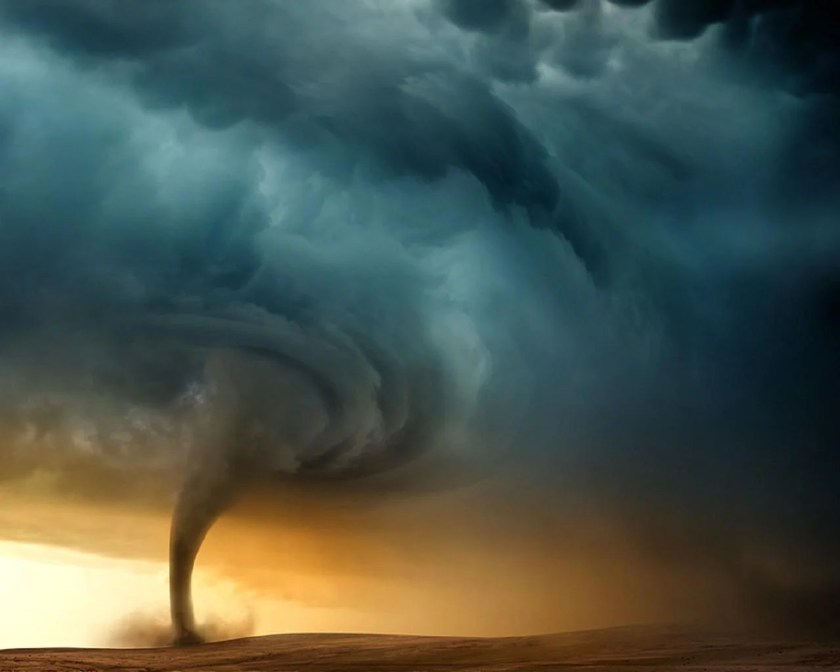
A new paper has just been published by Zhang and colleagues — Time trends in losses from major tornadoes in the United States — which updates and extends our 2013 analysis. They find: “[B]oth the severity of damage from individual events and the total annual losses from tornadoes are seen to have reduced over time.”
ROGER PIELKE JR.: A new paper has just been published by Zhang and colleagues — Time trends in losses from major tornadoes in the United States — which updates and extends our 2013 analysis. They find: “[B]oth the severity of damage from individual events and the total annual losses from tornadoes are seen to have reduced over time.”
Their analysis confirms our earlier work: “[O]ur findings reiterate the results of Simmons et al. (2013) who emphasize the importance of normalizing loss data to draw adequate conclusions about the severity of natural hazards.” …
Zhang et al. also find that the strongest tornadoes have also declined appreciably since 1950. The figure below shows their presentation of trends in tornadoes of various intensities (with F1 the weakest and F5 the strongest). You can see that the incidence of tornadoes of F2 strength and stronger have decreased. In our 2013 analysis we found that ~90% of damage results from tornadoes of F2 strength or stronger.
Excerpts: In 2011, the United States experienced more than 500 deaths and over $30 billion in losses from tornadoes. As is now common, climate activists were quick to claim that the destructive tornadoes that year were due to climate change. The National Oceanic and Atmospheric Administration (NOAA) rejected such claims, advising:
[A]pplying a scientific process is essential if one is to overcome the lack of rigor inherent in attribution claims that are all too often based on mere coincidental associations.
The 2011 tornado season motivated us — Kevin Simmons, Daniel Sutter and I — to take a close look at trends in tornadoes and their impacts across the United States. The result was a peer-reviewed paper with the first comprehensive normalization of U.S. tornado losses, for 1950 to 2011.
Our results surprised even us — U.S. tornado damage and tornado incidence appeared to have decreased dramatically, contrary to conventional wisdom:
The analysis presented in this paper indicates that normalized tornado damage in the US from 1950 to 2011 declined in all three normalization methods applied (two are statistically significant one is not). The degree to which this decrease is the result of an actual decrease in the incidence of strong tornadoes is difficult to assess due to inconsistencies in reporting practices over time. However, an examination of trends within sub-periods of the dataset is suggestive that some part of the long-term decrease in losses may have a component related to actual changes in tornado behaviour. Further research is clearly needed to assess this suggestion.
[B]oth the severity of damage from individual events and the total annual losses from tornadoes are seen to have reduced over time.
Their analysis confirms our earlier work:
[O]ur findings reiterate the results of Simmons et al. (2013) who emphasize the importance of normalizing loss data to draw adequate conclusions about the severity of natural hazards
…
Compare their results with ours in the figure below, which I have just updated through 2022.
Normalized U.S. annual tornado losses, 1950-2022. Source: Updated from Simmons et al. 2013.
…
In the 11 full years following our analysis, 9 of 11 have seen overall below average tornado incidence in the United States — 2023 will wind up slightly above average. There is simply no evidence to support claims that tornadoes are getting worse or causing more damage. In fact, the evidence indicates the opposite and peer-reviewed research is strongly in agreement.
EPA’s most egregious failure to properly account for costs is that it subtracts the amount of federal subsidies from the cost estimate, a nominal reduction of $369 billion based on CBO’s score. That figure will likely turn out to be much greater, given the subsidies’ lack of date-certain sunset.
Mario Loyola explains at Real Clear Wire EPA’s Illegal Power Play. Excerpts in italics with my bolds and added images.
EPA’s Ambitious Gambit to Reorganize America’s Electricity
The U.S. Supreme Court’s ruling in West Virginia v. EPA last year was a historic defeat for the Environmental Protection Agency. Not only did the Court rule that the 2015 Clean Power Plan, President Obama’s signature climate regulation, was unconstitutional; it also dramatically limited EPA’s power to regulate carbon emissions under the Clean Air Act (CAA) moving forward.
That left the agency with two courses of action. It could take its lumps and focus on proposing regulations with a high chance of surviving federal court review. Or it could stake everything on a final desperate attempt to decarbonize America’s power sector, and go for the win in keeping with President Biden’s commitment to net zero carbon emissions.
On May 23, 2023, EPA chose the latter, proposing carbon emissions standards for power plants far more ambitious than those struck down by the Supreme Court last year.
Like other EPA climate regulations, the proposed emissions standards under Section 111 of CAA are not designed to reduce emissions from standard power plants, but rather to force a rapid transition away from reliable and affordable sources of dispatchable power—natural gas and coal—to intermittent renewables and new kinds of power plants that don’t even exist yet. Together with EPA’s electric vehicle mandates, the proposed rule would be a train wreck for the American electricity grid and society as a whole, endangering economic competitiveness and energy security while yielding no measurable climate benefit.
Those hoping for a dramatic finish to Biden’s climate action will not be disappointed: the proposal has so many legal vulnerabilities that it would be a miracle nightmare if the rule survives federal court review.
Under the proposed rule, which President Biden hopes to finalize by next summer, large new or modified natural gas plants and existing coal plants would be required to virtually eliminate carbon emissions by 2038, at the latest. Under Section 111(a) “New Source Performance Standards” (NSPS), large new or modified combined-cycle natural gas plants, which currently supply roughly 30% of the nation’s electricity, would be required to achieve close to zero carbon emissions, either by implementing carbon capture and storage (CCS) to capture 90% of carbon emissions by 2035, or by switching from natural gas to 98% “green” hydrogen co-firing by 2038. In addition, under Section 111(d) emissions guidelines, existing coal plants, which currently supply more than 20% of America’s electricity, would be required to virtually eliminate carbon emissions by implementing CCS by 2035.
Interestingly, EPA declined to promulgate NSPS for coal plants because, as it explains, there are no plans to build any new coal plants in the U.S. It declined to promulgate emissions guidelines for existing natural gas plants out of concern for feasibility. Even more interesting, when EPA sent the proposed rule to the White House for regulatory review under E.O. 12866, it contained no emissions guidelines for existing plants at all, and therefore would not have applied to coal plants at all. The White House reportedly sent it back to EPA with orders to put a Section 111(d) rule for existing coal plants in the proposal. This suggests that EPA itself is not very confident in the ability of the Section 111(d) rule to survive court review.
Section 111 of CAA, the same provision at issue in West Virginia v. EPA, authorizes EPA to mandate “the degree of emission limitation achievable through the application of the best system of emission reduction which (taking into account the cost of achieving such reduction and any nonair quality health and environmental impact and energy requirements) the Administrator determines has been adequately demonstrated.”
Section 111 sets a high bar, especially after West Virginia v. EPA. The proposed rule falls woefully short. It has at least three major legal vulnerabilities, any one of which would be sufficient for a court to strike the rule down.
First, neither CCS nor green hydrogen is anywhere near “adequately demonstrated” within the meaning of Section 111.
Second, EPA has systematically ignored crucial costs and impacts that it is required to take into account in setting emissions standards under Section 111.
Third, like the “best system of emission reduction” struck down in West Virginia v. EPA, the new rule would require sweeping regulatory action and infrastructure investments entirely outside the fence line of the regulated facilities, thereby raising the “major question” doctrine’s presumption against the agency’s interpretation of the law.
The Mandated Technologies Have Not Been “Adequately Demonstrated”
Contrary to the unambiguous pronouncements of the D.C. Circuit, EPA treats Section 111 as if it were a technology-forcing provision throughout the proposed rule. For example, EPA claims that CCS has been “adequately demonstrated” for natural gas plants based on small-scale demonstrations at coal plants. But the coal demonstrations cited involve only small slipstreams (carbon captured from a small percentage of the plant’s total emissions) for use in the food industry. Moreover, the coal plant demonstrations do not involve the sophisticated combined-cycle configurations of large natural gas plants—in which the exhaust from the primary combustion cycle is used to heat the steam generator of the second cycle—that the new standards focus on.
In the several hundred pages laying out the proposed rule, EPA provides just two examples of demonstrations at natural gas plants. One, at Bellingham, Massachusetts, captured only a 10% slipstream and closed in 2005 because it was not economical. That was a decade before the Obama-era Clean Power Plan, in which EPA correctly rejected CCS as inadequately demonstrated and too costly. The other, a project at Peterhead, Scotland, is still in planning and may not even be built. Neither can be used as the basis for an adequately demonstrated BSER.
Furthermore, EPA’s CCS mandate would require a massive buildout of carbon transport and storage infrastructure, which has not been adequately demonstrated and would require sweeping investments and regulatory changes by developers and government authorities unrelated to the entities subject to regulation under Section 111 of CAA. Like the measures “beyond the fence line” of regulated entities that were struck down in West Virginia v. EPA, this massive infrastructure buildout would be beyond the ability of EPA-regulated entities to implement.
Co-firing with low-carbon hydrogen is even further from being adequately demonstrated. Nearly all hydrogen today is produced using carbon-intensive methods. Indeed, electrolysis from renewable and nuclear power produces only trivial quantities, and EPA doesn’t even bother to estimate the cost, feasibility, or time it would take to build out the vast amount of new renewable and nuclear power capacity that would be needed to make the low-GHG hydrogen a practicable option for power plants.
In short, neither CCS nor “green” hydrogen co-firing meets the Section 111 legal standards of “adequately demonstrated” BSER.
EPA Has Ignored the Proposed Rule’s Costs, as well as Its Health, Environment, and Energy Impacts
In determining that a technology is “adequately demonstrated” under Section 111, EPA must take into account the costs of the rule, as well as the health, environment, and energy impacts of the rule. Courts have interpreted this as requiring that costs be reasonable. That poses a threshold problem for EPA’s proposed rule because EPA can point to no measurable environmental benefit that would result from compliance. EPA has based all its greenhouse gas regulations on the same original 2010 Endangerment Finding, which has serious problems of its own, as William Happer and Richard Lindzen note in their July 2023 comment letter to the proposed rule. It has not been demonstrated that the sources subject to the rule make a significant contribution to a condition of air pollution that endangers human health, and the finding mentions the 2021 Technical Support Document on Social Cost of Carbon only in connection with a regulatory impact analysis that is unrelated to the requirements of CAA. Under such circumstances, there is a threshold question of whether any significant costs could be reasonable.
There are other problems with EPA’s estimate of costs and impacts.
First, its estimate of costs is highly speculative. The rule would affect a host of entities and government authorities across the whole society, the vast majority of them not subject to regulation under CAA, and EPA has little clue as to how they will adjust to the rule. If its cost estimates are off by any significant amount, regulated entities could well react by shuttering, rather than attempting to comply, which would create a situation of dangerous energy scarcity with skyrocketing prices. In parts of the country where fossil energy is restricted as a matter of policy, such as California, the electricity grid is on the verge of dangerous blackouts almost every evening in the summer.
And those restrictions are modest, compared with those now contemplated by EPA.
EPA’s most egregious failure to properly account for costs is that it subtracts the amount of federal subsidies from the cost estimate, a nominal reduction of $369 billion based on CBO’s score. That figure will likely turn out to be much greater, given the subsidies’ lack of date-certain sunset.
As for the impact on electricity prices, EPA estimates that the rule would lead to a price increase of 13%. That is almost certainly a woeful underestimate. In California, where a much milder form of renewable energy mandate has been in place for years, end-user electricity costs are twice the national average. The costs of compliance with the new rules could be far more exorbitant. As further explained below, CCS would reduce the power output of the relevant plants by at least 30%, while green hydrogen would likely be three to four times more expensive to produce and deliver as current demonstrations using natural gas.
Given the number of factors outside EPA’s expertise and jurisdiction that would determine how much time and money all that infrastructure would cost, EPA’s estimates are little more than conjecture.
The Power Plant Rule Raises the Same “Major Question” as in West Virginia v. EPA
The Court held that EPA’s interpretation raised a “major question” and that, in the absence of clear congressional authorization, the claimed power exceeded EPA’s statutory authority. The Court noted that EPA’s approach to BSER allowed it to set emissions standards at whatever level the agency wanted, regardless of whether any regulated entity could feasibly comply with the new standards. The Court noted that the Clean Power Plan would result “in numerical emissions ceilings so strict that no existing coal plant would have been able to achieve them without engaging in [generation-shifting].”
EPA’s new power plant rule relies on a similarly expansive definition of BSER to establish standards that can be met only by shifting generation away from fossil sources.
The only way that regulated sources could comply with the rule would be if states or utilities (or other developers) would build a major interstate infrastructure for CCS and “green” hydrogen, including tens of thousands of miles of specialized pipelines, massive underground storage facilities for CO2, and large-scale facilities for the production and transport of hydrogen gas from renewable sources. Whether to develop such infrastructure is a decision totally beyond the control of regulated entities.
The claimed power would regulate a significant portion of the American economy,entails political impact of great significance, and intrudes on mattersthat are the traditional domain of the states.
EPA’s Persistent Usurpation of Congressional Authority
EPA’s efforts to restrict greenhouse gas emissions from power plants and other sources represent a dangerous overreach of executive power. Congress never authorized EPA to regulate greenhouse gases in this expansive manner. By trying to reorganize the country’s electricity-sector limits through executive fiat, rather than the legislative process, EPA is abusing its authority and circumventing democracy.
Net zero climate policy raises novel issues that affect every American citizenin almost every aspect of modern life. Policy requiring suchtransformative change should be left to Congress.
Reuters is predicting the possible election of a right wing government on a platform of repealing climate policies which are devastating the countryside.
New Zealand farmers set for right-wing protest vote over climate change policies
By Lucy Craymer September 27, 20234:49 PM GMT+10 Updated 13 hours ago
WELLINGTON, Sept 27 (Reuters) – Rural voter anger at New Zealand’s environmental policies to tackle climate change and reduce carbon emissions may contribute to a return of right-wing parties to power at an Oct. 14 election, a shift that could diminish the country’s green image.
A flirtation with the New Zealand Labour Party in the 2020 election by rural voters, some for the first time in decades, has ended due to environmental policies such as planting pine forests on grazing land and taxing livestock methane burps.
Warning that livelihoods are at stake, farmers are looking to conservative candidates who will unwind or delay these Labour policies.
[1/2] FILE PHOTO:Cows graze near wind farms on the east coast region of Hawke’s Bay, New Zealand October 30, 2020. Picture taken October 30, 2020. REUTERS/Praveen Menon/File Photo
I wouldn’t get too excited. What passes for right wing in New Zealand is politically equivalent to a party of moderate democrats in the USA. The new party will possibly even support Net Zero, just at a slower pace.
But I suspect any relief from the green wrecking ball would be welcome, in a New Zealand economy which has seen pretty much every sphere of productive economic activity laid under siege from their current crop of far left greens.
h/t Chris Nisbet – “If you’re a climate change denier at the moment or even a minimalist, I just don’t understand how you can hold that position to be honest.” – The words of NZ opposition leader Christopher Luxon, whom farmers are hoping will roll back damaging climate policies of the current administration.
BOEM pretends it knows the noise impairment levels for Right Whales but hides its own admitted lack of knowledge on the issue and also obscures its ongoing research that will not be completed for several years.
BOEM pretends it knows the noise impairment levels for Right Whales but hides its own admitted lack of knowledge on the issue and also obscures its ongoing research that will not be completed for several years.
The Biden Administration is rushing headlong to start the massive construction of offshore wind power projects off the East Coast. The wind industry calls these installations “farms”.
In no way, shape, or form do they resemble bucolic farms?
They are massive, noisy, complicated, metal, concrete, and fiberglass factories consisting of thousands of steel towers, all taller than the Washington Monument, topped by fiberglass blades longer than a football field, and surrounded by tons of rock required to prevent ocean scouring.
Even if one subscribes to the absurd theory that carbon dioxide controls the climate, these factories will, when considering the energy and materials required to construct them, result in zero reduction of CO2 in the atmosphere and have zero impact on world climate.
Repeat: zero reduction of CO2 in the atmosphere and zero impact on climate.
But vendors believe there could be a lot of money to be made in this business, and the wind industry has been effective in sprinkling seed money into the coffers of politicians and so-called environmental groups to support the legislation necessary to pay for this boondoggle – money which will ultimately be derived from hapless electricity consumers who want nothing more than cheap, reliable electricity to power their daily lives, and who will find out too late in the game that offshore wind will be neither cheap, reliable, or environmentally friendly.
Fortunately, several citizen groups have been formed that are vigorously opposing this massive industrialization of the ocean. The two leading organizations are Save Right Whales Coalition, led by Lisa Linowes: https://saverightwhales.org/, and Save Long Beach Island, led by Dr. Robert Stern https://www.savelbi.org. In addition, Michael Shellenberger has produced a terrific documentary, Thrown to the Wind, which provides an eye-opening view into the real world of noise produced by so-called survey ships. Save LBI has also initiated litigation in New Jersey federal court seeking to revoke the permits issued by BOEM authorizing this preconstruction activity.
Officially listed as an endangered species by all State and federal governments, the Right Whale falls under the protection of both the Marine Mammal Protection Act and the Endangered Species Act. These statutes require wind energy companies to obtain an “incidental take” permit for the Right Whales and other protected marine mammals while engaged in pre-construction site assessment work, which consists of sonar blasting the ocean floor to determine the placement of the wind turbines.
Last year, BOEM issued a dozen “take” permits to different wind developers who spent the winter months sonar blasting off the East Coast.
Between December 2022 and May of this year, 60 large whales, including one Right Whale, washed up dead on the beaches of NY, NJ, and VA. BOEM put together a “hastily called ” news conference to counter the outcry from the public over this outbreak of dead whales.
BOEM seemed absolutely sure there was no connection between the dead whales and sonar blasting: “At this point, there is no scientific evidence”, BOEM claimed in carefully worded lawyer jargon, ” that noise resulting from offshore wind site characterization surveys could potentially cause mortality of whales”. It concluded, ” There are no known links between recent large whale mortalities and ongoing offshore wind surveys”.
But what BOEM did not mention, or even reference, was the fact that it has funded a program currently underway that is designed precisely to answer the question of the extent to which sonar noise adversely impacts Baleen whales. Nor did BOEM mention that it had virtually no knowledge of the impact of sonar noise on large whales when it authorized the IHAs that permitted sonar mapping off the East Coast.
The program, termed “Auditory Weighting Function for Low Frequency Whales,” consists of three studies that examine the underwater noise abilities of the minke and humpback whales as proxies for Right Whales and other Baleen whales.
The program, begun in 2021, contains some startling admissions. First, BOEM is very clear in admitting that it does not know how sonar noise impacts “low frequency” whales. “The hearing abilities of ‘low frequency’ whales”, it explained, “remain one of the ‘major unknowns’ as the regulatory community has tried to deal with the effects of noise on marine mammals.” It added, “This information is imperative for BOEM to assess the potential effects of noise-producing actions (from both oil and gas and renewable energy) on these species, many of which are highly threatened”. It further conceded, ” the data need is national information on just one species of baleen whale which will significantly advance the current understanding (which is almost nonexistent) ……”.
Second, it acknowledged that “we are required to know this information for analyses under the Marine Mammal Protection Act and the Endangered Species Act.” It further explains that ” the lack of meaningful, validated data for LF whales has made it extremely challenging for NMFS and others to derive meaningful regulatory ‘not to exceed thresholds’ for noise sources, as required under the MMPA and ESA”.
This means that the program, when completed, will provide guidance for the entire government concerning acceptable noise levels for both oil and gas and offshore wind development.
So why hasn’t BOEM acknowledged that it does not know noise impairment levels for large whales, and why hasn’t it revealed the existence of this program, which will produce the information it is “required to know” under the MMPA and ESA?
The reason is obvious. The studies are being conducted right now and have not yet been completed. The final report and conclusions of the studies are not scheduled for completion until June 2025, almost two years from now.
BOEM is obviously hiding the existence of these critical studies. BOEM does not yet know the impact of sonar signals on Baleen whales, it is very clear that under the Marine Mammal Protection Act BOEM is required to rely on ” the best scientific information available” in crafting underwater noise regulations. In its rush to authorize offshore wind construction before the elections in November 2024, BOEM is relying on guesswork and outdated guesswork, at that. The Federal Code of Regulations makes it very clear that BOEM cannot hide behind the excuse that this critical information is not available when it knows full well that the data will be derived from ongoing studies that are organized and funded by BOEM itself.
At a minimum, this set of facts would support a temporary injunction prohibiting BOEM from issuing further IHAs until the studies have been completed and the data has been incorporated into definitive regulations. Any final Environmental Impact Statement issued by the EPA that fails to incorporate the data to be derived from these latest studies will be de facto misleading and de jure unlawful.
When BOEM claims that “there is no evidence” linking the recent outbreak of whale deaths due to sonar testing, it is engaging in obvious and easily provable deception. This is a classic case of gaslighting. BOEM cannot sweep its “knowledge gap” concerning Right Whale noise impairment under the rug and expect the courts to approve any further offshore wind development.
Johnson has spent the last four decades working in the public and private sectors in Virginia, primarily in the fields of project finance and maritime transportation.
He began his career in public service as Chairman of the Board of the Virginia Port Authority. He was appointed by President George W. Bush, and confirmed by the Senate, as a member of the Overseas Private Investment Corporation, and most recently, as Administrator of the St. Lawrence Seaway Development Corporation.
In that capacity, he became knowledgeable in the field of climate and its impact on the Great Lakes. He currently serves on CFACT’s Board of Advisors.
Johnson holds a B.A. degree from Yale University, and a J.D. from the University of Virginia.




You must be logged in to post a comment.