AI AI, Oh Oh: Artificial intelligence power consumption about to skyrocket – and no one is prepared

Today’s musings go far into left field, but please do tag along. If you care about energy, you’ll want to hear all this. 

From The BOE REPORT

Terry Etam

Today’s musings go far into left field, but please do tag along. If you care about energy, you’ll want to hear all this. 

Though it has been around for a while, Artificial Intelligence (AI) has exploded in popularity in 2023. AI went from being a fringe thing to the thing. It has been a perplexing year in that regard; many first heard of AI in February and then by May were being told their entire profession was about to be wiped out. Yay, progress!

In a well-written and mercifully understandable article on LinkedIn, Susan Lindeque explains how this all unfolded so quickly. It is driven by, in her words, “a convergence of factors, including the availability of massive amounts of data, the rise of machine learning algorithms, the emergence of edge computing, and the convergence of AI with other technologies such as blockchain, 5G, and quantum computing.” A few of those aspects are worth examining with respect to energy.

In layman’s terms – all I have – this convergence is helping machines rapidly learn from massive amounts of data, continuously updated, with the effect that these machines can perform many tasks at least as well as, or better than, humans. ChatGPT, for example, can, with a simple query, write entire essays for students, to any length they want, because ChatGPT’s AI engine has scraped the web of all pertinent information. Conversely, teachers are not becoming suicidal over this; AI also provides a tool that spots AI generated output. You may notice a weird circularity here whereby AI is necessary to police itself; more on that topic in a second because it has some big ramifications.

AI has shown dramatic potential in many fields, and there is no doubt that it will knock some occupations on the head. This article chronicles how AI may revolutionize fields such as medicine, automotive, agriculture, and entertainment. 

So anyway, all great stuff, right? Except…what does this mean for energy? 

AI is a power hog the likes of which it is, frankly, hard to imagine. And it is about to explode in size. Consider these few examples. 

ChatGPT, the famous friend of students, is a good starting point if for no other reason than we’ve heard of it. One engineering prof estimates it can take up to 10 Gigawatt hours (GWh) to train the latest iteration of ChatGPT. According to the US Energy Information Agency, a typical home consumes about 11 Mwh per year. So that one training session consumes about the same power as a thousand homes do in a year. Chat GPT requires continuous updating, because it will only be of value if it routinely and often scrapes the web for all the latest updates.

And then there are the actual users, the millions of oddball requests for enlightenment that the machine must endure every day. Running ChatGPT for a typical day requires about 1 GWh, which is about the same daily consumption as 33,000 homes. There is no reason to think that load will shrink, quite the opposite in fact.

ChatGPT is just one of a whole wave of these things coming, and some of them are just off the charts. Consider what Tesla is up to: The pioneering auto firm is building its own AI supercomputer called Dozo. Sounds like a pet but wow, what an appetite. Dozo went into action a few weeks ago, using 10,000 Nvidia H100 CPUs. Each of those can consume 700 watts, so over a day that pile o’ CPUs in Dozo’s tummy will consume, fully cranked, 168 Mwh per day, or enough power for about 5,500 homes for a day. 

That might not sound too bad, but Tesla’s Dozo is, as of today, just a figurative tadpole. Fully grown, by the end of 2024, Dozo is expected to house 300,000 CPUs. That translates to the same power consumption as 165,000 homes. And that’s US homes; in Africa that would be about a small country’s worth. (Sharp eyed readers will note that the chart linked shows 300,000 A100 CPUs and not newer H100s, but don’t get too hung up – it’s a sh*tload of energy).

Now consider that there are thousands of large AI applications coming or underway. It will be an AI world – join in and compete, or get left behind.

Now, let’s take one more detour where it gets a bit weird, but highly plausible, and the potential load of this strange possibility is enough to make one throw up their hands.

A very smart person named Lyn Alden wrote an excellent piece on AI recently, well worth the read for the mind-bending ways she envisions AI possibly unfolding. The article is too massive and sweeping to integrate here, but a few nuggets are worth extracting. The first is the intersection of AI and Bitcoin.

Don’t laugh. Bitcoin may be so 2020, but BTC’s shards in the ceiling still hold interesting ideas and concepts. 

Recall that Bitcoin is based on a system called ‘proof of work’, where Bitcoins are issued to computers like dog treats for grinding away hour after hour solving artificial problems, the process of which updates all the blockchain records that give blockchain and Bitcoin their value. If computer processing power gets too large and Bitcoins are ‘earned’ too fast, the Bitcoin system simply makes it harder to earn a coin. Very cool, except that that simply means more power. Bitcoin is already a legendary power hog, currently consuming almost as much power as Argentina.

Hold onto that thought for a second.

Alden in her article speculates on some ways that AI could spin into something incomprehensibly huge, and provides a fascinating and highly realistic scenario.

Imagine hackers or governments make an AI tool that is designed for hacking. Hacking is an iterative activity conducted by relative humanoid boneheads (relative to AI, hear me out) whereby each “advance” in hacking is often soon met with a development by the good guys to stop the bug. Note also that hackers seek to exploit weaknesses, a far different task than defending hacks that clearly show you what the weakness is. 

AI could sift through the web at warp speed, looking for openings, integrating the latest defense tools as part of its stategy, and just keep escalating.

The only way to “defend” against hacks generated by AI would be by having AI as the defender. If the hacking AI keeps functioning and expanding – which it need to to keep up with current defenses – then the defense would have to as well.

There are two relevant points here: One is that the generals in this digital war would soon leave their human masters behind and start doing things humans aren’t even aware of, within a very short time frame.

The second relevant point, maybe just a question, is: What would the power consumption of this madness be? How fast would it spiral? Can anyone even guess?

That is one singular aspect of AI. There could be hundreds or even thousands just like it.

Remember from few paragraphs ago, Bitcoin’s proof of work structure, and what a power hog that is. What if that ‘proof of work’ model, or something similar, becomes a necessity for AI management?

Alden poses the scenario whereby this could happen: “Now that artificial intelligence is making the creation of pictures, videos, texts, programs, and other things almost costless, it’s becoming harder to know which content is genuine compared to which content is a high-quality fake video or personality.”

Such developments could render much of the web useless, if AI was able to generate whatever it wanted for whatever purpose, and build legions of followers and likers and anything else to move the junk up the social media algorithms. Imagine a social media platform overrun by millions of bots or anonymous accounts, generating for-hire popularity of whatever the cheque-writer is paying for, or fake news, or whatever.

Alden speculates that one way to stop such a spiraling process would be some sort of ‘proof of work’ structure, like the Bitcoin model described earlier. To “earn” Bitcoin, actual units of energy must be consumed as processing power, and the power required to run one of the mining machines is the “proof of work”. Consuming actual energy, as Bitcoin mining does, would be one way to put a check on an endless stream of AI fake accounts.

What if that turned out to be the most feasible way to put a check on AI generated spam bot armies? 

How much power would that consume?29dk2902lhttps://boereport.com/29dk2902l.html

One last “and then add this” rant…AI has the potential to revolutionize many fields, perhaps none more so than medicine. Consider what the web knows about your eating habits, for example. It’s simple to skim credit card data to know how often you order pizza. Google also knows quite likely what you order on your pizza, if ordering online. Google has access to your grocery buying habits, if you belong to a points program and the grocer is willing to sell access to data. As a final indignity, many have installed an Alexa or similar into our houses. They listen. They know not just what we buy but what we talk about buying. Alexa knows that you tell the spouse to remember to get some sauerkraut, then Alexa knows that you berate your child for not eating it. Marketing gold. And we paid for the device.

Now imagine an AI engine that can capture all that data and cross reference it with, say, cancer. There’s an unbelievably large data project right there, utilizing I can’t even imagine how much power. AI could take a certain type of cancer and go back into the history of all its victims and look for commonalities or patterns. It could be the most amazing human medical development imaginable. All it takes is a few square miles of data centres and a few billion kilowatt-hours. In a process that needs to be repeated continuously.

Now, take that same culinary data set and test it across hundreds or thousands of diseases or conditions. Well look at that, if you eat spicy chicken wings twice a month AND you have freckles AND you hate green onions AND your cuticles’ weird white part is oversized you might have a 90 percent chance of developing, say, elbow cancer, or maybe Foreign Accent Syndrome (yep, it’s a thing). All this could mean astonishing breakthroughs in medicine, albeit via a bank of computers that would cover the landscape like an endless digital shantytown.

To put a bit more context to the growth potential, listen to Salesforce’ CEO on a recent conference call. Salesforce is one of the largest technology companies in the world, with a market cap of over $150 billion. He commented: “So every CEO I’ve met with this year across every industry believes that AI is essential to improving both their top and bottom line, but especially their productivity AI is just augmenting what we can do every single day…”

It was hard to find AI information that even speculated as to what the power load might amount to. One article from the University of Washington commented that the number of current ChatGPT queries currently consumes the equivalent of the daily energy consumption for about 33,000 U.S. households but that “While these numbers might seem OK for now, this is only the beginning of a wide development and adoption of these models…Also, as models become more sophisticated, they get larger and larger, which means the data center energy for training and using these models can become unsustainable.”

Another article quoted a physicist from the US National Institute of Standards and Technology: “If you just keep throwing more and more compute power and resources into these networks and scale their parameters, they just keep doing better…But we’re burning up more and more energy. And if you ask the question of how big can we make these networks? How many resources can we invest in them? You realize we really start to run into the physical limits.”

What’s astonishing is that the article this is quoted from was titled “A Thirst for Energy: Solving AI’s Power Problem”, and the article offered no solutions at all other than mapping out a new technology/technique to make AI more efficient, and the article concluded with a comment indicating our present helplessness in the face of this power-swilling juggernaut: “A computer can play Go and even beat humans…But it will take a computer something like 100 kilowatts to do so while our brains do it for just 20 watts…The brain is an obvious place to look for a better way to compute AI.”

Well, yeah, that’s factually correct but…is that all we have? “Let’s emulate the brain” as a solution to power consumption? Yikes.

Note that all this new demand for energy – renewable, coal, natural gas, oil, nuclear, all of it – will not displace existing demand; the growth will be incremental to it – new demand creation. Imagine adding 10% to global energy demand from AI alone, a number that seems eminently plausible based on the few models in existence already. And that could be hugely understated – businesses and governments will join the AI party because they have to, and they will source power where they have to. 

AI is coming at us in a massive, power-sucking wave, whether we like it or not. The very nature of its functionality and execution power points to escalating energy requirements that we can’t even imagine.

Every single oil well, gas well, wind turbine, coal mine and nuclear plant is going to be called into service, until some energy breakthrough occurs or the world adopts nuclear power at mass scale in a few years. 

Energy conversations should be positive and, most of all, grounded in reality. Life depends on it. Find out more in  “The End of Fossil Fuel Insanity” at Amazon.ca, Indigo.ca, or Amazon.com. Thanks!

Read more insightful analysis from Terry Etam here, or email Terry here.

Sky Blame Libyan Floods On Climate Change

Why is a so-called Science Editor allowed to get away with writing drivel like this?

From NOT A LOT OF PEOPLE KNOW THAT

By Paul Homewood

h/t Ian Magness

Why is a so-called Science Editor allowed to get away with writing drivel like this?

On the face of it there is a clear explanation for the tragedy in Derna.

Two dams across the river that runs through the city were too old and too weak to cope with an unusually heavy rainstorm.

But there’s another story written in the stinking channels of mud that carved through Derna‘s high-rises and low-lying neighbourhoods: that vulnerable places and their people will suffer the most through our failure to recognise and respond to the risks of a rapidly warming climate.

https://news.sky.com/story/libya-floods-how-the-injustice-of-climate-change-set-the-stage-for-disaster-in-derna-12962009

The floods were a direct result of the failure of the two dams up stream of Derna, which were built in the 1970s by a Yugoslavian company (hardly a recipe for success!). Experts say that when the dams broke, 30 million cubic metres of water was released into the city.

Neither dam has had any maintenance for over 20 years.

Before the dams were built, there would only have been minimal flooding of course.

The storm which triggered the collapse was merely a catalyst for a disaster that was waiting to happen, and there is not a single piece of evidence to suggest that climate change had anything to do with it at all.

Instead of printing Clarke’s pack of lies, maybe Sky should have told its viewers the real story:

Libya: the failed dams of Wadi Derna

Clarke goes on to claim that this is an example of how poor countries are most at risk from climate change. What the dolt really means is that they are more vulnerable to all natural disasters, weather and otherwise. That is why it is so important to make their economies richer and infrastructure stronger, by giving them the freedom to use fossil fuels.

That is why the death toll from natural disasters has shrunk to close to zero in recent years:

The Mirage of Fossil Fuel Subsidies: Unraveling the IMF’s Dubious Claims

Legacy media, with its penchant for sensationalism, recently paraded a headline that would give even the most seasoned energy analyst pause: “Fossil fuels being subsidised at rate of $13 million a minute, says IMF”. Citing a staggering $7 trillion in support for fossil fuels in 2022, the claim is audacious, especially when juxtaposed against global expenditures on education and military.

From Watts Up With That?

Introduction

In the ever-evolving discourse surrounding climate change and energy policy, few topics generate as much debate as the alleged subsidies for fossil fuels. Tilak Doshi’s incisive article sheds light on the International Monetary Fund’s (IMF) recent claims regarding these subsidies, offering a critical examination of the figures and the motivations behind them.

The IMF’s Eye-Catching Headline

Legacy media, with its penchant for sensationalism, recently paraded a headline that would give even the most seasoned energy analyst pause: “Fossil fuels being subsidised at rate of $13 million a minute, says IMF”. Citing a staggering $7 trillion in support for fossil fuels in 2022, the claim is audacious, especially when juxtaposed against global expenditures on education and military.

“For those of us who have not completely given up on tracking legacy media headlines on climate issues due to the sheer noise-to-signal ratio, there was one recently that made even the most skeptical take notice.”https://www.forbes.com/sites/tilakdoshi/2023/09/06/energy-subsidy-shenanigans-the-green-imf-at-work/?sh=da9f26c4d89d

The Discrepancy in Estimates

The IMF’s figure starkly contrasts with estimates from other reputable institutions. The International Energy Agency (IEA) pegged global fossil fuel subsidies at a record $1.097 trillion in 2022, while the International Institute for Sustainable Development estimated them at $1.4 trillion for the G20 group.

“Why do these estimates vary? The differences in these estimates lie partly in varying methodologies employed to measure subsidies. They also reflect the inherently elastic nature of the subsidy concept.”

Understanding Subsidies: Not All Are Created Equal

Subsidies, in their essence, are government expenditures aimed at supporting specific sectors or demographics. They can be transparent, like price support for farmers, or opaque, favoring a particular industry or technology.

“A subsidy is government expenditure, in cash or kind (for example, a tax credit), in favor of households or firms as financial redistribution in the overall interest of the public.”

Deciphering the IMF’s “Subsidies”

The IMF’s classification of fossil fuel subsidies is intriguing. They differentiate between “explicit” subsidies, which refer to observable undercharging for fossil fuels, and “implicit” subsidies, which account for hypothesized costs of global warming and local air pollution.

“The fossil fuel subsidies identified by the IMF in its 2023 Update on Fossil Fuel Subsidies Data refer to “explicit” and “implicit” subsidies.”

The Flawed Logic of Implicit Subsidies

The IMF’s inclusion of “implicit” subsidies is a contentious point. By factoring in the costs of global warming, such as rising sea levels, extreme weather, and the spread of diseases, the IMF inflates the subsidy figure. However, this approach is problematic, as it doesn’t account for the positive externalities of fossil fuel use.

“While the IMF takes into account negative externalities in its measure of “efficient” fuel prices, it does not consider well-documented positive externalities of fossil fuel use in its report.”

The Greening Effect of Carbon Dioxide

One significant positive externality of increased carbon dioxide in the atmosphere is the greening of Earth’s vegetated lands. This phenomenon, which has been observed over the past 35 years, is largely attributed to rising levels of atmospheric carbon dioxide.

“An important example of the positive externality of carbon dioxide in the atmosphere is the significant greening of a quarter to half of Earth’s vegetated lands over the last 35 years largely due to rising levels of atmospheric carbon dioxide.”

The IMF’s Shift in Mandate

Historically, the IMF’s primary role was to maintain global financial stability. However, in recent years, the institution has expanded its purview to include climate change, aligning itself with the climate agendas of various governments.

“But what is an institution set up to act as a financial watchdog and first responder to countries in financial crisis doing dishing out advice on climate change?”

The Dangers of Overreach

The IMF’s foray into environmental policy is concerning. By delving into areas outside its expertise, the institution risks undermining its credibility and the efficiency of international capital markets.

“Climate policy is clearly beyond the scope of any financial regulator’s expertise. Given the uncertainty within the climate science community itself, there is no reason to believe that the IMF can have any greater understanding of climate risks.”

Conclusion

Tilak Doshi’s article offers a compelling critique of the IMF’s claims regarding fossil fuel subsidies. By highlighting the discrepancies in subsidy estimates and the flawed logic behind the IMF’s methodology, Doshi underscores the need for a more nuanced and informed discussion on energy policy.

Germany’s First Covid Patient in February 2020: “My Health is Great. In Fact, I Was Never Doing Poorly”

Last week, I told the story of Germany’s COVID-19 ‘patient zero’: a Chinese employee of the German auto parts maker Webasto who is supposed to have infected a colleague while on a business trip to Germany despite being “asymptomatic”. Except that she did in fact experience symptoms in Germany and took paracetamol.

From The Daily Sceptic

BY ROBERT KOGON

Last week, I told the story of Germany’s COVID-19 ‘patient zero’: a Chinese employee of the German auto parts maker Webasto who is supposed to have infected a colleague while on a business trip to Germany despite being “asymptomatic”. Except that she did in fact experience symptoms in Germany and took paracetamol.

But the story – and above all, in this case, the first-hand testimony – of Germany’s ‘patient one’, the German colleague who was supposedly infected by his “asymptomatic” Chinese colleague, is also of interest.

At the end of February 2020, a few days after being released from what he described not as quarantine but more like “imprisonment”, Patient One gave an extensive interview to the Bavarian public radio station Bayern1. In response to the interviewers’ first and “most important” question – namely, “How are you doing?” – he replied, “In terms of my health, I’m doing great, really in top form. Also, I was never in fact doing poorly”.

According to Patient One, who requested anonymity from the radio station, he met his Chinese colleague, who seemed fine to him, on a Monday, which would have been Monday January 20th, and on the following Friday he started having “a little bit of a scratchy throat”. By evening, he also had a cough, and he developed a 39°C (102.2°F) temperature, chills and “a little bit of joint pain” during the night. So, on Saturday January 25th he himself took paracetamol, and by the next day was feeling fine again.

“It [the medicine] worked,” he said, “and for me that was actually the end of the story.” Except that on Monday January 27th, already back at work – in fact he appears not to have missed any workdays – he was informed that his Chinese colleague, who had flown back to China in the meanwhile, had tested positive for the SARS-CoV-2 virus.

Thereupon, he went to his doctor, who sent his perfectly healthy patient in turn to the Tropical Medicine Department of the Munich University (LMU) Hospital. It was here that he would be ‘diagnosed’ with COVID-19 – even though he was not ill – by Dr. Claudia Rothe. Rothe, as discussed in my previous article, would go on to be awarded Germany’s Order of Merit in 2022 for having thus allegedly uncovered the first case of ‘asymptomatic transmission’ of the virus – even though, soon after this ‘diagnosis’, German health officials would concede that the Chinese ‘patient zero’ had in fact been symptomatic.

Rothe’s ‘diagnosis’ was reportedly made, or perhaps confirmed, based on PCR-testing conducted by none other than Christian Drosten: the German virologist whose SARS-CoV-2 PCR protocol, which was published just days earlier, would serve as the very basis for the declaration of a COVID-19 pandemic.

Having thus been ‘diagnosed’ with COVID-19 thanks to Prof. Drosten’s lab work – and given that Drosten is based in Berlin, not at the LMU in Munich, it is not entirely clear if or how this could have transpired on the same day – Patient One was directed to report not to another medical facility, but to a ‘house’ in the Munich neighbourhood of Schwabing.

It is likewise not clear who gave him these orders. It would appear that German Government officials were involved in the ‘treatment’ of Patient One right from the start. In any case, according to Patient One, he simply drove to the indicated address in his own car!

There he would, in effect, be held not only under house arrest but in solitary confinement for the next 18 days. Sometime after his own arrival, other Webasto employees, who, along with Patient One, formed Germany’s first reported cluster of COVID-19 cases, would also check-in to the mysterious house in Schwabing. But, according to Patient One, they were not allowed to have contact with one another – even though they were all healthy and if indeed ‘sick’ by virtue of being PCR-positive, then sick with the same virus!

“We were healthy,” Patient One explained, “we were more or less held prisoner in this facility and we had to wait until the Ministry [of Health, presumably] decided to draft criteria which would allow us to be released.”

The inmates regularly had their temperature taken – “I never had fever”, Patient One said – and were also tested and retested for Covid on a daily basis. Swabs were taken from both their noses and their throats. Patient One also had his blood taken. He described the situation as “completely surreal”: “I felt completely healthy”.

Asked whether the medical personnel in the house were wearing special protective gear, Patient One responded, no, not really. “Of course, they put on proper masks,” he said. Otherwise, their protective gear consisted of “a kind of painter’s outfit” and gloves.

Asked, finally, as Germany’s first COVID-19 patient, how he would advise others to go about dealing with the illness, Patient One replied:

I’d first advise people to keep calm. Of course, it’s a new virus. That’s well known. But it’s not as bad as the flu. It’s really a kind of cold. The bad thing is that it’s possible to detect the virus and then you get labelled. You just have to accept that. If you don’t have any pre-existing condition, then it also will never get bad. But if you do have a pre-existing condition, and, for example, you get the flu, then that will be much, much more serious. That’s why I’d advise everyone first of all: if you have it, then keep calm. If you don’t have it, then you should get vaccinated against the flu.

Robert Kogon is the pen name of a widely-published journalist covering European affairs. Subscribe to his Substack and follow him on X. All translations are by the author. Hat tip: Helen of Helen’s Substack for pointing out this interview.

Labour In A Spin Over Green Steel Job Losses

One of the inevitabilities of life is how the Labour Party ties itself into knots over the contradictions of its own policies.

From NOT A LOT OF PEOPLE KNOW THAT

By Paul Homewood

Port Talbot

One of the inevitabilities of life is how the Labour Party ties itself into knots over the contradictions of its own policies.

The news that the Port Talbot is likely to shed 3000 jobs as it transitions to “green steel”, as well as costing taxpayers £500 million, really should not come as a shock to Miliband and co, even given their low IQs.

Even so, it has.

Apparently in their own little dream world, you can uproot proven efficient technology, and replace it with expensive, less productive green technology, while at the same time saving money and creating loads of green jobs.

The Trades Unions are understandably furious, but at least they have been consistent in opposing the drive to Net Zero if it costs jobs.

As for the politicians though, take the son of Lord Kinnock of Brussels:

Does he not realise that Ed Miliband has been calling for arc furnaces to replace blast furnaces for years?

Electric Arc Furnaces (EAFs) rely mainly on scrap steel, which tends to be of highly unreliable provenance – in simple English, you have not got much idea what is in it!.

This does not, however, mean that EAFs cannot produce high quality steel. On the contrary. I worked in the 1970s at the brand new Stainless Steel Melting Shop in Sheffield, which used an EAF to produce alloy and stainless steels for the most demanding applications. EAFs are able to control steel specifications to a high degree, but first of all most of the scrap used needs to be of reasonable quality. (BTW – In drove past it again today, and it still brings back memories!)

Probably about half our scrap came from onsite operations, the rolling mills etc. We also used a lot of motor car bales, as a car is of a fairly well known property. And we also bought in stainless steel scrap, which by definition had to be of proven quality.

But somewhat surprisingly to some, we also used plenty of pig iron, as this too was uncontaminated.

Although there are already small EAF “mini-mills”in the UK, which are tailored to producing small batches of steel for specific orders, it is questionable whether there is enough high quality scrap in the UK to produce steel in bulk. Port Talbot, for instance, produces 3.3 million tonnes a year of steel strip.

A side issue is that EAFs produce much less steel than the blast furnace/BOS route. Port Talbot’s blast furnaces, for example produce 3.6 million tonnes a year of liquid iron. A typical EAF turns out maybe half a million tonnes a year.

Neither Tata or the government has stated how many EAFs will be built in this new investment, but I strongly suspect they will not replace all of its current output at Port Talbot.

This suspicion is reinforced by the fact that, according to the BBC, Tata’s workforce at Port Talbot is around 4000. Shutting down two blast furnaces certainly won’t save 3000 jobs, which leaves the logical conclusion that most of the job losses will come from the rest of the steelworks – ie rolling mills, finishing mills, and so on.

That inevitably points to a much lower level of steel production.

Giant Utility Rejects Net Zero Power, Big Fight Follows

Dominion Energy, Virginia’s big electric utility, is telling the State it does not foresee complying with the 2045 net zero power target in the Virginia Clean Economy Act (VCEA). The preferred option in Dominion’s latest Integrated Resources Plan (IRP) retires no fossil-fueled power generators, other than the few old ones that are already in the process of retirement. In fact, it adds a lot more fossil juice.

From Watts Up With That?

By David Wojick

Dominion Energy, Virginia’s big electric utility, is telling the State it does not foresee complying with the 2045 net zero power target in the Virginia Clean Economy Act (VCEA). The preferred option in Dominion’s latest Integrated Resources Plan (IRP) retires no fossil-fueled power generators, other than the few old ones that are already in the process of retirement. In fact, it adds a lot more fossil juice.

Up front in the IRP, Dominion puts it this way: “Due to an increasing load forecast, and the need for dispatchable generation, the Alternative Plans show additional natural gas-fired resources and preserve existing carbon-emitting units beyond statutory retirement deadlines established in the VCEA. The law explicitly authorizes the Company to petition the SCC for relief from these requirements on the basis that the unit retirements would threaten the reliability or security of electric service to customers.”

So, in effect, this is a notice to Virginia’s utility regulator, the State Corporation Commission (SCC), that Dominion is prepared to petition for permission to not comply with the net zero power generation mandate in the VCEA.

In fact, this IRP may constitute such a petition. The anti-fossil forces apparently think so because they have petitioned the SCC to reject the IRP because it includes more gas-fired generation. In response, the SCC has initiated a formal legal proceeding to consider this request. A number of green groups have joined the proceeding; there has been a hearing, public comments have been taken, etc. The whole rulemaking deal.

The impetus for this unexpected bout of rationality from Dominion is, as the quote says, an increased load forecast. Specifically, the SCC requires Dominion to use the load forecast from the regional grid operator, which is PJM. They issued a whopping new forecast that is roughly double their earlier ones going back years.

So Dominion is saying they don’t think we can service this enormous new load and comply with the VCEA net zero mandate. They specifically propose not to retire most of their fossil fleet, plus adding almost 3,000 MW of gas-fired generation over the next 15 years. No wonder the anti-fossils are apoplectic.

Unfortunately, they also add a ridiculous amount of renewables. This is about 11,000 Megawatts (MW) of solar and 3,000 MW of mostly offshore wind, on top of the 2,600 MW of offshore already in process. With their usual smoke and mirrors, there is virtually no storage to make this intermittent junk reliable despite costing tens of billions of dollars. If the gas-fired power does that, why not just use it instead of the renewables? Plus, offshore wind is hell on whales. But I digress.

Dominion has 7 million customers in 16 States, so its Virginia no net zero action has much wider implications. Beyond that, it could be a national precedent, so other utilities, States, and interest groups should be watching closely.

What the SCC decides could be very important. Ironically, in a ridiculous sense, the SCC does not exist at this time. Due to a political stalemate, there is only one Commissioner, out of the called-for three, and it takes a quorum of two to issue a formal order. It looks like the most that can happen is that an administrative law judge can render an opinion on the anti-fossil petition.

The SCC legal mess is beyond my knowledge or understanding. Rejecting an IRP seems odd to begin with. Then, too, the VCEA seems to allow what Dominion is describing specifically. Nor is it at all clear that an IRP is a petition when the matter is just presented as an option. Perhaps it is a petition to be allowed to suggest it. The whole fight strikes me as an absurd confusion, but alarmism is like that. Maybe that is the message. Anti-fossil alarmism is an absurd confusion.

This confused action should be fun to watch. Stay tuned to CFACT as the no net zero drama unfolds.

Author

David Wojick

David Wojick, Ph.D. is an independent analyst working at the intersection of science, technology and policy.

For origins see http://www.stemed.info/engineer_tackles_confusion.html For over 100 prior articles for CFACT see http://www.cfact.org/author/david-wojick-ph-d/ Available for confidential research and consulting.

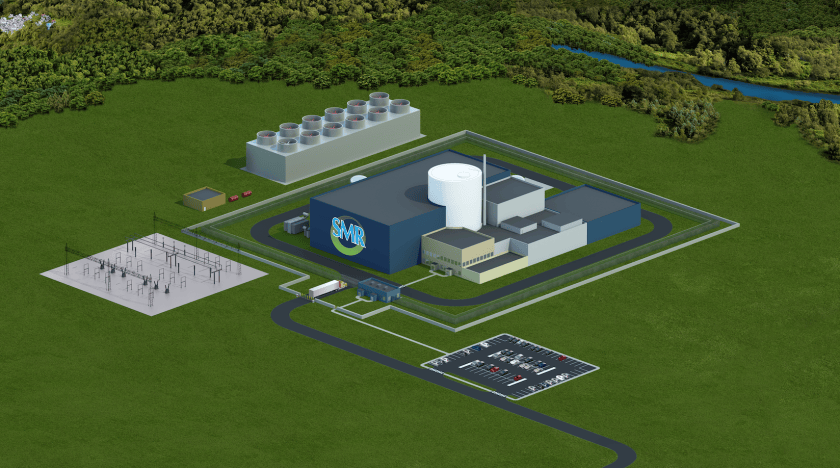
Simply Irresistible: Why Plugging Into Small Modular Reactors Makes Perfect Sense

Listen to the wind and sun cult and you’d think that Small Modular Nuclear Reactors are a work of far-fetched Science Fiction. The reality is that some 200 small nuclear reactors are presently powering 160 ships and submarines all around the world, and have been for decades.

FromSTOP THESE THINGS

Listen to the wind and sun cult and you’d think that Small Modular Nuclear Reactors are a work of far-fetched Science Fiction. The reality is that some 200 small nuclear reactors are presently powering 160 ships and submarines all around the world, and have been for decades.

None of which sits with the narrative pitched by renewable energy rent-seekers, who are evidently terrified of the prospect of bringing a fleet of those SMRs onshore to provide safe, reliable and affordable power 24 x 365, whatever the weather, with no need for batteries or backup.

Apply our good friends logic and reason and you’ll soon reach the very same conclusion expressed by Tony Grey in the piece below.

SMR option shows the ‘irresistible sense’ of going nuclear
The Australian
Tony Grey
30 August 2023

As Australia’s Minister for Energy, it is of great concern that Chris Bowen should demonstrate such a lack of understanding of one of the globe’s biggest sources of energy, nuclear, in his recent article in this newspaper.

For an energy minister to reveal that he knows little about nuclear, even as a reasonable option for Australia because it is emissions-free, puts into question his ability to manage the portfolio for the people of Australia.

Nuclear energy generation has continued to evolve significantly and the technology attracting the most interest and investment today is the small modular reactor. SMR technology is in an advanced stage of development and changing the nuclear landscape. Chris Bowen mentions SMRs in his article, and acknowledges they are gaining attention, yet he dismisses them in his article as being “small in one sense only: output” because “they can produce just 300MW each”.

While the maximum capacity of individual SMRs is 300MW, their modules (as the name implies) can be placed together to meet demand. A combination of three modules would generate enough electricity for about a million people.

Also, he fails to comprehend the load-following facility of SMRs, which allows them to adjust their output to demand. He makes the astonishing claim that they are “not a flexible source of peaking and firming”. This is from an “energy minister”.

And he doesn’t seem to appreciate the pivotal and economic role that SMRs could play in replacing coal as a firming agent to support renewables when the sun doesn’t shine and the wind doesn’t blow. For that purpose, they can be built on the sites of closed-down coal-fired stations, use much of their infrastructure, and provide jobs to many of their workers. They are the only emissions-free source that can do that. Renewables can’t.

SMRs are eminently suitable for Australia because of their easy transportability. They can not only be plugged into the existing grid (no need for a $20bn rewire of the nation) but used in off-grid regional areas, even in mining. BHP has publicly called upon the government to change its policy to permit this.

In view of the intransigence of the government on the issue, it’s understandable that the opposition is running a pro-nuclear policy. There is rising public support for at least considering nuclear power to assist in the country’s deeply flawed energy policies.

A recent financial newspaper survey and polls by the Lowy Institute and Institute of Public Affairs reveal a clear majority of Australians in favour of repealing the legislation enacted in 2000 prohibiting use in Australia of nuclear. The IPA poll found a majority of Labor voters supporting use of nuclear. The opposition is merely taking a line adopted by every other advanced nation. Australia is the only top 20 economy without nuclear power.

Safety developments for reactors and the well-publicised progress in Finland of constructing a world-first long-term high-level waste repository at Onkalo, have removed the major public fears about nuclear. The battleground has moved to the economic field just as it did in the struggle over uranium mining (a proxy for nuclear). Opponents of nuclear claim, without credible evidence, that it is too costly.

What about the costs of SMRs? Chris Bowen predictably claims nuclear is “too expensive” when asked about this option. He presumably relies on the CSIRO’s recent GenCost 2022-23 report, which provides estimates for Australian energy costs. In this extensive document only a small section is devoted to nuclear and it is treated superficially. The CSIRO did not commission any credible organisation to review capital costs for SMRs, but merely escalated an out-of-date 2018 figure from a questionable outside source. The result is an overestimate of more than double plausible industry estimates.

This error is demonstrated by a recent Canadian report on SMRs. In many respects, Canadian society and its economy are very similar to Australia’s. It would therefore seem appropriate to consider Canada’s decision to include SMRs in its nuclear program, which supplies 15 per cent of the country’s electricity.

Because of their modular form, SMRs can be manufactured in batches to a single design, which reduces unit costs and facilitates streamlining of regulatory approvals. Financing is made easier when several modules are combined. As one module is finished and starts producing electricity, it will generate a positive cash flow for the next module, as would be the case with NuScale’s project in the state of Idaho of six SMRs of 77MW each, producing a total of 462MW. This would reduce the amount of capital needed for SMRs in Australia.

Elsewhere, 80 SMRs are under development in 19 countries (including the US, Canada, Japan, and many in Europe) with 17 in near-term development. NuScale expects its plant to be operational by 2030.

If so many nations are developing SMRs, with large corporations such as Fluor, Hitachi, Rolls-Royce and others investing their funds, what possible confidence could we have in Chris Bowen’s cavalier claim that SMRs cost too much? At the very least, he and the government should undertake a proper examination of the technology and economics, but from a position of knowledge. For that to happen, the prohibitory legislation must be repealed, as the Liberal Party is now proposing. The lamentable situation we are in today brings to mind George Orwell’s dystopian novel, 1984, where Big Brother proclaims “Ignorance is strength”.

As Australia is way behind the rest of the world in the general understanding of nuclear economics, we could reach out to organisations such as the London-based World Nuclear Association, which has 181 members located in 44 countries and covers 70 per cent of the world’s nuclear generation. It is recognised for its comprehensive information on nuclear energy. I have been assured the WNA would be willing to offer its program to Australia.

With all the uncertainties of our energy industry, as demonstrated by Tasmania’s failure to support growing electricity needs in that state with its hydro power, and the manifest failures of the federal government to map a credible course to exchange our reliance on fossil fuels for zero-carbon sources, the Liberal Party’s call to remove the 24-year barrier to using emissions-free nuclear power, especially in its SMR form, makes irresistible sense.
The Australian

Steel workers facing job losses under £500 million Net Zero subsidy plan

Thousands of workers at Britain’s biggest steel mill are facing redundancy under a taxpayer-funded net zero plan.

From NOT A LOT OF PEOPLE KNOW THAT

By Paul Homewood

Thousands of workers at Britain’s biggest steel mill are facing redundancy under a taxpayer-funded net zero plan.

Tata Steel will be given £500m of taxpayer cash to fund its switch to net zero at its Port Talbot steelworks.

The Indian conglomerate is expected to invest £1.25bn in retooling the site to produce “greener” steel, which ministers said will reduce the UK’s entire carbon emissions by around 1.5pc.
However, the new processes will require fewer jobs and Tata will consult on a restructuring that could lead to 3,000 redundancies

.
The Unite union described the plans as a “disgrace” and vowed to fight them. TUC general secretary Paul Nowak said it was a “devastating blow for workers at Port Talbot and the opposite of a just transition”

.
Tata has been in talks with the Government for months about state aid to help switch the plant’s two coal-fired blast furnaces to electric arc versions that can run on zero-carbon electricity
.
Full story

If electric arc furnaces were the most efficient way of making steel, Port Talbot would already be investing in them, without the need for subsidies.

The reality is that arc furnaces use huge amounts of electricity, and at current prices are not as economical as blast furnaces, particularly as the coke used in the latter process provides coke gas, which is used in other parts of the steel works.

There is a further issue – arc furnaces rely on steel scrap and pig iron. But there is only a limited supply of scrap, and the pig iron will have to be sourced from other steel mills, which use blast furnaces anyway. In other words there is only an illusion of emission cuts, the likelihood being that pig iron will simply be imported.

A worker in the blast furnace at Tata Steel’s Port Talbot plant CREDIT: GEOFF CADDICK/AFP via Getty Images

Claim: Climate Change is Causing Floods and “Flash Droughts”

If the scientists are right, and “flash droughts” become a problem, I would suggest better water infrastructure is a higher priority than green energy fantasies. But I’m not losing any sleep over their prediction, given the complete lack of evidence that adverse growing conditions are impacting yields in the agriculture sector.

From Watts Up With That?

Essay by Eric Worrall

According to University of Melbourne academics, climate change is disrupting rainfall and affecting farmers. But strangely this alleged disruption isn’t showing up in global food production statistics.

Faster disaster: climate change fuels ‘flash droughts’, intense downpours and storms

Published: September 12, 2023 4.59pm AEST

Andrew King Senior Lecturer in Climate Science, The University of Melbourne
Andrew Dowdy Principal research scientist, The University of Melbourne

The run of extreme weather events around the world seems to be never-ending. After the northern summer of extreme heat and disastrous fires, we’ve seen more exceptional autumn weather over Europe with record-breaking heat in the UK. 

Meanwhile, record-breaking rain and intense flash floods struck Greece before the same storm devastated Libya, with thousands dead. 

Almost 20% of Africa is estimated to be in drought, and drought conditions are returning to parts of Australia. To top it off, we’ve seen several hurricanes intensify unusually quickly in the Atlantic.

We know climate change underpins some of the more extreme weather we’re seeing. But is it also pushing these extreme events to happen faster? 

The answer? Generally, yes. Here’s how.

…

Flash droughts

We usually think of droughts as slowly evolving extreme events which take months to form. 

But that’s no longer a given. We’ve seen some recent droughts develop unexpectedly quickly, giving rise to the phrase “flash drought”. 

…

Flash droughts tend to be short, so they don’t tend to cause the major water shortages or dry river beds we’ve seen during long droughts in parts of Australia and South Africa, for example. But they can cause real problems for farmers. Farmers in parts of eastern Australia are already grappling with the sudden return of drought after three years of rainy La Niña conditions. 

As we continue to warm the planet, we’ll see more flash droughts and more intense ones. That’s because dry conditions will more often coincide with higher temperatures as relative humidity falls across many land regions.

…Read more: https://theconversation.com/faster-disaster-climate-change-fuels-flash-droughts-intense-downpours-and-storms-213242

The obviously solution to any drought is to pipe in more water.

South Africa is on the brink of being a failed state, and Libya is a militia trouble spot, so it is no mystery why those countries are having trouble managing national water supplies.

But there is no such excuse for Australia’s lack of investment in water.

For example, in 2018 the ABC reported the CSIRO has surveyed 3 major river systems which could provide an enormous increase in available agricultural water. But so far these detailed plans have seen very little action – Aussie state and federal governments are too busy frittering all their spare cash on green fantasies, renewable grid upgrades and pumped hydro schemes.

If the scientists are right, and “flash droughts” become a problem, I would suggest better water infrastructure is a higher priority than green energy fantasies. But I’m not losing any sleep over their prediction, given the complete lack of evidence that adverse growing conditions are impacting yields in the agriculture sector.

Economic Suicide:Germany passes controversial green heating law estimated to cost economy €1 trillion

The problem is that approximately three-quarters of the old buildings in Germany were built before the first thermal insulation regulations came into force in 1979. Many of these buildings will now need to be made energy efficient, representing an enormous cost burden at a time when Germany has also phased out nuclear power and the price of energy, particularly oil and natural gas, has soared.

From  JUNGE FREIHEIT

By REMIX

A law would require newly installed heating systems to be powered by at least 65 percent renewable energy

After six months of fierce debate, Germany’s left-wing government has passed the country’s controversial green heating law, the Building Energy Act (GEG), with high estimates indicating the law will cost Germany’s economy over €1 trillion over the next 20 years.

While politicians belonging to Germany’s three-way politician applauded the heating law coming into force on Friday last week, the political fallout has likely yet to be fully realized.

Many Germans — already struggling with inflation and a slowing economy — balked at the mandate to install new expensive heating systems, with the law being rejected by the majority of the populace, according to polling. The government is also being accused of a hasty legislative process and a lack of parliamentary hearings, calling into question the democratic basis for the law in its entirety.

The law mandates that Germans with older heating systems replace them within a certain time period, although the final bill passed watered down some requirements and carved out some exceptions. Nevertheless, the final cost of the bill is still expected to be enormous, with high estimates placing it at €1 trillion and lower estimates hovering at €600 billion.

Many Germans have all of their savings in their home, and for many seniors, their homes, often featuring older heating systems, have seen their value take a hit due to the law. At the same time, in the coming years, they will be forced to make costly heating upgrades — usually in the form of a heat pump and the associated costs of making it work efficiently inside a building — to meet new green standards. Experts are also warning that landlords will have an incentive to increase rents in response to the Building Energy Act.

The problem is that approximately three-quarters of the old buildings in Germany were built before the first thermal insulation regulations came into force in 1979. Many of these buildings will now need to be made energy efficient, representing an enormous cost burden at a time when Germany has also phased out nuclear power and the price of energy, particularly oil and natural gas, has soared.

The Free Democrats (FDP), usually seen as a pro-business party, first fought their coalition partners on the proposed law, but in the end, the liberal party helped pass the law on Friday. There are already signs the FDP is paying the price for its decision, with the latest YouGov poll putting the party at just 5 percent, which is the threshold for entering the German parliament.

“There is fear among the population,” shouted Alexander Dobrindt (CSU) in parliament. He said it is “the height of disrespect” for the citizens to pass the law and that the CSU would work to abolish it.

The Alternative for Germany (AfD), which saw its polling numbers soar around the same time the heating debate raged, has also said it will abolish the law should it come to power, saying it is an arduous tax on German businesses, pensioners, and those who invested in a home or apartment.

“The AfD faction strictly rejects Habeck’s (…) heating hammer. Despite severe criticism, the law was neither postponed nor defused,” said Marc Bernhard, a parliamentary spokesperson for the AfD. “The tricky thing about the law, however, is that the heating has to be torn out again if it does not meet the municipalities’ heat planning required by 2028. In this way, the government is hiding the devastating consequences for millions of people and is transferring the risk of the heat transition to the citizens.”

He further pointed out that the nuclear power plants would save twice as much CO2 if they were allowed to continue to operate.

As Remix News reported last year, the proportion of poor people in Germany reached a new high, according to the Federal Statistical Office, with the data highlighting a sea change in the German economy. The report also only covered data up until the end of 2021 before the dramatic increase in food and energy prices in 2022.

Read full story here…