Global warming, climate change, all these things are just a dream come true for politicians. I deal with evidence and not with frightening computer models because the seeker after truth does not put his faith in any consensus. The road to the truth is long and hard, but this is the road we must follow. People who describe the unprecedented comfort and ease of modern life as a climate disaster, in my opinion have no idea what a real problem is.
I have gotten a lot of inquiries about the weather on April 8, the day of the total solar eclipse of the sun over the eastern half of the U.S.
Our operational forecast models reach that far in time and have for a few days. But considering the uncertainty at such a long projection, I have refrained from commenting until now.
The model solutions are starting to settle down and I have increasing confidence that I can provide useful information. So let me do the first of several updates on the weather associated with the event.
The area of totality will extend from Texas to Ohio to northern Maine (see below).
Totality will occur at roughly 1800 UTC (11 AM PDT) for most of the path (earlier to the southwest, later to the northeast). Here in Seattle, only about 20% of the sun will be covered (see below). You would hardly notice this, even if the skies were clear.
The Forecast Situation
Below is the forecast 700-300 hPa (10,000-30,000 ft) relative humidity, a good measure of cloud cover, at 1800 UTC 8 April based on the U.S. GFS model.
Portions of southwest Texas might have a good view, but I worry about viewing conditions over much of the Midwest. Some openings in Ohio and northern Maine.
But at this projection (270 hours), there is still substantial uncertainty. Only when we get within roughly 5 days (120 hr) will confidence be relatively high in the forecast.
To illustrate the uncertainty, let me show you are series of forecasts for the above humidity field for four different forecast projections, but verifying at the same time (1800 UTC 8 April). Specifically, you are viewing an animation of 288, 282, 276, and 270-hour forecasts of sea level pressure (solid lines) and the moisture field.
All have some kind of low-pressure system and a plume of clouds in the middle part of the country and it appears the solutions are converging. But there are significant changes between the forecasts.
For Seattle, the variations are quite large.
An animation of the precipitation forecasts valid for the same eclipse time is shown below. Enough precipitation to get a Midwest eclipse watcher nervous. And not promising for western Washington.
Another approach for such a long-term forecast is to look at the forecasts of ensembles of many forecasts.
Below is the North American Ensemble Forecast System (NAEFS) prediction of clouds over Dallas/Fort Worth Texas over time. I put a red arrow at the time of the eclipse. Remember: an ensemble forecast shows the results of many different forecasts all valid at a certain time.
10 indicates total cloud cover. The horizontal line shows the median cloud cover for that location and the yellow box around the medium shows the range of 50% of the ensemble forecast members. (remember that the median is in the middle of a distribution of many forecasts, as many above as below).
Lots of clouds and lots of uncertainty at that location.
Anyway, if you are planning to go to the eclipse, don’t expect perfect conditions and be prepared to move, depending on the closer-in forecasts.
Changes could force operators to build wind farms close to each platform.
North Sea energy companies could be forced to close oil and gas fields or be prevented from opening new rigs unless they slash emissions.
Changes could force operators to build wind farms close to each platform.
North Sea energy companies could be forced to close oil and gas fields or be prevented from opening new rigs unless they slash emissions. The Telegraph has the story.
Currently, more than 280 platforms extracting oil and gas from UK waters produce 3pc of the country’s total emissions, the equivalent of about 17 million tonnes of CO2 a year.
However, UK oil and gas fields also account for half of the country’s energy needs.
Despite this, the North Sea Transition Authority (NSTA), which regulates the offshore sector, has told producers that they must convert platforms to run on green electricity or low-carbon fuels.
This means all new developments before 2030 must be designed to run on electricity, while all those after that must be fully electrified from the start.
Critics say the new demands will deliver a fatal blow to many of the older platforms operating around British shores.
Some date back to the 1970s or 1980s and would be hugely expensive to decarbonise.
For many, it would mean running power cables from the shore or building a wind farm close to each platform.
Stuart Payne, NSTA chief executive, said closing some low-producing, high-polluting installations earlier could be necessary to allow higher-producing and cleaner new assets to come online.
He said: “Energy production, reducing emissions and accelerating the energy transition are at the heart of everything we do.”
But someone should tell Trudeau that his own government’s
Emission Reduction Plan mainly consists of heavy-handed
regulations, subsidies, mandates and winner-picking grants.
Trudeau Turns the Carbon Tax Screws on Canadians April 1
Ross Mckitrick explains the smoke and mirrors in Trudeau’s justifications for his racheting carbon tax in a National Post article Wanted: A leader who is honest about climate policy. Excerpts in italics with my bolds and added images.
Pierre Poilievre is leading anti-carbon tax rallies around the country, ginning up support for an old-fashioned tax revolt. In response, Justin Trudeau went to Calgary and trumpeted — believe it or not! — his love of free markets. After explaining the economic logic of using a carbon tax to reduce greenhouse gases, the prime minister slammed regulatory approaches, which, he said, “all involve the heavy hand of government. I prefer a cleaner solution, a market-based solution and that is, if you’re behaving in a way that causes pollution, you should pay.” He added that the Conservatives would instead rely on the “heavy hand of government through regulation and subsidies to pick winners and losers in the economy as opposed to trusting the market.” Amen to all that!
But someone should tell Trudeau that his own government’s Emission Reduction Plan mainly consists of heavy-handed regulations, subsidies, mandates and winner-picking grants.
Within its 240 pages one does find a carbon tax. But also 139 additional policies, including:
♦ Clean Fuels Regulations, ♦ An electric vehicle mandate that will ban gasoline cars by 2035, ♦ Aggressive fuel economy standards that will hike such cars’ cost in the meantime, ♦ Costly new emission targets specifically for oil & gas, agriculture, heavy industry and waste management, ♦ Onerous new energy efficiency requirements both for new buildings and renovations of existing buildings, New electricity grid requirements, and page upon page of ♦ Subsidy funds for “clean technology” firms and other would-be winners in the sunlit uplands of the new green economy.
Does Trudeau oppose any of that? Hardly. But the economic logic of a carbon tax only applies when it is used on its own. He doesn’t get to boast about the elegance of market mechanisms on behalf of a policy package that starts with a price signal then destroys it with a massive regulatory apparatus. Trudeau also tried to warm his Alberta audience to the carbon tax by invoking the menace of mild weather and forest fires. In fairness it was an unusual February in Calgary. The month began with a week of above-zero temperatures, hitting five degrees Celsius at one point, then there was a brief cold snap before Valentine’s Day, then the daytime highs soared to the low teens for nine days and the month ended with soupy above-zero conditions. Weird.
Oops, that was 1981.This year was weirder: February highs were above zero for 25 out of 28 days, eight of which were even above 10 degrees C.
Oops again, that was 1991. Granted, February 2024 also had its mild patches, but not like the old days.
Of course, back then warm weather was just weather. Now it’s a climate emergency and Canadians demand action. Except they don’t want to pay for it, which is the main problem for politicians when trying to come up with a climate policy that’s both effective and affordable. In fact, you can only have one of those two. Take your pick: effective or affordable, affordable or effective.
In practice, of course we typically end up zero for two, with policies that are both ineffective and unaffordable.
You can claim your policy will yield deep decarbonization while boosting the economy, which almost all politicians in every western country have spent decades doing. But it’s not true. With current technology, affordable policies yield only small temporary emission reductions. Population and economic growth swamp their effects over time, which is why mainstream economists have long argued that while we can eliminate some lowvalue emissions, for the most part we will just have to live with climate change. Trying to stop it would cost far more than it’s worth.
Meanwhile the policy pantomime continues. Poilievre’s anti-carbon tax rallies are popular, but what happens after we axe the tax? If he plans to replace it with regulatory measures aimed at achieving the same emission cuts, he really should tell his rallygoers that what he has in mind will hit them even harder than the tax they’re so keen to scrap.
Or does he have the courage to do the sensible thing and follow the mainstream economics advice?
If he wants to be honest with Canadians, he must explain that the affordable options will not get us to the Paris target, let alone to net-zero, and even if they did, what Canada does will have no effect on the global climate because we’re such small players. Maybe new technologies will appear over the next decade that change the economics, but until that day we’re better off fixing our growth problems, getting the cost of living down and continuing to be resilient to all the weather variations Canadians have always faced.
Addendum
Notice that Trudeau asserts that his carbon tax is needed so that “polluters pay.” Millions of Canadian taxpayers’ dollars have been spent on prime time TV ads reminding viewers that we have to do something to stop “carbon pollution”, by which they mean CO2 emissions. No matter that CO2, far from being an unnatural contaminant, is plant food without which (less than 150 ppm) plants and animals die. No mention of thousands of scientists proclaiming that “There is No Climate Emergency,” and that global warming and rising CO2 since the Little Ice Age have led to unprecedented human flourishing.
So essential CO2 is labeled as a pollutant in order to insist that emissions from burning hydrocarbons must be reduced to avert a crisis: heat waves, forest fires, floods, droughts, etc. etc. The premise is “We have to do something to stop emitting CO2.” Politicians of all stripes dare not question it. And a video interview below demonstrates how that premise prevents any reasonable discussion of energy policy.
The Parliamentary Budget Officer released a report looking into how much the carbon tax is actually costing Canadian households. In the CBC interview, Parliamentary Budget Officer Yves Giroux breaks down the report. And, Dale Beugin, executive vice-president of the Canadian Climate Institute discusses the analysis his organization has conducted on the government’s emissions reduction plan. Note the PBO role is non-partisan, while the CCI agenda is open and obviously Gung Ho against CO2.
The discussion with the PBO ends at 11 minutes into the video, the remainder being CCI talking about ways to shape industrial policies to force additional emissions down to meet Paris targets. A few excerpts from the first part show how difficult it is to escape the premise that we have to do something about CO2.
CBC: I’m sure have been watching what’s been happening in the House of Commons the conclusions in your report they’re being cited by the conservatives in particular as proof that Canadians are worse off because of carbon pricing and that means this policy needs to go. Is that a fair representation of your findings?
PBO: Well it’s a representation of our findings once you also include the economic impacts of introducing a carbon tax. So there’s the fiscal impact on households paying the tax versus the amount of the rebate that households are receiving. But once you also include the economic impacts due to the introduction of a carbon tax, for example the reduction in activity or the slower growth in economic activity in some sectors then that’s the full impact.
CBC: The fiscal analysis is the financial analysis that the government points to. They say most families will still get more in rebates than they pay, sort of Straight Cash Out, Straight Cash in. Is that a fair representation?
PBO: The conclusion we arrived at if you take into consideration the carbon tax that households pay on their fossil fuels that they’re buying: gasoline, natural gas, diesel and so on, they pay that directly as well as the embedded energy component of whatever goods and services they buy and they subtract from that the the rebate then about 80% of households are better off.
CBC: It gets complicated and this is where it gets controversial because you took a look at the broader effect that carbon pricing, any kind of tax has on an economy, it can have an economic impact to the negative and this is the line from report that conservatives point to once you factor in the rebate but also the economic impacts the majority of the households will see a negative impact as a result of the carbon tax. The rebuttal to that conclusion is that it doesn’t tell the whole story it doesn’t look at other options and other impacts. What do you say in terms of people understanding the meaning of that analysis?
PBO: The analysis looks at the world where the we have a carbon tax versus the absence of a carbon tax which is how we do economic analysis. So the impact of a carbon tax on the economy will have impacts on some sectors; the transportation sector to take one example, or the oil and gas sector, lower employment than would otherwise be the case or lower profits than would otherwise be the case. So that translates into economic impacts on average for households: lower employment, lower profits, lower dividends for those who own stocks Etc. so these are the economic impacts.
CBC: This is where the analysis has caused some confusion and drawn some criticism because the analysis only compares the impact as you said of a carbon price versus nothing, and nothing isn’t an option right? It doesn’t compare carbon pricing versus other options that other experts would say could be even more expensive. So how should people assess the political arguments we’re seeing without a clear comparative analysis of the options?
PBO: So my mandate is to provide cost estimates of policy proposals by the government or policy measures that the government has introduced. My mandate does not include providing cost estimates of alternative scenarios or multiple options. So you’re right that doing something else to reach International targets or a Canada’s commitment under the Paris Accord would also have costs. For example if we were to introduce massive subsidies for new technologies to wean ourselves off fossil fuels, that would obviously have costs. Introducing regulations also has costs and these costs could could be measured if we knew exactly what these alternatives are but there’s no clear policy proposal from the government as what would be the alternative to a carbon tax. So it’s difficult to cost something that has not been proposed yet.
It’s true that the consensus among economists is generally speaking a carbon tax is probably the least disruptive way to reduce emissions. That being said we see that the government itself is not relying solely on a carbon tax for various reasons. So the government itself is introducing subsidies for clean fuel and many regulations.
CBC: So you can’t assess this compared to another proposal because there is no other proposal to assess. You also don’t factor in the cost of climate change. We’ve seen massive wildfires still burning from last year throughout the winter In British Columbia and in Alberta; you know the extreme weather on the East Coast, flooding and storms, all of that has a massive economic impact as well and a loss of productivity and cost to governments.
The idea is to stop that from getting worse or more frequent, how do we assess that versus the cost of using carbon pricing to lower emissions.
PBO: That’s a very difficult field to to venture into because the number of unusual weather events that’s occurring. We don’t know which ones are due to climate change and which ones would have occurred anyways, or whether their extent would have been smaller or even worse, probably smaller especially in a short period of time. We’ve tried to estimate the impact of climate change between now and the year 2100 and we find that there is a cost to climate change but for the next few years between now and 2030 it’s very difficult to determine precisely the cost of climate change. It’s an area that we ventured into but it’s not easy and not that many institutions and organizations have established clear parameters under which to estimate the cost of climate change.
It’s very unlikely that there’ll be significant technological breakthroughs between now and 2030 sufficient to even partially offset the cost of a carbon tax for example, or any measures to mitigate or reduce our carbon emissions. But it’s quite possible that Beyond 2030 once technologies become more mature they’ll be able to offset some of the costs that we’ll we’ll have to incur to reduce our greenhouse gas emissions. So that’s why it’s difficult to say whether the costs will be offset by the benefits over the longer term but between now and 2030 it’s clearly not going to happen.
I’m providing unbiased nonpartisan information, information not pronouncements, not verdicts on policies. It’s up to decision makers and Canadians to make up their own minds based on the information we provide them so they can decide whether a carbon tax or other measures are the best way forward to reduce carbon emissions. We’re not passing judgments as to whether a policy is working or not.
My Observations
This interview shows that the carbon cult narrative subverts rational policymaking in three significant ways.
Firstly, there is no accounting of all the economic and social damage done by the multitude of federal government climate policies and regulations (139 that McKitrick found in the Emission Reduction Plan). Secondly the benefits to offset the carbon tax costs consider only saving some damages from extreme weather. This is problematic in two ways. There is no certainty that imposing these costs on Canadians will have any effect on CO2 levels,orthat climate and weather will be any different for having made the effort.
Add to that the ignoring of actual benefits to humankind and to the biosphere from rising atmospheric CO2 and warming temperatures. Virtually every year global agricultural production sets records because of warming and CO2 enhancing photosynthesis. That puts food on the table for billions of people. What insanity to pursue things like carbon capture to rob the biosphere of CO2, while dreaming of a cooler future planet. Both objectives would threaten the world food supply and can hardly be benefits to justify emissions reductions.
Finally CCI gives the game away when they say, in effect: “You don’t like the carbon tax, but doing nothing is not an option.”
In fact doing nothing to reduce CO2 emissions is the best option, though politicians are loath to admit it. Few nations are achieving their Paris Treaty targets, and their emissions dwarf Canada’s.
The prosperity that comes from hydrocarbons can serve to build and maintain robust infrastructure and means of production for humanity to adapt to any changes in the climate, such as those in the past likely to happen again beyond our ability to stop them.
h/t Breitbart; Another nail in the coffin of the Electric Vehicle revolution.
Ford to trim workforce at plant that builds its F-150 Lightning as sales of electric vehicles slow
by: The Associated Press
Posted: Mar 28, 2024 / 07:58 AM EDT Updated: Mar 28, 2024 / 07:58 AM EDT
DETROIT (AP) — Ford will drastically cut the number of hourly workers at its factory that builds the Ford F-150 Lightning as sales of electric vehicles slow, according to a media report.
Ford began the year by cutting production of the F-150 Lightning electric pickup after weaker-than-expected electric vehicle sales growth.
When I first clicked on the EV article (the Breitbart copy), an advertisement popped up offering a discount cremation service. I sure hope this is not because a funeral provider has found a new use for discarded EVs.
On a serious note, my heart goes out to the workers who put their faith in Ford Management’s defective strategic vision, and retrained as EV production line workers. This is not the prosperous future they were promised.
Regardless of intermittent weather, the electrical grid is expected to deliver continuous and uninterrupted electricity, no matter what the weather, to support computers for hospitals, airports, offices, manufacturing, military sites, and telemetry, which all need a continuous, uninterrupted supply of electricity.
Regardless of intermittent weather, the electrical grid is expected to deliver continuous and uninterrupted electricity, no matter what the weather, to support computers for hospitals, airports, offices, manufacturing, military sites, and telemetry, which all need a continuous, uninterrupted supply of electricity.
Yet, policymakers continue to subsidize wind turbines and solar panels (with taxpayers’ money) for generating electricity that DOES NOT work most of the time.
I find it amusing that twenty-three states have adopted goals to move to 100 percent clean electricity by 2050.
Of the six electrical generation methods, wind and solar cannot compete with hydro, nuclear, coal, or natural gas:
Wind and solar generate occasional electricity.
Hydro, nuclear, coal, and natural gas generate continuous, uninterruptible electricity.
The elephant in the room that no policymaker wants to discuss is that:
Neither wind turbines nor solar panels can replace the supply chain of products from crude oil, which is the foundation of our materialistic society demanded by the 8 billion on this planet.
Occasional electricity generated from wind and solar CANNOT support computers for hospitals, airports, offices, manufacturing, military sites, and telemetry, which all need a continuous, uninterruptable supply of electricity.
Interestingly, all the components of wind turbines and solar panels are also based on products made from fossil fuels. Thus, in a fossil-free society, we’re decaying back to the 1800s, as there will also be NO electricity. Life was short and hard for the common man just a couple hundred years ago!
Sarcastically, or more realistically, these are a few boomerang impacts of a society free of crude oil:
Without oil, there would be a significant loss of billions of lives of the 8 billion on this planet from starvation, diseases, and weather-related fatalities because of shortages of food, medications, and products and a reduction in transportation infrastructures, all of which are based on components made from fossil fuels!
Without oil, we would drastically reduce the homeless population as all the tents and sleeping bags utilized by the homeless are all made from fossil fuels! The homeless will need to live like cavemen in a non-materialistic society like that in the pre-1800s.
Without oil, we would drastically reduce the unfunded pension liabilities associated with those who retire early from business or start collecting Social Security in their mid-60s and collect pensions well into their 80s, as few people would live beyond their 40s!
Without oil, a smaller number of colleges would be needed because there would be no need for doctors for hospitals or engineers for infrastructure development, which are all based on the components made from fossil fuels!
As a refresher for those pursuing net-zero emissions, wind and solar do different things than crude oil:
> Wind turbines and solar panels do not work most of the time, as they only generate occasional electricity AND manufacture NOTHING for society, as renewables cannot make tires, insulation, or fuels for commercial and military aircraft, merchant ships, and the space program.
> Wind and solar cannot make any of the more than 6,000 products now in our materialistic world.
> Crude oil is virtually never used to generate electricity, but when manufactured into petrochemicals, it is the basis for virtually all the products in our materialistic society that did not exist before the 1800s.
> Over the last 200 years, we’ve become a very materialistic society, and the world has populated from 1 to 8 billion because of all the products and different fuels for jets, ships, trucks, cars, the military, and the space program that did not exist before the 1800s.
> If the world governments want to rid the earth of crude oil usage, what’s the backup source that can manufacture refrigerators, tires, asphalt, X-ray machines, iPhones, air conditioners, and the other 6,000 products that wind and solar CANNOT manufacture?
> Crude oil use is essential to human flourishing for the foreseeable future. The pursuit of “net zero by 2050, without first identifying the crude oil replacement to support the supply chain of products now demanded by those in developed countries, would be one of the most destructive developments in human history.
> Without crude oil, there would be nothing that needs electricity!! Everything that needs electricity to function is made with petrochemicals manufactured from crude oil, from computers, iPhones, telemetry, and HVAC units!!
> Until a crude oil replacement is identified to manufacture products for society, the world cannot do without crude oil, which is the basis of our materialistic “products” society.
We should be careful with what we wish for. The proverb “you can’t have your cake and eat it too” tells us that:
> You can’t rid the world of crude oil and continue to enjoy the products and transportation fuels that are currently made with petrochemicals manufactured from crude oil.
The few wealthy countries ⏤ the United States of America, Germany, the UK, and Australia — represent about 6 percent of the world’s population (515 million vs. 8 billion) and are mandating social changes to achieve net zero emissions.
Germany, the first country to go “green” with an electricity generation transition to renewables, now has electricity rates that are among the highest in the world and threatens to be an unaffordable, unrealizable disaster, according to the government’s own independent auditors.
Looking beyond the few wealthy countries setting environmental policies for the other 94 percent of the world’s population, billions still struggle to meet basic needs. The poor on this planet may never be able to enjoy the materialistic living styles of those in wealthier countries.
The few in the developed countries have come a long way in the last few hundred years from the zero-emissions society that existed before the 1800s when:
There were no products for heating, cooling, or irrigation to prevent weather-related fatalities and injuries before the 1800s.
Life longevity was about 40 years of age before the 1800s.
When people were born, they seldom traveled more than 100 miles from their birthplace before the 1800s.
There was no medical industry before the 1800s.
There were no electronics, computers, or iPhones before the 1800s.
There were no transportation infrastructures before the 1800s.
There were no tires or asphalt to support transportation infrastructures.
There were no airplanes and thus no airports before the 1800s.
There were no cruise ships or merchant ships other than sailing vessels before the 1800s.
There were no military ships or planes before the 1800s.
There were no coal-fired power plants before the 1800s.
There were no natural gas-powered plants before the 1800s.
There were no hydro or nuclear power plants before the 1800s.
At the recent climate summit gathering in Dubai, which attracted more than 70,000 people from around the world who enjoy materialistic lifestyles and more than 600 emission-spewing private jets, the president of the United Nations Climate Change Conference COP28, Sultan Al Jaber, stated that a phase-out of fossil fuels would not allow sustainable development “unless you want to take the world back into caves,” i.e., back to the pre-1800s!
The editorial pages of the Houston Chronicle, as well as news reports, did what they could to hype the “energy transition” before, during, and after CERAWeek. Chronicle business editorialist, the conflicted Chris Tomlinson, was particularly egregious in this regard.
The editorial pages of the Houston Chronicle, as well as news reports, did what they could to hype the “energy transition” before, during, and after CERAWeek. Chronicle business editorialist, the conflicted Chris Tomlinson, was particularly egregious in this regard. But just a bit of balance was achieved in the letters section, where an op-ed by Randall Morton, “Houston is making a losing bet on fossil fuels (Opinion),” (March 18), previously examined at MasterResource, received three rebuttals.
The letters follow:
Jim Lloyd, Lakewood, Colo.: Randall Morton painted a very grim picture for the future economics of Houston because of a lower demand for fossil fuels. Morton failed to account for several issues related to the principles of supply and demand. He simply needs to drive in the congested traffic of every large city. Millions of fossil-fueled cars are stuck bumper to bumper. These cars have a practical lifetime well past 2030.
The politically driven transition to electric vehicles will not be popular with drivers, many of whom will be willing to extend the life of their fossil-fueled cars to avoid buying an EV. Drivers like to occasionally drive long distances and do not like the anxiety of worrying about the life of an EV battery. The demand for fossil fuels will extend well into the future and the supply provided by the Houston economy will have to meet that demand.
There is hardly any demand for EVs: just look at the auto dealers’ inventory and the losses felt by EV manufacturers. In places such as California, supply is artificially high because of environmental mandates for EV sales. The other issue is the high demand for the materials needed to make the batteries, and the very limited supply of raw materials. Following supply and demand principles, the cost of batteries will skyrocket as material supplies don’t meet demand.
All of these factors will make the future of fossil fuel economies, such as Houston’s, flourish.
Joel Mohrman, Houston: Randall Morton’s op-ed urging Houston to abandon the fossil fuel industry and become a “New Energy Capital” misleads the reader. Morton claims the end of the age of fossil fuels is near, but is very vague on what will replace them.
He warns that Houston will end up like Detroit, seemingly unaware that Detroit did not fail because cars were no longer being bought. Detroit failed for many reasons, including because its government was awful.
The expense and lack of electric vehicle capability captures the problem of the green economy overall. Green power sources are more expensive and generally work less well than the systems they replace. Morton’s claim that renewables are cheaper is another sleight of hand. The cited figures do not include the costs of overbuilding and having backup systems (usually gas turbines) to solve the intermittency problem of renewables. You can’t run a modern economy only when the sun is out or when the wind blows.
We would not need subsidies and billion-dollar government giveaways if green energy and EVs were cheaper and better. Simply because something is new does not mean it’s better.
And in fact, these products aren’t new. Windmills have powered production since the 7th century and electric cars have been tried and rejected since the beginning of the [20th] century. Given poor green economics, it’s hard to understand green boosterism.
Perhaps Upton Sinclair had the answer. He said, “It is difficult to get a man to understand something when his salary is dependent on his not understanding it.” Morton and other green apologists are not shooting straight with us.
Barbara Goodson, Kingwood: Regarding “Oil and gas,” (March 19): Thumbs up to Raymond Martin for pointing out the obvious in his rebuttal letter to Randall Morton’s op-ed. Kudos to the Chronicle for printing the facts. He points out that unless our society would like to return to the 1800s lifestyle, there is no current substitute on the market that can replace the continued need for petroleum products derived from oil and gas.
My husband still enjoys watching “Gunsmoke,” but we don’t want to live like that.
Final Comment
I used to be an op-ed contributor at the Houston Chronicle[1] until the paper went from Left to Progressive Left. I no longer even try to submit articles but have gotten some letters published (and other letters not published.) I do my part, however, by exposing the conflict-of-interest of editorialist Chris Tomlinson, a fossil-fuel hater, meat-hater, and Republican hater. Every little bit counts ….
———————–
[1] Some past editorials were:
“ExxonMobil on Right Path” (June 14, 2009)
“Climate-Change Alarmism Runs into a Reality Check” (January 9, 2009)
“False Alarms and Climate Change” (March 30, 2008)
“Al Gore’s Telling Whoppers Again” (June 4, 2006)
“Shoppers: There is a Bright Side to Rising Gas Prices” (April 18, 2002)
“President is Correct to Ignore Climate Alarmists” (May 14, 2001)
“Fear Not: The Energy Malthusians Are Wrong” ( April 21, 2000)
If you weren’t already gibbering in your boots at the prospect of devastating climate change, it’s time to think again. Apparently, the movement of water from the melting icecaps is slowing the rotation of the Earth.
If you weren’t already gibbering in your boots at the prospect of devastating climate change, it’s time to think again. Apparently, the movement of water from the melting icecaps is slowing the rotation of the Earth.
The effect is so drastic that – wait for it – the next ‘leap second’ required to reconcile atomic time with the position of the Earth may need to be added a whole three years later than expected. Scientific American is one of the outlets with the story:
Drastic polar ice melt is slowing Earth’s rotation, counteracting a speed-up from the planet’s liquid outer core. The upshot is that we might need to subtract a leap second for the first time ever within the decade.
“This is another one of those ‘this has never happened before’ things that we’re seeing from global warming: the idea that this effect is large enough to change the rotation of the entire Earth,” says study co-author Duncan Agnew, a geophysicist at the Scripps Institution of Oceanography.
The BBC’s World At One (March 28th 2024) wheeled in Professor Andrew Shepherd, Head of the Geography and Environment Department at Northumbria University to spell out the impending horological catastrophe.
He explained, deploying a colourful metaphor:
The mass [of water] moves towards the equator and spreads evenly around the planet. And that causes the planet to slow down in the same way that a ballerina spinner spinning would slow down if they moved their arms outwards.
Presenter Jonny Dymond was keen to make sure listeners understood this is no joke with a proposition masquerading as a question: “This is another message from the Earth that things are changing.”
Prof. Shepherd took the bait:
Yeah. It’s another bad news story unfortunately but it’s a good example of how climate change affects all kinds of different parts of our lives. You might not think it’s important that the Earth is slowing down but that changes all of the satellite telecommunications that we rely on and people have to take account of to make sure that the GPS system is as precise as we want it to be and all of that has to go on in the background because we don’t, we don’t programme those satellites but someone else has to.
“Are you surprised by this finding?” Dymond asked. Shepherd replied:
So it’s quite interesting. I was surprised that the fingerprint of climate change crops up in all kinds of different records. I was quite surprised to see that geodesists, people who look at the Earth and time, spotted it and, I guess, they were saying that what’s going on here something must be happening and they’re not climate scientists so they had to hunt around for the source of this and realised, stumbled upon the fact that our polar ice sheets are melting at a colossal rate and so they have to join the dots. And that’s science really.
“Join the dots”, “that’s science really”. So that’s how science works. Just come up with an all-purpose climate change hypothesis and stick to it.
As ever, climate change apocalypse news is predicated on the concept that at some nebulous point in the relatively recent past the Earth was in a perfect unchanging state of equilibrium. The Moon of course is slowing the Earth’s rotation down anyway.
As for GPS, that’s a 21st century problem. Just a few years ago Australia’s annual 7cm move north was realised to be why GPS systems and maps were out of synch with where the country’s maps were located.
How could that be happening? Presumably the melting ice in Antarctica is pushing the island continent which is now surfing north towards the equator. Obvious, isn’t it? All you have to do is join the dots.
You can listen to World At Onehere. Spin forward to 27:14 in. Or you can listen to Radio 4’s PM and learn how a nuclear war would result in a drop in world temperatures of 40 degrees Fahrenheit thanks to the soot from nuclear fires, resulting in “large bodies of water becoming sheets of ice” (spin through to 57:35). Hobson’s Choice.
Better not tell the Child Saint that or she’ll be clamouring for nuclear war. At least the world would stop slowing down though, eh?
Modern relative sea levels are near the lowest in the last 7,000 years.
Two studies, independently published, identify Mid-Holocene sea levels in northern Norway (north of the Arctic circle) as 7 to 9 meters higher than today before declining to the present (Balascio et al., 2024, Nielsen et al., 2024).
This region of the Arctic was warm enough to support human settlements and boat harbors during the Medieval Warm Period. As the climate deteriorated into the Little Ice Age cooling centuries after the Medieval warmth, the accompanying sea level fall led to abandoned residences, ships, and harbors. The seas had become to shallow to sail in.
It is sometimes assumed that these much higher Holocene relative sea levels are merely a function of tectonics, or post-glacial uplift. But sea levels in the tropics (for example the Malaysia-Thailand region), unaffected by ice-loading vertical land motions, were also anywhere from 2 to 5 meters higher than today during this Mid-Holocene period before declining to present levels (Punwong et al., 2024).
“The Malay-Thai Peninsula is tectonically stable and remote from isostatic ice-loading effects.”
The recent sea level rise in recent centuries is thus well within the range of natural sea level variations.
Bud’s Offshore Energy blog highlighted a new national energy report card that is of interest to readers here. According to the Mackinac Center press release the report ranks energy sources by ranking eight key energy resource types “based on their ability to meet growing demand for affordable, reliable, and clean energy generation”.
Bud’s Offshore Energy blog highlighted a new national energy report card that is of interest to readers here. According to the Mackinac Center press release the report ranks energy sources by ranking eight key energy resource types “based on their ability to meet growing demand for affordable, reliable, and clean energy generation”. The report concludes that “natural gas and nuclear power lead the rest of the class in generating clean and affordable energy”.
Bottom Line Up Front: Each ranking area graded the energy resource on a scale of 1 to 10. If an energy source performed poorly, it received a 1, if it performed well, it received a 10.
The scores in each section were totaled and broken down from 1 to 50. The energy source was given a final letter grade of A to F based on its score out of 50. The grading system results in a comparative ranking that describes the energy resource as excellent (90-100 /A-range), very good (80-89/B-range), average (70-79/C-range), poor (60-69/D-range), and Failure (59 or below/F). This methodology is roughly based on the American Society of Civil Engineers’ methodology described in the annual “A Comprehensive Assessment of American’s Infrastructure: 2021 Report Card for America’s Infrastructure” document.
The score card evaluated each energy source for five ranking areas:
Capacity and Reliability: We estimated the capability of this energy source to produce sufficient energy to meet demand. We also considered how plans to maintain existing (or build new) infrastructure and capacity will meet growing energy demand.
Environmental/Human Impact: We asked what are the environmental impacts, the human rights, or other labor issues associated with using this energy source.
Cost: We asked how the energy source competes with other energy sources in terms of pricing.
Technology and Innovation: We asked what technologies are used and what new technologies are being developed for this energy source.
Market feasibility: We considered whether the energy source relies on free-market forces to supply energy to the public. To what extent do subsidies and/or government mandates drive its adoption and use?
The report includes recommendations for policies that could be implemented to improve this sector’s performance.
Energy Sector Rankings
The report card, ranked by the final grades, puts natural gas and nuclear at the top of the class.
The Executive Summary of the report includes a summary for each energy sector that describes the ranking rationale.
Natural gas tops the energy sectors because it not only provides electric energy but also provides the ancillary support services necessary for the transmission system at a relatively low cost. Aside from the irrational obsession with over hyped greenhouse gas effects it also has a low, albeit not zero pollution impacts. I agree with the concern that reliability would be improved with on-site storage.
Natural gas: 94 % (A)
Natural gas is at a unique position in our energy supply.
The nation has experienced rapid growth in energy demand for a range of activities: electricity generation, home heating, transportation, manufacturing, etc.
As governments around the nation attempt to impose a transition from traditional energy resources to energy sources often referred to as renewables, natural gas is the energy source that is best suited to integrate with the intermittency inherent in the use of wind and solar. Gas provides a reliable, affordable, and increasingly clean source of energy in both traditional and “carbon-constrained” applications.
Gas faces headwinds in the form of increasingly extreme net zero energy policies that will constrict supplies if implemented as proposed. Gas could also improve overall reliability if onsite storage was prioritized to help avoid supply disruptions that can occur in just-in-time pipeline deliveries during periods of extreme weather and demand.
The second highest energy sector was nuclear. The report card recognizes its zero emissions, that it provides electric energy and ancillary support services necessary for the transmission system, and that it is mature technology with the potential for extensive deployment. Were it not for high development costs and market feasibility issues it would undoubtedly be the highest rated.
Nuclear: 88% (B+)
Nuclear energy represents a best-of-all-worlds energy resource for the United States. Given its history as the nation’s safest and most reliable electricity source and its ability to produce near endless amounts of completely reliable and emission-free electricity, nuclear is an obvious choice, especially given the nation’s current hyper-focus on net zero carbon dioxide emissions.
Nuclear’s primary challenges lie in two areas: initial costs and concerns over safety related to fuel storage or the potential release of radioactive materials.
First, while initial costs to build can be high, they can be amortized over a 60- to 100-year expected life cycle. Additionally, costs can be addressed by reigning in the overactive nature of the Nuclear Regulatory Commission. Second, the industry’s record demonstrates it is the nation’s safest source of electricity.
Perhaps no better example of this technology’s safety, reliability, and usefulness exists than the nation’s fleet of nuclear-powered aircraft carriers, submarines, and cruisers. Building on Admiral Rickover’s innovations, the U.S. Navy has reliably and safely powered a significant portion of its fleet with nuclear power for decades. As we have done in many other areas, it is possible to use the knowledge gained in this area in the civilian nuclear fleet.
Given the safety and reliability of both our military and civilian nuclear, concerns over meltdowns or having the fuel used to build nuclear weapons are more in the realm of science fiction than reality. The United States was once the world leader in developing safe, reliable nuclear technologies. We should focus on rebuilding that status.
Coal and hydroelectric are ranked next with the same with a total of 40 points. I think that ranking by electric system characteristics and not weighing environmental impacts is the reason.
Coal is a mature technology that provides electric energy and ancillary support services necessary for the transmission system and has the potential for extensive deployment. I would have ranked the capacity reliability a point higher because coal can be stored on-site and that I think is an important characteristic too often overlooked.
Coal: 80% (B-)
Despite its low cost, abundant domestic supply, and reliability, Western nations—USA, Canada, UK, and across Europe—have targeted coal for closure largely due to climate change concerns. While most pollution concerns associated with coal use can be addressed with widely available emissions reduction technologies, coal does emit more pollutants and CO2 than natural gas.
Due to growing regulatory pressure and effective competition from low-priced, domestic natural gas, coal use is declining in North America, as well as Europe. However, coal use worldwide— especially China and India—continues to grow rapidly. Across Asia, coal use is growing so rapidly that attempts to cease its use in the West as a climate change mitigation measure are being wholly eclipsed.
The primary challenges faced by the coal industry are 1) a long-term campaign on the part of government and green special interests to stop its use, and 2) very effective competition from low-cost fracked natural gas, which is displacing coal as a primary baseload generation option.
The grading for conventional hydroelectric recognized this is another mature technology that provides electric energy and ancillary support services necessary for the transmission system. Unfortunately, there is little potential for further deployment and the current plans to destroy hydro dams are inconsistent with the supposed need to fight the “existential threat” of climate change. In my opinion that is almost as stupid as shutting down nuclear plants prematurely.
Conventional hydroelectric: 80% (B-)
Hydroelectric is the one form of renewable generation that is completely dispatchable and has no emissions associated with its operations (compared with biomass).
While hydroelectric would seem to meet most of the tests of the environmental movement, it is often targeted for removal because it requires a great deal of bulk material in its construction and interrupts or changes natural river flows and floods riparian zones (displacing wildlife and human inhabitants). Given the expansive nature of large hydroelectric facilities, it is unlikely that any new developments could be permitted in North America.
In my opinion petroleum fuels were a bit under-rated. This is another mature technology that provides electric energy and ancillary support services necessary for the transmission system. Admittedly it is important in limited areas but provides critical support in those markets. However, I agree the potential for any further development is very low.
Petroleum fuels: 70% (C-)
Petroleum products play a very small role in the production of U.S. electricity. They are almost a rounding error and are used primarily in older or geographically limited areas (like the Hawaiian Islands or Northeastern markets because of historical use).
I probably would have rated geothermal closer to petroleum fuels. As noted, it suffers from the same lack of potential development.
Geothermal: 66% (D+)
Geothermal plays a limited role in the production of U.S. electricity. Much like petroleum products, geothermal is almost a rounding error and is used primarily in geographically limited areas (like the Western states and the Hawaiian Islands)
Wind and solar receive failing grades. Both are rated lowest for similar reasons. When they are compared to the capability of the other energy sources to provide sufficient energy to meet demand the need for energy storage and supporting ancillary services, they are appropriately ranked lowest. Even though they are zero-emissions resources there are “numerous other grid reliability, environmental, economic (or cost), and social issues associated with its use that are often overlooked”. When human rights impacts are included, they should be rated lower than the other sources. Wind and solar are only relatively cheaper if the costs to provide reliable energy and transmission system ancillary services are ignored. I think this ranking correctly scores this category. The technology/innovation category recognized that there are limited opportunities to improve the energy output. The market feasibility scoring considered “whether the energy source relies on free-market forces to supply energy to the public.” I do not believe that wind and solar could survive without massive subsidies so believe this scoring is appropriate.
Wind: 56% (F)
Wind is one of two so-called renewable energy generation sources widely promoted for its claimed ability to reduce the environmental impacts of electricity generation. Wind is marketed as being able to reduce carbon dioxide emissions, protect the environment, reduce electric rates, and improve grid reliability.
While it is true that wind does not produce carbon dioxide as it produces electricity, there are numerous other grid reliability, environmental, economic (or cost), and social issues associated with its use that are often overlooked.
Given that society increasingly relies on a steady and reliable supply of affordable energy, government policies that mandate and heavily subsidize a transition to wind generation represent a growing threat to human health and well-being.
Solar: 58% (F)
Solar is the second of two so-called renewable energy generation sources (wind is the first) widely promoted for its claimed ability to reduce the environmental impacts of electricity generation. Like wind, solar is marketed as being able to reduce carbon dioxide emissions, protect the environment, reduce electric rates, and improve grid reliability.
Like wind, solar does not produce carbon dioxide as it produces electricity. However, there are numerous other grid reliability, environmental, economic, social, and human rights issues associated with its use that are often overlooked.
Given that society increasingly relies on a steady and reliable supply of affordable energy, government policies that mandate and heavily subsidize a transition to solar generation also represent a growing threat to human health and well-being.
This summary of the report is only an overview. The report is comprehensive with 107 pages of text. There is extensive documentation with 297 references. As a result, the rationale for the scoring is extensive.
Conclusion
The conclusion of the report states:
Demands for a hurried transition from conventional, reliable energy sources to unreliable and expensive renewable alternatives are threatening the reliability of the North American electric grid. Pushing for increased efficiency and improved environmental performance is a laudable (and achievable) goal. However, we cannot allow misplaced environmental zeal to obscure electricity’s pivotal role in promoting human health and well-being and powering our society.
Advocates for wind and solar hold them up as essential to environmental and climate health. However, rushing a systemwide transition to these untested and unreliable energy options puts human lives and the North American economy at risk. Their inherent intermittency will strain the ability of the grid to meet growing energy demands and the ability of ratepayers to cover the high costs they impose on the grid. In contrast, the reliability and affordability of fossil and nuclear fuels cannot be ignored. Admonitions from grid managers warning about the dangers of rushing to close reliable sources of electricity generation only serve to highlight the risks associated with the premature rush to transition to wind and solar.
This research demonstrates the high environmental and economic costs of hurrying the grid transition. While fossil and nuclear fuels do have environmental costs, we also have the technological capacity to address those costs as we continue to trust their unparalleled reliability for essential energy services.
Wind and solar energy have been marketed as a means of having our energy and environmental cake and eating it, too. We are told they are clean, cheap, and reliable. However, a closer look at their real costs, growing environmental impacts, and questionable human rights records leads to serious questions about their ability to serve as a realistic energy option.
Transitioning a service as important as the nation’s electric grid cannot be rushed. It requires a far more careful and pragmatic approach than we see from elected officials and utilities nationwide. The rushed transition is neither reasonable nor prudent and must be reconsidered.
Roger Caiazza blogs on New York energy and environmental issues at Pragmatic Environmentalist of New York. More details on the Climate Leadership & Community Protection Act are available here and an inventory of over 400 articles about the Climate Act is also available. This represents his opinion and not the opinion of any of his previous employers or any other company with which he has been associated.
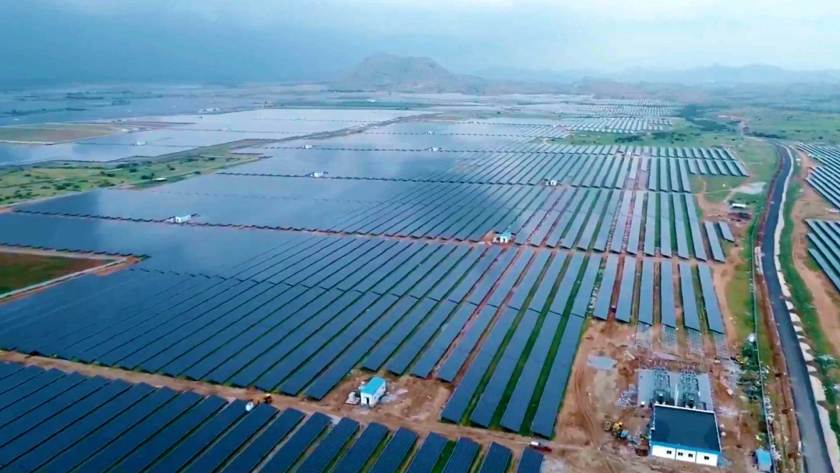
The recent demolishing of another Solar Farm, this time in Texas, means the meteorological community, if they had a lick of objectivity, should be pushing for temperature sensors as a requirement for the solar farms.
The recent demolishing of another Solar Farm, this time in Texas, means the meteorological community, if they had a lick of objectivity, should be pushing for temperature sensors as a requirement for the solar farms. This illustration:
from a Twitter handle, True Science illustrates precisely the concern. That we are creating a version of Heat Island on steroids with absolutely no regard for the impact. Have studies been done? They can’t be complete since the sample size has been so small. Yet it makes sense that if you want to replace the natural environment with an artificial one, there are going to be consequences.
It is akin to rushing forward with a vax with no long-term study or proof. There are going to be unintended (or perhaps, in this case, intended, since these things increase warming) consequences. See yet another COVID/ Climate link.
I propose that it be REQUIRED that weather stations be established at a height of 6 feet above the paneling to find out exactly what is going on with these. In an effort to “save” the environment”, it is entirely possible such large farms are harming it, or at the very least, the area that was once likely home to some form of vegetation and wildlife, if not an entire field of crops is being disrupted if not destroyed.
I recently went by car to Kansas City for the NCAA wrestling tournament and was alarmed at the number of open spaces paved over with panels. Why not just plant trees, given that each tree gets rid of 50 lbs of CO2? Trees have a cooling, not warming, effect. It’s the opposite of what these large farms do.
I don’t care what your stance on CO2 is, paving over large areas of what was open land subject to whatever nature had to provide and replacing it with what are urban heat islands on steroids IN RURAL AREAS is not being a good steward of the environment. It contributes extra warmth and is likely a magnet for enhanced severe weather. And I have to wonder if that is an intentional side effect. Of course, severe weather chasers may be dancing in the streets, but one has to wonder what is going to happen if insurance companies pick up on what might go on, that the very thing they are insuring these places from acts to increase the frequency of that occurrence.
One place we should never put these solar farms is anywhere near airports, given how they can impact the area. Airports with all their concrete now do so, but changing vertical velocity patterns on runway approaches is an invitation for problems.
Has anyone even done an environmental impact study on all this? If so, why is the lack of sensors and data-gathering instruments on these farms not a major issue?
As if we don’t have enough problems, we have people creating ways to fix a problem that isn’t there and, by doing so, creating problems. Where have we seen that before?
I am not anti solar panel. I like the idea of putting them on houses, for instance, as it empowers the individual to use that source for energy and cut down on his bills. And if you want to say you are lowering your carbon footprint, have at it.
But it’s another case, like my whole geothermal argument, where there is an avoidance of gathering data needed to see exactly what is going on. By ignoring that, it gives them a way to plausibly deny ( where have we heard that?) the source region of the real problem. And it is all because of a phony climate war.




You must be logged in to post a comment.