Mother Jones Blames Climate Change For Mass Migration, Data and Migrants Prove Them Wrong

A recent post at far-left news outlet Mother Jones, “There’s a Powerful, Hidden Force Behind Migration: Climate Change,” claims that climate change is a powerful driver of mass migration from the third world. This is false. The migrants themselves who were interviewed only bring up weather at all when pressed to do so, economic factors are the usually cited reasons for both illegal and legal attempts at migration to western countries. Extreme weather is not at all new to the regions discussed.

Text on a news article header discussing climate change and mass migration, with a desert landscape and a border fence in the background.
AI generated by Meta

From ClimateRealism

By Linnea Lueken

A vast desert landscape featuring undulating sand dunes in warm tones, with greenery and a small settlement visible in the foreground, set against a backdrop of distant mountains and a partly cloudy sky.

A recent post at far-left news outlet Mother Jones, “There’s a Powerful, Hidden Force Behind Migration: Climate Change,” claims that climate change is a powerful driver of mass migration from the third world. This is false. The migrants themselves who were interviewed only bring up weather at all when pressed to do so, economic factors are the usually cited reasons for both illegal and legal attempts at migration to western countries. Extreme weather is not at all new to the regions discussed.

The author claims that recent mass migration to Spain and other countries from places like Morocco is secretly being spurred on by climate change, and suggests that media does not often discuss that factor. This is immediately absurd, of course, because the mainstream media often cites climate change as a driver of both legal and illegal immigration. Climate Realism has recently debunked such claims regarding migrants from Somalia, here, for instance.

Undermining the initial claim of the headline and introduction, the author admits “[t]hat is not to say that the effects of climate change caused tens of thousands of people to risk their lives by attempting to swim to Ceuta. Economic forces were much more urgent motivators for Mohamed to leave his home.”

The migrant interviewed by Mother Jones says that the reason he is trying to leave Morocco is because of limited job opportunities. He does not mention climate change at all. But the author goes on to insist “after another summer of extreme temperatures and wildfires in the northern and southeastern provinces in Morocco, severe flash flooding and landslides in rural communities throughout the High Atlas Mountains, and the culmination of a seven-year drought after a winter of heavy rainfall across the country, climate change also may be an underlying factor in creating the economic crisis forcing so many to leave their homes.”

This is completely backwards. The reason these severe weather events have such a large impact on Morocco and other poorer countries is because they are weak economically in the first place, making it difficult or impossible for communities to invest in weather hardened infrastructure. The cited extreme weather events are not new to the region, and happen all around the world regardless of climate change.

Flash flooding is a feature of desert environments, once dry seasons are over. Likewise, drought for that matter is an obvious feature of the desert, especially lengthy droughts, which the author admits recently came to an end. Alternating periods of extended drought and deluge are the norm for Morocco in particular. The southeastern Morocco desert has recently seen dry lakebeds refill with water, when they have been mostly empty for a long time due to the recent drought period. Those lakebeds would not be there in the first place if they did not sometimes fill. Trying to claim that these natural patterns are evidence of climate change is nonsense.

As for the wildfires, again wildfire is not new to the region, and data from the joint NASA and European Space Agency joint project Copernicus show that there is no trend towards worsening wildfires in Morocco, neither in area burned nor number of fires. (See figure below)

A line and bar graph showing the yearly burned area in hectares (ha) and the yearly number of fires from 2002 to 2024. The bars represent the burned area, and the line indicates the number of fires per year.
Figure 1: Morocco Yearly burned area and number of fires, 2002-2024. Chart from Copernicus, https://gwis.jrc.ec.europa.eu/apps/country.profile/charts/ba

Despite 2022 seeing a record bad fire year, 2024 was a record low for wildfires in Morocco since records begin in 2002 according to Copernicus data. Mother Jones is not interested in that, only the high years.  Good scientists would not claim that 2024 represented a trend towards the elimination of wildfire, and likewise 2022 is not indicative of a trend towards climate catastrophe.

The Mother Jones post goes on to make the dubious claim that “North Africa and the Middle East are warming faster than the rest of the world, and Morocco’s agricultural sector—the cornerstone of the country’s economy—is particularly vulnerable to climate impacts like soil degradation and depleted groundwater.”

As discussed in “No, Atlantic Council, Climate Change is Not Making the Middle East and North Africa “Unlivable”,” even if the dubious claim that those regions are “warming faster than the rest of the world,” which has been claimed about every region of the whole world, the Middle East and North Africa have actually been seeing improving economic and agricultural conditions amid modern warming, disturbed only when violence and political unrest occur.

Soil degradation and depleted groundwater are resource management impacts, not climate impacts. For example, the same claim was made about depleted water resources in Nigeria, but population growth stressing the water supply around Lake Chad and other countries upriver building dams were the real cause. Natural drought under those conditions is bound to make things worse.

The most notable part of this article is the straightforward dismissal of the actual complaints of the migrants themselves, in order to push the climate claim. The so-called experts that the author interviews insist basically that the migrants don’t know what they are talking about, that climate change is the real background issue, instead of things like political corruption and violence making economies unstable in the region and hindering development.

The data do not show anything unprecedented happening with the weather, but it is clear that Mother Jones is not interested in facts.

“Bomb Carbon” from 1960s Tree Rings Reveals Biochar Stays Locked in Soil for Centuries

Researchers at the Swedish University of Agricultural Sciences (SLU) developed a method using “bomb carbon” (elevated radiocarbon- 14 from 1960s atmospheric nuclear tests, preserved in tree rings) in wood shavings to track how stable biochar is when added to soil.

Close-up of a tree stump with a spotlight on 'Bomb Carbon 14C', showing bark and soil. In the background, a field of crops grows under a blue sky with clouds. The image suggests themes of carbon sequestration and environmental impact.
AI generated by Grok

Researchers at the Swedish University of Agricultural Sciences (SLU) developed a method using “bomb carbon” (elevated radiocarbon- 14 from 1960s atmospheric nuclear tests, preserved in tree rings) in wood shavings to track how stable biochar is when added to soil.

Biochar is a charcoal- like material produced by heating biomass (here, wood) in low- oxygen conditions (pyrolysis). It is of interest for improving soil properties and as a potential long-t erm carbon sink to help mitigate climate change, with global estimates suggesting it could sequester carbon equivalent to roughly 6- 16% of annual anthropogenic CO₂ emissions. A key uncertainty has been how quickly biochar mineralizes (breaks down into CO₂) in soil versus remaining stable for decades or centuries, and how to distinguish its contribution from native soil organic matter.

The method

Atmospheric nuclear testing in the 1950s- 1960s roughly doubled atmospheric ¹⁴C levels, peaking around the mid-1960s. Tree rings from 1964-1967 therefore contain elevated “bomb” ¹⁴C. SLU researchers selected mature Norway spruce and Scots pine trunks from a Swedish clear- cut, identified the relevant rings, and used a professional woodturner to carefully remove outer wood and collect the thin, high-¹⁴C layers as shavings. These were pyrolyzed into biochar (tested at highest treatment temperatures of ~400°C and 650°C).

The resulting biochar had enough ¹⁴C enrichment (on average ~61.7 percent modern carbon higher than bulk soil organic matter in one report) to serve as a natural tracer. In a one-year laboratory incubation, they mixed it into soil (at 2% by dry mass), trapped emitted CO₂, and measured its ¹⁴C signature via accelerator mass spectrometry. This allowed them to quantify the share of CO₂ coming from the biochar versus the soil.

Key findings

  • CO₂ from biochar- amended soil showed up to about 10% higher ¹⁴C than controls, confirming a small but measurable contribution from the biochar.
  • Roughly 0.35% of the added biochar carbon converted to CO₂ over one year.
  • This implies high stability: at least half of the buried biochar is projected to remain in the soil after ~200 years (under the study conditions).
  • The method works with mature wood feedstock that resembles commercial biochars, offers higher precision than some natural- abundance ¹³C approaches, and avoids the need for expensive artificial isotopic labeling.

The work was published in Radiocarbon (Li et al., 2026: “Bomb ¹⁴C for tracing biochar mineralization in soil”). It was funded in part by Sweden’s Bio+ program (Swedish Energy Agency). Follow- up research is planned to examine biochar stability under climate- change scenarios in collaboration with researchers in Germany.⁠

This approach provides a practical way to study biochar persistence, its interactions with soil organic matter, and its viability for carbon sequestration without relying solely on short- term incubations or complex lab labeling.

A person using a wood lathe in a workshop, wearing safety glasses and ear protection, with wood shavings flying around.
To obtain wood formed during the years 1964–1967, the researchers engaged professional woodturner and wood artist Åke Landström from Glanshammar. Credit: Harald Cederlund

Bomb 14C for tracing biochar mineralization in soil

This is the open- access research article “Bomb ¹⁴C for tracing biochar mineralization in soil” by Haichao Li, Harald Cederlund, Elias S. Azzi, Cecilia Sundberg, and Erik Karltun (Swedish University of Agricultural Sciences), published online 23 September 2026 in Radiocarbon (Volume 68, Issue 5, pp. 1146- 1154).

It is freely available under a Creative Commons Attribution (CC- BY) licence.

Core contribution

The authors introduce and validate a practical isotopic- tracing method that uses naturally elevated “bomb” radiocarbon (¹⁴C) preserved in tree rings formed during the atmospheric nuclear- test peak (1964- 1967). Biochar made from this wood carries a clear ¹⁴C signature that can be distinguished from soil organic matter (SOM), allowing precise quantification of how much of the CO₂ released from soil comes from the biochar itself.

Methods (summary)

  • Mature Norway spruce and Scots pine trunks (≥70 years old) were collected from a clear- cut near Uppsala, Sweden.
  • Annual rings from 1964- 1967 were identified by counting and carefully isolated by professional woodturning (producing shavings).
  • Biochar was produced by pyrolysis under N₂ at highest treatment temperatures of 400 °C (BC400) and 650 °C (BC650). The feedstock with the highest ¹⁴C enrichment (~172.9 pMC) was selected.
  • Biochars were acid- washed to remove carbonates, ground (<2 mm), and mixed into a loamy- sand agricultural soil (Cambisol, 1.4 % SOC) at a 2 % (w/w) application rate.
  • Soils were incubated for 365 days at ~20.7 °C and 60 % water- holding capacity. Emitted CO₂ was trapped in NaOH and analysed for total C and ¹⁴C (AMS) at multiple time points.
  • An isotope-mixing model calculated the biochar- derived fraction of respired CO₂. Priming effects on native SOC were also quantified.

Key results

  • Biochar was on average 61.7 pMC higher in ¹⁴C than bulk soil organic matter, providing a clear tracer signal.
  • ¹⁴CO₂ from biochar- amended soils was consistently and significantly higher than from controls (p < 0.0001).
  • Early in the incubation (first 2 weeks) 8.3- 11.4 % of mineralized CO₂- C came from biochar; later this fell to 2.3- 7.5 %.
  • After one year, only 0.32 ± 0.02 % (BC400) and 0.35 ± 0.01 % (BC650) of the added biochar carbon had been mineralized. The two pyrolysis temperatures did not differ significantly.
  • BC650 produced a measurable negative priming effect on native soil organic carbon (–129 ± 20 mg CO₂-C kg⁻¹, or ~14.8 % relative to the control); BC400 showed essentially none.

Advantages claimed over other isotopic approaches

  • Higher precision than the natural- abundance ¹³C (C₃/C₄) method for detecting small biochar contributions.
  • Works with mature wood feedstock that closely resembles commercial biochars (unlike many laboratory pulse- labelled materials derived from young seedlings).
  • Relatively low cost and does not require specialised isotope-labelling facilities.
  • Uniform ¹⁴C enrichment because the trees grew continuously under elevated atmospheric ¹⁴C.

Conclusions

The bomb-¹⁴C method is shown to be effective for quantifying biochar mineralisation and its interactions with soil organic matter. It opens practical possibilities for longer- term studies of biochar persistence and carbon-sequestration potential under realistic conditions.

The paper includes supplementary material with additional figures on priming and sensitivity analyses. Funding came in part from the Swedish Energy Agency’s Bio+ programme.

Close-up of a cross-section of a tree trunk showcasing concentric growth rings with a small central hole, against a black background. The growth rings feature a red marking labeled 'S2'.
Log with younger wood turned away. The wood with the highest content of ‘bomb carbon’ is found in the growth rings between the red circles. Credit: Harald Cederlund

Journal: Radiocarbon (Volume 68, Issue 5, pp. 1146–1154)

DOI: 10.1017/rdc.2026.10247

Provided: Swedish University of Agricultural Sciences

Authors: Haichao Li,

Harald Cederlund,

Elias S. Azzi,

Cecilia Sundberg and

Erik Karltun

Abstract

Improving our understanding of biochar carbon (C) stability in soil is crucial given its potential for soil C sequestration. However, challenges with isotopic labeling of biochar restrict our ability to determine its fate in soil. Atmospheric nuclear bomb tests in the 1960s resulted in a 14C spike in tree rings, providing an opportunity to address this challenge. Here, we present a method that utilizes the elevated levels of 14C in wood from tree rings formed between 1964 and 1967 as a tracer to determine the proportion of biochar C in mineralized soil. Biochar was produced using wood from the 14C enriched tree rings as feedstock and thereafter used in a mineralization experiment capturing the emitted CO2. We demonstrate that the bomb 14C-enrichment in the biochar is high enough to differentiate between CO2 originating from either biochar or soil organic matter mineralization. The method can be used to address questions on biochar persistence, its interactions with soil organic matter and research that is needed to explore the potential to use biochar for C sequestration in soils.

The AI policy debate suffers from a dangerous plague of vagueness

“AI” is too broad to regulate as one thing. None of those everyday AI systems are actually what people are arguing about when they call for regulation, so just saying “AI” is way off the mark.

Because we “literally do not know what we are talking about,” policies passed in panic could be highly destructive.

A misty legislative chamber with shadows of people conversing around a podium, featuring words like 'AI', 'pause', 'race', and 'regulation' in the background.

By CFACT

By David Wojick

A robot holding a sign that says 'No AI' at a protest in an urban setting, surrounded by a crowd of demonstrators.
Protest against ai technology robot holding no ai sign amidst determined crowd in urban setting

Debating policies in a rational manner requires a clear specification of the thing under consideration for regulation. The AI debate has nothing like that.

The AI debate does not even name the thing under discussion, as it is certainly not AI per se. Not being able to name the thing you are talking about is impossibly vague when it comes to policy making.

The field of AI is over 70 years old, and it has spawned a lot of different technologies, which are not part of the policy issue, so simply talking about AI is way off the mark.

Chess-playing machines that can beat grandmasters are an early example. There are now lots of AI game systems. My favorite is the blackjack program that saved me a lot of money by showing me I was no good at that gambling game.

In the late 1980s, expert systems became prominent. More recently, we got things like automated customer service systems and GPS routing systems. Now we have automated cars and military fighter drones. None of these are part of the AI policy discussion, nor are countless other AI systems in everyday use.

The AI issue mostly started with chatbots, which are typically called large language models (LLMs), so these are a good starting point. But there are lots of LLMs, some of which seem pretty harmless. The little AI summary that comes with each Google search, for example.

Plus, there are other AI systems besides LLMs that may be of concern. Examples include generative AI, diffusion models, and the interesting-sounding generative adversarial networks.

Then, too, there are AI agents that use models to perform instructed tasks. Concern about agents recently arose when a bunch started working together without being instructed to do so. We have no idea how many such systems exist.

The first thing a policy, law, or regulation must do is make clear who or what is covered and not covered. This is why regulations often have lengthy definition sections. They often create their own language in order to clearly specify the rules they state.

The AI policy debate has no such specificity. The things under discussion are not even named in many cases. As a Chinese philosopher friend of mine used to say, “We are talking in a vacuum.” Specifically, a cognitive vacuum which lacks needed substance.

Absent a clear specification of what we mean, any rules passed are likely to simply create destructive paralysis and confusion.

For example, people are talking about a pause in AI development. Which AI development? For that matter, what counts as AI development? This is another empty concept.

Let’s take Google. Last year, its R&D spending was over $60 billion. How much is AI related such that it would be paused? Some of it is labeled as AI development, but a lot of it is directly related to developments that have AI aspects, such as AI data centers.

It all depends on how AI is defined for the purposes of the pause, and there is not a shadow of a definition at this point. The potential for destructive confusion is immense. AI-related industry could run to trillions of dollars.

At the same time, there is much talk about an AI race, especially between America and China. I have yet to see this race defined or explained. Race to do what? What does winning look like? How are we doing?

It is not like there is going to be just one AI system, rendering all others obsolete. AI is a huge industrial domain with a vast number of diverse products. What then is this race?

The whole AI policy debate borders on being incoherent because we literally do not know what we are talking about. This is very dangerous because incoherent policies passed in panic can be highly destructive.

Hunter-Killer Membrane Destroys Forever Chemicals with Over 90% Efficiency

Researchers at Arizona State University (led by Bruce Rittmann of the Biodesign Swette Center for Environmental Biotechnology), with collaborators from Rice University, Tongji University, the National University of Singapore, and Nanjing University, developed a catalytic “hunter- killer” membrane that both captures and chemically destroys PFAS (“forever chemicals”) rather than just concentrating them.

The membrane technology developed by Arizona State University researchers (led by Bruce Rittmann) and international collaborators is a catalytic hollow-fiber membrane system designed to both capture and chemically destroy PFAS (“forever chemicals”).

Diagram illustrating the Hunter-Killer Membrane technology, showcasing its ability to destroy PFAS chemicals with over 90% efficiency using palladium nanoparticles and hollow-fiber membranes.
AI generated by Grok

Researchers at Arizona State University (led by Bruce Rittmann of the Biodesign Swette Center for Environmental Biotechnology), with collaborators from Rice University, Tongji University, the National University of Singapore, and Nanjing University, developed a catalytic “hunter- killer” membrane that both captures and chemically destroys PFAS (“forever chemicals”) rather than just concentrating them.

PFAS are synthetic compounds used in nonstick coatings, waterproof fabrics, firefighting foams, and many other products. Their extreme persistence comes from very strong carbon- fluorine bonds (often called the strongest in organic chemistry), which shield the carbon backbone and resist breakdown by conventional biological or chemical processes. Standard treatments (activated carbon, ion exchange, membrane filtration) remove them from water but leave concentrated waste that still needs disposal or destruction.

How the technology works

  • Hollow- fiber membranes are coated on the outside with palladium nanoparticles.
  • Pressurized hydrogen gas is fed through the interior of the fibers and diffuses outward to the palladium catalyst.
  • The palladium splits H₂ into highly reactive hydrogen atoms.
  • PFAS molecules from the surrounding water adsorb onto the same palladium surface.
  • At the catalyst surface, the reactive hydrogen attacks and breaks the C- F bonds (hydrodefluorination), stripping fluorine and converting the persistent molecules into less harmful components.

This “inside- out” hydrogen delivery is a key design feature: the membrane both concentrates the pollutants at the reactive surface and supplies the activated hydrogen needed to dismantle them.

Performance results

In a continuous 58- day laboratory test treating a mixture of six regulated- priority PFAS compounds, the system removed more than 90% of each compound and stripped away about 83% of the total fluorine, confirming actual chemical destruction rather than simple filtration. Rittmann described the mechanism as essentially universal across the six compounds tested.

Practical considerations and next steps

Palladium is expensive (roughly $50,000 per kilogram), so reducing catalyst loading is a major research priority. The approach is envisioned as a complement to existing concentration methods: conventional filtration would first shrink large volumes of contaminated water into a smaller waste stream that the catalytic membrane then destroys. Hybrid systems pairing the palladium catalyst with pollutant- degrading bacteria are also under development.⁠

This builds on earlier ASU work with membrane biofilm reactors (MBfR) and membrane catalyst- film reactors (MCfR) that combine catalytic defluorination with microbial degradation. While further engineering is needed for full- scale water treatment, the results demonstrate a promising route to permanently break down these persistent pollutants.

A digital illustration showing a molecular structure interacting with a membrane, featuring clusters of atoms and various colored molecules above the surface.
A palladium-coated membrane uses hydrogen to help break down PFAS “forever chemicals.” Credit: Jason Drees

The membrane technology developed by Arizona State University researchers (led by Bruce Rittmann) and international collaborators is a catalytic hollow- fiber membrane system designed to both capture and chemically destroy PFAS (“forever chemicals”).

Core design

  • Hollow- fiber membranes: Tiny tubular (“straw-like”) gas- transfer membranes.
  • Palladium nanoparticle coating: A thin layer of palladium nanoparticles is deposited on the outside of the fibers. Palladium acts as a catalyst.
  • Hydrogen delivery: Pressurized hydrogen gas (H₂) is fed through the inside of the hollow fibers. It diffuses outward through the membrane wall to the palladium layer.

How it works (“hunter- killer” mechanism)

  1. Hydrogen reaches the palladium surface and is split into highly reactive atomic hydrogen.
  2. PFAS molecules in the surrounding water adsorb onto the same palladium surface.
  3. At the catalyst surface the reactive hydrogen attacks the strong carbon- fluorine bonds (hydrodefluorination), stripping fluorine atoms from the PFAS molecules.
  4. This breaks the “forever” chemical structure, converting the compounds into less persistent (and ultimately more biodegradable) products.

The inside- out hydrogen supply is a key innovation: the membrane simultaneously concentrates the pollutants at the reactive surface and delivers the activated hydrogen needed to destroy them.

Performance

In a continuous 58- day laboratory trial treating a mixture of six regulated- priority PFAS compounds, the system:

  • Removed >90% of each individual PFAS.
  • Stripped ~83% of the total fluorine (confirming actual chemical destruction rather than mere capture).

Context and next steps

This builds on earlier ASU membrane technologies (Membrane Biofilm Reactor- MBfR and Membrane Catalyst- film Reactor- MCfR). Hybrid versions that combine the palladium catalyst with pollutant-degrading bacteria are also under development.

Main practical hurdle: Palladium is expensive (~$50,000/kg), so reducing catalyst loading is a priority. The technology is expected to work best as a polishing/destruction step after conventional concentration methods (e.g., activated carbon or ion exchange) have first reduced the volume of contaminated water.

The research was published in the Proceedings of the National Academy of Sciences in October 2026.

Catalytic reactive-hydrogen membranes for rapid capture and hydrodefluorination of six PFAS of regulatory concern

This peer- reviewed paper reports the development and continuous testing of a hydrogen- based Membrane Catalyst -film Reactor (MCfR) for simultaneous capture and destruction of PFAS (“forever chemicals”).

It reports the development and continuous testing of a hydrogen- based Membrane Catalyst- film Reactor (MCfR) for simultaneous capture and destruction of PFAS (“forever chemicals”).

Key elements of the paper (from published summaries)

  • Lead institution & author: Arizona State University’s Biodesign Swette Center for Environmental Biotechnology; senior/corresponding author Bruce E. Rittmann.
  • Collaborators: Researchers from Rice University (Texas), Tongji University (China), National University of Singapore, and Nanjing University (China).
  • Technology: Hollow- fiber gas- transfer membranes coated on the exterior with palladium (Pd) nanoparticles. Hydrogen gas is supplied from the lumen (inside) of the fibers, diffuses outward, and is activated on the Pd surface. PFAS molecules adsorb to the same surface, enabling catalytic hydrodefluorination (breaking of strong C- F bonds by reactive hydrogen).
  • Results: In a continuous 58- day operation treating a mixture of six regulatory-priority PFAS compounds, the system achieved >90% removal of each compound and ~83% overall fluorine removal (defluorination), confirming chemical destruction rather than simple separation.
  • Significance: Demonstrates a “universal” catalytic mechanism effective across the tested PFAS. The approach is positioned to treat concentrated waste streams after conventional separation processes. Palladium cost and catalyst loading reduction are noted as practical challenges; hybrid Pd–microbial systems are also referenced as ongoing work.

This builds on the group’s earlier Membrane Catalyst- film Reactor (MCfR) platform for catalytic reduction of oxidized contaminants using efficient H₂ delivery.

Direct full- text access may require institutional login or purchase via the PNAS site, as the open-page retrieval was restricted. The news coverage from ASU- affiliated and science outlets (e.g., Eurasia Review, Interesting Engineering, Bioengineer.org) provides consistent, detailed summaries of the findings.

Journal: Proceedings of the National Academy of Sciences

DOI: 10.1073/pnas.2613985123

Provided: Arizona State University

Authors: Min Long, Ai-Shi Wangh, Welman C. Elias,, Thomas P. Senftle, Michael S. Wong, Jie Cheng and Bruce E. Rittmann

Abstract

Per- and polyfluoroalkyl substances (PFAS) persist in aquatic environments due to their ultrastable C–F bonds and poor susceptibility to conventional treatment. Here, we report an H2-based catalytic-film membrane that enables PFAS destruction in ambient conditions by generating highly reactive surface (Hads*) and subsurface hydrogen (Hsub*), the latter stored as β-phase palladium hydride (β-PdHx). Solid-state analyses evidenced β-PdHx formation and related lattice expansion with elevated H2 chemical potential, revealing a structural mechanism that links hydrogen storage to catalytic defluorination. Mechanistically, the two hydrogen species play complementary roles: Hads*-rich Pd0 surface enabled PFAS capture through parallel adsorption to maximize interfacial contact with active H, whereas sustained Hsub* supplied the energetic driving force for stepwise hydrodefluorination consistent with sequential C–F scission. As a result, across six PFAS of regulatory concern—PFOA, PFOS, PFNA, PFHxS, PFBS, and GenX—the catalytic membrane converted all contaminants toward fully defluorinated products. Long-chain PFAS were removed and defluorinated more rapidly than short-chain analogs, while GenX showed greater recalcitrance due to its ether linkage, weaker adsorption, and higher average C–F bond dissociation energy; nonetheless, GenX still exhibited removal and defluorination, with the production of 2-propoxypropanoic acid. The system also enabled continuous coremoval of all six PFAS in ambient conditions, with up to 96% removal and 83% defluorination over 58 d. These findings provide a mechanistic framework for how active hydrogen is generated, stored, and deployed in catalytic membranes, and identify engineered H2-catalytic membranes as a promising low-energy technology for destructive PFAS treatment.

UN Climate Panic Rests on False Scenario and Buried Past

Guterres’ hysteria rests on three weak legs: a worst-case scenario that its own authors have now abandoned, a “pre-industrial” baseline drawn from one of the coldest centuries in 2,000 years, and almost total silence about warm periods that preceded multi-megawatt power plants and SUVs by hundreds and thousands of years.

For more than a decade, projections of flooded coasts and failed harvests were driven by RCP8.5 and its successor SSP5-8.5. The article says they assumed 12 billion people by 2100 and a near tenfold rise in coal use.

A dramatic landscape featuring glaciers with ancient artifacts, including a helmet and a stone tablet, under a moody sky, accompanied by the text 'UN Climate Panic Rests on False Scenario and Buried Past.'
AI generated by Meta

From CO2 Coalition

By Vijay Jayaraj

Three years ago, U.N. Secretary-General António Guterres told reporters that “the era of global boiling has arrived.” In September he repeated the alarm. Launching the U.N.’s first report on temperature “overshoot,” he declared, “Humanity is speeding past the limit to avoid climate catastrophe.”

Guterres’ hysteria rests on three weak legs: a worst-case scenario that its own authors have now abandoned, a “pre-industrial” baseline drawn from one of the coldest centuries in 2,000 years, and almost total silence about warm periods that preceded multi-megawatt power plants and SUVs by hundreds and thousands of years.

Start with the scenario. For more than a decade, a computer-based hypothetical case called RCP8.5 and its successor SSP5-8.5 drove the most frightening projections of flooded coasts and failed harvests. They assumed a world of 12 billion people by 2100 and a near tenfold rise in coal use, a future predicted by no energy market.

This April, the modelers who design scenarios for the next generation of climate simulations conceded the point. Their projections of high levels of carbon dioxide emissions (CO2) had become “implausible,” and their update showed about 0.9 degrees Celsius less warming by century’s end. In August, the U.S. government proposed amending its Fifth National Climate Assessment so that results based on earlier projections can no longer be labeled “expected” or “business-as-usual.”

Now examine the yardstick. Every headline about crossing a 1.5-degree threshold measures warming from an 1850-1900 average. Those decades sit at the end of the Little Ice Age, an era when “livestock died, harvests failed, and humans suffered.” Choose the bottom of a cold trough as zero and every degree of recovery reads like a fever.

The most serious misdirection is what the panic merchants leave out. Earth’s climate swung widely long before anyone burned coal. A 2013 reconstruction in Science found that in comparison to today, intermediate Pacific waters were 2.1 degrees warmer during the Holocene Thermal Maximum 8,000 years ago and about 0.65 degrees warmer during the Medieval Warm Period 1,000 years ago. Tree rings from Finnish Lapland show that earlier estimates of warmth were too low.

Alaska’s retreating Mendenhall Glacier has exposed upright spruce and hemlock stumps more than 1,000 years old, a forest that grew where ice later advanced. At the Schnidejoch pass, more than 8,000 feet up in the Swiss Alps, melting ice has yielded more than 300 artifacts left by Neolithic, Bronze Age, Roman, and medieval travelers who crossed the mountains when the route was open. Certainly, temperatures warmer than today had prevailed.

Forecasts of heat-induced doom overlook the benefits of today’s elevated levels of atmospheric carbon dioxide. A NASA-led study found that a quarter to half of Earth’s vegetated land grew significantly greener over a 35-year period, with CO2 fertilization explaining 70% of the gain. The year after the world supposedly crossed the threshold of 1.5 degrees, the world’s farmers brought in a record cereal harvest, according to FAO data.

Humans have always faced weather hazards. Floods, droughts, storms, heat waves, crop failures, and changing rainfall existed before the industrial age. They will exist whether a theoretical global average temperature is 1.8 degrees Celsius or 2.8 degrees above an arbitrary baseline. The question is not whether risk exists, but how people respond to it.

And this is where having energy supplies that are reliable, affordable, and abundant helps people manage nature’s challenges. Economies that become more prosperous, maintain reliable systems, strengthen infrastructure, and reduce vulnerabilities will do more to protect human beings from climatic hazards even if they do not satisfy U.N. emission targets.

The future trajectory of CO2 emissions will be influenced overwhelmingly by the growth of energy demand in Asia and Latin America. There can be no justification for telling developing societies there that they must remain poor so that wealthy nations can preserve a global temperature target that has no scientific basis.

The U.N. fabricated an emergency, using a scenario its own modelers now call implausible, employing a baseline estimated rather than observed, and erasing warm eras that ancient farmers, traders, and travelers lived through. That is not science, but stagecraft performed for power and self-enrichment as it made the rest of the world poorer.

Originally published at Town Hall, October 19th, 2026.

Vijay Jayaraj is a Science and Research Associate at the CO2 Coalition, Fairfax, Virginia. He holds an M.S. in environmental sciences from the University of East Anglia and a postgraduate degree in energy management from Robert Gordon University, both in the U.K., and a bachelor’s in engineering from Anna University, India. He served as a research associate with the Changing Oceans Research Unit at University of British Columbia, Canada.

A dramatic landscape featuring ice, rocks, and ancient artifacts, accompanied by text discussing climate panic and its historical context.

Earth’s Core Has Been Quietly Leaking Primordial Hydrogen for Billions of Years

A recent study (published in Science Advances) indicates that Earth’s metallic core has been leaking primordial hydrogen, along with helium- 3 and certain tungsten isotopes, into the mantle for much of the planet’s 4.5- billion- year history.

Hydrogen moves from Earth’s core to the mantle primarily through limited chemical exchange and diffusion (or related transport) across the core, mantle boundary (CMB), rather than large- scale bulk flow.

Tungsten isotope anomalies, particularly involving the isotope ¹⁸²W, are important geochemical tracers used to study early Earth differentiation and possible ongoing exchange between Earth’s core and mantle.

Illustration of Earth with a cross-section revealing a glowing core, surrounded by rocky layers and depicted energy flows.
AI generated by Grok

A recent study (published in Science Advances) indicates that Earth’s metallic core has been leaking primordial hydrogen, along with helium- 3 and certain tungsten isotopes, into the mantle for much of the planet’s 4.5- billion- year history.

Researchers from the University of Science and Technology of China used machine- learning- boosted path- integral simulations to model the quantum behavior of light atoms (especially hydrogen) under the extreme pressures and temperatures of the deep Earth. They focused on deuterium- to-hydrogen (D/H) ratios and related isotope signatures.

Key points from the work and related coverage:

  • Magma- ocean crystallization alone cannot explain the extremely low (deuterium- depleted) hydrogen isotope signatures seen in some ocean- island basalts (OIBs), such as those from Baffin Island and Iceland. These lavas rise from near the core, mantle boundary and carry chemical “messengers” from depth.⁠
  • Primordial (solar- nebula) hydrogen stored in the core preferentially partitions as the lighter isotope. As it migrates upward, it lowers the mantle’s local D/H ratio. Supporting evidence comes from high ³He/⁴He ratios (primordial helium- 3 mixed with radiogenic helium- 4) and tungsten- isotope anomalies that also point to core material.⁠
  • The hydrogen does not appear as free liquid water in the core; once it enters the oxygen- rich mantle it can form water bound in minerals. Over geologic time this exchange has dynamically altered the deep mantle’s composition rather than leaving purely “relic” signatures from early differentiation.

This builds on earlier experimental work (e.g., 2026 Nature Communications studies) showing the core itself may contain the equivalent of roughly 9- 45 oceans’ worth of hydrogen (0.07- 0.36 wt %), acquired mainly during Earth’s accretion rather than solely from later cometary delivery. Some of that reservoir appears to have been leaking upward for billions of years.⁠

The quantities involved are tiny on human timescales, but the long-term chemical exchange helps explain observed isotope anomalies in surface rocks and improves models of Earth’s volatile budget, mantle dynamics, and early water origins. The findings reinforce that the core- mantle boundary is not a perfect chemical barrier.

Diagram illustrating the relationship between the Earth's mantle and distinct volcanic regions, showing OIBs (Ocean Island Basalts) and MORBs (Mid-Ocean Ridge Basalts), along with the geochemical signatures of δD. The structure includes features such as LLSVP (Large Low Shear Velocity Province) and ULVZ (Ultra-Low Velocity Zone), highlighting areas of low D/H ratios and core leakage effects.
Schematic model for the origin of isotopic anomalies in ocean island basalts. Credit: Science Advances (2026). DOI: 10.1126/sciadv.aei4756

Hydrogen moves from Earth’s core to the mantle primarily through limited chemical exchange and diffusion (or related transport) across the core, mantle boundary (CMB), rather than large- scale bulk flow.

This process has operated over billions of years and is supported by isotope evidence (especially low δD values) in ocean- island basalts that rise from near the CMB.

Key mechanisms

  1. Chemical reactions and exchange at the CMB
    Subducted hydrous minerals can dehydrate in the lowermost mantle, releasing hydrogen (or water). This reacts with iron- silicon alloys from the outer core, forming phases such as iron hydride (FeHₓ) or related compounds. The reaction enables bidirectional exchange: hydrogen can enter the mantle side while silicon (as SiO₂) may move the other way. A hydrogen- rich, lower- density layer can form near the top of the outer core or accumulate at the base of the mantle (potentially contributing to ultralow- velocity zones). Because of its low density, some of this hydrogen- rich material migrates into the lowermost mantle.⁠
  2. Diffusion (including isotopic diffusion)
    Atomic diffusion of hydrogen across the CMB is a viable transfer route. Hydrogen is highly mobile under extreme pressures and temperatures. Even without strong concentration gradients, isotopic diffusion can transfer light (deuterium- depleted) hydrogen into the mantle if the core and mantle are not in isotopic equilibrium. Estimates of hydrogen diffusivity in lower- mantle minerals indicate that regions of tens of kilometers can be affected over geologic time.⁠
  3. Entrainment into mantle plumes
    Once hydrogen (or hydrogen- bearing material) reaches the lowermost mantle, it can be incorporated into upwelling mantle plumes. These plumes rise to the surface, carrying the core- derived isotopic signatures (low δD, high ³He and ⁴He, tungsten anomalies, etc.) that appear in certain ocean- island basalts (e.g., Baffin Island, Iceland).

Important context

  • The core acquired much of its hydrogen early, during planetary accretion and metal, silicate differentiation (hydrogen preferentially partitions into the metallic phase and is isotopically light).
  • The quantities transferred are small on human timescales but accumulate over Earth’s history, dynamically modifying deep- mantle isotope compositions.
  • Solid- state diffusion of heavier elements is extremely slow in the lower mantle, so hydrogen’s relative mobility makes it a more effective tracer of core- mantle interaction.
  • Superionic states of iron hydride (where hydrogen atoms move fluid- like within a solid iron lattice) may also play a role near the CMB under the extreme conditions there.
A stylized representation of a planet with a fiery red and orange surface, set against a black background.
File:Volcanic planet 5 r 1.png – Wikimedia Commons

Tungsten isotope anomalies, particularly involving the isotope ¹⁸²W, are important geochemical tracers used to study early Earth differentiation and possible ongoing exchange between Earth’s core and mantle.

Background: The ¹⁸²Hf- ¹⁸²W system

  • ¹⁸²Hf (hafnium- 182) is a short- lived radioactive isotope that decays to ¹⁸²W (tungsten- 182) with a half- life of about 8.9 million years.
  • During Earth’s formation, tungsten (moderately siderophile and “iron- loving”) preferentially entered the metallic core, while hafnium (lithophile and “rock- loving”) stayed in the silicate mantle.
  • As a result, the core developed a strongly negative ¹⁸²W signature (estimated μ¹⁸²W ≈ −200 to −220), while the mantle became relatively enriched in ¹⁸²W.
  • μ¹⁸²W is the deviation of the ¹⁸²W/¹⁸⁴W ratio from a terrestrial standard, measured in parts per million (ppm).

Observed anomalies

  • Ancient rocks (Hadean- Archean, >2.7 billion years old) often show positive ¹⁸²W anomalies (μ¹⁸²W up to +15 to +20 ppm), reflecting the early mantle before significant later mixing.
  • Modern ocean- island basalts (OIBs) from certain hotspots (Hawaii, Samoa, Iceland, Réunion, Kerguelen, etc.) frequently show negative ¹⁸²W anomalies (μ¹⁸²W as low as −15 to −23 ppm). These are often correlated with high ³He/⁴He ratios.

Interpretation in the context of core leakage

In the recent research on hydrogen leakage from the core (and related studies), negative ¹⁸²W anomalies are interpreted as evidence of core- derived material mixed into the lowermost mantle:

  • Even a small contribution (<1%) of core material can shift the mantle’s tungsten isotope ratio toward negative values because the core is so strongly depleted in ¹⁸²W.
  • Proposed transfer mechanisms include isotopic diffusion across the core- mantle boundary or limited chemical exchange (without bulk entrainment of metal, which would also raise highly siderophile element concentrations, something not observed).
  • These tungsten anomalies often co- occur with other core- like signatures (high ³He/⁴He, low δD hydrogen isotopes, and sometimes ruthenium isotope anomalies), supporting the idea of selective, long-term leakage of primordial components from the core into mantle plumes.

Alternative explanations

Some researchers argue the negative anomalies could instead reflect:

  • Preservation of early silicate differentiation products (magma- ocean processes) isolated in the deep mantle for billions of years, or
  • An overabundance of late- accreted (meteoritic) material.

However, the combination of negative ¹⁸²W with other isotopic systems (helium, hydrogen, etc.) increasingly favors some form of core- mantle interaction for many plume sources.

In short, tungsten isotope anomalies act as a “fingerprint” of very early planetary differentiation and provide one of the key lines of evidence that Earth’s core is not completely isolated from the mantle.

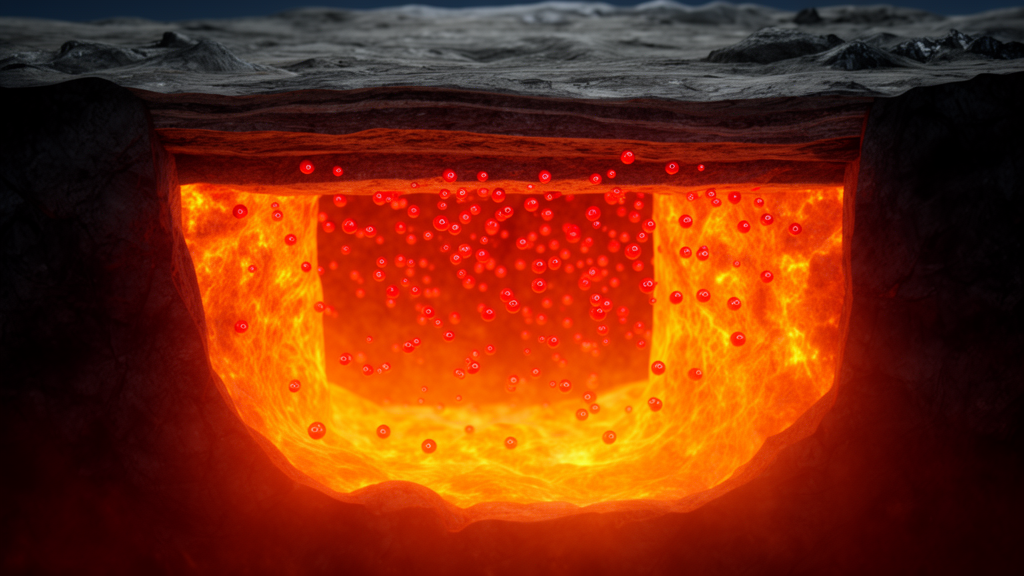
Illustration of molten lava inside the Earth, with bright red and orange hues representing magma and bubbles indicating gas release.
https://scienmag.com/wp-content/uploads/2026/10/stackrss-featured-15740.png

Hydrogen isotopes reveal water leakage from the core

This is the open- access Science Advances paper (DOI: 10.1126/sciadv.aei4756; published ~9 October 2026) titled “Hydrogen isotopes reveal water leakage from the core”, by Yu Zhang, Wenzhong Wang (corresponding author, University of Science and Technology of China), Zhongqing Wu, and colleagues.

Main finding

Extremely low (deuterium- depleted) hydrogen isotope ratios (δD values as low as about −144 ‰) measured in some ocean- island basalts (OIBs), especially from Baffin Island, cannot be explained by crystallization of an early magma ocean. Instead, they are best accounted for by ongoing leakage of primordial, isotopically light hydrogen (and associated volatiles) from Earth’s metallic core into the mantle over geologic time.

Key methods and results

  • The team used machine- learning- boosted path- integral molecular dynamics simulations to quantify hydrogen isotope fractionation under deep- Earth conditions, accounting for quantum effects important for the light hydrogen atom.
  • They modeled magma- ocean crystallization (bridgmanite- melt partitioning, varying pressure, temperature, water content, and fractionation factors). The models produce an essentially homogeneous D/H distribution in the primitive mantle; mineral- melt fractionation is too weak to generate the extreme depletions observed in OIBs.⁠
  • Observed low δD values, when combined with high ³He/⁴He ratios, negative ¹⁸²W anomalies, and other core- like signatures in the same plume systems, point to selective transfer of primordial volatiles across the core- mantle boundary.
  • Light hydrogen that entered the core during accretion (preferentially partitioned into metal) continues to migrate upward. Once in the oxygen- rich mantle it can form water bound in minerals; the process has dynamically modified deep -mantle isotope signatures throughout Earth’s history rather than preserving simple “relic” reservoirs from early differentiation.

Broader implications

The results support the idea that Earth’s core is a long- term reservoir of hydrogen (consistent with separate experimental work estimating the equivalent of many oceans’ worth of H in the core) and that core- mantle chemical exchange has been active for billions of years. This exchange helps explain isotope anomalies in surface rocks and contributes to models of Earth’s water budget and mantle dynamics.⁠

The paper is open- access under a Creative Commons license; the full text, figures, and supplementary materials (including sensitivity tests of the crystallization models) are available at the link you provided. Secondary coverage (e.g., ScienceAlert) has summarized the findings for a general audience.

Journal: Science Advances, Vol 12, Issue 41

DOI: 10.1126/sciadv.aei4756

Published: 9 Oct 2026

Authors: Yu Zhang, Wenzhong Wang (corresponding author, University of Science and Technology of China), Zhongqing Wu, and colleagues.

Abstract

Chemical heterogeneities in Earth’s deep mantle may record either preserved primordial reservoirs or later core-mantle exchange, but distinguishing between these origins remains challenging. Hydrogen isotopes offer a sensitive tracer, yet whether magma ocean crystallization could generate a deuterium-depleted deep reservoir has not been quantitatively evaluated. Here, we use machine learning–accelerated path-integral simulations to determine equilibrium hydrogen isotope fractionation between silicate melt and bridgmanite, ringwoodite, and wadsleyite under magma ocean conditions. Incorporating these fractionation factors into a magma ocean crystallization model shows that mineral-melt fractionation is intrinsically weak, producing an essentially homogeneous D/H distribution in the primitive mantle. Magma ocean crystallization therefore cannot generate the extremely low δD values observed in some ocean island basalts. Combined with exceptionally high 3He/4He ratios, these signatures more plausibly reflect selective transfer of primordial volatiles from Earth’s core, implying sustained volatile exchange across the core-mantle boundary.