


Researchers at the Swedish University of Agricultural Sciences (SLU) developed a method using “bomb carbon” (elevated radiocarbon- 14 from 1960s atmospheric nuclear tests, preserved in tree rings) in wood shavings to track how stable biochar is when added to soil.
Biochar is a charcoal- like material produced by heating biomass (here, wood) in low- oxygen conditions (pyrolysis). It is of interest for improving soil properties and as a potential long-t erm carbon sink to help mitigate climate change, with global estimates suggesting it could sequester carbon equivalent to roughly 6- 16% of annual anthropogenic CO₂ emissions. A key uncertainty has been how quickly biochar mineralizes (breaks down into CO₂) in soil versus remaining stable for decades or centuries, and how to distinguish its contribution from native soil organic matter.
The method
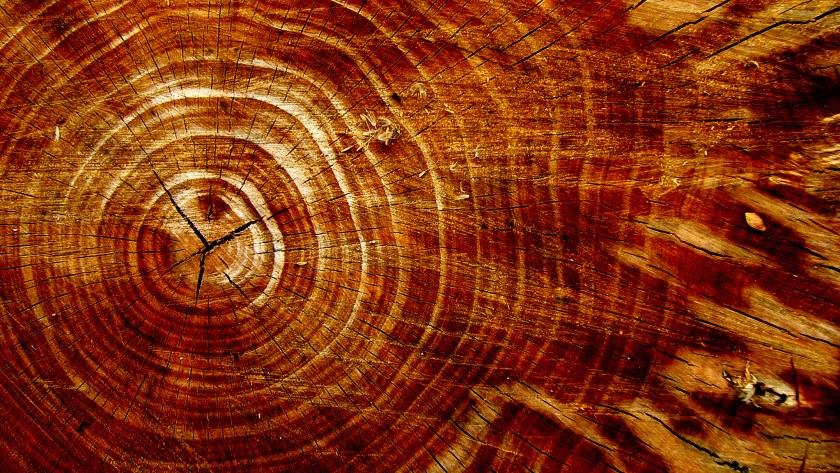
Atmospheric nuclear testing in the 1950s- 1960s roughly doubled atmospheric ¹⁴C levels, peaking around the mid-1960s. Tree rings from 1964-1967 therefore contain elevated “bomb” ¹⁴C. SLU researchers selected mature Norway spruce and Scots pine trunks from a Swedish clear- cut, identified the relevant rings, and used a professional woodturner to carefully remove outer wood and collect the thin, high-¹⁴C layers as shavings. These were pyrolyzed into biochar (tested at highest treatment temperatures of ~400°C and 650°C).
The resulting biochar had enough ¹⁴C enrichment (on average ~61.7 percent modern carbon higher than bulk soil organic matter in one report) to serve as a natural tracer. In a one-year laboratory incubation, they mixed it into soil (at 2% by dry mass), trapped emitted CO₂, and measured its ¹⁴C signature via accelerator mass spectrometry. This allowed them to quantify the share of CO₂ coming from the biochar versus the soil.
Key findings
- CO₂ from biochar- amended soil showed up to about 10% higher ¹⁴C than controls, confirming a small but measurable contribution from the biochar.
- Roughly 0.35% of the added biochar carbon converted to CO₂ over one year.
- This implies high stability: at least half of the buried biochar is projected to remain in the soil after ~200 years (under the study conditions).
- The method works with mature wood feedstock that resembles commercial biochars, offers higher precision than some natural- abundance ¹³C approaches, and avoids the need for expensive artificial isotopic labeling.
The work was published in Radiocarbon (Li et al., 2026: “Bomb ¹⁴C for tracing biochar mineralization in soil”). It was funded in part by Sweden’s Bio+ program (Swedish Energy Agency). Follow- up research is planned to examine biochar stability under climate- change scenarios in collaboration with researchers in Germany.
This approach provides a practical way to study biochar persistence, its interactions with soil organic matter, and its viability for carbon sequestration without relying solely on short- term incubations or complex lab labeling.

Bomb 14C for tracing biochar mineralization in soil
This is the open- access research article “Bomb ¹⁴C for tracing biochar mineralization in soil” by Haichao Li, Harald Cederlund, Elias S. Azzi, Cecilia Sundberg, and Erik Karltun (Swedish University of Agricultural Sciences), published online 23 September 2026 in Radiocarbon (Volume 68, Issue 5, pp. 1146- 1154).
It is freely available under a Creative Commons Attribution (CC- BY) licence.
Core contribution
The authors introduce and validate a practical isotopic- tracing method that uses naturally elevated “bomb” radiocarbon (¹⁴C) preserved in tree rings formed during the atmospheric nuclear- test peak (1964- 1967). Biochar made from this wood carries a clear ¹⁴C signature that can be distinguished from soil organic matter (SOM), allowing precise quantification of how much of the CO₂ released from soil comes from the biochar itself.
Methods (summary)
- Mature Norway spruce and Scots pine trunks (≥70 years old) were collected from a clear- cut near Uppsala, Sweden.
- Annual rings from 1964- 1967 were identified by counting and carefully isolated by professional woodturning (producing shavings).
- Biochar was produced by pyrolysis under N₂ at highest treatment temperatures of 400 °C (BC400) and 650 °C (BC650). The feedstock with the highest ¹⁴C enrichment (~172.9 pMC) was selected.
- Biochars were acid- washed to remove carbonates, ground (<2 mm), and mixed into a loamy- sand agricultural soil (Cambisol, 1.4 % SOC) at a 2 % (w/w) application rate.
- Soils were incubated for 365 days at ~20.7 °C and 60 % water- holding capacity. Emitted CO₂ was trapped in NaOH and analysed for total C and ¹⁴C (AMS) at multiple time points.
- An isotope-mixing model calculated the biochar- derived fraction of respired CO₂. Priming effects on native SOC were also quantified.
Key results
- Biochar was on average 61.7 pMC higher in ¹⁴C than bulk soil organic matter, providing a clear tracer signal.
- ¹⁴CO₂ from biochar- amended soils was consistently and significantly higher than from controls (p < 0.0001).
- Early in the incubation (first 2 weeks) 8.3- 11.4 % of mineralized CO₂- C came from biochar; later this fell to 2.3- 7.5 %.
- After one year, only 0.32 ± 0.02 % (BC400) and 0.35 ± 0.01 % (BC650) of the added biochar carbon had been mineralized. The two pyrolysis temperatures did not differ significantly.
- BC650 produced a measurable negative priming effect on native soil organic carbon (–129 ± 20 mg CO₂-C kg⁻¹, or ~14.8 % relative to the control); BC400 showed essentially none.
Advantages claimed over other isotopic approaches
- Higher precision than the natural- abundance ¹³C (C₃/C₄) method for detecting small biochar contributions.
- Works with mature wood feedstock that closely resembles commercial biochars (unlike many laboratory pulse- labelled materials derived from young seedlings).
- Relatively low cost and does not require specialised isotope-labelling facilities.
- Uniform ¹⁴C enrichment because the trees grew continuously under elevated atmospheric ¹⁴C.
Conclusions
The bomb-¹⁴C method is shown to be effective for quantifying biochar mineralisation and its interactions with soil organic matter. It opens practical possibilities for longer- term studies of biochar persistence and carbon-sequestration potential under realistic conditions.
The paper includes supplementary material with additional figures on priming and sensitivity analyses. Funding came in part from the Swedish Energy Agency’s Bio+ programme.

Journal: Radiocarbon (Volume 68, Issue 5, pp. 1146–1154)
Provided: Swedish University of Agricultural Sciences
Authors: Haichao Li,
Cecilia Sundberg and
Abstract
Improving our understanding of biochar carbon (C) stability in soil is crucial given its potential for soil C sequestration. However, challenges with isotopic labeling of biochar restrict our ability to determine its fate in soil. Atmospheric nuclear bomb tests in the 1960s resulted in a 14C spike in tree rings, providing an opportunity to address this challenge. Here, we present a method that utilizes the elevated levels of 14C in wood from tree rings formed between 1964 and 1967 as a tracer to determine the proportion of biochar C in mineralized soil. Biochar was produced using wood from the 14C enriched tree rings as feedstock and thereafter used in a mineralization experiment capturing the emitted CO2. We demonstrate that the bomb 14C-enrichment in the biochar is high enough to differentiate between CO2 originating from either biochar or soil organic matter mineralization. The method can be used to address questions on biochar persistence, its interactions with soil organic matter and research that is needed to explore the potential to use biochar for C sequestration in soils.







You must be logged in to post a comment.