Global warming, climate change, all these things are just a dream come true for politicians. I deal with evidence and not with frightening computer models because the seeker after truth does not put his faith in any consensus. The road to the truth is long and hard, but this is the road we must follow. People who describe the unprecedented comfort and ease of modern life as a climate disaster, in my opinion have no idea what a real problem is.
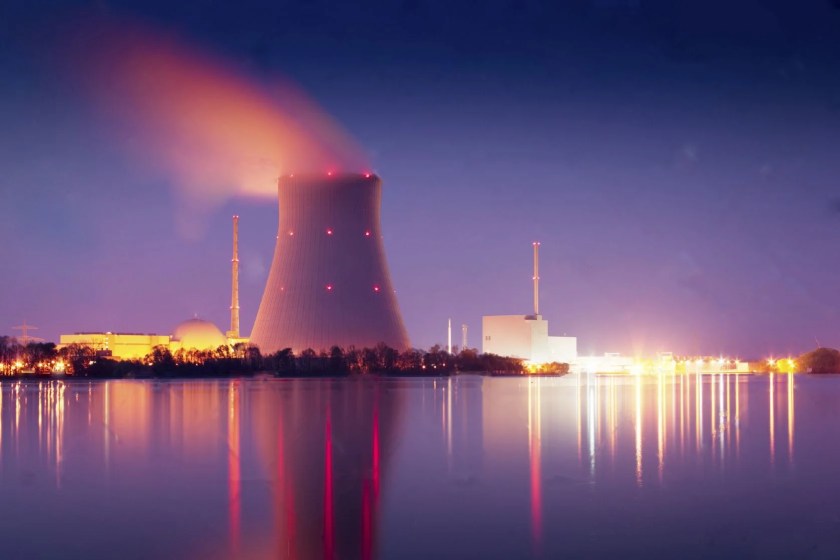
Nuclear power as a means of energy production has in recent decades become a taboo topic in the minds of many Americans. Despite having developed into the world’s cleanest method of generating electricity, western nations continue to abandon and decommission nuclear power plants in favor of less reliable and more expensive “green energy.”
Nuclear power as a means of energy production has in recent decades become a taboo topic in the minds of many Americans. Despite having developed into the world’s cleanest method of generating electricity, western nations continue to abandon and decommission nuclear power plants in favor of less reliable and more expensive “green energy.”
To combat this unscientific and economically illiterate move, CFACT campus representative Darren Fife attending Grand Valley State University in Allendale, Michigan, recently penned a superb op-ed for a local newspaper. Advocating for recently announced plans to recommission the Palisades Power Plant near South Haven, Michigan, Darren hopes his article will shore up community support for the project. His piece is available to read in full below:
I was personally saddened by the news of the shutdown because I know how hard working the employees of nuclear power plants are, thanks to my connection to western Michigan’s other nuclear power plant, DC Cook. DC Cook provides guided tours of their facility, which I am grateful to have participated in. When I was on the tour I was impressed by the scale of the systems and safety measures in place to protect the public. I was able to see firsthand the attention to detail and work put into safely operating the reactors at DC Cook, and I am sure that the engineers of Palisades worked with the same level of conviction and duty.
Additionally, two 300 megawatt small modular nuclear reactors are planned to be built on the site following the recommissioning of the main reactor. Holtec plans to file a Construction Permit Application for them in 2026 and hope to have them online by 2030. This, of course, will be subject to the Nuclear Regulatory Commission’s oversight. These small modular reactors are expected to be the United States’ nuclear power industry’s first experiment with land-based small modular reactors. It should be noted however that small modular reactors are not entirely new technology. Smaller sized nuclear reactors have been used reliably in U.S. aircraft carriers and submarines since 1955. While not modular, this use shows that nuclear power can be generated at a smaller scale reliably. These small nuclear reactors at Palisades will benefit from the larger main reactor’s infrastructure already in place, which in turn will help keep their construction price down.
Overall, repowering Palisades Nuclear Power Plant is a good thing for the community of western Michigan as it will help provide reliable, clean, and safe energy for the coming decades. Additionally, the planned expansion of the plant with two small modular reactors points towards a good use of the already existing infrastructure. Hopefully, Palisades reopening is a trailblazing event that paves the way for additional nuclear power plants to be built in the United States, as nuclear reactors are the cleanest way to provide reliable power baseline which promotes human prosperity.
New research indicates there has been no reduction in sea ice in Antarctica’s Robertson Bay (Ross Sea) during the last century. Instead, the frigid Little Ice Age and its expanded sea ice conditions continue unabated through the 20th and 21st centuries.
New research indicates there has been no reduction in sea ice in Antarctica’s Robertson Bay (Ross Sea) during the last century. Instead, the frigid Little Ice Age and its expanded sea ice conditions continue unabated through the 20th and 21st centuries.
Between ~8000 and 3500 years before present the Antarctic ice sheet experienced several millennia of retreat and the sea ice extent surrounding the continent decreased throughout the Middle Holocene. For the next few millennia after that, or from about 3500 to 1500 years ago, the ice sheet and sea ice extent advanced to near modern levels.
“The East and West Antarctic ice sheets underwent rapid periods of retreat in the Ross Embayment, the continent’s largest ice drainage basin, between 8 and 3.5 calkyr BP. Recent work shows that retreat was followed by a period of readvance and the ice sheets reached their modern configurations during the late Holocene.”
During the Medieval Warm Period, or from approximately 1500 to 700 years before present, variations in F. curta diatom, a proxy for sea ice extent, indicate Antarctic Sea ice retreated again to its much lower (<40%) Middle Holocene levels.
“…during the period between 1.5 and 0.7 calkyr BP…lower F. curta abundance in Robertson Bay (<40%) is characteristic of a reduction in spring sea ice concentration and a longer summer open water season.”
Then, after the Medieval Warm Period ended, Antarctica’s Little Ice Age (LIA) cooling began. The ice sheet grew and sea ice advanced to the highest levels of the last 7000 years (~60%).
“…an increase in the seasonal duration of sea ice between 0.7 calkyr BP [~700 years ago] and the present [is] consistent with ice core temperature reconstructions of cooling atmospheric temperatures.”
The rain in Spain falls mainly on the plain, but only in My Fair Lady. On October 29 and 30, 2024, however, it fell elsewhere with tragic consequences: the loss of over two hundred lives and widespread damage in the Valencia region.
Almost as surprising as the downpour’s intensity was the rush by agencies in this space to conclude it was caused by the bogeyman apparently driving all natural disasters today: “climate change”.
An alternative explanation is that the weather gods were up to their old tricks. After all, a so-called extreme weather event (EWE) happens somewhere in the world every day. So the probability was high they might conjure up one just a week before COP29, as indeed they did last year. Storm Bettina made landfall in Eastern Europe on November 28, 2023, just days before COP28, the annual UN climate conference. It too was attributed rather promptly to nasty anthropogenic greenhouse gas emissions.
The COP29 Conference of the Parties is being held in Baku, Azerbaijan, from 11 to 22 November, 2024. After twenty eight years of talks, the event is being promoted, optimistically, as a Climate Action Summit. How many people does it take to change the climate of a whole planet to suit everybody everywhere and forever? At least 40,000, judging by the number of delegates this year. Good luck with that exercise of breathtaking hubris, the bureaucratic equivalent of collective hara kiri, at least for the developed world.
The UN Secretary-General, António Guterres, had a familiar message for them: immediate steps must be taken to cut [carbon dioxide] emissions, “safeguard people from climate chaos”, and “tear down the walls to climate finance”, especially given what he described as this year’s “masterclass in climate destruction”. It was déjà vu all over again.
COP29 is yet another attempt by the developing world to monetize the climate and raise “trillions of dollars to protect lives and livelihoods from the worsening impacts of climate change.” Yet most countries were silent on the irony of China’s chutzpah: the world’s largest coal consumer, biggest solar panel manufacturer and now space explorer, still claiming developing country status and putting its hand out for billions of dollars of free money.
There is, of course, no suggestion here that the agency rush to judgment mentioned above might have been due to activist researchers so dazzled by confirmation bias – and now underwritten by fabulous funding from both governments and private entities – they could not resist making confident claims about climate causation, such as detecting the “fingerprint of climate change in complex weather events”; or that the MSM has become rather keen to provide them with a media megaphone without further scrutiny, or express any doubt about the veracity of their claims.
Nevertheless, dear reader, here’s an intriguing case for your consideration. On 31 October, 2024, just a few hours after the Spanish deluge, BBC’s climate editor, Justin Rowlatt, posted this article: Deadliest weather made worse by climate change – scientists.
Human-caused climate change made the ten deadliest extreme weather events of the last 20 years more intense and more likely, according to new analysis.
The killer storms, heatwaves and floods affected Europe, Africa and Asia killing more than 570,000 people.
The new analysis highlights how scientists can now discern the fingerprint of climate change in complex weather events.
The study involved reanalysing data for some of the extreme weather events and was carried out by scientists from the World Weather Attribution (WWA) group at Imperial College London.
“This study should be an eye-opener for political leaders hanging on to fossil fuels that heat the planet and destroy lives”, said Dr Friederike Otto, co-founder and lead of WWA.
“If we keep burning oil, gas and coal, the suffering will continue,” she said.
To investigate if climate change influenced the heavy rainfall, we determine if there is a trend in the historic rainfall observations in the region. The three analysed datasets indicate that heavy 1-day rainfall events, as intense as the one observed, are about 12% more intense and about twice as likely in today’s climate, that is 1.3°C warmer than it would have been in the cooler preindustrial climate without human-caused warming.
These results are based on observational data and do not include climate models that are used in full attribution studies. However, the results are in line with existing evidence of climate change signals in similar past extreme daily-rainfall events that have been studied across Europe. They are also aligned with basic physics and the so-called Clausius-Clapeyron relationship, which outlines that a warmer atmosphere can hold more moisture, resulting in a 7% increase in heavy rainfall with 1°C of warming. We are therefore confident the changes in heavy rainfall are driven by human-caused climate change.
Only a seven percent increase in heavy rainfall with an increase of one degree Centigrade of warming hardly seems alarming. In any case, with what alchemy does WWA, or indeed any agency, distinguish the weather’s natural variability from “human-caused climate change”?
WWA’s analysis also “built on a relatively sparse literature on rainfall extremes in the region”. In other words, poor data. Why it included the following paragraph, which appears to contradict its conclusion, is unclear, at least to me.
Working group 1 of the sixth assessment report of the IPCC found evidence of an increasing trend in rainfall extremes in western and central Europe, but with low confidence of the human contribution to this due to limited agreement (IPCC, 2021). Furthermore, projected changes in such extremes vary strongly by location and season, especially in the study region in this analysis, which suggest a wetting trend in winter and drying in summer (Wood & Ludwig, 2020).
How did WWA decipher this EWE and reach such an emphatic conclusion in less than a week? Was its “super rapid analysis” driven more by a desire to turn the Spanish downpour into another scary storyline for the Imperial College climate research team to promote in Baku, when it presented there on November 11, the first day of COP29? The so-called facts in this case surely were not massaged to achieve other objectives.
Whatever the case, if the fate of humankind depends on the insights – and prejudices – of professional readers of the Earth’s atmospheric entrails, perhaps it would be prudent not to ignore their warnings. Yet, on the balance of probabilities, it’s hard to deny that the sequence of events outlined above has a fishy smell about it. A sceptic might conclude that a random EWE – in this case the rain in Spain – may have been weaponised to support the alarmist mood at COP29.
Such a view arguably becomes more credible on discovering that WWA’s main benefactor is The Grantham Institute. It sits “at the heart of Imperial College London’s work on climate change and the environment, with the mission: “to lead on world-class research, policy, training and innovation that supports effective action on climate change.”
The Grantham Institute – Climate Change and the Environment entity was created in February 2007 with a multi-million-pound donation from the Grantham Foundation for the Protection of the Environment. It was the largest sum of private funding given to UK climate change research at the time. The aim: to create a global centre of excellence for research and education on climate change at Imperial College London.
The Granthams hope that their donation will motivate other individuals to support research into the causes, consequences and mitigation of climate change with a view to informing policy on an international scale.
The Grantham Family established the Grantham Foundation for the Protection of the Environment in 1997. The Foundation supports natural resource conservation projects both in the US and internationally. Jeremy Grantham is a well-known investment manager and chairman of Boston-based investment firm, GMO. Hannelore Grantham is Director of the Grantham Foundation.
Jeremy Grantham remains the long-term investment strategist at the firm he cofounded in 1977, Grantham, Mayo, Van Otterloo & Co. (GMO). He still serves on its asset allocation committee and board of directors.
In an interview with Morningstar on October 9 this year, Grantham said he was as concerned as “every scientist in the climate business”.
Morningstar:You spend a lot of time thinking about climate and environmental issues more broadly. Renewables have clearly made a lot of strides, electric vehicles, and yet carbon emissions remain stubbornly high. As a climate solutions investor, what you’re excited about these days?
Grantham:Well, what I consider important is the ability of senior people to miss the point. Climate change is like some giant python. It’s got us gripped and it isn’t squeezing that tight yet. But each year it’s getting a little tighter and it shows no inclination to go away and we’re ignoring it. If we continue to take climate change this lightly, if we continue to protect our short-term profits and ignore longer-term consequences to the general world, we will have a very hard time maintaining a stable world, stable social, stable corporate, stable anything. And I would say, to me, on a global basis, it looks like we’re quite a handful of years into a destabilizing mode and the climate change has a lot to do with it.
The Grantham Foundation has 90% of all the money I’ve ever made: 50% is in venture capital, maybe closer to 60% today, and half of that is green. So, we get a ringside seat at what is going on.
As for the World Weather Attribution group, it was formed by Imperial and The Grantham Institute in 2014 with the explicit aim of “changing the global conversation around climate change, influencing adaptation strategies and paving the way for new sustainability litigation.” In other words, funding a smorgasbord of controversial extreme event attribution computer games, green ideology and climate politics. If the ultimate objective is litigation, perhaps “conversation” is the wrong word.
The group says it has “performed more than 80 attribution studies on heatwaves, extreme rainfall, drought, floods, wildfires and cold spells around the world.”
Having an agreement about the amount of money and where that money’s coming from […] will be one of the most significant outcomes of COP29. Mike Wilkins, Executive Director, Centre of Climate Finance & Investment, Imperial Business School.
The shrinking carbon budget shows the importance and urgency of near-term emissions reductions. Professor Joeri Rogelj, Director of Research, Grantham Institute – Climate change and the Environment.
Grantham is right. Climate change has become a global “business”, presumably very profitable for “carbon” cowboys or green investors like GMO, at least unless the RE music stops for some reason, such as a decline in public gullibility about the “climate crisis”. There’s another python on the planet too: the sperm count.
Grantham:In terms of pessimism, in a sense, you ain’t heard nothing yet. Because in my opinion, there’s not just one python squeezing us, there’s two—the other is toxicity. If we do not move against toxicity, we are going out of business. And to give you the most shocking single number, our sperm count, which is the best indicator of general health, is down to a third of what it was in 1950—and 1950 was not a healthy place to be. Hunter/gatherers a few thousand years earlier would have been much healthier. And it’s falling at an accelerating rate. One of great epidemiologists who study this said, “It’s as if we mean to go out of business.” The drop since 2000 is over 2.5% a year from where we were. And the drop in the 20th century was closer to 1.5%. But no one gives it rat’s tail.
Amen.
Michael Kile
A version of this article was posted at the Australian site, Quadrant Online, on November 19, 2024, with the title: We’re all Doomed. Yawn
There’s nothing new under the sun. Snow falls, flowers bloom, and then Fall comes with roughly 50,000 delegates, activists and lobbyists flying out to a UN Climate Summit in some exotic part of the world. This year it was to COP 29 in Baku, Azerbaijan, where I and other members of the Committee For A Constructive Tomorrow (CFACT) team joined them for a front-row seat to the spectacle.
There’s nothing new under the sun. Snow falls, flowers bloom, and then Fall comes with roughly 50,000 delegates, activists and lobbyists flying out to a UN Climate Summit in some exotic part of the world. This year it was to COP 29 in Baku, Azerbaijan, where I and other members of the Committee For A Constructive Tomorrow (CFACT) team joined them for a front-row seat to the spectacle.
We taxpayers and consumers pay for all their airfare, hotel and dining, of course. We also pay with higher energy costs that their net-zero actions impose on workers and families – and for “climate reparations” they plan to dole out to destitute and not-so-destitute developing countries.
We pay out despite the fact the science doesn’t back their claims. Hurricanes and tornados have not increased in frequency or intensity; nor have floods and droughts. We can prepare for, adapt to, and warn communities far better than ever before, so the number of people killed by weather and other natural disasters has plummeted 90% since 1900.
But the Climate Industrial Complex (CIC) that organizes these pow-wows is unmoved by such facts. They have so much money and power at stake at events like COP 29 that their scientists, politicians, activists and lobbyists will never stop inducing panic and demanding more sacrifice from us to “end the climate crisis.”
That’s why I went to Baku as a representative of CFACT. Just as we’ve done at almost every other climate conference over the past 30 years, we believe it is important to attend, provide insights and comment on what we observe.
What we observed this year was eye-rolling.
The pressure groups attending COP29 were in full force and their agendas a bit, let’s just say, out there. Among them were some seeking to turn the decades-long climate change “crisis” into an unprecedented “public health” threat, allegedly far worse and longer-lasting than COVID, and thus requiring even more drastic and draconian government actions – and stratospheric spending.
They claim the food we eat is worsening the supposed climate cataclysm. They want the UN to oversee what crops and livestock farmers will be permitted to grow, how they can do it, and what people will be allowed to eat. This new “Great Food Reset” movement, alive and well at COP 29, intends to restrict meat consumption; compel banks to stop providing loans for livestock production, nitrogen fertilizers, biotech crops and even diesel-powered tractors; and more.
Fortunately, they at least propose a substitute: “edible insects.”
But it’s not just food these activists are targeting. Many urge consumers to “transition” away from fossil fuel vehicles, cooking, and home and water heating … to electric technologies – regardless of costs, inconveniences, dangers or inadequate electricity. They seek to have our factories, businesses and hospitals do likewise, and pay 2-3 times more for electricity – even if that brings on massive price increases for goods and services.
As for your home, that too was discussed at COP 29. Some attendees claim the climate crisis necessitates herding people into “climate resilient homes,” many of them tiny, to lower carbon footprints – and then controlling the thermostats. They also want to control your vacations and almost every other aspect of your life.
Yes, it’s ridiculous. But alas, it doesn’t stop there. The climate cabal that gathered in Azerbaijan also sought money … lots of it.
Even as Western economies crater, COP29 attendees are angling for a New Collective Quantified Goal of $1.1 trillion in 2025, rising to $1.8 trillion by 2030. Increasingly de-industrialized nations are expected to contribute this money to a Climate Finance Action Fund, to help poor developing nations “transition to a low-carbon future,” get “climate mitigation and adaptation” funds, and receive “reparations” for “losses and damages” that poor countries suffer due to climate changes allegedly caused by rich countries.
This will replace the current, supposedly insufficient goal of $100 billion per year and help developing countries implement “low-carbon, climate resilient solutions” to energy, transportation, agriculture and other vital systems. It’s intended to “persuade” poor countries to “leapfrog fossil fuels” and go directly to a magical “clean energy future.”
The proper term for this is “carbon colonialism” or “eco-imperialism.” It would further enrich the Climate Industrial Complex, and politicians and bureaucrats in poor countries, while leaving the people energy-deprived, jobless and impoverished.
In short, what we saw in Baku was appalling. Unfortunately, the Trump-Vance administration wasn’t there to impact COP 29. But thankfully it will be next year.
And once it does take power, let’s all hope both it and the incoming Republican Congress will be able to “net-zero” the USA out of any future COP meetings, before they can actually inflict any serious damage on us.
Nothing ever seems to deter Ed Miliband, the green commissar of this Labour government. He has already brought back the boiler tax, adding a few hundred pounds to the bill for anyone unlucky enough to need a new heating system this winter. Now he is relaxing the size and noise restrictions on heat pumps, allowing them to screech through the night. At this rate, the typical British city will be turned into a cacophonous heat pump farm, with a few pale, sleep-deprived humanoids trapped inside. But hold on. This is crazy. In reality we are doubling down on a failing technology and risking civil unrest in the process.
Nothing ever seems to deter Ed Miliband, the green commissar of this Labour government. He has already brought back the boiler tax, adding a few hundred pounds to the bill for anyone unlucky enough to need a new heating system this winter. Now he is relaxing the size and noise restrictions on heat pumps, allowing them to screech through the night. At this rate, the typical British city will be turned into a cacophonous heat pump farm, with a few pale, sleep-deprived humanoids trapped inside. But hold on. This is crazy. In reality we are doubling down on a failing technology and risking civil unrest in the process.
For a man who typically despises any form of deregulation, Miliband makes one crucial exception. If it is part of his net-zero crusade, then it is perfectly fine. Too big? Never mind. Too noisy? No problem. Too expensive? What does cost matter when the planet has to be saved? We already have subsidies for heat pumps, quotas and taxes on the traditional alternative. Now they will be allowed to fill the night with noise as well.
And yet, there are two big problems with Miliband’s decision. To start with, why are we obsessing over a technology that doesn’t seem to work very well? If your dishwasher sounded like a fighter jet with the afterburners switched on, we might suggest the boffins in the lab figured out a way to make it quieter. If mobile masts took up half the street, we’d ask the manufacturers to go back to the drawing board and make them smaller.
Heat pumps may or may not be the best way of moving towards carbon neutral home heating. But if we are going to install millions of them, then surely they need to be fit for purpose, in the same way that any other mass market product should be? Pumps need to be quiet, compact, and cheap. Until they are, they either need to get better, or else we need to look at alternatives.
Instead, we will risk splitting communities apart. Relations between neighbours can often be fraught at the best of times. There are arguments over parking, parties and fences. Now we can add heat pumps to the list. If one house is keeping the whole street awake with its heating that hardly seems reasonable, but presumably the self-righteous eco warriors will insist it is OK and will have the Government on side.
Nor does it stop there. Miliband also wants us to do our washing at three in the morning to even out the load on the grid. But if a rackety drier wakes up half an apartment block in the middle of the night, that hardly seems reasonable either. Likewise, cabling for electric cars now runs across many pavements, but it is easy to trip over, and we surely would not allow that it was not part of the green crusade. Very soon, communities will be at war with one another, arguing about every new rule handed down from Westminster, until tempers are stretched beyond breaking point.
That is crazy. We can debate whether climate change is an imminent catastrophe, and whether the UK, accounting for less than one per cent of global emissions, really needs to lead the world in combating it. But regardless of that, surely, we can all agree that whatever technologies we adopt for the transition to carbon neutrality need to be cheap, effective and safe, and mustn’t disrupt the communities in which we all live. Miliband doesn’t seem to care about any of those tests – and instead appears intent on driving the country to the brink of civil unrest.
Grapevines sequester carbon dioxide so Virginia’s climate alarmism activists are pulling corks without guilt today, after learning that a Virginia circuit court judge will order Virginia to rejoin the Regional Greenhouse Gas Initiative (RGGI).
Grapevines sequester carbon dioxide so Virginia’s climate alarmism activists are pulling corks without guilt today, after learning that a Virginia circuit court judge will order Virginia to rejoin the Regional Greenhouse Gas Initiative (RGGI).
During the three years Virginia was part of the multi-state cap and tax compact, Virginia collected $828 million from electric power producers seeking permits to emit CO2. The largest of the payers in the state, Dominion Energy Virginia, simply passed its cost along to consumers dollar for dollar right on monthly bills.
The final order from the judge has not been produced so the details of any relief he will order are not settled. But on Monday Floyd County Judge C. Randall Lowe circulated an opinion letter stating he agreed with RGGI’s boosters that only the Virginia General Assembly could pull the state out of the compact, based on his reading of 2020 legislation.
It was the position of Republican Governor Glenn Youngkin and Republican Attorney General Jason Miyares that the statute was permissive but not mandatory. Both issued brief statements today disagreeing with the judge’s order and promising to pursue an appeal to the Supreme Court of Virginia. Presumably they will also ask the upper court to stay the order, but that motion could be denied.
The case resided in rural Floyd County because that is the home base for an association of energy efficiency renovation contractors, the only one of the original plaintiffs in the case granted standing.
It was always likely that whoever prevailed at the circuit court level would face an appeal. And it is still true that the real decision on RGGI’s future in Virginia will hinge on the 2025 election, the next governor and future General Assembly. If this ruling stands and Virginia is in RGGI when the new governor arrives, only a Republican trifecta would overturn it again.
Getting out of RGGI was a promise the Governor made at the beginning of his term in 2021, but it took two years to accomplish. At the Governor’s urging, the Air Pollution Control Board voted in the summer of 2023 to exit RGGI at the end of that current contract period in December 2023.
The judge has stated that the board vote to repeal was void, illegal, without effect. The regulation remains in force. That means it was illegal for the state not to force its electricity generators to buy and expend RGGI credits for this year. He asked lawyers for the plaintiffs in the case to draft the final order that outlines what happens next. Could that include some compensation for the lost 2024 RGGI revenue, probably about $400-500 million?
Why not? The case was brought by a group of energy conservation contractors who were being paid to renovate homes for energy efficiency. They argued (correctly) that the decision to exit RGGI ended their meal ticket and would reduce their activity and revenue. Loss of money is the damage they suffered, and money is a logical part of any relief. That RGGI was hardly the only source of revenue for their programs didn’t seem to matter. The judge ruled they were illegally deprived of that money.
On the other side of the RGGI ledger, localities and contractors doing work to prevent or mitigate flooding also lost work and money. They got the other half of the RGGI tax dollars collected between 2021 and 2023. They did not join the case, but if financial reparations are ordered, they will get in line.
RGGI’s agreement among the states runs on a three-year cycle, and Virginia missed the start of the 2024-2026 contract period. The other RGGI states will have a say in whether, when and under what conditions Virginia rejoins the confederation. Virginia getting back in will also have an impact on the price of allowances, the carbon tax.
RGGI has been a political yo-yo in Virginia for most of a decade. Governor Terry McAuliffe started the process by asking his Air Board to impose a RGGI membership regulation. There was no General Assembly action ordering Virginia into RGGI. On the contrary, Republican legislators at the time passed bills to require Assembly approval, and Democrat governors vetoed them. But Republicans were able to block RGGI by denying funds for its implementation.
The game flipped when Democrats obtained trifecta control of Virginia in 2020. Suddenly Assembly action was paramount after all. It was the 2020 legislation that also dictated the use of RGGI funds for weatherization and flood control, creating a powerful constituency for maintaining the revenue stream. It will soon be a revenue flood.
As reported by Bacon’s Rebellion before, in the months since Virginia exited the compact, the price for each ton of carbon emissions has risen dramatically. A new record could be set at the final 2024 auction in early December.
In 2023 Dominion was charging each of its customers, residential and business, the same $4.43 per 1,000 kilowatt hours. A good guess would be that had the tax stayed on bills for 2024, it would have risen to at least $5 or more per 1,000 kwh for this year. Dominion used that 1000 kwh example as a “typical” bill but many, many of its residential customers use far more than that per month, and thus would see far more than a $5-6 increase in their power bills. Often those large bills accrue to fairly small, but poorly insulated, dwellings with lousy heating systems.
As to what the tax would be for 2025, given the rising carbon price in the auctions, perhaps Dominion has an estimate if it wants to share that. Could it hit $7-8 per 1,000 kwh? In Virginia’s first auction in 2021 the carbon tax was $7.60 per ton and in the most recent auction – less than four years later – it had risen 240% to $25.75 per ton.
None of the price projections in Dominion’s most recent integrated resource plan assumed the imposition of RGGI carbon tax on its hydrocarbon generation fleet in the next 15 years. And in the case of that IRP, it would be its growing hydrocarbon generation fleet, given the plan adds 6 gigawatts of natural gas generation.
The old saying around Richmond is a statute means what a judge says it means. The first of what could be several judges has spoken.
I am convinced that implementation of the New York Climate Leadership & Community Protection Act (Climate Act) net-zero mandates will do more harm than good if the electric system transition relies on wind, solar, and energy storage. My primary reliability concern is the challenge of providing electric energy during periods of extended low wind and solar resource availability.
I am convinced that implementation of the New York Climate Leadership & Community Protection Act (Climate Act) net-zero mandates will do more harm than good if the electric system transition relies on wind, solar, and energy storage. My primary reliability concern is the challenge of providing electric energy during periods of extended low wind and solar resource availability. Experts, including those that are responsible for electric system reliability, agree that a new category of generating resources called Dispatchable Emissions-Free Resources (DEFR) is necessary during those periods. This article summarizes a very readable description of the DEFR problem by Tim Knauss who describes the work done by Cornell’s Anderson Lab headed by Dr. Lindsay Anderson.
Takeaway Message – If you don’t have time to read the whole thing
This is an issue that must be addressed for any jurisdiction that hopes to transition to a wind and solar reliant grid. This post summarizes a readable description of DEFR in an article by Tim Knauss. He described the work of Cornell engineering professor Dr. Lindsay Anderson regarding the necessary DEFR component of the proposed transition of the electric system to zero emissions. The article explains how Anderson’s team calculates the gap between future wind, solar, and energy storage generating resources needed and projected electric load during periods of low renewable resource availability. I believe that the work of the Anderson Lab provides support to my contention that renewable development should be paused. A renewable-based electric system needs DEFR, the most likely DEFR solution is nuclear, but if you use zero emissions nuclear then you don’t need renewables. That makes renewables a dead-end approach.
Overview
The Climate Act established a New York “Net Zero” target (85% reduction in GHG emissions and 15% offset of emissions) by 2050. It includes two targets that address the electric sector: 70% of the electricity must come from renewable energy by 2030 and all electricity must be generated by “zero-emissions” resources by 2040. New York Department of Public Service (DPS) Proceeding 15-E-0302 addresses DEFR but there is no schedule for resolving the future plans for DEFR in New York.
Last July I summarized six analyses describing the need for DEFR: the Integration Analysis, New York Department of Public Service (DPS) Proceeding 15-E-0302 Technical Conference, NYISO Resource Outlook, Richard Ellenbogen, Cornell Biology and Environmental Engineering Lindsay Lab, and Nuclear New York. I have updated my DEFR page to this report.
Knauss poses the critical question: “What technology will grid operators turn to when solar and wind fall short?”. He notes:
Maybe it will be advanced nuclear reactors. Or hydrogen-burning power plants. Nobody knows for sure. Operators will need some emission-free power source they can turn on and off at will.
At Cornell University, Professor Lindsay Anderson and fellow researchers have been studying this problem. Given the specific layout of New York’s electric grid, they asked, how much of this new power source would be needed in addition to all the solar and wind?
A staggering amount, it turns out.
Just 15 years from now, the electric grid will need about 40 gigawatts of new generating capacity that can be activated regardless of wind speeds, cloud cover or other weather conditions, according to Anderson’s research.
How much is that? It’s roughly equal to the total capacity of all of New York’s current power plants – nuclear, natural gas, hydro, wind, all of it.
You read that right. To back up the massive quantities of solar and wind power that will provide most of our future electricity, the state power grid will need some new, mystery resource equal in size to the entire generating fleet of today.
The need for new, mystery DEFR, the potential quantity required, and the technological challenges for the resource are issues well known by those who understand the electric system. However, there is a loud and passionate segment of society who disagree that anything new is needed and reject the scale of the projected resource need. Anderson and Knauss understand that this is a touchy subject. Knauss writes:
Anderson knows that’s not easy to hear.
“That’s the thing, right?’’ she said. “Where people are going to start to worry is (to) say, ‘Okay, wait, so you’re telling us that we’re going to spend all this money building out all this wind and solar and batteries — AND we have to put in 40 gigawatts of this?”
But there will have to be a backup.
Knauss describes the analysis work done to generate the “mind-boggling” projections.
Anderson chairs Cornell’s department of biological and environmental engineering. She has a PhD in applied math and a master’s degree in engineering. For the past decade, she has worked with a shifting assortment of doctoral candidates and other graduate students in her eponymous Anderson Lab, housed in a large room full of cubicles and computers. They examine issues related to the growing importance of renewable energy.
The Anderson Lab is looking at the physics of how all that will work. To do so, they built an elaborately detailed computer model – a “digital twin’’ — of New York’s electric grid.
That level of detail sets their work apart. Many of the studies that look at phasing in renewable energy pretend that the electric grid is a single pool of electrons that flow from point to point without constraint. It‘s known as the “copper plate’’ assumption.
In reality, the New York electric grid is a complex, lopsided network that has been stitched together piece by piece over a century. There are limits on how much electric current can move from one area to another.
The six analyses that are described on my DEFR page all handle the electric system in similar fashions and all unequivocally conclude DEFR is needed. The reference to studies that use the “copper plate” assumption refers to the analysis that was used by the politicians who authored the Climate Act. It is the basis of the Climate Act presumption that implementation was simply a matter of political will because no new technology would be required. New York’s electric grid experts disagree. This contradiction needs to be resolved.
The Knauss article goes on to describe DEFR:
It stands for “dispatchable emission-free resource.” It’s a place-holder phrase referring to a carbon-free generating plant that can be turned on and off as needed. It’s pronounced DEE-fur.
Today, dispatchable power is provided mostly by natural gas power plants. Energy planners hope to replace them with something that does not produce greenhouse gases. Nobody knows what that will be.
“They’ve come up with a name for something that they don’t know what it is, but their modeling shows that they need something. It kind of seems like dark matter in the universe,’’ said environmentalist Tim Judson, executive director of the Nuclear Information and Referral Service.
When the state’s Climate Action Council issued their December 2022 report on how the state will eliminate greenhouse gases from the grid by 2040, they estimated a need for 18 to 23 gigawatts of DEFRs. Anderson’s study concluded that the estimate should be roughly doubled, to 37 to 40 GW. In its most recent forecast, the NYSIO estimated a need for at least 20 GW of DEFRs, and as much as 40 GW, by the year 2040.
Knauss explains that Anderson is concerned about the need for DEFR and the quantity required as well as the ramifications of this new resource:
The need stems from two main vulnerabilities, Anderson said.
First, there will be lulls when the wind dies down for days on end and the skies cloud over, resulting in power shortages that exceed the current ability of batteries to compensate. Second, there will be periods when the state has plenty of renewable energy but not enough transmission capacity to get it where it’s needed.
There would even be times when Upstate produced too much renewable energy, which must be disconnected to keep from overloading the grid, even as blackouts rolled across Downstate due to bottled up transmission lines.
Most of those problems are likely to occur in the coldest part of winter and the hottest part of summer, when demand for electricity will surge to peak levels. And the region most vulnerable to blackouts would be Downstate, where communities with massive electricity needs sit at the end of transmission lines from Upstate that are often overloaded.
These issues raise a concern of mine. I maintain that there are unacknowledged challenges associated with weather variability risks associated with planning for the DEFR resources needed. The first challenge is calculating the resources needed which requires analysis of meteorological data to estimate resource availability and expected loads. I believe no one has done a comprehensive enough analysis because they haven’t used the longest period of data available, and they have not included adjacent regional transmission operator areas. The second challenge is more concerning to me. The evaluation of the meteorological data develops a probabilistic estimate of the resources needed that are analogous to the one in a hundred-year flooding parameter. The problem is that we often see a flood exceeding the one in hundred probabilities. It is inevitable that the weather conditions that caused the worst-case resource drought planning scenario will also be exceeded. When that happens there will not be enough electric energy available, blackouts are likely, and the consequences of blackouts on a society that decarbonized by using electricity will be catastrophic.
There is another issue relative to the aspirational Climate Act mandate to go to “zero emissions” by 2040. We need DEFR but the technology is not available. Knauss describes potential DEFR technologies:
Some experts propose converting power plants to burn hydrogen rather than natural gas. Or hydrogen could be used in fuel cells, which rely on chemical reactions rather than combustion to make electricity.
Others promote the idea of sequestering the carbon emissions from gas plants underground. Or burning “renewable” methane recovered from landfills and other sources.
Recently, New York officials have expressed interest in small advanced nuclear plants, which are under development by various companies. State energy planners are developing a “roadmap’’ that should be released early next year detailing how new nuclear technology might be encouraged.
None of the possible technologies is ready for commercial application. Which will emerge?
“That’s the million-dollar question,’’ said Lanahan Kevin Lanahan, a spokesman for NYISO, the grid operator.
The article goes on to note a difference of opinion regarding DEFR deployment. On one side is the electric industry who are obligated to provide reliable electricity.
New York is long overdue to identify DEFR technologies and to support their development, said Gavin Donohue, executive director of the Independent Power Producers of New York, a trade group representing power plant owners. IPPNY formally asked the Public Service Commission three years ago to decide what it will accept as “zero-emission’’ generating plants. The PSC is still mulling that over in a regulatory proceeding. “The timely development of fully dispatchable zero emitting resources is crucial to maintain reliability as the economy electrifies and reliance on intermittent renewable and duration limited resources increases,’’ the group wrote.
On the other side are the special interests who have no accountability.
But some environmentalists argue against a rush to develop DEFRs, saying it could distract from building wind and solar resources and could lead state officials to hastily subsidize unproven technology such as hydrogen combustion.
Following a technical presentation to the state Public Service Commission last year by Anderson and a NYISO planning director, representatives from Sierra Club and Earthjustice submitted rebuttal comments claiming that NYISO’s forecast of the need for DEFRs was “alarmist.” (The forecast presented by NYISO that day was about 25% lower than the Anderson Lab’s estimate.)
The critics said the state should focus on proven techniques such as importing power from out of state, improving transmission, and encouraging demand response programs under which customers cut their power consumption during peak periods. “Rushing to deploy expensive and untested DEFRs risks committing New York to flawed technologies, as it is unclear at the present time which technologies will emerge as commercially scalable and cost effective,’’ they wrote.
I responded to some of the referenced rebuttal comments because I think their analyses are naïve. In the first place, their analytical methodologies are not as sophisticated as the Anderson Lab. Secondly, they don’t acknowledge the correlation of wind energy across New York so their estimates of the magnitude of the problem are flawed. Knauss mentions the critics “solutions”.
It’s a complicated issue, in part because there are strategies other than adding power plants to help reduce demand for electricity during peak periods. Improvements in meter technology, for example, will enable residential customers to respond during power shortages by reducing their demand, as some commercial and industrial customers do already. Likewise, grid operators could one day draw power from electric vehicle batteries during peak periods.
This line of reasoning is naïve because it ignores the fact that DEFR is needed when the electric system energy requirements are highest. The conditions that cause light winds and low wind power output also cause extreme temperatures which lead to peak electrical loads. Those are the conditions when residential customers are not going to want to reduce power consumption. They will want to keep their homes warm!
The article goes on to discuss practical alternatives to the “mind-boggling” gap and the aspirational Climate Act schedule. Dr. Anderson suggested looking at slightly less stringent emission limits at least as a bridge until a DEFR solution is found.
Knauss also points out that the Anderson Lab work makes the optimistic assumption that all the wind and solar projected by the Hochul Administration actually gets built on schedule.
In reality, siting battles and other issues have stalled many large wind and solar projects for years. And as inflation drives up the capital costs of renewable energy, Gov. Kathy Hochul is under mounting pressure from business and consumer groups to keep the cost of the energy transition under control.
Because of those barriers, there is a vast gap between New York’s renewable energy capacity today and what would be needed to retire all the fossil fuel plants. Developers would have to build about 10 times the wind and solar power that exists now.
“It’s a huge problem, and we are so far behind,’’ Anderson said.
Conclusion
I think that the Knauss article does a great job explaining the intricacies of the DEFR issue and the work of the Anderson Lab. I believe they appropriately describe the challenges of DEFR. However, the article does not address the policy implications of DEFR.
The Hochul Administration has finally started its update of the NY Energy Plan. The draft scope of the plan considers an electric system that relies on wind and solar generation consistent with the Climate Act Scoping Plan. No jurisdiction anywhere has successfully developed such a system. The State agencies responsible for a reliable electric system agree with Professor Anderson that a wind, solar, and energy storage system requires DEFR. I believe that it is prudent to fund a demonstration project to prove that such an electric system will work. At the very least, the energy plan must provide a comprehensive renewable feasibility analysis to determine whether such a system will maintain affordability and reliability standards.
The most likely DEFR backup technology is nuclear generation because it is the only candidate resource that is technologically ready. Nuclear power has a proven record for resilient electric production, development would not require changes to support the transmission system and buildout the system, it is not limited by weather extremes, it has lower environmental impacts, and when life cycle and backup costs are considered is likely cheaper. Its use as backbone energy would eliminate the need for wind, solar, energy storage, and new DEFR deployment to meet Climate Act zero-emissions mandates.
Sierra Club and Earthjustice argue that DEFR is a distraction to their preference for wind and solar development. I believe that the work of the Anderson Lab provides support to my contention that renewable development should be paused because that development cannot work until DEFR is proven feasible. If the DEFR solution is nuclear then renewables are a dead-end approach.
Roger Caiazza blogs on New York energy and environmental issues at Pragmatic Environmentalist of New York. This represents his opinion and not the opinion of any of his previous employers or any other organization with which he has been associated.
A November 18 article by Atlanta News First (ANF) claims that climate change is affecting Georgia’s farmers and the restaurants that depend on local produce. This is demonstrably false. Empirical data of temperature and crop yields refute the claim.
A November 18 article by Atlanta News First (ANF) claims that climate change is affecting Georgia’s farmers and the restaurants that depend on local produce. This is demonstrably false. Empirical data of temperature and crop yields refute the claim.
Contrary to the widespread assertion that global warming is causing uniform temperature increases, data from the National Oceanic and Atmospheric Administration (NOAA) indicate that the Southeastern United States has experienced a cooling trend over recent decades. This phenomenon, often linked to the polar vortex, has led to colder winters in the region, defying the generalized warming narrative. As reported by Forbes, “Defying Climate Change, Southeast U.S. Is Getting Colder Instead of Warmer via Polar Vortex.” This cooling trend challenges the premise that warming temperatures are responsible for agricultural difficulties in Georgia.
The article suggests that climate change is threatening Georgia’s peach industry. Yet, in 2024, Georgia experienced one of its most successful peach harvests to date. According to the Georgia Peach Council, growers anticipated shipping approximately 3 million boxes, or 75 million pounds, of peaches, marking a 25% increase over a typical crop. This substantial yield contradicts the claim that climate change is detrimentally impacting peach production in the state.
A sharp decline in Georgia peach production in 2023 came in the aftermath of a late-season freeze, the very type of weather event that is projected to become more infrequent as the planet modestly warms.
Strangely, just 6 months previous to the present article, ANF ran a video article titled Georgia farmers say 2024 peach crop is best ever. Apparently ANF doesn’t pay attention to its own news reports when it comes to producing scary climate change stories.
While peaches are culturally significant in Georgia, their economic impact is relatively modest. Agricultural data from the University of Georgia Cooperative Extension notes that peaches account for only about 0.58% of the state’s agricultural economy, with Georgia producing between 3% and 5% of the U.S. peach crop. This context is essential when evaluating claims that climate change is harming or poses a threat to Georgia’s agricultural sector.
Looking at the broader farm market, the University of Georgia’s College of Agricultural & Environmental Sciences and the state’s Cooperative Extension updated its report, “Georgia Farm Gate Value Report 2022,” in August of 2024, which determined, despite the typical yearly ups and downs of different crops, the state’s agriculture sector has done well over the past 20 years.
“The data speaks to the fact that agriculture in Georgia is consistent,” said Jared Daniel, data coordinator in the Department of Agricultural and Applied Economics. “The ag industry is important and here to stay.”
Not every farmer, every year, in every region does well or equally well as his or her peers, but in Georgia the agricultural sector as a whole, has prospered during the recent period of modest warming.
Media outlets like ANF often amplify narratives that align with the prevailing climate change narrative that climate change is causing everything bad, often at the expense of presenting an accurate view of long-term weather and economic trends. The emphasis on climate change as a primary factor affecting agriculture can overshadow other critical variables such as market dynamics, government farm policies, technological advancements, short-term weather events, and adaptive farming practices. This skewed representation misleads the public concerning the actual challenges farmers face and ongoing positive production and yield trends in the agricultural sector.
A thorough analysis of regional climate data and agricultural outcomes in Georgia reveals that there is no evidence climate change is altering weather patterns in Georgia for the worse or harming the state’s agriculture sector. The Southeastern United States has experienced a modest cooling trend in recent decades and Georgia’s peach industry, contrary to the impression given in the ANF article, achieved record yields in 2024. These facts underscore the bogus nature of ANF’s article.
Berkeley, California is arguably the most liberal city in the U.S. Tourist shops sell t-shirts touting its identity as a leftist hub. The city is overwhelmingly white and wealthy, with large Asian and small Black minority populations, a median household income over $100,000, and median home value of nearly $1.3 million. When we think of the liberal elite, we think of Berkeley. So when residents last week voted down a new fossil fuel tax, it came as a rude surprise to green activists across the country.
Berkeley, California is arguably the most liberal city in the U.S. Tourist shops sell t-shirts touting its identity as a leftist hub. The city is overwhelmingly white and wealthy, with large Asian and small Black minority populations, a median household income over $100,000, and median home value of nearly $1.3 million. When we think of the liberal elite, we think of Berkeley. So when residents last week voted down a new fossil fuel tax, it came as a rude surprise to green activists across the country.
On the Berkeley ballot this November was a local initiative that would have imposed a heavy tax on large buildings that used natural gas for heating, cooking, and for other purposes. Proponents argued that the measure would help rid us of fossil fuel use, following a trend across the country in which climate activists look for every opportunity to shut down natural gas.
In a resounding rebuke, Berkeley voters rejected the ballot measure 68% to 32%, sending the message that they were not interested in sacrificing their use of natural gas for any climate benefit that they thought it would net. To soothe their nagging climate conscience, donations to environmental activists will surely flow forth from Berkeley. The ability to avoid any sacrifice in the name of climate change only to demand those sacrifices from other, less wealthy communities is an environmentalist privilege that does not go unnoticed by working class Americans.
Effective federally-focused environmental activism will likely be on the wane following the Trump win and the ascension of an unfriendly bureaucracy. With hundreds of millions of dollars to spend, these groups will turn their money and organizers on state and local governments in an attempt to rid them of natural gas infrastructure.
This strategy is a mistake. The Americans who live in our biggest cities are burdened by high energy costs, unreliable electricity grids, and often live in neighborhoods with inadequate infrastructure and inefficient, aging homes. The problems are worst in the parts of these cities with histories of segregation and redlining, and the disproportionately Black residents of these struggling communities are those who can least afford the additional energy burden brought by constricting energy supplies. While cities are the most efficient places to live in terms of carbon emissions, cities also have a crippling energy burden that falls mostly on these communities that cannot afford to weather the price volatility and reduced reliability that comes with removing vital energy infrastructure. The Progressive Policy Institute (PPI) will be publishing a report on the energy burden in cities this year.
In addition to the important benefits, there are costs involved in modernizing our outdated energy systems and moving toward a greener, lower-carbon future. PPI works to inform decision makers about those costs, who is being asked to bear them, and how to minimize their impact. The U.S. needs a climate policy that reduces carbon emissions, encourages innovation in clean energy generation and transmission, meets the energy demands of households and businesses, and, critically, does so without laying the cost of that transition on the people who can least afford it. Continuing down the path of left-wing environmentalism is a political dead end for these working-class communities. Instead, we need a political push for effective and pragmatic state and local energy policy for deep blue states that shows we can reduce greenhouse gas emissions and cut the household costs that burden disadvantaged communities.
City leaders should be on the lookout for dead-end environmental activists in their towns, fresh from a fundraiser in Berkeley, CA, demanding that their own community make sacrifices of cost, reliability, and convenience that Berkeley won’t in the name of climate justice. Watch closely what the funders of environmental activists do in their own communities while they make demands on others.
In this recent election, the wealthy elite in Berkeley said to environmental activists, “We’ll keep our natural gas. Here’s some money. Go tell the poor people to get rid of theirs.”
Is that just?
Neel Brown is Managing Director at the Progressive Policy Institute. Fnd Neel’s bio here.
This article was originally published by RealClearEnergy and made available via RealClearWire.
Ford has announced it will cut 800 jobs in the UK over the next three years.
The move is part of a major restructuring programme, which will see 4,000 posts closed across Europe as a whole.
The company said it had to act because of difficult trading conditions, including intense competition and weak demand for electric vehicles.
However, the cuts will not affect its manufacturing sites in Dagenham and Halewood, or its logistics base in Southampton. Ford said it hoped to make the majority of job cuts through voluntary redundancy.
“Making this announcement isn’t something that anybody wants to do, and I appreciate it will have a very significant impact on our employees,” said Lisa Brankin, managing director of Ford of Britain and Ireland.
“It’s not the news anyone wants to hear at any time. So our aim is to try to deliver this through voluntary redundancy.”
Ford has 5,300 employees in the UK.
The restructuring plan will remove 15% of its workforce. The majority of them are expected to be administrative or product development roles.
This is the second round of cuts to hit Ford’s operations in Britain in less than two years. In March 2023 it said 1,300 jobs were to go, a fifth of its workforce, most of them at the Dunton site.
The latest announcement comes at a time when car manufacturers across Europe are struggling.
Among the issues they face are high energy costs, weaker than expected demand for electric cars and growing competition from Chinese manufacturers.
Many of the continent’s biggest names, including Volkswagen, Mercedes Benz and BMW have seen their profits tumble this year.
Volkswagen is even contemplating the closure of factories in Germany, a step that would be unprecedented.
“The automotive industry is going through a period of massive disruption at the moment,” explained Ms Brankin.
“We’ve got unprecedented competition, regulation and lots of economic headwinds”
Those pressures are hitting Ford at a difficult time. The carmaker is attempting to move away from its past as a mass-manufacturer of cheap “runabouts”, and position itself as more upmarket brand, focused on electric cars. Last year, it stopped making the Fiesta after nearly five decades.
In addition to the cuts in the UK, Ford will be shedding 2,900 jobs in Germany and another 300 in the rest of Europe.
Meanwhile in Britain, the government is coming under intense pressure from the car industry over rules designed to force them to build more electric vehicles. The issue is due to be discussed at a meeting between industry and ministers on Wednesday afternoon.
Under the so-called Zero Emission Vehicle (ZEV) Mandate, which came into force this year, at least 22% of cars sold must be classed as zero emission. If manufacturers fail to hit their quotas, they could face fines of up to £15,000 per car.
A number of carmakers are already struggling to meet their targets, although there are flexible mechanisms built into the rules which should allow them to avoid fines for the moment.
But the quota is due to rise to 28% next year, and to 33% in 2026 – being ramped up each year after that to hit 80% by 2030.
Manufacturers insist this is happening too fast. Although sales of new EVs are rising – with one in five cars sold in October being battery powered, they say this is misleading.
They claim demand for electric cars simply isn’t high enough yet, forcing them to offer unsustainable discounts in an effort to meet their targets.
Some are calling for the government to water down the quotas, in order to give them more time.
Others say it needs to offer greater taxpayer-funded incentives for electric cars, and to do more to reassure car buyers that enough charging infrastructure will be built.
All three of the problems identified – EVs, energy prices and competition from China – can be directly laid at successive governments’ doors.
As was obvious from the beginning, there never was enough demand for EVs for the mandated targets to be achieved. Manufacturers have been forced into offering unaffordable discounts for EVs, and are now cutting back on ICE cars, so as to artificially increase the ratio of EVs. Even then, some will still not meet ZEV targets, and carrying the deficit forward is a mug’s game.
And it was equally obvious that banning the sale of petrol/diesel cars would open the door to cheap Chinese EVs. All we were doing was throwing away the technological advantages that UK and European manufacturers had built up over the years.
Energy prices, of course, speak for themselves.
Unless the EV madness is abandoned and electricity prices reduced to competitive levels, both the UK and European car industries will be much smaller in ten years’ time.




You must be logged in to post a comment.