Global warming, climate change, all these things are just a dream come true for politicians. I deal with evidence and not with frightening computer models because the seeker after truth does not put his faith in any consensus. The road to the truth is long and hard, but this is the road we must follow. People who describe the unprecedented comfort and ease of modern life as a climate disaster, in my opinion have no idea what a real problem is.
Grangemouth produces most of the petrol, diesel, heating oil and aviation fuel used in Scotland, Northern England and Northern Ireland. The closure, said Ineos, reflected lower fuel demand given the “ban on new petrol and diesel cars due to come into force”.
While Sharon Graham, general secretary of Unite, accused Grangemouth’s “billionaire owners” of “industrial vandalism”, she also highlighted the car ban. “The road to net zero cannot be paid for with workers’ jobs,” said the boss of Britain’s second-biggest union.
Along with Grangemouth, the Government recently confirmed the closure of the last two blast furnaces at the iconic Port Talbot steelworks, resulting in 2,500 more layoffs.
Labour’s green policies are “hollowing out working-class communities”, said Gary Smith, the leader of GMB, Britain’s third-biggest union. The Government, he said, must stop “decarbonisation through deindustrialisation”.
At last week’s Trades Union Congress conference, Unite and GMB highlighted union concerns about the route to “net zero” – a journey Labour is determined to pursue more doggedly than the Tories.
The two unions pushed through a joint motion opposing Labour’s incoming ban on new North Sea drilling licences, championed by Energy Secretary Ed Miliband.
They want “cast-iron” guarantees for the workers affected – some 30,000 off-shore North Sea oil and gas jobs, plus another 200,000 or so along the UK’s oil and gas supply chain.
Graham evoked the coal mine closures of the 1980s. “Unite will not stand by and watch those workers becoming the miners of our generation,” she said, one of Britain’s most powerful union barons raising the spectre of Thatcher-era industrial relations, marred by chaos and violence, barely two months into the first Labour Government for 14 years.
But there are signs of a much more substantial, long-term conflict, as the existential industrial cost of the UK’s bid to hit legally binding “net zero carbon emissions” target by 2050 comes into sharper focus.
Grangemouth and Port Talbot are just the latest in a growing list of closures linked to net zero at plants that have long provided decent, well-paid jobs in parts of the country where such jobs are hard to come by.
The destruction of the UK’s North Sea oil and gas operations, and the huge range of related activities, will cause enormous industrial tensions – exposing the chasm between Labour’s relatively wealthy, often urban-based “environmental” voters and its traditional base.
“I didn’t leave the Democratic Party, the Democratic Party left me.”
Those words were not spoken by Robert Fitzgerald Kennedy, Jr. last week. Rather, they are words of our nation’s 40th president, Ronald Wilson Reagan, who voted for Franklin Roosevelt for President all four times he headed the ticket. By the 1960s, Reagan made the formal Party switch.
The political transformation of Bobby Kennedy Jr., one of the scions of Democratic Party royalty and longtime environmental activist and lawyer, may be as impactful as Reagan’s more gradual evolution. Kennedy left his party last year to become an Independent and recently endorsed Donald Trump for president.
A less sensational but very significant related evolution by Bobby Kennedy, Jr comes from his views on climate change, which were discussed this week when Tucker Carlson interviewed him on his podcast.
Mr. Kennedy mentioned that America is undergoing a major political realignment between the two major parties, Democrat and Republican, which Kennedy himself is an example of this current trend. One of the ways that is manifest is the Democrats’ climate agenda, specifically its embrace of “carbon orthodoxy.” As the Democratic Party has become the “party of the elites,” Kennedy asserted, “Democrats have become subsumed in this carbon orthodoxy, that the only issue is carbon.”
“Everything is measured by its carbon footprint as in how many tons of carbon something produces,” Kennedy said, “which is something you should never do as an environmentalist… commodify and quantify everything.” Rather, Kennedy stated, “The best thing you can do for climate is restore the soils. Soil absorbs carbon.”
CFACT (Committee For a Constructive Tomorrow) has written that climate policies are increasingly harmful to nature and traditional environmentalism. Kennedy echoed these points by condemning mining (for electric vehicle batteries), mountain clearing (for solar and wind projects), and off-shore wind turbines that are “exterminating the whales” – all policies favored by the present-day Democratic Party from which RFK Jr. departed.
Mr. Kennedy especially was critical of carbon capture pipelines, which are “wreaking havoc with agricultural lands across the Midwest, stealing private property rights with eminent domain…it is a useless technology that does not work; it’s all a boondoggle.”
“That’s what has become of the environmental movement in this country,” Kennedy said, “and if you depart from that orthodoxy, then you’re expelled from it.”
Kennedy acknowledged that he was “pretty much” expelled. And bravo for him; it’s a badge of honor.
The expulsion of Kennedy is more due to the government/corporate climate movement, where hundreds of billions of dollars are made by investment firms that are financing wind turbines, solar panels, carbon capture and other climate boondoggles than a war on nature itself. Kennedy singled out Goldman Sachs and Black Rock for cashing in on these climate policies.
Bobby Kennedy, Jr expressed an astute awareness that today’s climate agenda is not true environmentalism that respects and protects nature, as CFACT and numerous other activists and scientists have long argued. Perhaps the most riveting moment of his talk on the Carlson podcast was when he explained the importance of nature and the reasons we should be environmentalists, that there is a “spiritual connection.”
“When we destroy nature, we diminish our capacity to sense the Divine [and] understand who God is and what our own potential is and our duties as human beings,” Kennedy stated. “We preserve nature because we love our children; nature enriches us.”He went on to say that nature also “connects us to previous generations of human beings.”
The fact that Bobby Kennedy, Jr can generate so much news—and reaction—reveals the long-standing legacy of the Kennedy family, especially President John Kennedy, Bobby’s uncle, and his father, Senator Robert F. Kennedy, both of whom were the victims of assassins’ bullets.
As Bobby Jr., Robert’s third child, said during his speech recently when he endorsed Donald Trump for president, the Democratic Party has changed in significant ways from prior generations by embracing government censorship, “forever wars,” and corporate power, including over climate policies at war with wildlife, sea life, oceans and landscapes.
Agree with Bobby Kennedy, Jr or not, he has become a profile in courage, to coin the title of the book authored by his Uncle Jack nearly 70 years ago. But the scorn he is enduring from Democratic Party politicians and at least some of his own siblings ultimately will be insignificant and fleeting.
More importantly, Robert F. Kennedy Jr.’s understanding of and his attack on the government and corporate collusion of climate policies that are harmful to nature and working, middle class Americans will be a more impactful and positive legacy.
Reports of the impending death of the Environmental, Social, and Governance (ESG) movement have been greatly exaggerated.
While several sustainability-minded companies and Wall Street firms have recently adopted a lower ESG profile due to the public backlash, this is largely a tactical retreat until the government provides air cover. Financial regulators are now riding to the rescue, passing rules that make the entire climate-focused ESG system compulsory and prescriptive.
In March 2024, the Securities and Exchange Commission (SEC) issued final climate disclosure rules that require every large U.S. corporation to report in detail all the climate-related physical and transition risks faced by their businesses, along with the size of their carbon footprints.
The new SEC rules will force the management of all reporting companies to act as meteorologists and disclose every conceivable weather impact to their businesses over exceedingly long investment horizons, thereby reinforcing the climate change narrative. They will also discourage investment in the traditional energy sector by highlighting the outsize regulatory, litigation, contingent liability, and reputational risks now facing the industry due to government climate policies.
However, rather than de-risking the financial markets by improving disclosure for investors as promised by the SEC, the agency’s new rules will have the opposite effect. By imposing a climate test on all issuing and investing companies—basically, every financial market participant in the U.S.—the SEC’s goal is to help force the clean energy transition by stigmatizing carbon-emitting industries in general and specifically redirecting capital flows away from fossil fuel producers.
The SEC’s climate disclosure rules are part of the federal government’s coordinated climate plan and the latest piece in a sweeping regulatory attack on the oil and gas industry since President Biden took office. Defunding oil, gas, and coal companies arguably represents one of the most effective ways to shrink domestic hydrocarbon supply and cut national emissions.
Decarbonization, which the SEC’s rules will now abet and accelerate, is the real threat to the American economy and the U.S. financial markets. If the current administration succeeds in its goal of reducing U.S. net greenhouse gas emissions by 50%–52% by 2030 versus a 2005 baseline—on the way to net-zero emissions by 2050—the macroeconomic impact will be decidedly negative.
For starters, it will competitively hamstring the U.S. economy while doing nothing to solve the purported problem of global climate change since most developing countries—particularly China and India—are not playing by the same climate rules. Notwithstanding reports to the contrary, there is no global energy transition currently underway. Since 1990, when the United Nations first started warning the world about the dangers of man-made global warming, annual global greenhouse gas emissions have increased by more than 50%, mainly due to the continued use of fossil fuels (especially coal) by developing countries.
Increased U.S. reliance on intermittent wind and solar power generation while simultaneously electrifying whole new swaths of the economy—starting with transportation—will strain and destabilize the American electricity grid and increase electricity prices across the board.
Constraining the domestic production of fossil fuels will lead to higher oil and gas prices, which will feed through the entire U.S. economy and raise the cost of almost everything, especially food. A regulatory-forced downsizing of the domestic oil and gas industry will also lead to significant job losses and shrink U.S. GDP, while the failure to maintain American energy independence will heighten national security risk for the country.
Germany’s recent economic woes show what lies in store for the U.S. if the Biden administration continues down its current climate policy path. Since embarking on its Climate Action Plan 2050 in 2016, Germany, the largest economy in Europe, has gone from the growth engine of the E.U. bloc to the “sick man of Europe” as climate-driven energy policy mismanagement has led to a downward spiral of deindustrialization and degrowth over the past decade.
There is no evidence that economic growth can be decoupled from emissions or fossil fuels. Aggressive emissions reduction during the current decade will result in a diminished U.S. economy by 2030, one marked by anemic growth, higher inflation, increased unemployment levels, and a hollowed-out domestic industrial base. It is difficult to see how such a macroeconomic backdrop would be constructive for Wall Street or Main Street.
Decarbonized financial markets will be, by definition, more volatile, riskier, and less diversified, with fewer investment choices for investors. Since energy-consuming industrial, utility, and technology companies represent the lion’s share of most benchmark U.S. stock and bond indexes, this will amplify the market’s exposure to fluctuating energy prices. Average U.S. corporate credit quality—especially for energy and other heavy industry—is also likely to trend lower by the end of the decade, with bankruptcy and debt default rates moving higher. By 2030, the U.S. may resemble an emerging country’s financial market more than a developed one.
The SEC has now stayed the implementation of its climate disclosure rules pending the resolution of the various lawsuits that are challenging the rulemaking on the grounds that it exceeds the agency’s statutory authority. Issuing climate disclosure rules as a backdoor means of changing the U.S. energy mix and restructuring the overall economy would seem to go well beyond the SEC’s role as the top cop for the U.S. financial markets.
Most egregiously, with these climate disclosure rules, the SEC will no longer be an objective market referee, at least when it comes to the ESG factor of climate change. The SEC will now become an active partisan player in the Biden administration’s drive to decarbonize the U.S. economy, in direct contravention of its regulatory mandate to remain impartial and simply ensure full disclosure and fair dealing across well-functioning financial markets. By mandating the integration of climate factors into both corporate policy and investment risk management, the agency will be supplanting the governance role of corporate executives, bank credit officers, and investment portfolio managers.
By attempting to achieve specific market outcomes based on an emissions litmus test, the SEC will also be picking corporate winners and losers and influencing asset pricing and financial market access by tilting the playing field away from traditional energy and other high-carbon-emitting sectors, which is an inversion—if not a perversion—of the SEC’s regulatory function.
In May 1992, and again in March and April 1993, the Royal Australian Navy, specifically HMAS Tarakan, was involved in the translocation of tens of thousands of clams as part of Operation CLAMSAVER. The clams were moved from a successful breeding program at Orpheus Island to various locations on the Great Barrier Reef, including to Grub Reef.
In May 1992, and again in March and April 1993, the Royal Australian Navy, specifically HMAS Tarakan, was involved in the translocation of tens of thousands of clams as part of Operation CLAMSAVER. The clams were moved from a successful breeding program at Orpheus Island to various locations on the Great Barrier Reef, including to Grub Reef.
I am grateful to Jon Daly for providing me some photographs from that time.
Daly wrote: “The guy in the top image is Paul Livermore … photograph of Tarakans tank deck covered in plastic scallop shaped children’s paddling pools a continuous spray from the ship’s fire main … I’m in the blue t-shirt. [end quotes]. And I have more notes from other conversation with Jon Daly, for another time.
There appears to have been little if any follow-up, to know the fate of the clams.
Considering the photographic evidence from Jon Daly, the clams were not much more than30cm in length when they were moved. How big are they now?
As part of the inaugural Megafauna Expedition – with the charter of the MV Sea Esta funded by Sydney-based philanthropist Simon Fenwick – we set off for Grub Reef on Wednesday, 4th September.
The skipper, Paul Crocombe, did some careful research and reconnaissance in advance of the expedition and was able to find one of the translocation sites.
Despite the blustery conditions, strong surface current and the ever-present risk of colliding with a one of the many bombies, Paul got the MV Sea Esta safely into Grub Reef and the team close to one of the translocation sites.
Good job!
Underwater photographer Jenn Mayes with her scuba buddy Nadine Huth found and photographed the largest clam at 1.47 metres. Congratulations!
And so, the winning photograph in the expedition’s photographic category ‘largest clam’ is by Jenn Mayes and shows Nadine Huth holding the metre long ruler across one of the clams saved by the Royal Australian Navy.
The same clam is shown in the feature photograph at the very top of this blog post.
To be clear, this is one of the clams saved by the Royal Australian Navy as part of operation CLAMSAVER.
There is so much more to tell, about that day at Grub Reef and how it unfolded, even a whale shark encounter for Dave Armstrong.
Rick Braley, who was involved in the original translocation effort, asked that we measure some clams, and that was not only done by the photographers with their yardsticks, but the underwater team also had a tape measure. The mean length of the clams measured on the first dive with the tape measure was 1.11 metres (n=6), and on the second dive was 0.91 (n=8).
And Jenn Mayes found more than clams at Grub Reef, even a slipper lobster on the night dive, filmed by Stuart Ireland.
Paul Livermore and others from the Navy who were involved in operation Clamsaver have been in touch following my related social media post. And so, I have more historic photograph, for a future blog post. Paul Livermore is so pleased to know that their baby clams are now all grown up. The relevant Facebook post is pinned to the top of my official Facebook page, ’tis here: https://www.facebook.com/JenniferMarohasyOfficialPage/
At one time, “Saving the Environment” and “Fighting Climate Change” were synonymous. That is no longer true. The quest for Clean Energy through electric vehicles (EVs) epitomizes “the end justifies the means.”
According to the International Energy Agency (IEA), an electric vehicle requires six times the mineral inputs of a comparable internal combustion engine vehicle (ICE). EV batteries are very heavy and are made with some exotic, expensive, toxic, and flammable materials.
The primary metals in EV batteries include Nickel, Lithium, Cobalt, Copper, and Rare Earth metals (Neodymium and Dysprosium). The mining of these materials, their use in manufacturing, and their ultimate disposal all present significant environmental challenges. Ninety percent of the ICE lead-acid batteries are recycled, while only five percent of the EV lithium-ion batteries are.
Oil has been so demonized that we tend to overlook some of its positive traits as a power source relative to the battery power of EVs. The power for an internal combustion engine, oil, is a homogeneous commodity found abundantly around the world (especially in our own backyard). In 2019, the four top oil-producing nations were the United States, Russia, Saudi Arabia, and Canada. In contrast, the power for EVs is dependent on a mixture of diverse commodities from just a handful of third-world countries.
In spite of the environmental hysteria about oil drilling, the surface area disturbed is relatively small since the oil is extracted from under the ground. In contrast, many of the materials prominent in the clean energy revolution are obtained through open-pit horizontal mining, which is extremely damaging to wide areas of the environment.
Nickel
Nickel, a major component of the EV batteries, is found just below the topsoil in the Rainforests of Indonesia and the Philippines. As a result, the nickel is extracted using horizontal surface mining, which results in extensive environmental degradation, deforestation, and removal of the top layer of soil. It should be noted that Rainforests play a major role in “fighting climate change” by removing Carbon Dioxide from the atmosphere through photosynthesis. The environmental battle cry “Save the Rainforests” needs to be replaced with a new slogan reminiscent of this one from the Vietnam War: “It was necessary to destroy the village in order to save it.” Here is the new environmental bumper sticker for all Clean Energy EVs: “It was necessary to destroy the rainforest in order to save the planet”.
Lithium
Over half of the world’s Lithium reserves are found in three South American countries that border the Andes Mountains: Chile, Argentina, and Bolivia. These countries are collectively known as the “Lithium Triangle”.
According to the Institute for Energy Research, Lithium is found in salt flats in very arid areas, which complicates the mining process. A multi-mineral mixture containing Lithium is removed from beneath the salt flats. The Lithium extraction from the mixture is a lengthy, 12 to 18 months evaporation process that is water intensive. Each ton of lithium produced requires 500,000 gallons of water. Besides the discarded mineral salt mixture, the process can result in water and soil contamination, plus a depleted water table.
It should be noted that the United States is 4th in total Lithium reserves behind the Lithium Triangle countries. However, NIMBY (Not In My Backyard) environmental protests to “Save the Planet” have stymied efforts to develop the US Lithium market. It seems that our provincial “Earth-Firsters” want to maintain a pristine US but have no problem turning a blind eye to the environmental exploitation of third-world countries.
Cobalt
The Democratic Republic of the Congo (DRC) produces 70% of the world’s Cobalt. While there is no shortage of environmental issues with its Cobalt mining, the overriding problem here is human rights: dangerous working conditions and the use of child labor. Cobalt is a toxic metal. Prolonged exposure and inhalation of Cobalt dust can lead to health issues of the eyes, skin, and lungs. Because Cobalt can be easily extracted from the ground by hand, small-scale, bare-bones “artisanal” mines are common. The simplicity of the operation discourages/negates the need for occupational safety measures and encourages the use of child labor.
According to the Wilson Center, “small-scale mining in the DRC involves people of all ages, including children, obligated to work under harsh conditions. Of the 255,000 Congolese mining for cobalt, 40,000 are children, some as young as six years.”
Amnesty International has also made similar comments. “Thousands of children mine cobalt in the Democratic Republic of the Congo. Despite the potentially fatal health effects of prolonged exposure to cobalt, adult and child miners work without even the most basic protective equipment.”
The “suspect” (bad) Cobalt is mixed in with the “legitimate” (good) Cobalt that comes from the large-scale mines that have the required safety standards and employ only adults. This co-mingling of “good” and “bad” Cobalt serves to mask the human rights abuses in the country’s mining operations.
As it turns out, however, this charade is largely unnecessary since the majority of the DRC’s cobalt mines are owned or financed by Chinese firms.
Eighty percent of the DRC’s Cobalt ultimately ends up in China, a country not known for being a champion of human rights (the Uyghurs?). So, what is more important: Fighting Human Rights Abuses or Fighting Climate Change?
Copper
Chile is the leading producer of the world’s Copper. The vast majority of Chile’s Copper comes from open-pit/strip mines. This type of mining negatively affects vegetation, topsoil, wildlife habitats, and groundwater. The next three largest producers of copper are Peru, China, and the infamous Democratic Republic of the Congo. Number five happens to be the United States. Several states in particular, such as Minnesota and Arizona, show promise as new sources for domestic copper using underground mining instead of open-pit mining.
However, on January 26th, the Biden Administration canceled two copper mining leases in Minnesota. Commenting on the matter, Interior Secretary Deb Haaland said, “the Department of the Interior takes seriously our obligations to steward public lands and waters on behalf of all Americans.” This decision was applauded by the strongest supporters of America’s quest for Clean Energy: Environmentalists and Democrats.
It’s Time to be Honest about Clean Energy
President Biden issued an Executive Order saying the United States government will “provide a strong foundation for American businesses to compete and win globally in the clean energy economy while creating well paying, union jobs [except in mining] at home. Today’s executive action further reinforces the President’s directive to Buy American [except for clean energy raw materials] and ensure that equity [in the US, but not in Third World countries] and environmental justice [in the US, but nowhere else] are key considerations.”
For all the “happy talk” about Clean Energy, our actions simply show a superficial commitment. We don’t want to do the heavy lifting that it will take to make the transition to Clean Energy. Our role in the Clean Energy revolution will be limited to the final assembly of electric vehicles. But hey, that is good enough for our virtue signalling Earth First environmentalists and politicians.
What is needed, however, is an honest and comprehensive evaluation of the entire life cycle of clean energy from raw materials through disposition. There are pros and cons to all forms of energy. To date, all we have heard are the benefits of clean energy. It is now time to highlight the true costs of clean energy, which must include the negative societal and environmental impact as well.
Watched by a global audience, last month’s opening ceremony of the Olympic Games in Paris featured an obscene mockery of the Christian Last Supper. Everyone is entitled to their view was a liberal response and some even suggested it was a ‘celebration’ of diverse religious belief. Just days before, the French state fined the second largest rolling news channel CNews €20,000 (£17,000) for failing to question a contributor’s view that human-caused global warming was a scam. Welcome to free speech, French style.
Watched by a global audience, last month’s opening ceremony of the Olympic Games in Paris featured an obscene mockery of the Christian Last Supper. Everyone is entitled to their view was a liberal response and some even suggested it was a ‘celebration’ of diverse religious belief. Just days before, the French state fined the second largest rolling news channel CNews €20,000 (£17,000) for failing to question a contributor’s view that human-caused global warming was a scam. Welcome to free speech, French style. It is fine and dandy to mock religious belief, or at least the Christian beliefs held by millions of citizens, but take a sceptical view of a hotly disputed and highly politicised science matter and the fines rain down. Catholicism might be the nominal religion of France but it’s not that of the ruling elites. Their new religion is Gaia worship and like the Medieval Popes of old the courts await for those who dare to challenge infallible dogma handed down by the new climate priests.
CNews is a popular ‘Right-of-centre’ news channel and in August 2023 it featured the opinion of the economist Philippe Herlin that human-caused global warming was a lie and a scam. In his view it was being used to justify the intervention of the state, absolve the State from having to reduce public spending “and is a form of totalitarianism”. The state broadcast regulator Arcom found that CNews’s lack of reaction to his charge was a “failure” to meet an obligation “to ensure an honest presentation of controversial issues”.
This of course is a common complaint used to suppress inconvenient opinions and information. Needless to say it never applies in reverse with mainstream media free to broadcast biased and often false stories about climate ‘collapse’ to their heart’s content. In the U.K., the state-dependent BBC even insists that no contrary and heretical opinion to the ‘settled’ ex-cathedra narrative can pollute its airways. Herlin is brutal in his assessment of the science of anthropogenic climate change, an assessment that can be justified on the basis that no definitive proof yet exists that humans control the climate thermostat. Many eminent scientists note that it is difficult to discern human involvement in a changing and chaotic climate due to the overwhelming noise created by natural variations. Even the Intergovernmental Panel on Climate Change (IPCC) can find no human involvement in changing patterns across most types of weather. Nor can it find any human involvement going forward to 2100.
Climate change has long been a highly-politicised affair. Words such as ‘crisis’ and ‘emergency’ are recent political inventions and are not to be found within the main body of the IPCC reports. Commenting on the CNews fine, Vijay Jayaraj writing in Watts Up With That? noted that many climate scientists had transformed their discipline into something that hardly qualifies as science. “While their work has the appearance of scientific research and is conducted by those with scientific credentials, both its methodologies and findings are heavily shaped by the agendas of special interest groups, political figures and international governing bodies,” he observed. “Such scientists are supplicants of governments and wealthy foundations wanting particular findings and willing to pay for them,” he added.
Censorship of dissenting commentary about politicised climate science and the proposed mad solution of command-and-control Net Zero takes many forms. Marlowe Hood is the self-styled ‘Herald of the Anthropocene’ at the French State-owned Agence France-Presse (AFP), although he has other sources of income, notably a recent €100,000 award from the foundation of a large Spanish bank heavily involved in funding green technology. He was one of a gang of activists including Graham Readfearn of the Guardian and Michael ‘hockey stick’ Mann that recently secured the retraction in Springer Nature of a paper written by three eminent Italian physicists that said the available data did not support a climate ‘emergency’. Much of the data in the paper led by Professor Gianluca Alimonti was based on information used by the IPCC, but Hood claimed it was “grossly manipulated” and “fundamentally flawed”. Mann claimed a scientific consensus that weather ‘extremes’ were increasing and he asked if this ‘wide consensus’ was wrong, “or a couple of nuclear dudes in Italy are wrong”.
The claim of a non-existent consensus is an attempt to shut down debate and in the process destroy the well-tried scientific method based on experiment and continual questioning of existing hypotheses. In many parts of the world, free speech is on the run. Google controls much of the online advertising through its AdSense service but this was cancelled in 2022 for Dr. Roy Spencer whose page showed accurate satellite temperature measurements of the Earth’s atmosphere. His crime was publishing “unreliable and harmful claims”. It just so happens that the satellite data show less warming than that produced by the frequently adjusted and urban heat-ravaged surface measurements. If the measurements had shown more warming, we can assume that they would have been considered helpful and highly reliable.
In the U.K., Hope not Hate receives copious amount of cash from the hard-Left money tree Joseph Rowntree Trust. Hope Not Hate’s campaigning arm runs a successful advertising boycott of GB News, one of only a couple of U.K. regulated broadcasters that casts a sceptical eye on political climate claims. Rowntree has recently topped up the grubby DeSmog operation with £400,000 so it can continue to list climate ‘deniers’ with a view to curbing their growing influence. And of course here at the Daily Sceptic we are denied any advertising revenue, despite around 1.5 million hits a month, due to the antics of political busy-bodies like NewsGuard, a self-appointed assessor of journalist truth and integrity.
Governments, narrative-enforcing regulatory bodies, billionaire foundations, self-styled, cash-packed fact checkers and activist journalists all seem determined to shut down any views they dislike. No debate required. That’s your lot Enlightenment, welcome to a new dark age, fired up by a brand-new digital Inquisition.
Chris Morrison is the Daily Sceptic’sEnvironment Editor.
Social protection is essential to safeguard people from shocks, but half the world is without any coverage, including over 90 per cent of people living in climate-vulnerable countries, according to a new report released on Thursday by the International Labour Organization (ILO).
“Climate change does not recognise borders, and we cannot build a wall to keep the crisis out,” said Gilbert Houngbo, ILO Director-General. “The climate crisis affects us all and represents the single, gravest threat to social justice today.”
Findings showed that governments are failing to make full use of the powerful potential of social protection to counter the effects of the climate crisis and support a just transition to a greener future.
Low-income countries, including the most climate-vulnerable States, need an additional $308.5 billion a year, or 52.3 per cent of their GDP, to guarantee at least basic coverage and international support will be needed to reach this goal.
The report also recommends prioritising investment in social protection, including external support for countries with limited fiscal space.Read more: https://news.un.org/en/story/2024/09/1154266
Even if this money was somehow mustered, it would provide no benefit whatsoever for the intended recipients. The following is from Kenyan economics expert James Shikwati;
“For God’s Sake, Please Stop the Aid!”
The Kenyan economics expert James Shikwati, 35, says that aid to Africa does more harm than good. The avid proponent of globalization spoke with SPIEGEL about the disastrous effects of Western development policy in Africa, corrupt rulers, and the tendency to overstate the AIDS problem.
04.07.2005, 00.00 Uhr
SPIEGEL:
Mr. Shikwati, the G8 summit at Gleneagles is about to beef up the development aid for Africa…
Shikwati: … for God’s sake, please just stop.
…
Shikwati: Such intentions have been damaging our continent for the past 40 years. If the industrial nations really want to help the Africans, they should finally terminate this awful aid. The countries that have collected the most development aid are also the ones that are in the worst shape. Despite the billions that have poured in to Africa, the continent remains poor.
…
Shikwati: Huge bureaucracies are financed (with the aid money), corruption and complacency are promoted, Africans are taught to be beggars and not to be independent. In addition, development aid weakens the local markets everywhere and dampens the spirit of entrepreneurship that we so desperately need. As absurd as it may sound: Development aid is one of the reasons for Africa’s problems. If the West were to cancel these payments, normal Africans wouldn’t even notice. Only the functionaries would be hard hit. Which is why they maintain that the world would stop turning without this development aid.
…
SPIEGEL: Following World War II, Germany only managed to get back on its feet because the Americans poured money into the country through the Marshall Plan. Wouldn’t that qualify as successful development aid?
Shikwati: In Germany’s case, only the destroyed infrastructure had to be repaired. Despite the economic crisis of the Weimar Republic, Germany was a highly- industrialized country before the war. The damages created by the tsunami in Thailand can also be fixed with a little money and some reconstruction aid. Africa, however, must take the first steps into modernity on its own. There must be a change in mentality. We have to stop perceiving ourselves as beggars. These days, Africans only perceive themselves as victims. On the other hand, no one can really picture an African as a businessman. In order to change the current situation, it would be helpful if the aid organizations were to pull out.
We all want to help – you would have to be utterly heartless to see a picture of a starving child in the midst of utter desolation, and not want to reach out and provide food and other assistance.
But according to Shikiwati, all of the help kind Westerners provide actually makes things worse, by perpetuating and worsening the economic dysfunction which led to that starvation.
The only thing we can do to make things better in poor nations is leave them to sort out their own mess, so they can learn how to be prosperous, the same way our ancestors learned how to create the prosperity they bequeathed to us.
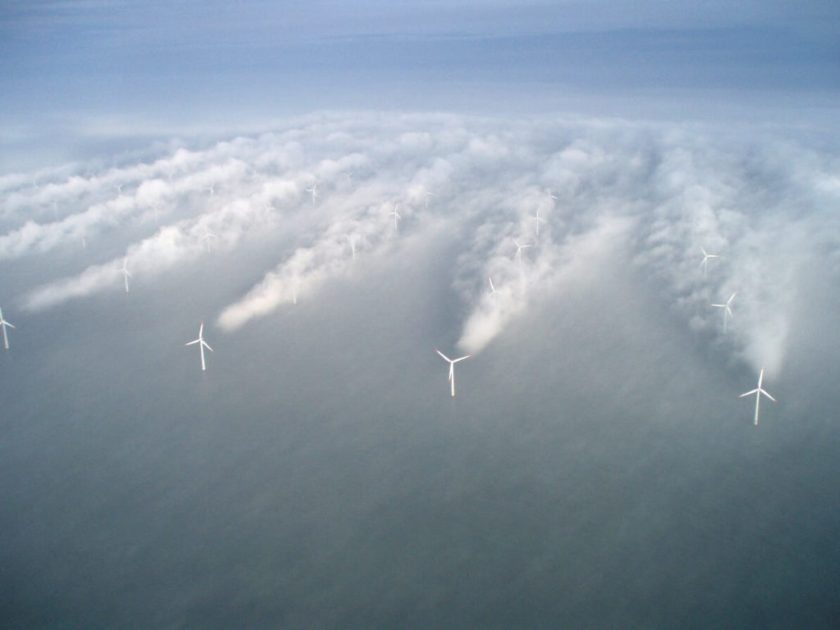
Professor Gerd Ganteför was not insulted when he reported on the so-called wake effect of wind turbines on the high seas in the spring of 2024. Wind turbines in wind farms not only take the wind away from each other, they can also have an impact on the wind behind the turbines for up to 100 kilometres. In the meantime, the realization has also reached the operators. The company Orstedt, which is heavily involved in the so-called renewable energies, has some interesting results on its website.
Professor Gerd Ganteför was not insulted when he reported on the so-called wake effect of wind turbines on the high seas in the spring of 2024. Wind turbines in wind farms not only take the wind away from each other, they can also have an impact on the wind behind the turbines for up to 100 kilometres. In the meantime, the realization has also reached the operators. The company Orstedt, which is heavily involved in the so-called renewable energies, has some interesting results on its website.
In a convoluted way, it says that the plants in the network deliver less yield, which means that the profitability per plant decreases. Overall, electricity production would increase with more wind farms, but so would the time up to which the investment per turbine would pay off. The return decreases if the calculated 4,000 – 4,500 hours of electricity generation per year are not achieved. The effect is likely to intensify with more and more wind farms. It’s like a downward spiral. Let’s see what the German answer to this is. It would not be surprising if this were to pay even more feed-in tariffs.
“The size of the German areas is not the decisive point. ” Theoretically, much higher capacities than 70 gigawatts could be built up there,” says Martin Dörenkämper from Fraunhofer IWES at the Oldenburg site. It is true that the shading effects would increase if the wind turbines were planned even more densely than before. But overall electricity production would still increase, even if the yield per plant were lower. The question is therefore not whether Germany has enough space for 70 gigawatts, but how many terawatt hours of electricity can be produced each year – and at what price. After all, the higher the power density and the lower the yield per turbine, the more difficult it becomes for the operator to refinance the construction and generate a return.”
Ganteför explains in his video that it is now possible to make the wake effect visible with the help of radar images from the Sentinel 2 satellite. In the spring, he was still ridiculed for the thesis. He points out that the wake effect can have various effects. On the one hand, there are the turbines on land, which could get less wind, the possible warming behind the turbines and also the influence on precipitation. Ganteför pleads for more research in this area. Two years ago, the Fraunhofer Institute Hereon already pointed out another problem. Another effect: The disruption of the stratification of the water can affect plankton production and that would be the beginning of the food chain.
“Another consequence of wake vortices is the reduction of shear-related processes at the sea surface. In other words, the turbulent mixing of the water surface caused by the wind is reduced dozens of kilometers around the wind farm.
Water is usually layered, e.g. a layer of warmer water lies on top of a layer of cold water.
The wind farms disrupt the natural stratification. Due to the reduced mixing, a more stable stratification of the water is favored. This was particularly noticeable during the decline in summer shifts. The natural sighting of the water is particularly striking in summer and decreases towards autumn. In the area of the wind farms, however, a more stable stratification outside the seasonal fluctuation was calculated.
“What do the results mean for the North Sea?
“The magnitude of the induced mean changes does not indicate serious local effects, but far-reaching structural changes in the system occur,” says Christiansen. “The changes in current and mixing are expected to affect plankton production and the structure of the food web and can influence the functioning of protected areas. It is therefore important to take these consequences into account when developing marine protection concepts,” says Hereon Institute Director Prof. Corinna Schrum and gives an outlook for the implementation of the results.However, further investigations are needed to analyse possible feedbacks on air-sea exchange. A change in this exchange has the potential to affect regional atmospheric conditions and ecosystem dynamics and will be the subject of further studies.”
We have reached the end of the Olympic summer in Paris, comprising of the Olympics and the Paralympics. Though the U.S. finished at the top in the Olympics and in the top three at Paralympics, much of the world’s attention was on the Olympics’ obscene mockery of Christianity in its opening ceremony at Paris.
It also overshadowed some unprecedented events in the city. A few days prior to the games, French authorities fined the country’s second most popular news channel 20,000 euros for challenging the popular narrative about a purported climate crisis.
CNews, a round-the-clock news operation, was charged by the Regulatory Authority for Audiovisual and Digital Communication (ARCOM) with a broadcast’s failing to adequately challenge views skeptical of the global warming scare.
“This is the first time in France and internationally that ARCOM or a regulatory authority has issued a financial sanction for a breach concerning an environmental subject,” said QuotaClimat, an organization that reportedly has complained in the past about the climate reporting of various media.
The case of CNews raises serious concerns about press freedom – a cornerstone of democratic societies — and the public’s access to diverse perspectives on environmental issues. While the regulator argued that the channel failed to provide sufficient context and counterarguments, critics contend that the decision sets a dangerous precedent, effectively requiring media outlets to adhere to a specific ideological position.
The role of journalism in a democracy is not to parrot official viewpoints or consensus opinions but rather to investigate, question and present different perspectives on important issues. By imposing restrictions on how climate issues can be reported, France undermines this crucial function of the media.
This crackdown on climate reporting exemplifies a broader trend of using authorities backed by official powers to curb the expression of views that challenge a government’s preferred narrative, a concerning development for anybody favoring an open society.
The practice has become far too common in academic research as well. Scientists who challenge the crisis narrative are subjected to witch hunts and termination from their professions.
Many climate scientists, influenced heavily by funding sources, are transforming their discipline into something that hardly qualifies as science. While their work has the appearance of scientific research and is conducted by those with scientific credentials, both its methodologies and findings are heavily shaped by the agendas of special interest groups, political figures and international governing bodies.
Researchers and their organizations, in too many cases, have become harvesters of grants rather than seekers of truth. Such scientists are supplicants of governments and wealthy foundations wanting particular findings and willing to pay for them.
Those who champion genuine scientific inquiry must speak out against deliberate efforts by climate alarmists to discredit sceptics, whose questions are manifestations of critical thinking. Inquiry into popular theories should be welcome, not treated as sedition.
From Galileo’s astronomical discoveries to more recent controversies in fields like genetics and nuclear energy, attempts to protect the popular view have often backfired. slowing scientific progress and technological advancement.
In the case of climate change, this is true too. Restrictive energy policies — justified on the basis of addressing a “climate crisis” — already have impeded economic growth and increased prices. Ideologues seek to reverse decades of advancement in clean-coal power generation, oil and gas development and other technologies.
Scientific understanding of Earth’s climate is not furthered by silencing dissent but through rigorous research, peer review and open debate. By allowing a diversity of voices in the media, including those that challenge the so-called “consensus,” opportunities for truth arise.
Isolated intrusions on press freedom are annoying. But actions like that of the French regulator for reporting on a climate story can be replicated by other governments and for other subjects – a certain eventuality without the intervention of honest citizens
For this is the proverbial slippery slope greased by powerful people’s lust for control or money or both. Left alone, only the most ruthless of the politically connected get to say where it ends. Even they can’t say for sure, but history tells us it ends badly.
This commentary was first published at yourNews on September 10, 2024.
Vijay Jayaraj is a Research and Science Associate at the CO2 Coalition, Arlington, Virginia. He holds a master’s degree in environmental sciences from the University of East Anglia, U.K., and a postgraduate degree in energy management from Robert Gordon University, U.K.
SEC Chair Gary Gensler started out with big plans on ESG.
Gensler seeks board diversity, workforce, ESG fund disclosures
Agency unlikely to finalize ESG regulations before January
The Democrat arrived at the Securities and Exchange Commission in 2021, after George Floyd’s murder in 2020 and President Joe Biden’s election that year fueled interest in environmental, social and governance investing. Gensler wanted public companies to report details about their climate change risks, workforce management and board members’ diversity.
He also sought new rules to fight greenwashing and other misleading ESG claims by investment funds.
Almost four years later, most of those major ESG regulations are unfinished, and they’ll likely remain so in the less than five months Gensler may have left as chair. A conservative-led backlash against ESG and federal agency authority has fueled challenges in and out of court to corporate greenhouse gas emissions reporting rules and other SEC actions, helping blunt the commission’s power.
The climate rules—Gensler’s marquee ESG initiative—werewatered down following intense industry pushback, then paused altogether after business groups, Republican attorneys general and others sued.
“It’s clear the commission leadership is exhausted and feeling buffeted by the courts, Congress and industry complaints,” said Tyler Gellasch, who was a counsel to former Democratic SEC Commissioner Kara Stein and is president and CEO of investor advocacy group Healthy Markets Association.
The SEC has finalized more than 40 rules since 2021, “making our capital markets more efficient, transparent, and resilient,” an agency spokesperson said in a statement to Bloomberg Law.
The spokesperson declined to comment on the status of the agency’s pending ESG rules, beyond pointing to the commission’s most recent regulatory agenda.
Long-standing plans to require human capital and board diversity disclosures from companies have yet to yield formal proposals. Final rules concerning ESG-focused funds still are pending, and even if the SEC adopts them before January as the agenda suggests, a Republican-controlled Congress and White House may have the power to quickly scrap them under the Congressional Review Act.
Unlike the workforce and board diversity rules that have yet to be proposed, investment fund regulations concerning ESG have already been drafted and are targeted for completion in October, according to the SEC’s latest agenda. ESG funds would have to disclose their portfolio companies’ emissions and report on their ESG strategies.
The SEC proposed the regulations in May 2022, along with rules intended to ensure ESG funds’ names align with their investments. The commission issued final fund name rules in September 2023.
The SEC’s investment fund proposal has raised objections from both funds and environmental and investor advocates.
The proposal would require environmentally-focused funds to disclose their carbon footprints, if emissions are part of their investment strategies. But it wouldn’t require funds that look at emissions to disclose other metrics that play a significant role in how they invest and the methodology they use to calculate those measures. The Natural Resources Defense Council, Interfaith Center on Corporate Responsibility, and other environmental and investor groups pushed for those requirements in an April letter to the SEC.
The Investment Company Institute, which represents funds, has raised concerns its members would have to report on their carbon footprints before public companies must disclose their emissions under SEC rules. The group in April called on the SEC to keep fund emissions reporting requirements on ice until the litigation challenging the agency’s public company climate rules is resolved. That litigation is at the US Court of Appeals for the Eighth Circuit, which is unlikely to rule this year.
The fund rules have received no Republican support at the SEC, with only Gensler and his fellow Democratic commissioners voting in favor of proposing them.
“If it’s a Republican Congress and Trump administration, you could imagine they would be willing to disapprove those,” said Susan Dudley, a George Washington University professor who oversaw the White House regulatory policy office under President George W. Bush.







You must be logged in to post a comment.