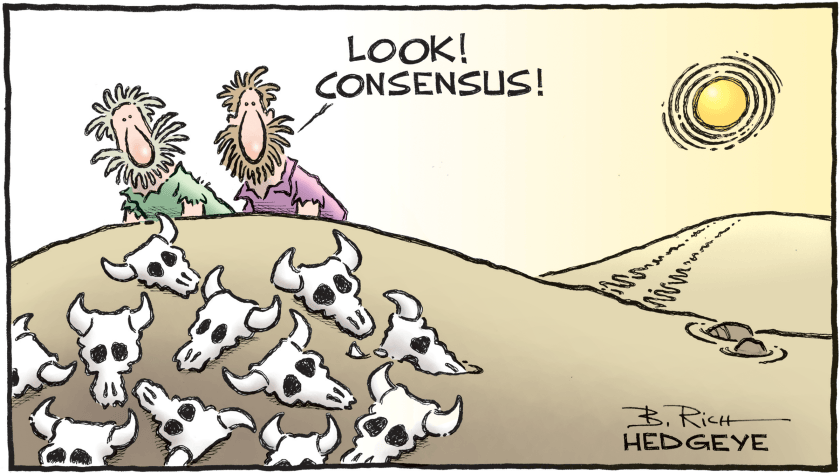
Global warming, climate change, all these things are just a dream come true for politicians. I deal with evidence and not with frightening computer models because the seeker after truth does not put his faith in any consensus. The road to the truth is long and hard, but this is the road we must follow. People who describe the unprecedented comfort and ease of modern life as a climate disaster, in my opinion have no idea what a real problem is.
“… Major uncertainties include … exit or connection of large loads, dependability of new technologies … regular or seasonal decommitment of coal units … changes to exit timing or unexpected plant failure. …”
“… Major uncertainties include … exit or connection of large loads, dependability of new technologies … regular or seasonal decommitment of coal units … changes to exit timing or unexpected plant failure. …”
Energy grid not ready for Eraring coal plant’s closure, AEMO says
The energy grid is not ready for the closure of the Eraring coal plant, the energy operator has warned, raising the threat of widespread blackouts in eastern Australia.
The Hunter Valley coal plant’s life had already been extended from a planned closure of 2025 to 2027, at a cost to taxpayers of up to $225 million a year.
The Australian Energy Market Operator (AEMO) has warned, however, that while there are enough renewables in the pipeline to cover its closure, supporting infrastructure to keep the grid stable is not expected to be ready.
“Coal-fired power stations are retiring, and this is not new news. Ten have retired since 2012, and the remaining fleet are getting old,” AEMO chief executive Daniel Westerman told AM.
…
“We need to make sure that the grid has a steady heartbeat.”
…
But he said necessary technology like synchronous condensers, which help to absorb reactive power and keep the grid stable, is not due to be installed until after Eraring’s closure.
From the AEMO report 2025 Transition Plan for System Security;
2025 Transition Planfor System SecurityDecember 2025
Maintaining system security through the energy transition
…
Throughout this transition, the NEM must be both reliable and secure. To be reliable, there must be enough generation to meet consumer needs at any point in time. To be secure, the power system must operate safely within its defined technical limits, withstand disturbances, and be able to restart in the event of a widespread outage.
For decades, system security services have been a by-product of coal-fired power generation. As these aging generators withdraw and retire, replacement services must be delivered on time to support higher levels of renewable energy produced by residential rooftops and commercial scale generators.
…
Shortfalls in security investment mean action is needed for imminent transition points
Industry and governments are already acting to resolve known risks, with specific remedial action needed to navigate fast-approaching transition points:
System strength requirements to enable the planned retirement of Eraring Power Station have been identified by AEMO each year since 2021, and Transgrid is progressing the procurement of new synchronous condensers. The decommitment of Eraring before these synchronous condensers are operational would result in the activation of Transgrid system security contracts (where available). If security contracts are unavailable, operational intervention may be required by AEMO up to 30% of the time, at significant cost to consumers, to avoid potential consequences of greater severity. Furthermore, without these synchronous condensers the New South Wales power system could face periods where there may not be enough large synchronous units available for AEMO to direct online for system strength, creating a plausible risk of last-resort operational actions.
…
1.2.3Shortages of system security can have severe consequences
Despite best endeavours, the power system can, on rare occasions, experience cascading failures resulting in loss of supply to large portions of the power system. Recent examples – including on the Iberian Peninsula and Chile in 2025, Brazil in 2023 and 2018, and South Australia in 2016 – demonstrate how failures to maintain sufficient system security can lead to widespread blackouts with severe consequences.
…
1.2.4System security risks are asymmetric
…
The period of infrastructure renewal and technology change in the NEM presents a heightened risk profile for system security. This is due to uncertainties associated with what asset and technology changes might occur, when, and the practicalities of commissioning new large infrastructure.
Major uncertainties include the timing of network augmentation, delivery of synchronous condensers and new generators, potential exit or connection of large loads, dependability of new technologies in providing certain security services, regular or seasonal decommitment of coal units under flexible operating regimes, changes to exit timing or unexpected plant failure. Statistically, failure rates increase as plants near the end of their planned operational life …
The AEMO is still talking like the renewable transition just needs a little adjustment, slightly earlier delivery of inertial stability systems, but big questions remain unanswered, like how to time shift the duck neck duck curve between peak solar around midday and peak demand in early evening. And even the AEMO admits to “major uncertainties”, including uncertainties over the “dependability of new technologies” in stabilising the grid.
One of my first software development gigs, many years ago, was working for a major Aussie state government electricity utility. The thing which impressed me was those guys had a real sense of mission, like police or emergency services. It wasn’t just a job to the electricity people, knew there would be real consequences if the grid went down, and saw it as their mission to keep the electricity flowing.
But how could anyone maintain that loyalty to mission in today’s net zero madhouse?
Gas plant operators are forced to play second fiddle to renewables, with the ever present threat of price controls if they try to make up lost revenue when the renewables inevitably stumble.
Hydropower – in a country as dry as Australia, there just isn’t that much to go around.
And none of the other technologies meant to stabilise the coming renewable heavy grid is known to be fit for purpose – as the AEMO themselves admit.
The Aussie electricity grid is politicians playing a game of chicken against the laws of physics. And the green fanatics who run Australia have no intention of being the first to blink.
A Murdoch Media Sky News video on the situation is available here.
Correction (EW): I mentioned the “Duck Neck”, I should have said “Duck Curve”. The Duck Curve is the amount of load which has to be carried by sources other than solar and wind, with maximum load appearing in the early evening, when solar is dropping to zero.
Roger Hallam, cofounder of Extinction Rebellion and Just Stop Oil, as well as a jailbird from his disruptive climate protests, is ready to throw in the towel on Net Zero.
“The fact that Roger Hallam wants to use coercive government to impose his ‘solutions’ on others is a bulls-eye refutation that he is more of a megalomaniac than a clear-eyed scholar. His fringe views should be rejected and his proclivity for violence condemned.”
If there is one article to read to understand why the present economic and political arrangements are going to collapse then this is it. There are only two alternatives:
1. The Labour government keeps with the net zero target for 2030, bills rise, Reform gets in and ensures the target is trashed.
2. The Labour government trashes the target itself so bills don’t rise and so creates a chance that Reform won’t get in.
Either way the target is trashed – the world goes over 2C in the 2030s and social/ecological collapse gets locked in. Either way suicidal short term-ism wins, either in its neoliberal version or its fascist version.
But there is an alternative we cannot speak about – which is to tax the rich who created the mass death project in the first place.
The reality is that net zero by 2030 is expensive and that by dashing flat-out towards it, the result will be even higher costs. The price is not coming down; it is going up.
What a depressing — and errant — analysis and outlook. Neo-Malthusianism lives despite the evidence and without a theoretical basis. There is little reason to believe in doomism. The Julian Simon et al. rejoinders are on the shelf and await an open mind.
The fact that Roger Hallam wants to use coercive government to impose his ‘solutions’ on others is a bulls-eye refutation that he is more of a megalomaniac than a clear-eyed scholar. His fringe views should be rejected and his proclivity for violence condemned.
————————
Roger Hallam describes his story:
As an organic farmer for over 20 years, I could no longer sustain my vegetable growing. The impacts of climate change were decimating the livelihoods of farmers such as myself. Something was very wrong with the world; I could feel it, I could see it and I knew that something had to be done about it as our entire food production system was at stake.
I studied the science and realized beyond unequivocal doubt that the extinction crisis was upon us and that our impending annihilation was being perpetuated by psychopathological criminals who have no interest in the wellbeing of the average human being or the natural world.
Never in doubt, he continues:
Something needed to be done; I gave up everything I had and left for Kings College where I spent the next 4 years sleeping in my car in order to complete my studies in the science of mass mobilization in the tradition of Martin Luther King and Gandhi. I found the answers to the questions I had been seeking. I discovered the actions that we need to take in order to buy ourselves as much time as possible and mitigate indescribable suffering that awaits us as most of the planet becomes uninhabitable and we risk unspeakable horrors such as mass slaughter, starvation and rape, and the rise of fascistic regimes as the scramble for water and land takes off.
Remember the Club of Rome in the early 1970s? “Limits to Growth”? Roger Hallam is in a time warp where he believes that what he believes is real–and sober reality is not.
Remember all those times you’ve been told wine is facing a climate crisis?
France blames climate change for ‘deteriorating’ wine industry. But is uprooting vines the solution?
By Liam Gilliver Published on 29/11/2025 – 8:00 GMT+1
France says it is ‘determined’ to rescue the wine industry from a crisis, but could its plan backfire?
France has turned to the European Union for help after announcing additional funds to help rescue its “deteriorating” wine industry.
Earlier this week, the French Agriculture Ministry confirmed it has allocated €130 million to finance a new, permanent vine-pulling plan to “rebalance supply” and “restore the viability” of struggling farms in the most vulnerable regions.
This process involves severing and lifting the vines and their roots from the soil, usually using specialised equipment like a deep plough, and can cost around €1,000 per hectare.
Minister Annie Genevard has also asked the European Commissioner for Agriculture and Food, Chrisophe Hansen, to finance the crisis distillation of non-marketable overstocks. This is where excess supply is turned into alcohol used for industrial purposes rather than consumption.
…
It comes after Donald Trump threatened to impose a 200 per cent tariff on European alcohol earlier this year, a move which was quickly rescinded. However, a 15 per cent tariff on exports to the US, a crucial market for the French wine industry, was announced several months later.
…
To top it all off, Genevard argued the sector’s suffering has been compounded byclimate change, which has “repeatedly impacted harvests” for several years.
Can you imagine some government official coming onto a US farmer’s land, and telling them they have to uproot some of their crops, to help the farmer next door avoid bankruptcy?
What really strikes me about this story is the problem is overproduction – yet we are continuously told the wine industry is suffering a climate crisis.
Clearly that climate crisis is creating too much wine, so much so the French government wants to kill lots of grape vines. Not exactly the narrative we have all been given by our lapdog mainstream media.
Climate Cultists might hail him for presiding over the demise of fossil fuels and advent of wind, solar, and battery power; or of an idyllic past turning into a tumultuous present and calamitous future if we don’t make that transition.
The Roman god Janus had two faces: for comings and goings, beginnings and endings, the interim between war and peace, and transitions both tangible and abstract.
Climate Cultists might hail him for presiding over the demise of fossil fuels and advent of wind, solar, and battery power; or of an idyllic past turning into a tumultuous present and calamitous future if we don’t make that transition.
Most of us might herald Janus as looking back on decades of fantasy and fanaticism over manmade climate crises and magical “renewable” energy – and forward to an era of realism about natural climate change and reliable, affordable energy as the foundation of civilization and living standards.
Of course, to paraphrase Winston Churchill, this is not the end of that fanaticism. It may not be even the beginning of the end. But it is, perhaps, the end of the beginning of global economic suicide.
For Climate Cultists, the thirtieth Conference of Parties (COP30) ended in dismay and disarray. Every mention of eliminating fossil fuels to reach temperature targets was stricken from the global outcome document. Demands that rich nations pay trillions of dollars to mitigate or stop climate change were replaced with calls for funding “adaptation” and “loss and damage” compensation.
Worse, those new funding demands include no concrete mechanisms for raising and distributing funds, no enforcement mechanisms to compel countries to contribute, and no countries actually willing to provide more than a pittance.
Perhaps worst for COP Climate Cultists are the latest global energy numbers. Even after decades of gaslighting the world about greenhouse gas emissions, rising seas, worsening weather, and the “inevitable” energy transition, 86% of the world’s energy is still oil, natural gas, and coal.
It may indeed be the end of the beginning of global economic suicide. Happy tidings for all.
But COP30 also highlighted another Janus, the two faces of climate censorship: an incessant stream of climate alarmism and renewable energy fantasy – and continuous efforts to silence voices of realism about both illusions. The UN, academia, search engines, activists, news media, and others are all guilty.
* GIGO computer models, exaggeration, fabrication and fearmongering cover the indoctrination gamut.
“We are hurtling toward climate chaos. The planet’s vital signs are flashing red.” The dangers “are no longer future threats but are here now!” Michael Mann proclaimed. “Climate change is no longer a threat of the future. It is a tragedy of the present,” Brazil President Lula da Silva echoed at COP30.
More than 80 million people “could be killed” this century by rising planetary temperatures, a Columbia University “study” declared. Fossil fuel use is causing rising seas and worsening typhoons that threaten “climate vulnerable” island nations, South Pacific University law students claimed.
Climate change is creating “deadly rivers in the sky” and “supercharging” extreme rainfall, said the Washington Post. Battered by “ferocious climate-fueled” Hurricane Melissa, small island nations tell the world, “Our lives are on the line,” the Associated Press announced.
Scientists have debunked every one of these assertions, and many more. See here, here, here, here, here, here, here, and here!, for example. Moreover, those much-despised fossil fuels provide abundant, reliable, affordable energy for heating and cooling, modern homes and buildings, early warning systems, and other technologies that protect us against all these threats – and explain why deaths from extreme cold and natural disasters have plummeted by 99% over the past century.
* Equal efforts are devoted to silencing climate reality and dissent from the “climate consensus.”
Google’s AI summary insists that “claims that the IPCC prevents climate debate are false” and are “not supported by the organization’s findings.” Actions by the IPCC and others completely belie this.
Indeed, at the just-concluded COP30 summit in Brazil, the UN and IPCC launched a Global Declaration to support their Global Initiative for Information Integrity on Climate Change. The Declaration calls on “governments, the private sector, civil society, academia and funders [George Soros and others] to take concrete action to counter the growing impact of disinformation, misinformation, denialism, and deliberate attacks on environmental journalists, defenders, scientists and researchers that undermine climate action and threaten societal stability.”
Of course, they alone will define and determine what is climate “information” or “disinformation,” decide what scientific inquiry and debate will be permitted and reported in “mainstream” circles, determine what is or is not “reliable” information about “climate disruption,” decree which “integrity” will be promoted, and assess what “societal stability” is being threatened.
They certainly won’t cover the real Net Zero reasons skyrocketing electricity prices and blackouts have hammered families in Britain, Germany, and Spain. Nor will they report honestly (or at all?) about the record 12-year absence of any Category 3-5 hurricanes striking the United States (2005-2017) … or zero landfalling US hurricanes in 2025.
Multiple nations have already endorsed the Declaration, including Brazil, Uruguay, and once-stalwart-defenders of science and free speech Canada, Denmark, France, Germany, and Sweden. They clearly have no intention of ending the COPs, rolling back the Climate Industrial Complex, or reducing support for the climate “crisis” and renewable energy “consensus” and agenda.
The Biden administration’s National Climate Advisor worked closely with Big Tech and news organizations to suppress inconvenient facts about climate models, climate change reality, fossil fuel benefits, and the massive land areas, raw materials and mining required for wind, solar, and battery power.
Even “reputable” and “esteemed” organizations actively censor climate discussions. The American Chemical Society’s Chemical & Engineering News has not permitted dissent to “prevailing views” about “dangerous CO2-driven global warming” since a balanced December 2009 article presented multiple sides of this too often contentious issue, CO2 Coalition executive director Gregory Wrightstone told me.
And yet, leading news outlets, teachers’ unions, and other institutions work closely behind the scenes to coordinate and propagate narratives that advance one perspective and ignore natural climate change today and throughout Earth history, the irreplaceable benefits of fossil fuels, and the harmful impacts of “clean, renewable” energy on air and water quality, agriculture, scenery, habitats, and wildlife, especially birds.
For example, Wrightstone explained, the National Science Teachers Association pressures teachers to use a curriculum that claims we face a manmade climate crisis, ignores the agricultural and environmental benefits of carbon dioxide, stresses alleged harm from fossil fuels, and ignores damage inflicted by expensive, intermittent wind and solar projects on our planet, economy, and human health.
It may be true, as Don Vito Corleone said in The Godfather, that “one lawyer with his briefcase can steal more than a hundred men with guns.” But one hacker with a computer can steal far more … and bureaucrats with a UN treaty or two can rob us of trillions. The climate and clean energy scam must be terminated – pronto.
Calendar may need to be ripped up for major rescheduling of some of world’s biggest tournaments
A World Cup final played on Easter Sunday or Hallowe’en. A summer Olympics staged in the autumn, winter or spring. A World Athletics Championships spanning several months of the year.
If that reads like a shortlist of ideas for a Telegraph Sport April Fools’ Day story then it is probably because, until recently, it might easily have been dismissed as one.
Now, however, those ideas are genuinely being discussed as part of plans to rip up the international calendar and revolutionise when sport’s biggest events take place.
And it is all thanks to one burning issue: climate.
It’s the same load of old nonsense we get every year, usually from the BBC. It is sad though to see the Telegraph embarrass itself in this way.
If it is going to be too hot to hold the Olympics in the summer, why have they been held in hot locations such as Athens, Atlanta, Barcelona and Los Angeles in recent years. Surely Athens in the middle of August would be far too hot?
As for the World Cup, they are always traditionally held in summer, because it is the offseason for most countries. The Qatar event, held in winter a few years ago, created huge disturbance to domestic leagues. The reality is that several World Cups have been held in weather that was far too hot, including Mexico in 1970 and Italy in 1990 – it is a case of “follow the money”.
It is hardly beyond the wit of man to choose venues, such as England, where summer temperatures are ideal.
Silly Mr Rumsby even writes:
“At the 2019 Rugby World Cup in Japan, World Rugby was forced to cancel England’s pool match with France and New Zealand’s against Italy as a result of Typhoon Hagibis”
Well, yes, Mr Rumsby. They often have typhoons in Japan! Did not you know?
He reports about concerns regarding heat stress in next summer’s World Cup in the US:
“Infantino’s comments about moving the World Cup to March or October came barely a week after Victor Montagliani, the Fifa vice-president, said that matches at next summer’s tournament could kick off later than they might have in order to avoid the hottest part of the day.
That, in turn, followed the publication of a study that found 10 of the 16 venues in the United States, Canada and Mexico were at very high risk of extreme heat stress conditions.”
The final will be held in New York, where peak temperatures used to be much higher in the past. In most years, you can expect to experience temperatures close to or over 100C. It is not “climate change”, Mr Rumsby, it is weather.
Journalism fearmongering has been alive and well for more than a century. In 1918, the American journalist, critic and satirist H. L. Mencken is credited with saying: “The whole aim of practical politics is to keep the populace alarmed (and hence clamorous to be led to safety), by menacing them with an endless series of hobgoblins, all of them imaginary.”
Journalism fearmongering has been alive and well for more than a century. In 1918, the American journalist, critic and satirist H. L. Mencken is credited with saying: “The whole aim of practical politics is to keep the populace alarmed (and hence clamorous to be led to safety), by menacing them with an endless series of hobgoblins, all of them imaginary.”
The Op-Ed article [below] was first published by Professor Emeritus Daniel W Nebert in The Cincinnati Enquirer in May 2015; immediately afterwards, several newspapers located in the southeastern United States asked permission to reproduce the article in their own newspapers. Today, more than a decade later, this article is just as relevant, or even more relevant, than ten years ago.
Should I Worry?
The media constantly strives to increase newspaper and magazine circulation; also, the number of radio listeners and television, and online viewers. One effective way to achieve this goal is to exploit the theme: “Should I worry?”
For example, after World War II was the “flying saucer scare.” Worry about an invasion from outer space certainly sold more newspapers and magazines and increased television news-watching. This concern also led to the government-funded program, Search for Extraterrestrial Intelligence (SETI).
In the 1940s-50s some were convinced that fluoridation of drinking water was a “communist conspiracy.” Fearmongering has remained sufficiently strong even today in some communities so that fluoride is still not added to city water supplies — despite medically-proven benefits that children drinking fluoridated water (containing very low levels of fluoride) have fewer dental cavities due to strengthened enamel.
In the late 1940s began the fright of “nuclear winter,” propagated over the next four decades by Russian KGB, Carl Sagan and others. Explosions of multiple nuclear bombs, causing numerous city-firestorms and excessive atmospheric dust, might block sunlight and lead to serious climate cooling.
In the 1960s was “zero population growth,” endorsed by Paul Ehrlich and others. By 2000, if Earth’s population continued to increase, the planetary food supply was predicted to become depleted; some followers of this political movement actually decided on having fewer children because of this fear.
Between 1950 and 1970, cooler weather prevailed in the U.S., Europe and China, compared with the 1930s-40s. “Global cooling” became a concern. Major articles in Time (1974) and Newsweek (1975) magazines proposed that Earth might be entering a new “Ice Age.” Yet, by 1978, the cooling trend of 1945-75 had disappeared.
In 1975Wallace Broecker, geochemist at Columbia University in a Science journal article, was credited with first using the term “global warming.” In 1988 the United Nations’ Intergovernmental Panel on Climate Change (IPCC) held its first meeting, which marked the beginning of global warming hysteria. Satellite measurements of extremely accurate worldwide bulk temperatures of the atmosphere began in late 1978, which did show warming of several tenths of a degree, until 1997; this coincided with the 1997 Nobel Peace Prize awarded jointly to Al Gore and the IPCC for “creating awareness of global warming.”
For the past 18 years, however, no further statistically significant increases in global surface temperatures have occurred — while fear-mongering of “rising carbon dioxide levels” and “climate change” has continued to this day as political agenda in the media. Wind and solar power, heavily subsidized by governmental funds because they are not otherwise cost-effective, have been championed by environmentalists.
Then came the “Y2K Bug,” fear that all computers worldwide would simultaneously crash, when changing from December 31, 1999, to January 1, 2000. “The computer glitch that scared the world” — never materialized.
There are other topics of concern. Childhood vaccinations causing autism spectrum disorder (ASD) or attention-deficit-hyperactivity disorder (ADHD). Consumption of commercially-prepared food, or food containing preservatives, rather than “organic” foods, resulting in cancer. Exposure to genetically modified foodstuff causing cancer. All of the above, and many other things, are proposed to be responsible for dramatic increases in childhood ASD, ADHD, asthma, and obesity seen today in Western societies.
On a daily basis in the media, each of us is free to choose: “Should I worry?” or “Should I ignore all the hype?” Perhaps being aware of these issues is acceptable. Being consumed with panic over these issues is not healthy.
Daniel W. Nebert is professor emeritus, University of Cincinnati Medical Center, Ohio.
What’s New!
Happy Thanksgiving from the CO2 Coalition! Here is a video for you:
The consequences for marine life flow directly from these physical changes. For a region whose fisheries and ecological dynamics depend heavily on subtle balances in ocean stratification, nutrient cycling, and the Mid-Atlantic Cold Pool, even small-but-persistent distortions can ripple across the food web.
There is an old scientific maxim that complex systems rarely behave as planners expect. For decades, environmental policy has marched in the opposite direction—insisting that ever-larger interventions can be sketched out on whiteboards, implemented by decree, and assumed to behave as the architects intend. Offshore wind development is one of the latest manifestations of this technocratic impulse. The rhetoric surrounding it is full of confidence: these vast industrial installations are treated as benevolent intrusions upon the marine environment, as if nature would politely adapt to accommodate the turbines.
Accepting the study’s findings at face value, the implications for marine ecosystems are not trivial; they are structural. They challenge the notion that “green” energy infrastructure is harmless or ecologically restorative. Quite the contrary: the study describes a persistent reshaping of the upper ocean—one that affects temperature, mixing, upwelling circulation, stratification, and atmospheric stability.
The consequences for marine life flow directly from these physical changes. For a region whose fisheries and ecological dynamics depend heavily on subtle balances in ocean stratification, nutrient cycling, and the Mid-Atlantic Cold Pool, even small-but-persistent distortions can ripple across the food web.
The purpose of this essay is to examine those ramifications. Not through speculative catastrophism, but through careful reading of what the researchers themselves report. This post does not contest the study’s methodology. It does not challenge its assumptions. It simply takes the authors at their word and asks: If this is correct, what happens next?
And in doing so, one encounters a great irony. The same movement that claims to champion the protection of marine ecosystems may be planting the seeds of a long-term ecological reorganization—engineered not by CO₂ emissions, but by the physical footprint of the so-called solution.
A Study That Quietly Admits What Policy Makers Loudly Deny
The study begins with a statement that should have immediately raised questions when offshore turbines were first proposed:
“Offshore wind farms may induce changes in the upper ocean and near-surface atmosphere through coupled ocean-atmosphere feedbacks.” (p. 2)
That sentence alone would have shut down other kinds of offshore development. Imagine the regulatory reaction if an oil company casually admitted that new drilling platforms “may induce changes in the upper ocean.” Yet for wind turbines, such declarations are treated as benign observations.
The authors further acknowledge:
“The role of air-sea interactions mediated by offshore wind farms remains poorly understood.” (p. 2)
If one substitutes “deepwater drilling rigs” or “extensive trawling operations” into that sentence, the precautionary principle would be invoked immediately. Instead, until the Trump administration began to intervene, offshore wind development proceeded at historic scale, while scientists only now begin studying the consequences.
This is not skepticism in the cultural sense; this is skepticism in the scientific sense—the active suspension of assumption until evidence is available. The study presents precisely that evidence: that large-scale wind installations do not merely sit atop the ocean surface as silent sentinels. They reshape the environment around them.
Wake-Induced Changes: A Subtle Physical Distortion with Outsized Ecological Meaning
What the study documents is not dramatic, but persistent. And in ecological systems, consistency over time is more consequential than magnitude.
The central finding:
“Simulated cumulative reductions in wind stress due to large-scale wind farm clusters lead to sea surface warming of 0.3° to 0.4°C and a shallower mixed layer.” (p. 2)
That sentence deserves to be read twice. It is the heart of the matter.
These turbines weaken wind stress—something that should surprise no one, since extracting energy from the wind must reduce the wind’s momentum. But what has been largely ignored is what happens next: the ocean responds to the reduced stress by warming, restratifying, and retreating from the usual summer mixing regime.
The authors quantify the structural changes:
Wind speeds decrease by 20–30% at hub height (p. 4)
Wind stress decreases by 10–20% within lease areas (p. 6)
Ocean turbulent kinetic energy decreases (p. 6; Fig. 4D)
Mixed layer depth shoals by ~20% (p. 6–7; Fig. 3B)
Stratification increases sharply at the mixed-layer base (p. 6–7; Fig. 3E)
SST warming reaches up to 1°C in some summers (p. 9; Fig. 6D–M)
These are not trivial adjustments. They indicate that the entire physics of the shelf region is being nudged into a new state—not by climate change, but by the turbines themselves.
The authors phrase this in neutral scientific language, but ecological interpretation does not require activist rhetoric. Every one of these parameters—mixing, stratification, upwelling, heat flux—controls the availability of nutrients, the timing of phytoplankton blooms, the distribution of fish, and the structure of food webs.
They write:
“These changes may drive oceanic and ecological responses.” (p. 3)
That understated phrase is the closest the paper comes to discussing consequences. It is left to others to extend the implications.
The Mixed Layer: A Five-Meter Engine of the Atlantic’s Biological Productivity
The Mid-Atlantic Bight sees a shallow summer mixed layer—only about 5 meters deep. The authors emphasize this:
“The mixed layer depth… remain[s] less than 5 m near the wind farms.” (p. 6)
In such environments, even a one-meter shoaling is proportionally enormous. A 20% reduction in mixed-layer depth shrinks the zone where nutrients, light, and turbulence combine to support primary productivity.
The model shows:
“With the wind farms in place, the MLD decreases by about 1 m, a 20% reduction.” (p. 6–7)
A thinner mixed layer:
Restricts nutrient entrainment
Increases stratification
Changes the ratio of light to nutrients
Favors smaller phytoplankton at the expense of larger diatoms
Alters the base of the food web
That is not conjecture. Those are established dynamics in marine ecology.
The authors further note:
“Ocean warming is concentrated within the mixed layer, while cooling occurs below.” (p. 6–7)
This creates a sharper thermocline—a physical barrier to mixing. Nature does stratification on its own in summer, but the turbines are sharpening the knife.
Upwelling Weakening: The Quiet Undermining of a Fisheries Engine
One of the most consequential findings appears in the analysis of the New Jersey coast. Offshore wind installations, by reducing alongshore wind stress, also reduce the Ekman transport that drives coastal upwelling.
The study presents clear evidence:
“Upwelling-favorable alongshore wind stress is weakened shoreward of the wind farms.” (p. 11; Fig. S12A)
And:
“In the absence of wind farms, the 21.6°C isotherm outcrops 20 to 30 km offshore… with the wind farms, it remains at the subsurface.” (p. 11; Fig. S12B)
This is unambiguous: the turbines alter upwelling.
Upwelling is not a side detail of oceanography. It is the mechanism that delivers nutrients into the photic zone, sets the stage for plankton bloom timing, and influences fish recruitment. The Mid-Atlantic may not have the dramatic upwelling of the California Current, but its modest upwelling pulses are critical to ecosystem function.
If the turbines consistently suppress these events—something the model indicates—then:
Coastal nutrient supply declines
Primary productivity shifts
Larval transport pathways change
Populations that depend on cooler bottom waters (e.g., flounder, surfclams, scallops) lose thermal refuge
These are system-level impacts.
The authors themselves connect the dots by citing prior research:
“Large wind farm clusters may affect nearshore stratification and formation of the Cold Pool (a key subsurface water mass supporting regional fisheries and ecosystems).” (p. 3)
Thus, even before their own analysis, the researchers admit the stakes are large.
The Cold Pool: A Vulnerable Cornerstone of Atlantic Ecology
The Mid-Atlantic Cold Pool—the mass of cool, dense bottom water that persists through summer—is a defining feature of this region’s ecology. It shapes species distributions, migration timing, recruitment, and survival.
The study’s findings read like a recipe for perturbing this structure:
Reduced wind stress
Weaker mixing
Shallower mixed layer
Increased stratification
Altered upwelling circulation
The authors state:
“These patterns… are consistent with reductions in wind stress, TKE, and turbulent mixing.” (p. 7)
Reduced mixing and altered upwelling are precisely the conditions that affect Cold Pool erosion and renewal. If wind farms cause summer stratification to intensify and persist, the Cold Pool may warm or shrink, shifting habitat ranges for commercially important fish and shellfish.
This is not speculation; it is well-known oceanographic mechanics.
The SST anomalies in the study are highly localized, forming coherent warm patches anchored to turbine arrays.
As the authors note:
“The SST warming appears consistently in all cases and is spatially well aligned with the largest offshore wind farm areas.” (p. 9)
The warming is not diffuse—it is patchy. Marine organisms capable of sensing temperature differences (virtually all fish, zooplankton, and many invertebrates) will respond to these patches. Depending on species:
Some will avoid the warm zones
Some will aggregate along the thermal edges
Some will shift migration routes around them
Some will find newly altered predator-prey relationships
This is the ecological equivalent of installing dozens of parking lots across a forest and wondering if wildlife will “adapt.”
Nature adapts, but not always in ways humans prefer.
The Model Shows Persistent, Not Transient, Alterations
A key observation in the time series analysis:
“SST warming emerges within days… the SST anomaly patterns show substantial temporal variability.” (p. 13; Fig. 6C)
The warming does not dissipate. It oscillates within a range but remains locked to the turbine footprint across years.
That persistence is significant. If marine life can count on a consistent patch of anomalously warm water, it will reorganize around that feature. What is a “small” deviation to the human eye becomes a stable environmental landmark for species that rely on fine-scale cues.
Elsewhere the authors add:
“The SST warming… accounts for ~50 to 60% of the… interannual SST variability.” (p. 9)
If accurate, this means the turbines are creating a signal comparable to natural year-to-year fluctuations. Ecologically, that is massive.
Atmospheric Feedbacks Matter: The Ocean Becomes a Heat Source
The study’s most striking feedback mechanism is that the ocean begins transferring heat upward.
As stated:
“The warm SST response is associated with positive anomalies of 3 to 5 W/m²… up to 10 W/m² off New Jersey.” (p. 7; Fig. 2F)
And:
“SST warming exceeds 2-m air temperature… leading to upward heat fluxes and a more unstable marine atmospheric boundary layer.” (p. 7; Fig. 4E)
This turns the nearshore region into a modest heat engine—a new thermal feature in the coastal climate system. The warmer ocean surface destabilizes the atmosphere, increasing turbulence, slightly modifying wind stress, and participating in a feedback loop that reinforces the original warming.
For ecology, this is not merely a meteorological curiosity. Changes in surface turbulence affect:
Gas exchange (oxygen, CO₂)
Surface nutrient retention
Larval dispersal
Air-sea interactions that drive biogeochemical cycles
These are not minor couplings.
Scale Matters: Thousands of Turbines Create a Regional Effect
The study models 1418 turbines (p. 3–4; Fig. 1A). At that density, wake effects are not limited to individual turbines; they merge into cluster-scale phenomena.
The authors write:
“Cumulative reductions in wind stress due to large-scale wind farm clusters” (p. 2) “…widespread SST warming has been reported… in association with floating offshore wind farms.” (p. 9)
Large arrays behave differently than single turbines. Once clusters reach a certain size, the region behaves as a new boundary condition.
Marine ecosystems evolved with seasonal cycles, not with industrial gradients anchored in fixed positions year after year.
The Authors’ Understated Warnings
The study contains several understated but serious acknowledgments:
“These changes lead to a shallower mixed layer… enhanced stratification… altered upwelling.” (p. 12; Fig. 10B)
“These changes may influence downstream ocean circulation and biogeochemical cycling.” (p. 3)
“Assessing potential oceanographic impacts… may require a coupled modeling approach.” (p. 2)
“Upper-ocean processes may play an important role in shaping SST responses.” (p. 14)
Each of these statements admits uncertainty in a system where uncertainty is risk, not permission.
The Irony: The “Green” Project That Warms the Water
The ecological implications are clear:
Surface waters warm
Stratification increases
Mixing weakens
Upwelling diminishes
Deep waters receive less energy
Thermal anomalies persist year after year
This is not what one expects from a supposedly climate-mitigating technology.
The system warms itself—not through CO₂ emissions, but through mechanical interference with natural wind stress.
The authors acknowledge:
“The SST warming exceeds 2-m air temperature warming.” (p. 7)
In other words, the warming is not driven by atmospheric climate change. It is turbine-induced.
This raises a fundamental question: How can a technology be sold as protecting marine ecosystems if it reorganizes them?
Even if one believes in a looming climate catastrophe, the logic fails. You do not fix environmental uncertainty by imposing additional uncertainty.
Historical Precedent: Technocratic Interventions Rarely Go as Planned
Marine history is full of cases where subtle physical distortions produced large ecological reconfigurations:
Salmon runs collapsed when river temperatures rose by fractions of a degree.
European fisheries reorganized when stratification in the North Sea shifted.
Harmful algal blooms proliferated where upwelling weakened.
Lobster populations in New England moved northward due to small temperature changes.
A 0.3–1°C warming anchored to industrial infrastructure is not subtle.
The authors even note similar findings in Europe:
“Reduced wind stress… suppresses vertical mixing… leading to stronger stratification and warming… shown to influence downstream ocean circulation and biogeochemical cycling.” (p. 3, citing Christiansen et al.)
Ocean ecosystems are structured around patterns of mixing, not around human preferences.
The Policy Problem: Decisions Are Being Made Before the Science Is Done
Consider this admission:
“The role of two-way wake-ocean interaction… remains poorly understood.” (p. 3)
Yet offshore wind farms are being approved and constructed at unprecedented scale.
In any other context, a statement like that would trigger a pause in development, not an acceleration. It would invite environmental review, not political slogans. But offshore wind has been insulated from scrutiny because it is sheltered under the umbrella of climate virtue.
From a scientific viewpoint, that is backwards. In a complex system, it is not the well-understood interventions that cause surprises. It is the poorly understood ones.
The Ecosystem Consequences: A Conservative, Evidence-Grounded Summary
Taking the study entirely at face value, the following ecological ramifications are likely:
Reduced Nutrient Input to Surface Waters
Shoaling of the mixed layer reduces entrainment of nutrient-rich deep water.
Reduced upwelling limits nutrient pulses to the euphotic zone.
Diatoms—which support many fisheries—decline in stratified, nutrient-poor conditions.
Changes in Zooplankton Dynamics
Food availability changes in timing and magnitude.
Temperature shifts alter reproductive cycles.
Altered Fish Habitat and Distribution
Species tracking cooler waters will shift away from turbine-induced warm patches.
Predation patterns and migration timing may be disrupted.
Potential Stress on Cold Pool–Dependent Species
Weakened mixing and altered upwelling may shrink or warm the Cold Pool.
Surfclams, scallops, cod, flounder, and others rely on its stability.
Increased Likelihood of Harmful Algal Blooms
Strong stratification and warm surface layers create ideal conditions for dinoflagellate blooms.
Habitat Fragmentation
Persistent thermal anomalies act as ecological boundaries.
Species distributions become patchier.
Long-Term Restructuring of Regional Ecosystems
Persistent changes in stratification and upwelling could reorganize food webs.
Recovery is unlikely without removal of turbines, as the physical forcing is structural.
These are not alarmist conclusions. They derive directly from the physics described in the paper.
The Bigger Picture: Offshore Wind as an Uncontrolled Experiment
The most responsible way to interpret this study is not through emotional rhetoric, but through clear-eyed pragmatism.
Policymakers are currently transforming large regions of the Atlantic into industrial corridors. Yet the science is only beginning to examine the consequences. The authors themselves describe their work as foundational, not definitive. They note:
“Additional uncertainty quantification is necessary… turbulence closure approaches… may influence the evolution of simulated SST and MLD responses.” (p. 14)
In other words, the model may underestimate or overestimate effects; the true impacts remain unknown.
The responsible response to uncertainty is caution.
The political response has been acceleration.
In the name of sustainability, central planners have deployed a technology whose ecological consequences they cannot predict. They presume that a system as complex as the Atlantic continental shelf will behave according to their intentions rather than according to its physics.
But physics always wins.
Conclusion: The Need for Real Skepticism, Not Slogans
This essay has not attempted to argue that offshore wind turbines will cause ecological collapse. Instead, it argues for something far more modest and far more scientific: If you change the physics of the ocean, you change the ecology of the ocean.
The study’s authors have done the scientific community a service by quantifying that physical change:
Reduced wind stress
Shallower mixed layers
Increased stratification
Altered upwelling
Persistent sea-surface warming
Modified atmospheric boundary layer stability
None of this is speculative. It is what their model produced. And if we accept their work at face value—as this post explicitly does—then the ecological ramifications are not uncertain; they are inevitable.
Not because of catastrophism, but because ocean ecology is ocean physics.
The genuine skeptic—the scientist who suspends disposition rather than parrots consensus—must therefore acknowledge that offshore wind development in the Atlantic constitutes a large-scale environmental experiment whose outcomes are unknown, and whose risks have been systematically downplayed.
It is time to retire the simplistic narrative that “green” infrastructure cannot harm ecosystems. The turbines do not know they are green. They obey no moral imperative. They only reduce wind stress. They only alter mixing. They only warm the water.
Bjorn Lomborg is a Danish political scientist, author, and president of the Copenhagen Consensus.
A former Greenpeace member turned pragmatic environmentalist, he argues that fighting poverty and improving global well-being should take priority over extreme climate policies.
His latest book, Best Things First, continues his mission to make the world’s resources work smarter—not louder.
The Version 6.1 global average lower tropospheric temperature (LT) anomaly for November 2025 was +0.43 deg. C departure from the 1991-2020 mean, down from the October 2025 value of +0.53 deg. C.
The Version 6.1 global average lower tropospheric temperature (LT) anomaly for November 2025 was +0.43 deg. C departure from the 1991-2020 mean, down from the October 2025 value of +0.53 deg. C.
The Version 6.1 global area-averaged linear temperature trend (January 1979 through November 2025) remains at +0.16 deg/ C/decade (+0.22 C/decade over land, +0.13 C/decade over oceans).
The following table lists various regional Version 6.1 LT departures from the 30-year (1991-2020) average for the last 23 months (record highs are in red).
YEAR
MO
GLOBE
NHEM.
SHEM.
TROPIC
USA48
ARCTIC
AUST
2024
Jan
+0.80
+1.02
+0.58
+1.20
-0.19
+0.40
+1.12
2024
Feb
+0.88
+0.95
+0.81
+1.17
+1.31
+0.86
+1.16
2024
Mar
+0.88
+0.96
+0.80
+1.26
+0.22
+1.05
+1.34
2024
Apr
+0.94
+1.12
+0.76
+1.15
+0.86
+0.88
+0.54
2024
May
+0.78
+0.77
+0.78
+1.20
+0.05
+0.20
+0.53
2024
June
+0.69
+0.78
+0.60
+0.85
+1.37
+0.64
+0.91
2024
July
+0.74
+0.86
+0.61
+0.97
+0.44
+0.56
-0.07
2024
Aug
+0.76
+0.82
+0.69
+0.74
+0.40
+0.88
+1.75
2024
Sep
+0.81
+1.04
+0.58
+0.82
+1.31
+1.48
+0.98
2024
Oct
+0.75
+0.89
+0.60
+0.63
+1.90
+0.81
+1.09
2024
Nov
+0.64
+0.87
+0.41
+0.53
+1.12
+0.79
+1.00
2024
Dec
+0.62
+0.76
+0.48
+0.52
+1.42
+1.12
+1.54
2025
Jan
+0.45
+0.70
+0.21
+0.24
-1.06
+0.74
+0.48
2025
Feb
+0.50
+0.55
+0.45
+0.26
+1.04
+2.10
+0.87
2025
Mar
+0.57
+0.74
+0.41
+0.40
+1.24
+1.23
+1.20
2025
Apr
+0.61
+0.77
+0.46
+0.37
+0.82
+0.85
+1.21
2025
May
+0.50
+0.45
+0.55
+0.30
+0.15
+0.75
+0.99
2025
June
+0.48
+0.48
+0.47
+0.30
+0.81
+0.05
+0.39
2025
July
+0.36
+0.49
+0.23
+0.45
+0.32
+0.40
+0.53
2025
Aug
+0.39
+0.39
+0.39
+0.16
-0.06
+0.69
+0.11
2025
Sep
+0.53
+0.56
+0.49
+0.35
+0.38
+0.77
+0.32
2025
Oct
+0.53
+0.52
+0.55
+0.24
+1.12
+1.42
+1.67
2025
Nov
+0.43
+0.59
+0.27
+0.24
+1.32
+0.78
+0.37
The full UAH Global Temperature Report, along with the LT global gridpoint anomaly image for November, 2025, and a more detailed analysis by John Christy, should be available within the next several days here.
The monthly anomalies for various regions for the four deep layers we monitor from satellites will be available in the next several days at the following locations:




You must be logged in to post a comment.