When Climate Modeling Becomes Climate Mythmaking: “Sea-Level Rise Causes More Cold Snaps”

The modern climate discourse is full of surprises, but every so often a publication appears that manages to outdo even the most ambitious attempts at connecting loosely related climate variables. The recent Nature Communications paper “Intensification of extreme cold events in East Asia in response to global mean sea-level rise” is one such specimen. It attempts to link global mean sea-level rise (GMSL) — especially in the comically tiny range of 15 to 30 centimeters — to an increase in extreme cold outbreaks in East Asia.

A beach scene featuring tall palm trees swaying against a cloudy sky, with waves crashing onto the shore.

From Watts Up With That?

By Charles Rotter

Article title and metadata related to extreme cold events in East Asia and their relation to global sea-level rise, published in Nature Communications.
https://www.nature.com/articles/s41467-025-63727-1

The modern climate discourse is full of surprises, but every so often a publication appears that manages to outdo even the most ambitious attempts at connecting loosely related climate variables. The recent Nature Communications paper “Intensification of extreme cold events in East Asia in response to global mean sea-level rise” is one such specimen. It attempts to link global mean sea-level rise (GMSL) — especially in the comically tiny range of 15 to 30 centimeters — to an increase in extreme cold outbreaks in East Asia.

Abstract

Today, the global mean sea level (GMSL) stands ~ 20 cm higher than at the beginning of the last century, and the rate of sea-level rise has been accelerating in recent decades. Even a slight, globally uniform sea-level rise can notably impact atmospheric and oceanic circulations at climatic and potentially synoptic scales. However, the extent to which sea-level rise will influence extreme weather remains largely unknown. Here, we focus on East Asia and conduct climate model experiments to investigate the effects of GMSL rise on winter cold extremes. Our experiments demonstrate that GMSL rise promotes stronger and more frequent extreme cold events, and this influence is expected to strengthen significantly in the coming century. This effect is attributed to weakened mid-high latitude westerly winds and increased occurrence of blocking events over Eurasia. Our study presents evidence that GMSL rise can modify synoptic systems and intensify extreme events, suggesting that both coastal and inland countries are exposed to threats arising from GMSL rise.https://www.nature.com/articles/s41467-025-63727-1

To reach this conclusion, the authors construct a world that doesn’t exist, run simulations for thousands of virtual years, and then present the resulting patterns as evidence for a new climate threat. It reads less like a scientific study and more like a technocratic fable: Once upon a time, a uniform global ocean rose an identical number of centimeters everywhere, and then the atmosphere obediently rearranged itself to produce additional cold spells.

The paper admits at the outset that “the extent to which sea-level rise will influence extreme weather remains largely unknown” — a commendably honest statement. Unfortunately, what follows is an attempt not to illuminate that unknown, but to populate it with model-generated certainties dressed in statistical regalia.

The premise rests on the assumption that “even a slight, globally uniform sea-level rise can notably impact atmospheric and oceanic circulations at climatic and potentially synoptic scales.” That line alone deserves an award for imaginative framing. A globally uniform sea-level rise exists in climate models, but nowhere on Earth. The oceans are not a swimming pool; they are a dynamic, sloshing fluid influenced by gravity anomalies, tectonics, heat transport, winds, freshwater fluxes, and basin geometry. Treating them as a flattened bathtub surface is the kind of abstraction that may simplify a model but certainly does not simplify reality.

Yet the authors treat this artificial uplift as a physical input to the climate system, not as a testing gimmick.

And then the real fun begins.

The 2200-Year Model Voyage

The paper reveals that each simulation is run for 2200 model years:

“All experiments were run for 2200 model years, with analyses focusing on the last 200 years of the model output.”

One can appreciate the computational commitment, but the physical justification is less clear. Running a climate model for millennia under fixed conditions is an easy way to induce artificial equilibrium states or oceanic warm pools that have no analog in observed history. The authors themselves candidly acknowledge this:

“Our coupled sea-level experiments have been conducted over a span of 2200 years, a duration sufficient to induce substantial warming in the North Pacific.”

This is equivalent to admitting that the model has been allowed to drift into a condition that Earth has not experienced — and then treating the drift as a feature rather than a flaw. When a long simulation produces substantial warming in a specific region simply because it was allowed to run long enough, that warming is not a discovery; it’s a numerical artifact.

Yet this artifact becomes the scaffolding for the claim that sea-level rise “intensifies extreme cold events.”

The Uniform Sea Level Assumption: A Modeler’s Fantasy

The foundational design choice is laid out without irony:

“Here, GMSL rise is represented by a globally uniform uplift of the ocean reference surface—an idealized but scientifically justified simplification.”

Idealized? Yes.
Scientifically justified? Only if the goal is to make the model easier to manipulate, not to reflect the physical characteristics of ocean basins.

There is something remarkable about taking an inherently heterogeneous real-world process and flattening it into a uniform forcing, then concluding that this manufactured homogeneity creates complex climate responses. It’s a bit like digitally raising the floor of your house by a few centimeters in a video game and concluding that this explains thunderstorms in your backyard.

Later the authors concede that real-world regional sea-level patterns produce “minor and less significant” effects. This is their way of admitting that their modeled effect depends on a scenario that Earth does not produce:

“Regional sea-level variations may also influence winter extreme cold events in East Asia, although the effects appear minor and less significant.”

In other words: the real ocean doesn’t generate the effect they want, but the fictional one does.

The CO2 Paradox: High Sea-Level Rise, Fixed Atmospheric CO₂

The paper freezes atmospheric CO2 concentration at 400 ppm for every simulation, even when sea-level rise is pushed to absurd levels (5, 10, 20 meters):

“In all SL experiments, atmospheric CO2concentration was fixed at 400 ppm (close to current levels) to isolate the impact of GMSL rise.”

This creates a physical impossibility. If sea level rises by 5 to 20 meters — a scale associated with glacial melt over millennia — CO2 would not be holding still at 400 ppm. The entire scenario becomes a detached, ahistorical sandbox, not a representation of anything that could plausibly occur.

The authors even admit that in a world where sea level rises beyond about 2.5 meters, rising CO2 and its warming effects would overwhelm their hypothesized cold-event mechanism:

“The warming caused by high CO2 levels… could potentially offset the effects of sea-level rise.”

Put more plainly: the mechanism only functions in a physically impossible world — large sea-level rise without greenhouse forcing.

Statistical Tricks: When Model Output Becomes “Observed” Data

Extreme cold days (ECDs) are defined using a model-derived threshold:

“We define the temperature threshold by the 10th percentile of the winter daily surface air temperature distribution of the PiControl experiment.”

Using a single model’s internal distribution to define what “extreme cold” means is not inherently problematic. What is problematic is treating 200 years of model output — from a single model — as if they represent 200 independent years of real-world observations.

The authors then apply t-tests grid by grid, highlighting results that achieve a confidence level as low as 90%. In any field outside climate modeling, a 90% confidence level is what you’d use for screening, not for declaring robust risk. But because the model produces thousands of cold events across centuries of output, the statistical machinery can dress even small, model-driven fluctuations in the garb of significance.

The paper is full of statements such as:

“The increase in max persistence can be significant (90% confidence level).”

and

“The solid dots indicate the mean change is significant at a 90% confidence level.”

When you treat synthetic output as empirical data, statistical significance becomes easier to obtain than a parking space at a climate conference.

The Blocking Events and Atmospheric Teleconnections

One of the more creative parts of the study is the claim that raising sea level weakens Eurasian mid-latitude westerlies, strengthening blocking events that funnel cold Arctic air into East Asia. The authors assert:

“As sea-level rise, winter background westerly winds weaken… favoring the development of blocking events.”

This presumed causal chain runs as follows:

  1. Uniform sea-level rise warms the North Pacific (due to long-term model drift).
  2. That warming triggers Rossby wave anomalies.
  3. These anomalies weaken westerlies.
  4. Weakened westerlies allow blocking events to persist.
  5. Blocking events allow cold Arctic air to spill into East Asia.

This is a marvelous illustration of how, once a model is allowed to run long enough, everything can be connected to everything else. The authors even admit that the North Pacific warming — the very heart of this mechanism — is a product of the extended simulation:

“A duration sufficient to induce substantial warming in the North Pacific.”

In other words, the model generates the mechanism because the model is asked to.

To reinforce the illusion of significance, they provide regressions such as:

“R² = 0.45, p = 0.05” between blocking frequency and cumulative intensity of extreme cold events.

Only in climate modeling can one regress two synthetic variables, both produced by the same simulation, both influenced by the same artificial forcing, and call the correlation “evidence.”

The Self-Organizing Maps: When Patterns Organize Themselves

The paper uses Self-Organizing Maps (SOMs) to classify synoptic patterns. This algorithm takes large numbers of similar circulation states and compresses them into clusters representing typical atmospheric configurations.

SOMs are not inherently problematic — they are useful clustering tools — but they rely completely on the dataset provided. Feed them biased model output, and you get biased clusters.

The authors cluster the model’s output into three synoptic patterns (SOM1, SOM2, SOM3), then note:

“The frequency and max persistence of SOM1 increases in almost all sea-level experiments.”

Since SOM1 is defined as the pattern associated with cold events in East Asia, this is simply restating the model’s behavior: when we force the model with a uniform sea-level rise, the cold-related pattern happens more often. This is not a discovery of nature but an internal property of the artificial system.

The Paper’s Own Disclaimers Tell the Story

Buried in the Discussion section is a string of admissions that, taken together, dismantle the very conclusions the paper claims to offer.

  1. Model warming is exaggerated due to long runs: “The warming in this region… may exhibit a slower rate and a smaller magnitude [in reality].”
  2. Uniform sea-level rise is unrealistic compared to regional variations: “We used a uniform sea-level rise and did not account for regional differences.”
  3. Transient responses are not represented: “They do not account for transient responses.”
  4. High sea-level rise scenarios are physically inconsistent: “Atmospheric CO₂ concentrations are expected to far exceed 400 ppm.”
  5. Regional sea-level variations produce little effect: “The effects appear minor and less significant.”

One might expect such limitations to temper the conclusions. Instead, the paper presses forward, declaring:

“Our study presents evidence that GMSL rise can modify synoptic systems and intensify extreme events.”

Map showing cumulative intensity and frequency of extreme cold days (ECD) events in East Asia, with color gradients indicating varying levels and a legend detailing the significance of sea-level experiments.

Evidence is a strong word for findings produced entirely within a model world that bears little resemblance to the real one.

The Grand Finale: “Urgent Assessment”

The study concludes with one final crescendo of technocratic alarm:

“An urgent assessment of the global disaster risk stemming from sea-level rise is imperative.”

This is perhaps the most striking line in the entire paper. After constructing a scenario based on a uniform sea-level rise that does not exist, allowing the model to drift for thousands of imaginary years, and generating cold outbreaks via artifacts of that drift, the authors finish with a call for an urgent global disaster assessment.

It’s the academic equivalent of sketching a hypothetical animal in a notebook and then insisting the Department of Agriculture issue emergency guidelines for feeding it.

What This Tells Us About Climate Science Today

This paper is not an outlier; it is an example of a broader pattern where climate models have evolved into self-referential systems. Inputs are simplified for convenience. Outputs are treated as observations. Statistical tests are applied to synthetic data. And elaborate narratives are woven to suggest real-world risks based solely on model-world cause-and-effect.

The danger here is not that such studies exist — creative modeling can be useful — but that they are routinely presented as evidence, not speculation.

Policymakers are then encouraged to act on the basis of what numerical worlds do, not what the real world demonstrates. When models become the source of threats and models become the evidence for those threats, we’ve crossed into mythmaking.

The uncertainty acknowledged at the beginning of the paper — “largely unknown” — is replaced by synthetic certainty at the end: a certainty that reinforces the prevailing climate narrative and supports calls for more research, more funding, and more policy intervention.

Conclusion

In the end, the paper illustrates how climate modeling can drift far from empirical grounding. A uniformly rising global ocean — a physical impossibility — is used to generate a warmed North Pacific — a model artifact — which is then used to claim that sea-level rise intensifies extreme cold events in East Asia.

If this were not enough, the authors decorate the output with t-tests, regressions, and confidence levels pulled from a dataset that exists only inside a computer. The result is presented as a threat requiring urgent assessment.

If this is not p-hacking on steroids, it is at least the next generation of climate numerology: p-hacking through simulation, where the “p” stands not for probability, but for parameterization.

Cold snaps in East Asia are real. Sea-level rise is real. But the bridge constructed in this paper between the two is as artificial as the uniform ocean surface the authors command into existence with their model code.

As always, the important lesson is this: uncertainty is not a flaw in climate science; dismissing uncertainty is.

And in this case, the uncertainty is large enough to sail the entire model ocean through.

UN Official Orders Brazil to Get It Together Over Absolute Climate Fest Dumpster Fire

A chaotic scene during the COP30 climate conference in Belém, Brazil, showing a crowd of individuals including security personnel and protesters.

From The Daily Caller

Daily Caller News Foundation

Audrey Streb
DCNF Energy Reporter

A top United Nations official reportedly directed Brazilian authorities to immediately address concerns like leaky light fixtures, unbearable heat, and inadequate security personnel at the COP30 climate conference in Belém, according to Bloomberg News.

UN Framework Convention on Climate Change Executive Secretary Simon Stiell reportedly wrote to Brazilian officials on Wednesday, demanding that the state manage security lapses like unsecured doors and insufficient security staffing, according to Bloomberg News. Stiell reportedly noted in the letter that Brazilian President Luiz Inácio Lula da Silva’s office asked state police not to disperse the activists that stormed COP30 on Tuesday, according to the publication.

“The security forces and command structure required to execute the security plan were all present on the ground during the incident but failed to act,” Stiell wrote, according to Bloomberg News.  “This represents a serious breach of the established security framework.”

 (RELATED: Feather-Headed Protesters Storm Elite Climate Summit In Chaotic Scene)

Almost 200 countries and over 50,000 people are in attendance at COP30, according to UN materials. Attendees have been plagued by protesters, flooding and high temperatures during the conference that is set to run until Nov. 21, according to Bloomberg News.

About 150 protesters stormed the conference on Tuesday night and caused a fracas in which two security guards were injured, with one being taken out in a wheelchair while holding his stomach, Sky News reported.

At the conference venue, rain has poured from “the ceiling and light fixtures, creating not only disruption but also potential safety hazards due to electrical exposure,” the letter said, according to the publication.

Poor air conditioning and hot temperatures have also endangered attendees, according to Bloomberg News, with Stiell reportedly arguing that the situation required “immediate intervention” to “safeguard the well-being of delegates and personnel” as there had already been “instances of heat-related health concerns.”

Additionally, one Associated Press report stated that an Indigenous people’s performance was interrupted by a power failure on Monday.

Delegates dealt with bathroom water shortages and long food lines, according to Bloomberg News. Stiell reportedly flagged these uncomfortable conditions, noting that there has been “serious concern regarding the poor condition of delegation offices,” and that several facilities “fall below agreed standards,” while others “are not fit for use,” according to the publication.

Limited accommodations meant that some attendees had to book “love motels,” with owners clearing rooms of raunchy materials ahead of COP30, according to multiple reports.

COP30 attendees are being asked not to flush toilet paper at the venue or elsewhere around Belém, but to dispose of it in trash cans instead, according to an email from the COP30 operations team reviewed by the Daily Caller News Foundation.

“The UN can’t even figure out how to allow toilet paper in toilets at their own summit, but they want to tell the world how to manage and plan their energy economies for the year 2100!” Marc Morano, author and publisher of ClimateDepot.com, who is in Brazil covering the conference, told the DCNF.

All content created by the Daily Caller News Foundation, an independent and nonpartisan newswire service, is available without charge to any legitimate news publisher that can provide a large audience. All republished articles must include our logo, our reporter’s byline and their DCNF affiliation. For any questions about our guidelines or partnering with us, please contact licensing@dailycallernewsfoundation.org.

SPACE.com Swallows Lies that Climate Change Is Making Wildfires Worse, It Isn’t

SPACE.com ran a story claiming that 2024/2025’s wildfires are proof that climate change is making wildfires larger and more severe. This is false. Ground based data, where available, and satellite data both show that wildfires have declined in number and acreage lost over the past century, even as the Earth warmed slightly.

A dramatic wildfire scene with thick smoke and flames rising from a hillside, surrounded by dry grass and charred trees under a cloudy sky.

From ClimateRealism

By H. Sterling Burnett

A dramatic image of a wildfire engulfing a ruined structure, surrounded by flames and smoke, with the word 'NOPE' overlaying the scene.

SPACE.com ran a story claiming that 2024/2025’s wildfires are proof that climate change is making wildfires larger and more severe. This is false. Ground based data, where available, and satellite data both show that wildfires have declined in number and acreage lost over the past century, even as the Earth warmed slightly.

The SPACE.com article, “Wildfires are getting more intense around the world due to human-driven climate change,” is based on a single study published in the journal Earth System Science Data (ESSD), “State of Wildfires 2024-2025,” which makes the unscientific claim that a single year of severe wildfires provides proof that climate change is causing an increase in wildfires.

This assertion suffers from a number of deficiencies. First, it is impossible to honestly attribute a single year of weather or disaster phenomena to climate change. Only a long-term measurement and averaging of trends could indicate a pattern that might suggest climate change as a causal factor. Global wildfire incidences from 2024 to 2025 were due a combination of disparate factors – with different factors resulting in wildfires in different areas. Some factors were common among regions, some not. But none were common across all regions.

The 2024/2025 wildfire season was not, as will be demonstrated shortly, part of a long-term trend.

The underlying study used cherry picked data to claim wildfires were worsening. A review of larger data sets, both location-based historical measurements of wildfire acreage burned and large satellite data sets for recent decades, show the total number of wildfires and acreage lost to wildfires have declined sharply both over the past 130 years covering the pre-satellite era (see Figure 1 below for the United States) and the post-satellite era.

Line graph showing the number of acres burned in wildland fires in the USA from 1926 to 2019, illustrating a decline in acreage burned over the decades.
Figure 1. Available wildfire acreage burned, by year, in the United States, 1926 to 2019. This includes data from NIFC prior to the disappearance of data that occurred in 2021. Graph by Anthony Watts.

Looking at broader global data during the satellite era, data sets from both NASA and the European Space Agency (ESA) show a marked decline in the amount of acreage lost to wildfires, with NASA recording a 24 percent decline in acres lost to wildfires from 1998 to 2015. (See figure 2, below)

Global map showing burned area trend from 1998 to 2015, with areas of increased and decreased fire activity marked in blue and red.
Figure 2: Global observations of burned areas and trends show a decline in wildfires from 1998-2015. Source: “NASA detects drop in global fires,” NASA website, June 29, 2017.

An ESA data set shows a similar declining trend. Scientific journals such as Science, Remote Sensing of the Environment, and Nature confirm these findings.

If there is an overall declining trend in wildfire numbers and acreage lost to wildfires, then climate change can’t be causing an increase in wildfires.

Those facts alone should be sufficient to discredit the SPACE.com article and the study it is based upon. When examining the specific wildfires discussed in the ESSD study one discovers that the wildfires in many instances weren’t wildfires at all. For instance, while the Los Angeles wildfire was large and destructive when compared to recent decades, it wasn’t historically unusual for the region. Also, its ignition, size, and destructiveness were the result, not of a changed climate – since temperatures have actually declined slightly there and precipitation has increased, but rather of a combination of arson, poor water management and neighborhood planning, and lack of fire response management. Nor as discussed at Climate Realism, were recent wildfires in Europe, the Mediterranean, Brazil, and Canada, historically unusual, or tied in anyway to long-term climate change. Moreover, they did create greater air pollution than they would have produced absent climate change.

The ESSD study ties the heightened danger of wildfires to climate change driven worsening drought and fire weather. However, the Intergovernmental Panel on Climate Change (IPCC) has been unable to detect any change in fire weather patterns. (See the table, below)

Chart displaying climatic impact-driver types and their classified confidence levels regarding changes in historical periods and future projections.

The IPCC also reports that more precipitation is falling on average than in the previous 30 years of climate change.

As far as drought goes, in its 2021 Sixth Assessment report, the IPCC distinguishes four categories of drought: hydrological, meteorological, ecological, and agricultural. According to the IPCC, there is limited evidence climate change has increased the number, duration, or intensity of hydrological or meteorological droughts, and it has only medium confidence it has “contributed to changes in agricultural and ecological droughts and has led to an increase in the overall affected land area.”

Even for ecological and agricultural droughts, the data are not clear. The IPCC divides the world into 47 separate regions of study when analyzing drought trends, and its survey of the literature suggests ecological and agricultural drought may have increased during the period of modest warming in 12 of those 47 regions. However, in only two of those regions does the IPCC have even “medium confidence” for any human role in the observed increase. For the remaining regions experiencing a possible increase in droughts, the IPCC has low confidence human activities have had any discernible impact.

In short, there is limited to no evidence, meaning real-world data, suggesting that climate change, whether human-caused or not, has made droughts worse or resulted in heightened fire weather. By contrast, data clearly show that wildfires have declined during the present period of climate change. If SPACE.com wants to be taken seriously as a credible source of science information for the wider public, it should not be in the business of publishing uncritical stories sycophantically promoting the latest alarming study on climate change. Had the journal done a simple fact check, it would have easily discovered that the ESSD study was wrong or misleading on nearly all, if not all, of its major points.


Green Dreams Turn to Rust

Napa Valley College is not far down the road from me, a small community college in the wine country of California. So let me lay out the sunny saga of Napa Valley College’s solar field—a green fantasy that was supposed to be a model for the nation and ended up as a million-dollar weed patch. This is the kind of story that only seems shocking if you weren’t paying attention to how the solar “revolution” actually works: splashy ribbon cuttings, loud political speeches, wild promises…and then, about a decade later, the sound of crickets and the sight of public money quietly composting.

Aerial view of a solar field at Napa Valley College, showing rows of empty solar panel frames interspersed with overgrown vegetation and bare ground.

From Watts Up With That?

Guest Post by Willis Eschenbach (@WEschenbach on X)

Napa Valley College is not far down the road from me, a small community college in the wine country of California. So let me lay out the sunny saga of Napa Valley College’s solar field—a green fantasy that was supposed to be a model for the nation and ended up as a million-dollar weed patch. This is the kind of story that only seems shocking if you weren’t paying attention to how the solar “revolution” actually works: splashy ribbon cuttings, loud political speeches, wild promises…and then, about a decade later, the sound of crickets and the sight of public money quietly composting.

Logo of Napa Valley College featuring green hills and a cluster of grapes.

Flash back to 2006. Napa Valley College, fueled by $7.5 million (half from taxpayers via a bond, half from utility incentives paid for by us poor ratepayers), launches what is then the nation’s fifth-largest solar project. Local and national press swarm, a congressman champions the cause, and the administrators beam with pride. This masterpiece was going to power 40% of the campus, save $300,000 a year, run “virtually maintenance-free” for 25 or 30 years, and serve as a postcard for college sustainability reports everywhere.

For a few years, everything hums along. The thing works. Solar output looks impressive in the glossy pamphlets; the college basks in eco-glory.

But then, reality shows up on the ledger. By 2017—barely a decade on—output has cratered, maintenance costs are climbing, and the system is barely limping along. In 2018, SunPower (the system’s new corporate overlord after a straight-out-of-silicon-valley company shuffle) discovers major faults and charges an extra $160,000 to patch the system together. No one seems to know—or wants to explain—when the panels finally gave up the ghost, but sometime between 2019 and 2021, the weeds won. SunPower goes bankrupt and vanishes, leaving the school with zero support, zero warranty, and a $7.5 million monument to wishful thinking.

How did it fail? Let’s count the ways.

  • The 25- to 30-year “lifespan” was always a myth, an industry fairy tale pulled out of thin air and sold to unprepared bureaucrats.
  • Central inverters—then the industry standard—didn’t have the staying power, leading to cascading technical failures and “planned obsolescence” on the scale of a college football field.
  • Maintenance became a patchwork, as installer, module supplier, inverter company, and maintenance contractor all vanished into the bankruptcy fog one by one.
  • Regulatory goalposts kept moving: by the time Napa tried to salvage the project, new grid export rules and skyrocketing fuel-cell competition made solar more trouble (and less savings) than ever.

The final insult? The only “fix” on offer is a $1 million bid just to haul the dead system away. No maintenance records, no liability info, no insurance payout, no ability—or apparently even the will—to go after the broken warranty. The school is left pondering its new “fuel cell,” which at least uses technology someone can repair.

And don’t let energy consultants off the hook. Far too few of them truly understand this stuff—and not one of them works for Napa Valley College, or any of the bankrupt companies that lined up for taxpayer cash. The colleges, schools, towns, and small governments caught riding the solar coaster are all learning the same lesson: you may want renewable energy, but you’d better get ready for a decade in the customer-service wilderness when something breaks. You’ll be lucky if there’s even anyone left to answer the phone.

Now, 20 years on, Napa Valley College is looking at new bonds, new consultants, and another round of “studies,” all while its original field rusts—too expensive to remove, too costly to repair, too embarrassing to celebrate, and too much reality for the next round of green-themed PR. They’re told “the new technology is better,” the panels cheaper, the batteries better…and you wonder how this one ends.

The Napa fiasco isn’t just an accident—it’s the logical destination for a sector riddled with hype, corporate churn, regulatory quicksand, and political FOMO. “Build it and they will come” has turned into “build it, and ten years later, call a demolition crew.” If you’re a taxpayer or a trustee, the lesson is simple: demand the receipts, don’t buy the fairy tale, and remember—a $7.5 million solar field looks invincible the day you cut the ribbon, and a total farce the day you lock the gate for good.

Another day, another green “success” sprouting weeds.

My best to all,

w.

PS—When you comment please QUOTE THE EXACT WORDS you are discussing. It avoids endless misunderstandings.

No, The Independent, Weather Disasters Do Not Threaten Survival in the U.K.

In The Independent’s article, “Is your kitchen at risk from climate change? It’s closer to home than you think,” author David Simon warns that the climate crisis has moved from “our children’s future” into our homes. Data show these claims are false. Weather hasn’t turned unusually severe nor is the U.K.’s continued survival threatened by flooding or sea level rise.

A dramatic split image showing contrasting extreme weather phenomena: on the left, icy waves and lightning, and on the right, a tornado with a fiery landscape below.

From ClimateRealism

By Anthony Watts

Screenshot of an article from Independent Premium discussing climate change's impact on local environments, with the word 'RIDICULOUS' prominently displayed.

In The Independent’s article, “Is your kitchen at risk from climate change? It’s closer to home than you think,” author David Simon warns that the climate crisis has moved from “our children’s future” into our homes. Data show these claims are false. Weather hasn’t turned unusually severe nor is the U.K.’s continued survival threatened by flooding or sea level rise.

Simon claims that extreme weather is now threatening the “foundations on which we’ve built our lives,” pointing to recent floods, hurricanes, and NASA projections that supposedly show London and other urban areas will soon be under water, writing, “[i]ncreasing numbers of homes here and worldwide are being damaged or destroyed by flooding and other disasters.” He specifically references Hurricanes Katrina (2005) and Sandy (2012).

“The frequency of such flooding is increasing,” Simon asserts, concluding that ignoring or denying the “harsh realities of climate change . . . [is] short-sighted and delusional.”

Simon’s commentary is long on rhetoric and unverified assertions, but short on facts. As Climate at a Glance: Hurricanes explains, long-term data on hurricanes show that there has been no increase in hurricanes as the planet has modestly warmed. In fact, data show hurricane numbers have trended slightly downward since 1971. Also, the U.N. Intergovernmental Panel on Climate Change’s (IPCC  Sixth Assessment Report—an organization Simon once contributed to—states plainly that there is “low confidence in any long-term trends in hurricane activity” and no detectable increase in global tropical cyclone frequency or landfall intensity. What’s true of hurricanes is equally true of flooding, the IPCC has discovered no worsening trend. See the IPCC table 12.12 below:

A table summarizing various climatic impact drivers, their categories, and confidence levels regarding changes in their occurrence, highlighting areas such as river floods and tropical cyclones.
Table 12.12 from Page 90 – Chapter 12 of the UN IPCC Sixth Assessment Report. Emergence of Climate Impact Drivers (CIDs) in time periods, as assessed in this section. The color corresponds to the confidence of the region with the highest confidence: white colors indicate where evidence of a climate change signal is lacking or the signal is not present, leading to overall low confidence of an emerging signal. Highlight and arrow added by A. Watts.

Attributing individual weather disasters to climate change is illegitimate. Floods and hurricanes are weather, not climate. They are temporary events shaped by local and regional atmospheric conditions, not global temperature averages. A flood in New York or a hurricane in the Caribbean does not prove a global trend—it’s a single data point in a noisy system. Only a long-term trend in flood or hurricane frequency or severity might suggest that climate change is making these types of events more common or more intense, but no such long-term trends exist.

When Simon cites the “unprecedentedly wet” period from 2022 to 2024 in the UK, he omits historical context. Britain’s Met Office records show comparable or worse flooding events going back centuries, including the devastating Thames 1947 flood. The event, considered one of the worst floods of the twentieth century, inundated thousands of acres of farmland, displaced tens of thousands of people, crippled business and industry, and caused major damage. Simon also missed the 1953 North Sea inundation “that struck low-lying coastal areas of the Netherlands, Belgium, and the United Kingdom. More than 2,000 people were killed on land and hundreds more at sea. It was the worst natural disaster of the 20th century in the United Kingdom and the worst in the Netherlands since the Middle Ages.” And these terrible natural disasters occurred when carbon dioxide concentrations in the atmosphere were much lower.

The idea that today’s storms are unique, worse, and driven by climate change is ridiculous.

Simon’s article also relies on speculative modeling rather than data. His warning that “NASA projections show vast swathes of [London] at severe risk of flooding by 2030” is based on computer-generated scenarios, not on actual measured trends. According to sea-level monitoring, the current rate of rise near London’s Thames Estuary at Sheerness is modest—around 1.5 millimeters per year—comparable to natural post-glacial rebound rates. London sits, on average, about 25 meters above sea level. At the Thames, the river bank varies from 1.5 meters above sea level at its lowest point to 21.6 meters at the highest level. As a result, at current rates of rise, it would take 1,000 to about 47,333 years for London to flood at the Thames shore depending upon the location. Thus, contrary to Simon’s alarmist claim, there is no sign of a “climate emergency” in the tide gauge record.

The broader scientific evidence aligns with Climate Realism’s repeated findings: floods, droughts, and storms show no consistent global increase. Localized urban flooding is often a function of poor drainage design, aging infrastructure, or land-use changes—not rising CO₂ levels. Moreover, IPCC acknowledges that climate change is as likely to have reduced flooding as it is to have made flooding events more common.

Which brings us back to the absurd headline question: “Is your kitchen at risk from climate change?” No, it isn’t. Your kitchen may be threatened by local planning mistakes, overdevelopment, and infrastructure failures, but it is not at risk from climate change. Climate change did not pour concrete over natural floodplains or build cities below sea level, humans did.

By conflating everyday weather with global climate, Simon and The Independent mislead readers into believing the ordinary is catastrophic. As Climate at a Glance: Extreme Weather points out, the media’s fixation on fear has no statistical foundation. The long-term record shows no significant global trend in extreme weather events. If there is any real risk highlighted by this story, it is of a possible erosion of public trust in media that chooses once again to promote false alarms over accurate reporting.

COP30 Flounders on the Rising Tide of Climate and Energy Reality

Belém, Brazil – COP30, the 30th Conference of the Parties on climate change, is underway in Brazil from November 10 to 21. Attendees insist they’re meeting to save people, the planet, and priceless wildlife from the ravages of manmade climate change.

A large gathering of people at the COP30 climate conference in Belém, Brazil, with lush greenery and mountains in the background, featuring the prominent title 'COP30' in bold blue letters.

From CFACT

By Craig Rucker

Belém, Brazil – COP30, the 30th Conference of the Parties on climate change, is underway in Brazil from November 10 to 21. Attendees insist they’re meeting to save people, the planet, and priceless wildlife from the ravages of manmade climate change.

They’re also “meating” on lavish courses of beef, poultry, lamb, and pork delicacies that dot the COP30 menu list (courtesy of Brazilian agro-giants JBS, Minerva, and MBRF), while a naked Brazilian actress “lays bare” the hypocrisy of these planetary saviors savoring so much “planet-killing” meat and dairy at yet another U.N. bacchanal.

Of course, our credentialed team of CFACT experts is here as well, keeping a watchful eye on the numerous grifters, NGO hysterics, and unworkable proposals. We’ve done so at all 30 U.N.-sponsored climate confabs since the 1990s and feel even more energized this year, because the United States and world are finally waking up to the climate scams.

The Prophets of Doom in Belém warn us endlessly about dangerously soaring temperatures, rising seas, disappearing species, more frequent and intense hurricanes, tornadoes, floods, and droughts.

All are predicted by their computer models and dutifully repeated in news headlines – even though none are actually occurring in the real world.

The tirades have had a long run on Broadway. But fortunately, this year, most of the world is beginning to recognize that the charade is not reality. After President Trump wrecked the farce earlier this year at the United Nations, many now have the courage to acknowledge that:

  • Climate hype and hysteria have been proven to have weak foundations in evidence-based science.
  • “Green” energy is not clean, renewable, or sustainable. Nor can it provide sufficient, dependable electricity to power modern industrial economies or build thriving communities where squalor and disease now reign.
  • Countries that have gone down the “Green Brick Road,” like Britain and Germany, have squandered their citizens’ health and prosperity in obeisance to false climate and energy gods. Fewer and fewer countries want to follow them into civilizational decline or perpetual privation.
  • Without oil and natural gas, paints, plastics, pharmaceuticals, cosmetics, eyeglasses, computers, cell phones, and thousands of other essential products will become harder and harder to come by or will disappear completely.
  • Far more than climate cash handouts, still-impoverished countries need abundant, reliable, affordable electricity and fuels to lift their people out of poverty, disease, malnutrition, joblessness, and hopelessness.

Even billionaire climate alarmist and influencer Bill Gates has moderated his fears about global warming causing “humanity’s demise.” He now says it’s time to focus on improving lives and reducing suffering, particularly for families in the world’s poorest countries. He’s hardly alone.

Since January 2025, nearly 900 companies (including large international corporations) have pulled out of the Science-Based Targets Initiative, which requires that they set “scientifically validated climate targets” and align their greenhouse gas emission goals with international standards. The action represents an “overdue return to economic common sense” to avoid jeopardizing long-term economic viability globally and recognizes that the stringent requirements are not practical or achievable. Nor are they science-based, I would add.

And since December 2024, the largest U.S. banks have withdrawn from the U.N.-sponsored Net Zero Banking Alliance, joining dozens of other banks around the world. The mass exodus caused the alliance to cease operations.

Some of them say they will continue working on their climate commitments independently — in other words, refuse to finance fossil fuel projects in African and other impoverished areas and fund only wind and solar. But that posture will bring vocal condemnation from poor countries, as well as President Trump, Secretary of State Marco Rubio, and anyone else who supports fundamental human rights to energy, health, and prosperity.

Perhaps as a result, the U.N., COP30, and Climate Cabal mantra is shifting: from mitigation (the fantastical belief that humans can control Earth’s temperature and climate by regulating a few manmade gases) to a new “adaptation” racket.

Multi-trillions of dollars are now being sought in Belém to devise, fund, and implement schemes to help countries and communities adapt to manmade climate change, even if they actually exacerbate poverty and inequality. COP30 bureaucrats intend to convert these assertions and goals into economic planning, national policies, and concrete actions for “renewable” energy, human health, food security, water management, and “resilience-building.”

No wonder President Trump is not attending COP30. Nor is he sending any mid- or high-ranking officials. He told U.N. delegates the confabs are “a waste of time,” and predictions of climate calamities “were made by stupid people who have cost their countries fortunes” and give poor countries “no chance for success.”

COP30 will end like all its predecessors. As Shakespeare might say, its poor players will strut and fret their hour upon the stage, spewing tales told by idiots, full of sound and fury, signifying nothing.

This article originally appeared at Townhall

Public Support Net Zer0–But Don’t Want to Pay for It!

There’s a new poll out from YouGov on Net Zero:

A view of offshore wind turbines against a sunset, representing renewable energy and Net Zero initiatives.

From NOT A LOT OF PEOPLE KNOW THAT

By Paul Homewood

There’s a new poll out from YouGov on Net Zero:

A silhouette of wind turbines against an orange sunset sky, with the text 'How far does the public support net zero?' displayed prominently.

No doubt the Net Zero promoting lobby will run with the headline poll:

Bar chart showing the support levels for the UK government's commitment to net zero by 2050, indicating that 60% of Britons support the initiative, with varying degrees of support across different political parties.

It’s like asking if you support Xmas or saving fluffy seals. It is a meaningless question, especially given the propaganda surrounding Net Zero and the lack of understanding about how it will be achieved (or not),

But when we get to some of the implications, the answers reverse themselves drastically:

Chart showing public support and opposition for various policies related to achieving net zero in the UK, with a focus on measures such as taxes on air travel, banning gas power stations, and new taxes on certain foods.

There are large majorities against banning gas boilers, banning petrol cars, new taxes on meat and taxing gas bills.  All these are either already government policy or are being actively considered.

Even banning gas power stations is disapproved of, Only new nuclear and taxes on frequent flyers get net approval. The former interestingly gets most support from those opposed to Net Zero. The latter gets approval for the simple reason that it does not affect the vast majority of people.

We get similar results from another question:

Chart displaying public opinion on various government policies to tackle climate change, including support and opposition percentages.

Pain free solutions are popular – planting more trees, subsidies for insulation, single use plastic bans. Increasing fuel duty, blanket flight taxes and rationing meat are extremely unpopular.

I don’t think we need to be psychics to guess what the answer would have been to the question – “Would you be prepared to pay £1000 a year for Net Zero”? Given that this is pretty much what every household pays, without realising it, it is a shame it was not.

As I have often commented, Net Zero has long been sold on the basis of easy, new taxes – nice, clean renewable energy, planting trees and so on.

Attention is being diverted away from costs already being incurred by, for instance, blaming high electricity prices on “sky high gas prices”.

The truth has been deliberately kept from the public. If they knew the harsh reality, most would not support Net Zero at all.

Ten Years After the Paris Climate Agreement, Climatism is Crumbling

COP30, the United Nations climate conference, is underway in Belem, Brazil. Thousands of representatives from all over the world have journeyed to discuss how to cut carbon dioxide (CO2) emissions to try to fight human-caused climate change. But ten years after the Paris Climate Agreement, the global consensus on climate change is crumbling.

A graphic depicting a world map in green on a red background, with a laurel wreath surrounding it and the text 'This is Not Working' at the bottom.

From Watts Up With That?

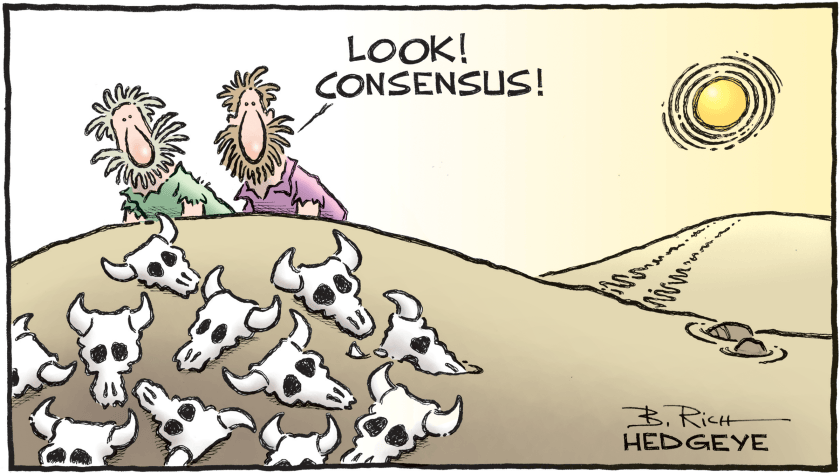
A cartoon depicting two bearded men on a hill with animal skulls, exclaiming 'LOOK! CONSENSUS!' under a bright sun.

By Steve Goreham

Originally published in RealClear Energy.

COP30, the United Nations climate conference, is underway in Belem, Brazil. Thousands of representatives from all over the world have journeyed to discuss how to cut carbon dioxide (CO2) emissions to try to fight human-caused climate change. But ten years after the Paris Climate Agreement, the global consensus on climate change is crumbling.

COP30 is the thirtieth “conference of the parties.” The first took place in Berlin in 1995. At COP21 in Paris in 2015, more than 190 countries signed the Paris Climate Agreement, pledging to cut emissions and to limit global warming to 2 degrees Celsius above pre-industrial levels.

About 50,000 people are attending COP30 from more than 190 nations. But key world leaders are not attending, including President Xi Jinping of China, Prime Minister Narendra Modi of India, and President Donald Trump of the United States. Climatism, the ideology pushing for a global transition to Net Zero energy, faces a rising tide of opposition across the world.

Two weeks before COP30, billionaire and philanthropist Bill Gates posted a memo to COP30 on his website titled “Three Tough Truths About Climate.” In it he states that “Climate change is a serious problem, but it will not be the end of civilization,” and also that “Unfortunately, the doomsday outlook is causing much of the climate community to focus too much on near-term emissions goals …” He also said that “Our chief goal should be to prevent suffering, particularly for those in the toughest conditions who live in the world’s poorest countries.”

This is a remarkable change of position for Mr. Gates, who has spent billions in the fight against climate change over the last two decades. In 2021, he wrote a best-selling book titled How to Avoid a Climate Disaster. His shift of emphasis away from stopping emissions to solving real world problems is a move away from climate alarmism and toward common-sense policy.

President Trump called climate change “the greatest scam ever perpetrated on the world” in his address to the UN General Assembly in September. During the last 10 months, the Trump Administration has shut down permits for offshore wind, slashed subsidies for wind, solar, and electric vehicles, cut climate funding, and banned climate change rhetoric in government documents. The US is not sending delegates to COP30.

But in addition to the United States, opposition to Net Zero and Climatism is rising in other nations. Reform UK, the opposition party led by Nigel Farage in the United Kingdom, is now using the phrase “Net Stupid Zero.” Reform UK is now leading in some political polls.

Alternative für Deutschland, the number two political party in Germany, wants to tear down all wind turbines, calling them “windmills of shame.” Germany has more than 20,000 wind turbines installed, one of the highest densities in the world. Last month the Nationals party in Australia voted to abandon support for Net Zero. Nationals’ leader David Littleproud said, “We believe in reducing emissions, but not at any cost.” Just this week, Australia’s Liberal party also abandoned Net Zero and pledged to bring down energy prices instead. Australia, Germany, the UK, and other nations are struggling with escalating energy costs and no apparent benefit from Net Zero policies.

What have thirty UN climate conferences accomplished since 1995? The answer is “no measurable climate benefit.” Since 2000, the world has spent about $10 trillion on renewable energy, but hydrocarbons ─ coal, natural gas, and oil ─ still provided 87% of world energy in 2024 according to the Energy Institute.

Graph depicting the hydrocarbon share of world energy from 1965 to 2024, showing percentages for coal, gas, and oil, along with annotations for significant events like the formation of the IPCC and the Kyoto Protocol.

Since 1965, global energy consumption has quadrupled and has accelerated since 2000.  Every year the world adds about an additional UK worth of energy consumption. Except for the recession year of 2012 and the COVID-19 year of 2020, wind, solar, and other renewables failed to generate enough new energy to provide for the global increase in consumption, let alone replace hydrocarbons.

A line graph depicting total world energy supply and the contributions from wind and solar energy from 1965 to 2024. The graph shows a significant increase in total energy supply, with wind and solar contributions visibly smaller in comparison.

Last year, former US Secretary of State John Kerry said, “There shouldn’t be any more coal-fired power plants permitted anywhere in the world.” But global coal consumption continues to rise. Today, more than 6,500 coal-fired power plants operate across the world and another 1,000 are in planning or under construction. In 2024, coal provided 34% of the world’s electricity, the largest source of power.

Global energy consumption will continue to rise. The US has about 80 vehicles for every 100 people, but vehicle usage in Africa and India remains below 10 vehicles for every 100 people. Today, developed nations use up to 20 times as much plastic as poor nations on a per-person basis. Developing nations will continue to use more hydrocarbon fuels to enable their economies to grow.

As Mr. Gates has observed, poverty still characterizes many of the world’s people. Almost 700 million people do not have access to electricity and another two billion have blackouts or brownouts every other day. Over two billion people do not have access to clean water. Millions die each year from malaria, typhoid, and other diseases. World leaders should concentrate on these real problems, instead of unfounded concerns about carbon dioxide emissions.

From the political scene to the continued growth of hydrocarbon energy, the global climate consensus and the push for Net Zero is crumbling. It’s time for nations to return to sensible energy policy.

Steve Goreham is a speaker on energy, the environment, and public policy and author of the bestselling book Green Breakdown: The Coming Renewable Energy Failure.