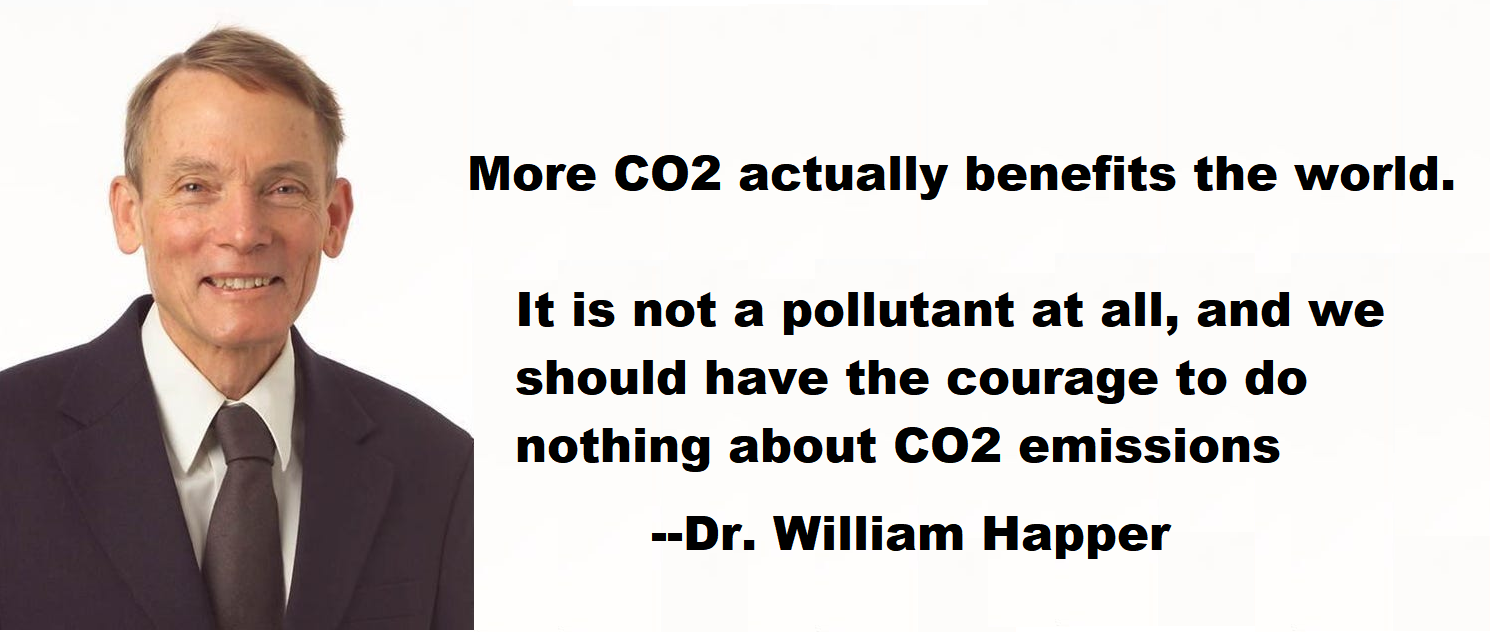
Global warming, climate change, all these things are just a dream come true for politicians. I deal with evidence and not with frightening computer models because the seeker after truth does not put his faith in any consensus. The road to the truth is long and hard, but this is the road we must follow. People who describe the unprecedented comfort and ease of modern life as a climate disaster, in my opinion have no idea what a real problem is.
The UK’s Net Zero agenda is making families poorer by driving the productivity crisis and squeezing living standards, economists have said.
This shocking revelation features in a story in the Mail. Investment bank Peel Hunt commissioned a report in order to find out if there was a link between decarbonisation and Britain’s collapsing productivity:
They found a “clear link” between falling energy capacity and weak productivity in the UK, which has “hurt economic performance and growth in living standards”.
A decline in UK electricity supply, which began in 2006, coincided with the start of structural weakness in productivity growth, the research added.
The economists said their analysis challenges the Government’s claim that there is no trade-off between Net Zero and economic growth.
Prior to winning last year’s General Election, Labour pledged to decarbonise the UK’s electricity grid by 2030 as part of accelerating Net Zero efforts.
Since entering Downing Street, Sir Keir Starmer has lifted a de facto ban on onshore wind farms in England and given consent for a slew of solar projects.
The PM has hailed Net Zero as “one of the economic opportunities” of this century, while business chiefs recently pointed to an £83 billion boost from the sector last year.
But the Tories have said the UK’s Net Zero target “leaves us economically worse off” and admitted putting the 2050 deadline into law was among “mistakes” they made when in power.
The report’s damning verdict was:
The result of the UK’s decarbonisation efforts, so far, appears to be weak economic growth, high energy prices, de-industrialisation and no significant impact on the overall trajectory of global emissions.
If an economy throttles its production of energy, it impairs its capacity to produce all types of goods and services. Productivity is the major driver of per capita GDP.
It’s not all doom and gloom though. If you’re in your 20s or 30s there’s something to look forward to (at least while the sun is shining and the wind is blowing):
“If the Government can stay on track with plans to build new renewable capacities, electricity supplies can rise sharply,” they added – although they warned new technology such as Artificial Intelligence would ramp up energy demands.
But that’s hardly what the Confederation of British Industry came out with:
The report contrasts with a recent analysis by the Confederation of British Industry that suggested the Net Zero sector in the UK has become a “powerhouse of job creation and economic expansion”.
Decarbonisation in one country – or more accurately one continent – is only possible in a globalised economy. Britain has managed to reduce its carbon emissions at least in significant part by shedding its domestic industries and importing goods instead. This is obviously a pointless exercise, as global emissions increase when goods are manufactured in countries with dirtier energy sources and poorer environmental standards, and when the goods must be transported around the world.
The reality of decarbonisation – that as long as the policy runs faster than technology allows, and other countries do not follow our lead – is that it means deindustrialisation, with all the consequences that follow. The country is less resilient to shocks, supply chains are stretched and we are exposed to instability in other parts of the world.
Renewable power advocates often claim wind and solar are less expensive energy sources than coal, natural gas, and nuclear power. Such a claim begs the question of why the heavily subsidized Ivanpah solar power facility is going out of business, following a long line of other renewable energy project bankruptcies. Also, why would most of the world continue to build coal power plants if it is more expensive than wind and solar? The answer is wind and solar are expensive, financial losers. A recent peer-reviewed analysis proves that point.
Renewable power advocates often claim wind and solar are less expensive energy sources than coal, natural gas, and nuclear power. Such a claim begs the question of why the heavily subsidized Ivanpah solar power facility is going out of business, following a long line of other renewable energy project bankruptcies. Also, why would most of the world continue to build coal power plants if it is more expensive than wind and solar? The answer is wind and solar are expensive, financial losers. A recent peer-reviewed analysis proves that point.
A recent study, published in the peer-reviewed journal Energy, reports on the full-system levelized cost of electricity generation. The term “full-system” is key. Many entities have assessed what it costs utilities to purchase or produce electricity from existing sources and deliver it to customers. These cost assessments, however, ignore the intermittency of wind and solar and how intermittency adds substantial costs to the entire electric grid. The cost assessments also fail to account for how wind and solar projects cannot be built just anywhere and often require new, long, expensive, and inefficient transformation lines to deliver power from the generation locations to consumers. This also adds substantial costs to the overall electric grid.
The peer-reviewed Energy study analyzes these factors and presents an apples-to-apples cost comparison on the full-system cost of wind, solar, coal, natural gas and nuclear power. The verdict is devastating to wind and solar power and explains why most of the world prefers to build coal and natural gas power plants.
Geographic location is a significant factor in the cost of producing wind and solar power. For example, producing solar power in Germany, with its northern latitude and frequent cloudiness, is three times more expensive than producing solar power in the southern latitude and general sunniness of western Texas.
Indeed, Texas is about as favorable an environment as there is for wind and solar power. In western Texas in particular, the southern latitude, predominant sunshine, and persistent windiness make for extremely favorable conditions for wind and solar power.
Even in Texas, however, the Energy study shows wind and solar power are prohibitively expensive. The peer-reviewed study shows solar power produced in Texas is more than triple the cost of nuclear power, more than quadruple the cost of coal power, and more than 10 times the cost of natural gas power.
By the full-system numbers, solar power in Texas costs $413 per megawatt hour (mwh) of generation. Wind power costs $291 per mwh. Nuclear power costs $122. Coal power costs $90. Natural gas power costs merely $40. That is a huge price differential between wind and solar versus all other energy sources.
In most places, it costs even more to produce wind and solar power than in the favorable climate conditions of Texas. So, the disparity is typically greater than the numbers reported above.
Another important factor to consider is a typical proposal for a new wind or solar power project does not entail building wind and solar to fill an imminent new power need. Typically, climate activists and monopoly utilities propose shutting down a perfectly operating – and already built and paid for – coal, nuclear, or natural gas power plant and replacing it with wind and solar. Building a new wind or solar power project to provide power is substantially more expensive than building a new coal, nuclear or natural gas power plant to provide power. Shutting down an already paid-for coal, nuclear or natural gas power plant to build an expensive new wind or solar project makes even less economic sense.
Utilities often support such wind and solar madness because they make a financial killing on wind and solar projects. Governments typically guarantee monopoly utilities an approximately 10% profit on their expenditures, including the cost of building new wind and solar projects. Construction for large solar projects can cost $2 billion, $3 billion, or more. That means a guaranteed utility profit of $200 million or more per project. A utility pushing for more wind and solar power has nothing to do with saving consumers money and everything to do with stuffing the utility’s own pockets.
The next time some climate activist or wind and solar shill claims wind and solar are less expensive than conventional energy sources, point them to the peer-reviewed Energy study and the actual truth.
Well, well, well—look who’s finally come around! California Governor Gavin Newsom, the Golden State’s self-styled progressive poster boy, has just declared a state of emergency to clear flammable brush from the state’s forests. And why? Because President Donald Trump’s been right all along, and Newsom knows it.
Well, well, well—look who’s finally come around! California Governor Gavin Newsom, the Golden State’s self-styled progressive poster boy, has just declared a state of emergency to clear flammable brush from the state’s forests. And why? Because President Donald Trump’s been right all along, and Newsom knows it. POLITICO broke the story detailing how Newsom’s dramatic move suspends California’s sacred environmental regulations—those same rules the left has clung to like a security blanket while wildfires torch the state year after year. Turns out, Trump’s been sounding the alarm on this for years, and Sacramento’s finally listening.
Let’s rewind the tape. Back in his first term, Trump famously pointed out what any sensible person could see: California’s forests were a tinderbox waiting to ignite, choked with dead trees and brush that the state refused to clear. His solution? Manage the land—rake it, trim it, do something—instead of letting nature run wild under the guise of eco-piety. The response from the California elite? Sneers and eye-rolls. “Raking the forests? How simplistic!” they scoffed, as if Trump had suggested fairy dust could solve the problem. Meanwhile, wildfires kept burning, lives were lost, and billions in damages piled up—culminating in January’s Los Angeles blaze, now pegged as the costliest disaster in U.S. history.
Fast forward to today, March 3, 2025. Newsom’s emergency order isn’t just a policy shift—it’s a tacit admission that Trump’s been on the money. The governor’s suspending the California Environmental Quality Act and Coastal Act, those bureaucratic behemoths Trump and his allies have long blamed for tying the state’s hands. Newsom’s even echoing Trump’s language, promising “fuel breaks” and “prescribed fires” to protect vulnerable communities. Sound familiar? It should. Trump’s been hammering this point since at least 2018, when he first called out California’s mismanagement—despite the fact that over half the state’s forests are federally controlled, a detail his critics conveniently ignore.
And here’s the kicker: Newsom’s timing couldn’t be more transparent. With Trump back in the White House and Republicans holding the purse strings on nearly $40 billion in disaster aid for Los Angeles, the governor’s suddenly eager to play ball. POLITICO notes Trump’s January visit to LA, where he slammed the California Coastal Commission as a permitting nightmare— “the most difficult in the entire country,” he said. Now Newsom’s slashing those same red-tape rules to appease the administration. Coincidence? Hardly. This is a man who knows the aid spigot won’t flow unless he shows some spine on forest management.
The irony is thicker than the smoke over LA. For years, Newsom and his crew insisted they’d “surged” brush-clearing efforts since he took office in 2019. Yet here we are, with the governor admitting it’s not enough—implicitly conceding that Trump’s critique hit the bullseye. Even Richard Grenell, Trump’s special envoy, is piling on, calling the Coastal Commission “a disaster” and hinting at tying aid to real reforms.
So, let’s raise a glass to common sense prevailing—at least for now. California’s finally waking up to the reality that hugging trees doesn’t stop them from burning. Trump’s been vindicated, and Newsom’s eating a slice of humble pie, whether he admits it or not. The only question left is how long it’ll take the eco-warriors to forgive their golden boy for this heresy. Something tells me they won’t be raking him over the coals too hard—not when there’s federal cash on the line.
In his latest book, author and academic Mike Berners-Lee calls for a ‘climate of truth’ from business, politicians and the media
At a glance
Author and academic Mike Mike Berners-Lee believes dishonesty about climate change and other challenges facing the world is behind the lack of progress in reducing emissions and tackling wider problems such as pollution and nature loss
He insists change is possible, but calls on everyone to be more truthful, and to call out the media, business and policymakers when they are being dishonest
Regulation, in conjunction with high penalties and strict enforcement, is necessary to ensure business is delivering on environmental stewardship, he says
“A couple of decades ago, it was considered pretty normal by many celebrities that every now and then a bit of groping went on,” Mike Berners-Lee tells me. “Now, it is pretty clear to every BBC personality it would be the end of your career — and if you were found to have stood by while someone else was getting up to it, you would also be in very hot water.”
…
Berners-Lee’s latest book, A Climate of Truth, concludes that central to our inability to get to grips with the “deadly polycrisis” we are in — one that includes climate change, biodiversity loss, food security concerns and permanent pollution — is a pervasive lack of truthfulness from policymakers, business and the media.
…
He cites the greenhouse gas emissions curve, which shows that despite 29 climate change COPs and a 30th in the offing, emissions continue to rise. “This is a reality we need to face up to: the process isn’t working. The best thing that came out of COP29 is the understanding that the process is broken.” It is also being “subverted by companies that can’t be trusted”, he adds.
Mike Berners-Lee wrote “There is no Planet B” and a bunch of other climate crisis books, so I think its fair to describe him as a bit of a fixture in the radical environmental movement.
But the fact is the truth is already coming out about climate change.
Despite all this, I am not accusing Mike Berners-Lee of being a liar. Reading Climategate convinced me climate radicals actually believe what they are preaching.
The problem is not that they are lying, the problem is they are wrong.
One of Freeman Dyson’s great disappointments was his political fellow travellers are caught up in climate groupthink. Dyson described seeing this kind of baseless groupthink many times in the past, mostly amongst the Astronomy community. It happens when scientists fall too much in love with their models, and begin confusing models with established fact.
Given the world has now experienced 1.5C warming without any of the predicted disasters, at least no more than usual, will academics like Mike Berners-Lee find the courage to admit they were wrong? You might think the answer is an automatic never, but we have had at least one example of a high profile academic who had the courage to face the truth.
By the mid 2030s it won’t matter what climate alarmists say or believe, the world will have moved on. Climate alarmism has all but run its course, many new voices are now casting doubt on the most extreme climate predictions. But a decade of continued high energy price misery is a long time to wait for people struggling to pay their energy bills.
Every academic who adds their voice to climate skepticism will help shorten the suffering of those still trapped in societies where climate alarmism dominates government policy.
Using a detailed atmospheric radiative transfer model, we derive macroscopic relationships of downwelling and outgoing longwave radiation which enable determining the partial derivatives thereof with respect to the explanatory variables that represent the greenhouse gases. We validate these macroscopic relationships using empirical formulae based on downwelling radiation data, commonly used in hydrology, and satellite data for the outgoing radiation. We use the relationships and their partial derivatives to infer the relative importance of carbon dioxide and water vapor in the greenhouse effect.
Using a detailed atmospheric radiative transfer model, we derive macroscopic relationships of downwelling and outgoing longwave radiation which enable determining the partial derivatives thereof with respect to the explanatory variables that represent the greenhouse gases. We validate these macroscopic relationships using empirical formulae based on downwelling radiation data, commonly used in hydrology, and satellite data for the outgoing radiation. We use the relationships and their partial derivatives to infer the relative importance of carbon dioxide and water vapor in the greenhouse effect.
The results show that the contribution of CO₂ is 4% – 5%, while water and clouds dominate with a contribution of 87% – 95%. The minor effect of carbon dioxide is confirmed by the small, non-discernible effect of the recent escalation of atmospheric CO₂ concentration from 300 to 420 ppm. This effect is quantified at 0.5% for both downwelling and outgoing radiation. Water and clouds also perform other important functions in climate, such as regulating heat storage and albedo, as well as cooling the Earth’s surface through latent heat transfer, contributing 50%. By confirming the major role of water on climate, these results suggest that hydrology should have a more prominent and more active role in climate research.
Robin Horsley draws the implications from this and other recent papers. Transcript in italics with my bolds and added images.
For decades, we’ve been told that human generated CO2 emissions are the single most dangerous threat to our planet. Politicians, celebrities, and the mainstream media have united to amplify this alarm, warning of an impending climate catastrophe unless we act now.
But what if the story’s wrong? What if the very foundation of the theory, the idea that CO2 is the principal driver of global warming, is flawed? What if the science we’ve been told is settled is actually far from settled?
This week I’ve been digging into this very provocative question looking at an extremely interesting recent report on the subject. And what I found might make you rethink a lot of what you thought you knew about climate change.
What If Everything You Thought About CO2 Was Wrong
For years we’ve been fed a simple story: Humans burn fossil fuels, releasing carbon dioxide – CO2 – Into the atmosphere. CO2 traps heat causing the planet to warm. The Greenhouse Effect as it’s known. The solution? Reduce CO2 to save the planet. But what if this narrative is overly simplistic or even fundamentally wrong?
At the recent international Clintel science conference in Prague leading climate experts gathered toscrutinise the dominant narratives around climate change. One of the most striking contributions came from Professor Demetris Koutsoyiannis, a highly regarded climate scientist from the University of Athens. His research challenges the very core of our understanding of CO2’s role in the climate system. Professor Koutsoyiannis presented groundbreaking findings that question the long-held belief that rising CO2 levels cause global temperatures to increase.
► Changes in global atmospheric CO2 are lagging 11–12 months behind changes in global sea surface temperature. ► Changes in global atmospheric CO2 are lagging 9.5–10 months behind changes in global air surface temperature. ► Changes in global atmospheric CO2 are lagging about 9 months behind changes in global lower troposphere temperature. ► Changes in ocean temperatures explain a substantial part of the observed changes in atmospheric CO2 since January 1980. ► Changes in atmospheric CO2 are not tracking changes in human emissions.
Instead, his research suggests it’s the other way around. Global temperature increases drive higher atmospheric CO2 levels. This isn’t an entirely new idea. For decades, scientists like Dr. Patrick Moore, a co-founder of Greenpeace have pointed to evidence showing that historically rises in CO2 levels have followed, not preceeded, global temperature increases. Ice core data, spanning millions of years, apparently supports this claim.
If true, this challenges the foundation of the mainstream climate narrative.
Why would rising temperatures cause an increase in CO2
But why would rising temperatures cause an increase in CO2 levels? Professor Koutsoyiannis explains that when temperatures rise, the natural world responds. Plants and oceans release more CO2 than they otherwise would. Warmer temperatures lead to a thriving environment.
Now, I think this needs some explanation, because plants absorb CO2 and produce oxygen. Not release CO2, don’t they? Well, yes, plants sustain themselves and grow through the process of photosynthesis, which turns sunlight, water and CO2, which plants absorb, into glucose which enables plants to grow, and which produces oxygen as a by-product which we and animals need to breathe.
Figure 22. Annual carbon balance in the Earth’s atmosphere, in Gt C/year, based on the IPCC estimates (Figure 5.12 of [30]). The balance of 5.1 Gt C/year is the annual accumulation of carbon (in the form of CO2) in the atmosphere (reproduced from [5].).
However, Plants also release CO2 as part of a process known as cellular respiration during the day, and particularly at night, when due to a lack of sunlight, photosynthesis cannot occur. On balance photosynthesis typically outweighs respiration. So, living plants typically absorb more CO2 than they release. But when that increasing number of plants die and decompose, micro-organisms break down the organic matter releasing retained CO2.
Oceans also release CO2 into the atmosphere when the water is warmer than the surrounding air. Warmer water holds less dissolved CO2. These natural processes account for the majority of CO2 emissions. In fact, Koutsoyiannis argues that Nature contributes 96% of CO2 emissions leaving just 4% attributable to human activity.
Nature contributes 96% of CO2 emissions
Yes, burning fossil fuels adds CO2 to the atmosphere. However, the professor’s research suggests that human contributions are a mere drop in the ocean compared to natural emissions. Crucially, his data shows that the dominant greenhouse gases aren’t CO2. But water vapor and clouds. CO2, it seems, plays a much smaller role than we’ve been led to believe.
Additionally, the study challenges the claim that CO2 lingers in the atmosphere for thousands of years. Instead, it finds that CO2 is rapidly cycled through the atmosphere oceans and land with an average cycle of just 4 years.
Figure 26: Contribution of (left) the three mechanisms responsible for the cooling of Earth’s surface and (right) the four mechanisms responsible for the warming of Earth’s atmosphere, based on the global energy balance by Trenberth et al. (2009). Koutsoyiannis (2024)
The paper also concludes based on the data gathered over the last hundred years, when the amounts of CO2 in the atmosphere increased from around 300 parts per million to just over 400 parts per million, that this increase has had no discernible effect on the greenhouse effect. It’s that small a factor.
If this research is accurate, it doesn’t mean climate change isn’t real. But it does suggest we need a better understanding of what drives it.
The professor asks a number of pertinent unanswered questions at the end of his paper. The earth is currently, when viewed over hundreds of millions of years, going through a relatively cool period. What caused the huge increases in earth’s temperature in the past? The professor asks.
It wasn’t industrialisation, was it? These are crucial questions especially as Governments implement sweeping policies in the name of achieving net zero emissions by 2050. Policies that impact everything from energy prices to housing and transportation. Even the food that we eat.
The global cost of the Net Zero 2050 agenda is projected to be between $100 and $150 trillion dollars by 2050. Meanwhile, the world bank estimates that eradicating extreme poverty globally would cost just three to four trillion. Universal health care and education, defeating diseases such as malaria on a global basis would cost less.
What if we’re funding trillions into solving something that isn’t actually the main source of the problem? What if we should be spending more on other things that can limit global warming? What if we should instead be spending more money on mitigating the effects rather than trying to prevent it?
Shouldn’t we demand more scrutiny of the science driving these decisions? Could it be that the climate crisis narrative isn’t just about science but also about power, control and profit? Entire industries are heavily invested in the CO2 narrative. And millions of people, and much of the mainstream media are emotionally invested in the quest to reduce CO2 to save the planet.
But is that what we’re actually doing? Science thrives on debate and scrutiny. Science is never settled as such. It’s constantly evolving, particularly in complex areas such as global climate. Yet the CO2 science on which we’re proceeding is decades old, and many of the models on which it is based have failed to make accurate predictions.
Yet those who challenge the mainstream climate narrative are often dismissed as ‘deniers’ or attacked personally. But shouldn’t the truth welcome scrutiny? Shouldn’t we demand transparency and evidence that can stand up to rigorous examination?
This isn’t about denying climate change. It’s about questioning whether we’re focusing on the right solutions. As more scientists speak out, surely, it’s time to demand open debate. And consider whether the trillions we’re spending on Net Zero might be better used elsewhere.
Now, I’m not a climate scientist. Perhaps this report is flawed. Perhaps it is complete nonsense even. But the professor who wrote it is not the only one who’s pointing out the first fundamental point that the mainstream narrative is fundamentally wrong, that by burning fossil fuels we’re producing CO2 that is warming the planet.
An increasing number of others are breaking ranks and saying exactly the same thing. That increasing CO2 is largely a consequence of increasing global temperatures not the cause. Yet we’re told that we’re facing a climate emergency. We must cast aside all caution. We must listen to Greta Thunberg, the climate change messiah.
To ask questions is heresy! Really? What do you think? Should we blindly follow the mainstream narrative, or should we dig deeper and ask tougher questions? Please let me know your thoughts in the comments below. Thank you for watching.
Net Zero was only ever an elite luxury belief backed by 30 years of lies, fake science and constant climate scare forecasts that never happened. Removing all hydrocarbons from industrial societies will lead to economic and societal collapse. Removing hydrocarbons from the developing world is just plain wicked.
Lord Gavin Barwell was the Chief of Staff for Theresa May – in a field with numerous candidates, probably the worst British Prime Minister in living memory. Reacting to a recent Daily Sceptic article that laid out the science surrounding carbon dioxide, he pounced on an X repost by “Toby and his mate [yours truly]” and stated: “I suspect the next generation may pursue people like him who sought to delay action for damages.” Barwell’s comment is as silly as it is sinister, but it indicates considerable elite derangement as members observe their Net Zero fantasy falling in flames. Net Zero was only ever an elite luxury belief backed by 30 years of lies, fake science and constant climate scare forecasts that never happened. Removing all hydrocarbons from industrial societies will lead to economic and societal collapse. Removing hydrocarbons from the developing world is just plain wicked.
The pure snobbery behind Net Zero is plain for all to see. The latest carbon budget from the Climate Change Committee (CCC) suggested restrictions on meat and dairy, higher air fares, ripping out efficient gas boilers and replacing them with optimistically-named heat pumps and replacing most cars with battery buggies. The message might have gone down slightly better if it had not been delivered by the new CCC head Emma Pinchbeck, who rose through the mediocre ranks of the Green Blob following her degree in Classics and English at Oxford University. Does anyone outside the deluded, science-lite green community seriously believe that an entire population will fall in line with plans to cut the hard-won increases in living standards that have eased the lives of recent generations? In a future ‘Blackout Britain’, the only pursuing likely to occur is a chasing of the Net Zero rascals out of Parliament at the next available General Election.
Following Trump’s historic victory, the attack on Net Zero is now general across all fronts. The costs involved in Net Zero are astronomical and are a topic of independent commentary in the Daily Sceptic and a greatly increasing number of other concerned outlets. There simply isn’t enough money in highly-indebted states to fund a so-called renewable transition. There is no point in looking for the free market to chip in – nobody spending their own money would considering building a windmill unless their mouths were stuffed with taxpayer gold. The recent story in the Express that the UK Energy Secretary Ed Miliband is set to be sacked as the British Government “shifts from ‘green’ policies to focusing on economic growth” is not without interest. Nevertheless, caution in believing such political stories is always advisable, although it appears that knives are being sharpened. Even if the Mad One is sacked, the Labour front and back benches are packed with one-track eco-zealots, and the CCC is always there to hold feet to the legal fire.
Dr Roy Spencer is a brilliant former NASA scientist and currently produces the monthly global satellite temperature record out of the University of Alabama in Huntsville (UAH). In a scientifically honest world, his UAH readings taken just above massive urban ground warming would be accepted as the gold standard. After all, satellite data is now used across all other climate study areas. But the readings since 1979 show less warming than the constantly fiddled surface datasets and he compounds this crime by holding sceptical independent views. “The science of human-caused climate change is much more uncertain that you have been led to believe,” he recently wrote. Spencer does not deny that humans have played a part in 1°C of warming over the last century, give or take a 30% range in different temperature datasets. He just notes, “We don’t really know.” And why don’t we know, he asks, and why can we therefore state that the invented ‘settled’ science backing Net Zero is a gigantic lie? Spencer explains that the global energy balance caused by increasing human-caused emissions is smaller than the accuracy with which we know natural energy flows in the climate system. “This means recent warming could be mostly natural and we would never know it,” he helpfully adds.
Most climate and weather fearmongering is based on computer models, with unquestioning messengers always at hand to pass on the junk findings to a wider audience. The climate models are adjusted (‘fudged’) so that increasing CO2 is the only cause of warming, says Spencer. “The models themselves do not have all of the necessary physics, mostly due to cloud process uncertainties,” he observes
Spencer also notes that the UN Intergovernmental Panel on Climate Changes does not claim that greenhouse gas emissions have caused changes in severe weather. This inconvenient finding has necessitated the invention of a particularly large whopper. Almost all bad weather is now routinely tied to human causation, and ‘attribution’ pseudoscience is both big business and bedrock copy for mainstream media. “But with public opinion of mainstream news outlets at an all-time low, fewer and fewer people take those news reports seriously,” suggests Spencer.
Gavin Barwell was May’s Chief of Staff at the end of her Premiership at a time when she was desperately seeking a legacy for her failed time in office. For some inexplicable reason, she suddenly committed the UK in 2019 to full Net Zero by 2050, without providing any realistic explanation as to how a modern industrial society can stop using hydrocarbons in all forms in 30 years. Perhaps Barwell could now be ‘pursued’ for an explanation as to why he was complicit in forcing the UK down such a potentially damaging, disastrous even, path.
Stop Press: The latest UAH global temperature reading shows a +0.5°C anomaly for February 2025. The figure is similar to January and recent recordings exhibit a large downward trend. Surface measurements do not appear to have picked up much of this fall and mainstream media still seem to be looking for another ‘hottest evah’ contribution to the science debate.
Chris Morrison is the Daily Sceptic’sEnvironment Editor.
Today, we raise a cheer for reason, justice, and the unyielding spirit of free expression! Today, the Superior Court of the District of Columbia delivered a resounding blow to overreach in the long-running defamation lawsuit brought by climate scientist Michael Mann against conservative commentator Mark Steyn.
Today, we raise a cheer for reason, justice, and the unyielding spirit of free expression! Today, the Superior Court of the District of Columbia delivered a resounding blow to overreach in the long-running defamation lawsuit brought by climate scientist Michael Mann against conservative commentator Mark Steyn. In a Final Judgment Order, Judge Alfred S. Irving, Jr. reduced Steyn’s punitive damages from an astronomical $1 million to a modest $5,000—vindicating Steyn, protecting open debate, and sending a powerful message about the limits of legal bullying.
This decision marks a triumphant turn in a 12-year legal saga that began with Steyn’s 2012 blog post criticizing Mann’s iconic “hockey stick” graph, a cornerstone of climate change narratives. Back in February 2024, a D.C. jury awarded Mann a symbolic $1 in compensatory damages and slapped Steyn with a jaw-dropping $1 million in punitive damages, alongside a similar $1,000 penalty for Rand Simberg of the Competitive Enterprise Institute (CEI). The awards, disproportionate and chilling, threatened to silence critics of Mann’s work and set a dangerous precedent for free speech.
But justice has prevailed! The court’s ruling not only slashes Steyn’s punitive damages to a reasonable $5,000 but also declares the original $1 million award unconstitutional—too excessive, too punitive, and out of step with the actual harm (or lack thereof) Mann suffered. This isn’t just a win for Steyn; it’s a victory for every skeptic, scientist, and citizen who dares to question orthodoxy in the public square. The $5,000 figure, aligned with the jury’s nominal $1 compensatory award, restores proportion and reaffirms that robust debate—however sharp—remains protected under the First Amendment.
Adding to the celebration, Mann has been ordered to pay over $500,000 in legal costs to National Review, Steyn’s co-defendant in the case. This award, rooted in D.C.’s Anti-SLAPP (Strategic Lawsuit Against Public Participation) law, recognizes the frivolous nature of Mann’s decade-long legal crusade against those who challenged his research.
For years, skeptics have watched this case with bated breath, fearing it could muzzle honest inquiry into climate science. Mann’s “hockey stick” graph, central to his reputation, has long been a lightning rod—challenged by statisticians, researchers, and commentators like Steyn for its methodological flaws and data handling. Steyn’s post, while biting, was an opinion, not a factual falsehood, and the jury’s initial $1 million penalty seemed less about justice and more about punishing dissent. Today’s ruling overturns that injustice, ensuring that critics of public figures like Mann can speak without fear of financial ruin.
This moment isn’t just about numbers—it’s about principle. The reduction to $5,000 sends a clear signal: courts won’t tolerate weaponizing defamation lawsuits to silence debate. It’s a rebuke to Mann’s “lawfare” tactics, which have drained resources from Steyn, National Review, and CEI while raising millions in crowdfunding from supporters rallying for free speech. Now, those supporters can celebrate a hard-fought victory, knowing their voices helped tip the scales.
Steyn himself has weathered this storm with grit, representing himself in court and refusing to back down. His resilience, paired with the court’s wisdom, has preserved a critical space for scientific skepticism and public discourse. Meanwhile, the over $500,000 in legal costs awarded to National Review—and the potential for CEI file for and secure similar relief—underscores the absurdity of Mann’s claims and the toll they’ve taken on his opponents.
Let’s raise a glass to this triumph! The slashing of Steyn’s penalty to $5,000 isn’t just a legal correction—it’s a beacon for free speech, a shield for honest inquiry, and a reminder that truth emerges from open debate, not courtroom battles. The fight for reason continues, but today, we celebrate a monumental step forward.
The WSJ article is a blast to an imaginary past where hopes and hyperbole pollute rational analysis. Wind and solar as grid electricity was always a government play, being dilute, intermittent, and fragile. And with the new politics toward energy exceptionalism (free market energies), the stock prices of the rent-seekers are headed south, with regular news of bankruptcies, actual and likely (Sunnova, yesterday, was the latest)
“Just when it seemed hard reality had stamped out the last baseless predictions of a global green energy revolution saving the world from climate change, the WSJ publishes a cringe-worth essay so detached from reality it’s hard to read.” (— D. Sheridan, below)
Doug Sheridan of EnergyPoint Research is part of an intellectual energy brigade that runs circles around learned academics on energy/climate issues. He recently rebutted a Review article in the weekend Wall Street Journal edition, “The Clean Energy Revolution is Unstoppable” by Eric Beinhocker and J. Doyne Farmer of Oxford University, subtitled “The Trump administration is determined to promote fossil fuels, but the economic and technological forces driving solar, wind and other sources are now too powerful to resist.”
Bunk. Such an article is now out of date with the energy “transition” going in reverse. I’ll let Sheridan take it from here, before adding a final comment.
Just when it seemed hard reality had stamped out the last baseless predictions of a global green energy revolution saving the world from climate change, the WSJ publishes a cringe-worth essay so detached from reality it’s hard to read.
The essay’s authors, Eric Beinhocker and J. Doyne Farmer, both professors at the Oxford University, apparently fell into a worm hole that transported them back to Davos 2020. We found these assertions especially ridiculous:
1. “The clean energy revolution is being driven by fundamental technological and economic forces… too strong to stop. Trump’s policies can marginally slow progress in the US… but they cannot halt the fundamental dynamics of technological change or save a fossil fuel industry that will inevitably shrink dramatically in the next two decades.”
Our Take: Really? Care to tell us professors when fossil fuels will fall to below 70% of primary energy consumed globally? Because most self-respecting energy experts we follow say it’s going to be decades into the future.
2. “Solar energy is 10,000 times cheaper today than when it was first used… in 1958. The [IEA] calculates electricity from solar power with battery storage is less expensive today than electricity from new coal-fired plants in India and new gas-fired plants in the US. We project that by 2050 solar energy will cost a tenth of what it does today, making it far cheaper than any other source of energy.”
Our Take: Since 1958… seriously? That’s almost 70 years ago. Not only have the declines been far less, even flat, in recent years, solar panels now comprise too little of the cost of solar installations for further declines to matter much. And the number of places in the world in which solar + batteries is cheaper than gas- + coal-fired generation is so small as to basically be zero. It’s certainly not so in North America.
3. “When a technology is new… it grows exponentially early on. As exponential growth continues, its share suddenly becomes large, making its absolute growth large too… until the market eventually becomes saturated, and growth starts to flatten. The result is an S-shaped adoption curve.”
Our Take: This claim isn’t tethered to reality. Few if any green technologies are on paths to the kinds of high global market shares that constitute “saturation.” Not renewables, not EVs, not heat pumps, not biofuels. So spare us the S-curve claptrap.
4. “The energy transition is a one-way ticket. As the asset base shifts to clean energy technologies, large segments of fossil fuel demand will permanently disappear. Very few consumers who buy an EV will go back to fossil-fuel cars. Once utilities build cheap renewables and storage, they won’t go back to expensive coal plants.”
Our Take: There’s virtually no chance fossil fuel demand declines to such levels in the timeframe envisioned by the authors. Growth in energy demand in non-developed countries virtually guarantees it.
Final Comment
The WSJ article is a blast to an imaginary past where hopes and hyperbole pollute rational analysis. Wind and solar as grid electricity was always a government play, being dilute, intermittent, and fragile. And with the new politics toward energy exceptionalism (free market energies), the stock prices of the rent-seekers are headed south, with regular news of bankruptcies, actual and likely (Sunnova, yesterday, was the latest). [1]
The new reality is exemplified by Daniel Yergin latest. He is polite and late to question the great hoax of ‘energy transformation’. It is now just too obvious, sped up by Trump reversing the Podesta-Biden-Harris ‘all of government’ climate policy.
He recently wrote in Foreign Affairs (March/April 2025) with three coauthors, “The Troubled Energy Transition: How to Find a Pragmatic Path Forward”:
… what has been unfolding is not so much an “energy transition” as an “energy addition.” …. This was not how the energy transition was expected to proceed. Concern about climate change had raised expectations for a rapid shift away from carbon-based fuels. But the realities of the global energy system have confounded those expectations, making clear that the transition—from an energy system based largely on oil, gas, and coal to one based mostly on wind, solar, batteries, hydrogen, and biofuels—will be much more difficult, costly, and complicated than was initially expected.
He ends with a polite, something-for-everyone, all-of-the-above energy forecast:
The scale and variety of the challenges associated with the transition mean that it will not proceed as many expect or in a linear way: it will be multidimensional, proceeding at different rates with a different mix of technologies and different priorities in different regions. That reflects the complexities of the energy system at the foundation of today’s global economy. It also makes clear that the process will unfold over a long period and that continuing investment in conventional energy will be a necessary part of the energy transition. A linear transition is not possible; instead, the transition will involve significant tradeoffs. The importance of also addressing economic growth, energy security, and energy access underscores the need to pursue a more pragmatic path.
Daniel Yergin is half intellectual, half business maximizer. His pronouncements must stay in reality but not dismiss the climate agenda as anti-energy, anti-efficiency. His consultancy (in the old days Cambridge Energy Research Associates, now part of IHS Energy), has had programs for every political energy, and everyone needs to be kept happy. But Trump has changed the game, and the massive shrinkage of solar and wind firms in the new environment will end a huge constituency.
A separation of government and energy, in fact, will shrink the whole consulting business. Energy majors and trade associations can do their own work, thank you. And maybe the energy future will look back at Yergin/CERA as an artifact of the political energy era.
————–
[1] “The ups and downs of solar installers aren’t new to the industry. In 2024, ADT, Titan Solar, SunPower and Lumio all declared bankruptcy or went out of business, though subsequently, SunPower was acquired by Complete Solar in Chapter 11 proceedings.
With new tariffs on solar manufacturers and many of the US’s closest trading partners, solar installations are likely to become more expensive in 2025. Sunnova may be one of the first companies to face serious challenges to its business model this year, but it’s not likely to be the last.”
The new chairman of the Federal Energy Regulatory Commission used the Trump Administration’s order to have agency employees report their activities as a chance to show off. Late last week he issued a four-page letter of accomplishments on behalf of his staff, a list that might be a good month, not a good week, at some other agency.
The new chairman of the Federal Energy Regulatory Commission used the Trump Administration’s order to have agency employees report their activities as a chance to show off. Late last week he issued a four-page letter of accomplishments on behalf of his staff, a list that might be a good month, not a good week, at some other agency.
The Chairman of FERC now, of course, is Virginia’s own Mark Christie, previously a member and sometimes chairman of our State Corporation Commission. The letter should also reassure those Americans who are hoping to see the new administration take a new direction in energy policy, accepting of hydrocarbons and focused on energy reliability.
Whether Christie answering on behalf of all his employees and fellow commissioners satisfies the request from the Department of Government Efficiency, time will tell. The substance of the report with its focus on natural gas projects likely would have infuriated many in the previous Biden Administration.
He reports that between February 14 and 24, FERC:
“Issued the following Orders under Sections 3 and 7 of NGA (Natural Gas Act) to ensure that pipeline infrastructure needed to ensure plentiful supplies of natural gas at reasonable prices are in place:
(1) Authorizing Northern Natural Gas Company to abandon, construct, and operate certain pipeline facilities in Minnesota and Wisconsin enabling Northern to provide an additional 46,064 dekatherms per day (Dth/d) of incremental firm transportation service to five natural gas customers.
(2) Authorizing Venture Global Plaquemines LNG, LLC to amend its existing authorization to increase the authorized liquefaction production capacity of LNG export facilities in Plaquemines Parish, Louisiana from 24.0 to 27.2 million metric tons per annum to reflect the project’s actual capabilities.
(3) Granting a two-year extension for Iroquois Gas Transmission System, L.P. to construct and operate certain facilities in New York and Connecticut to provide up to 125,000 Dth/d of firm natural gas transportation service to delivery points in New York.”
Then he mentioned FERC’s efforts to defend in court (with briefs and oral arguments) previous permits issued on various natural gas projects. He listed three cases, including one brought against FERC over the Mountain Valley Pipeline by the environmental group Appalachian Voices. The other two cases listed were gas or LNG projects in Puerto Rico or on the border with Mexico.
Next up, construction permits:
“Issued nine notices to proceed with construction of the following natural gas infrastructure including but not limited to:
(1) Granted Woodside Louisiana LNG’s request to construct ISBL Non-Firewater Underground Piping and Cable.
(2) Granted Elba Liquefaction Company L.L.C.’s request to commence certain construction activities on its existing Movable Modular Liquefaction System facilities in Chatham County, Georgia.
(3) Granted Port Arthur LNG, LLC’s request to commence installation of a feed gas pipeline and to set the priority 1 mechanical equipment on the foundations.”
Finally, Christie turned to the longer-term issues of energy reliability and the challenge posed by the massive expansion of electricity demand to serve the data center industry. The Energy Policy Act of 2025 gave FERC a leading role in protecting the reliability and cybersecurity of the national grid.
First up: “a joint workshop with the North American Electric Reliability Corporation on March 20, 2025, to examine supply chain risk management. The workshop will examine potential actions entities may take to validate the completeness and accuracy of information received from vendors during the procurement process.”
And then:
“A Commissioner-led Technical Conference on June 4 and 5, 2025, to explore risks to energy resource adequacy; the efficiency and effectiveness of capacity markets in achieving resource adequacy at just and reasonable rates; design and performance comparisons between capacity markets and alternative resource adequacy constructs; and the roles and interests of states or other entities with legal authority in achieving resource adequacy.”
Finally, citing its authority under the Federal Power Act, FERC:
“Issued two orders approving new reliability standards to improve the reliability of electric service for consumers: the first established new mandatory performance requirements for inverter-based resources; the second approved new reliability standards for planning the bulk electric system during expected extreme heat and cold events.” Note: Inverter-based resources would be mostly solar projects. FERC just set mandatory standards for solar farm performance.
And no, this didn’t just set out the whole letter, which reported several other decisions and actions (one involving an oil pipeline). In fairness, many of the items represented months of work before a decision was made or a court brief filed and simply indicate how busy FERC has been for a while.
But does anyone imagine such a report a year ago would focus on natural gas infrastructure or make it clear that grid reliability is the summum bonum? No report to Biden would go four pages with not one mention of greenhouse gas or climate alarmism. The momentum shift is obvious and welcome.
Reconstructed ice core CO2 values and modern CO2 and CH4 measurements do not support the narrative that human emissions are driving changes in atmospheric greenhouse gas concentrations.
Reconstructed ice core CO2 values and modern CO2 and CH4 measurements do not support the narrative that human emissions are driving changes in atmospheric greenhouse gas concentrations.
New research extensively reviews the “pitfalls” of believing the conventional wisdom about modern CO2 concentration variations, as well as the “flaws” in reconstructed CO2 values from ice cores.
The record of annual increases (or decreases) in CO2 (ΔCO2) from the NOAA database indicate that prior to 1958 there were years when CO2 increased by 4 or 5 ppm from one year to the next, or even decreased by 3.5 ppm relative to the previous year.
“[B]efore 1958 there are several years which show an increase of about 5 ppm or a decrease of about 3.5 ppm. … If these reconstructed values are correct, then there have been many years since the Industrial Revolution in which atmospheric CO2 has decreased.”
Problematically for the anthropogenic global warming narrative, it is not possible for human CO2 emissions to have driven either the 4.9 ppm increase from 1872 (286.66 ppm) to 1873 (291.56 ppm), or the 3.5 ppm decrease from 1908 to 1909. Year-to-year changes in human emissions could not have been nearly large enough to produce that much change – in either direction.
“The most impressive value is the of 4.9 ppm in 1873.”
“The year when human emissions exceeded 7.8 gigatons (Gt, equivalent to 1 ppm) was 1913. Before this year, an increase of more than 1 ppm per year is impossible, even when the CO2 increase over the Industrial Era is assumed to be of anthropogenic origin.”
The NOAA record of year-to-year change in the methane (CH4) concentration reveals a similar problem, but this time in the 1980s-to-present data.
Not only are human CH4 emissions not large enough to account for the annual changes, but the changes show a nearly 40-year declining trend, 1984 to 2013, before rising again in the last decade.
“Since atmospheric methane has actually dropped even in present days, when humans are emitting large amounts of the gas [CH4], it cannot be assumed that about 1000 ppb [parts per billion] would have accumulated and risen in previous periods of low emissions.”
There are fatal flaws in assuming we can actually derive accurate estimates of past global atmospheric CO2 concentrations from ice bubbles located at one site on Earth, Antarctica.
The author succinctly summarizes the problems with believing air from hundreds of thousands of years ago is fully sealed, uncontaminated, and never-changing in bubbles within the ice, and at no time in any and all excavation processes does the globally-representative CO2 value fail to deliver the precise measurement.
“There is no experimental evidence to prove the basic assumption of this method [that assumes the ‘composition of the gas at the time of capture will remain the same indefinitely’], that the gases in the upper layers will mix together for several years to thousands of years, and once they are sealed off, they will remain constant and no changes will occur.”


You must be logged in to post a comment.