Global warming, climate change, all these things are just a dream come true for politicians. I deal with evidence and not with frightening computer models because the seeker after truth does not put his faith in any consensus. The road to the truth is long and hard, but this is the road we must follow. People who describe the unprecedented comfort and ease of modern life as a climate disaster, in my opinion have no idea what a real problem is.
Dramatic new and improved evidence points to temperatures on Earth rising before an increase in atmospheric carbon dioxide. The new findings are causing considerable concern in the ‘settled’ world of climate science where a political narrative promoting Net Zero demands that it is undeniable that temperatures rise after humans burn fossil fuels. The controversy has been building for about a year since initial findings were first published by the U.K. Royal Society.
The latest work from four scientists uses sophisticated stochastic or change-formulated causality techniques to examine data from numerous temperature and CO2 data sets over the last 60 years. As with the initial findings published by the Royal Society, they found the causality link placing a CO2 rise ahead of temperature cannot be scientifically supported since it is clearly shown that temperature precedes CO2 by six or more months. “All evidence resulting from the analysis suggests a unidirectional, potentially causal link with temperature as the cause and CO2 as the effect,” they state.
The collectivist Net Zero project relies on the assumption that humans operate a climate thermostat by burning fossil fuel. The UN-backed Intergovernmental Panel on Climate Change promotes the suggestion that all variation in the climate since 1900 has been caused by humans. But the hypothesis of anthropogenic climate change was always shaky since no scientist can prove the actual amount of warming to be expected, while scientific observations going back 600 million years offer little proof of a conclusive link.
It will be hard for activists and alarmists to debunk these findings since the scientific process demands the need to critically examine and justify every proposed causal link. Of course given the initial involvement of the Royal Society, the cancellation weapon may be considered as a late option. However the scientists have noted that their current and more detailed work was developed after critical review in the Royal Society journal. “Some concerns expressed by critics, such as lengths of time series, effect of seasonality, effect of timescale, are dealt with in this new paper. No-one has however developed any critique of the methodology,” they note. The mathematics involved are complex and readers can access the full workings in the paper, which is linked in the first paragraph of this article.
The lead author is Professor Demetris Koutsoyiannis from the University of Athens and there are three others contributors from Athens, London (Imperial) and Poznan. The paper is titled ‘On Hens, Eggs, Temperature and CO2: Causal Links in Earth’s Atmosphere’. The reference to hens and eggs highlights a basic, age-old concept in the scientific process. What is the sequence of cause and effect – what came first, the hen or the egg?
This paper may well hasten the breakdown of the always shaky hypothesis that humans hold the climate thermostat, and can control it by regulating their own CO2 production. Ironically the recent rush to don sandwich-board doomsday placards by activists and media after a warm summer suggests its ‘settled’ days may be numbered. If human-caused CO2 was causing the climate to warm, it would only be detectable over a longer period. But the longer period does not offer much evidence of a direct link, with the last 150 years showing rises, falls and pauses in the global temperature record. Instead alarmists have had to fall back on anomalies which show one-off departures from the norm. It is impossible to link human-caused CO2, or indeed any CO2, to an outlier over a month or so. Of course this has not stopped pseudoscientists using computer models to claim they can link an individual weather event to the long-term trend.
The above graph, recently tweeted by the science writer Andy May, demonstrates how unscientific the use of individual outliers to prove a doomsday prediction can be. It shows the global temperature measured by satellites since 2015, and reveals a small downward trend over the last eight years. But there are departures from the norm, both higher and lower over the period including a spike upwards this year. When doomsters start to catastrophise the heat spikes but ignore the trend, it is time to start counting the spoons. When the Guardian runs a front page story titled ‘“Gobsmackingly bananas”: scientists stunned by planet’s record September heat‘, it might even be time to call for the men in white coats.
The Koutsoyiannis-led scientists are adamant that it is not possible to attribute climate change to just one human agent. Not least, such a suggestion fails to explain 4.5 billion years of changing climate. While not the main scope of the paper, the authors observe that natural CO2 changes due to temperature rises are larger by a factor of three than the 4% produced by humans.
The biosphere is noted to be more productive at higher temperatures with more biochemical reactions – in other words, plant growth. This leads to a ‘greening’ of the planet which in its turn produces even more of the so-called carbon fertilisation effect. It might be additionally noted that this has occurred over the last few decades with 14% more plant growth observed across the planet, a process that has undoubtedly led to less global famine.
The authors go on to provide other reasons for climate change, many of which will be familiar to regular readers including oceanic heat exchange, solar and geological activity. They conclude on a note of realism, seemingly lost in the mainstream rush to attribute all climate change to humans:
Causal links in complex systems may form endless sequences… it is naïve to expect complete answers to problems related to complex systems, or to assume that a complex system is in permanent equilibrium, and that an external agent is needed to ‘kick’ it out of the equilibrium and produce change.
Chris Morrison is the Daily Sceptic’sEnvironment Editor.
Missy’s Twitch is an amusing and enjoyable read that’s very funny in places. Extremely topical, with a story that represents things as they are happening today without straying too much from reality.
It brings to life the mental stresses of young people bombarded daily with doomsday messages about the climate. It’s no wonder so many of them are seeking therapy.
This book provides a service to people who don’t follow the scientific debate by helping them understand the distortions, history, and motives behind climate alarmism, and doing so in an entertaining fashion. The author’s use of ridicule to skewer such pompous hypocrites as King Charles is worth a laugh.
Fictional contrarian views of climate change are rare, the most notable example being Michael Crichton’s “State of Fear” in 2004. Missy’s Twitch takes a more humorous approach on the issue, but still manages to make an effective case that’s definitely worth reading.
If you crawl around the drainpipes of the internet enough, you will see plenty of news about how great things are going for EVs. An example this week from Mr. Bloomberg is shown in the featured image.
[Visit the link for the entire self-congratulatory marmalade.]
This excerpt hints at what is actually going on:
COLIN McKERRACHER (BloombergNEF’s head of Advanced Transport): But policy really matters and what you can safely say is that in places where there is no supportive policy, there’s very, very little EV adoption. And in places where there’s a lot of policy, there’s a lot of adoption.
JIT: And in places where packs of starving feral dogs roam, people don’t take their families on picnics.
In a car review a fortnight ago, it was reported that the Lucid Air is the best EV around. According to Auto Express,
It’s a crying shame we won’t get the Lucid Air in the UK, for it is arguably the best EV in the world right now.
OK Kevin, how much is it?
The basic version available in some European countries…
costs the equivalent of just 80 grand and delivers a real-world range of over 400 miles, a 0-62mph claim of less than four seconds and a top speed of 140mph. And that’s just the base model.
Just 80 grand! For just the base model. Remarkable!
The story of Lucid Motors (so far…) is an interesting one. In 2021, Lucid was the next big thing:
In fact, some smart guy called Mr. “On the Pulse” got so excited by Lucid that he bet the farm on it.
What happened next? This headline – coincidentally also from Mr. Bloomberg – hints that not everything is rosy.
This is what happened to the share price after Mr. “On the Pulse” invested half his net worth in the project (at about where the blue dot is).
The good news for Mr. “On the Pulse” is that he still has the 50% of his net worth that he didn’t spend on Lucid shares. However, it is fair to say that he is ruing his punt:
I count my investment in Lucid Motors as the largest investment error I have made so far.Mr. On the Pulse
Well, you can say that again.
I count my investment in Lucid Motors as the largest investment error I have made so far.Mr. On the Pulse
Thanks. I heard you the first time. Lucid has gone for the luxury EV market, which of course is low volume and rife with competition. Maybe they will make a go of it. They do have the serious backing of the Saudis, so they will not go bankrupt any time soon. Obviously Lucid are not really going to be affected by EV mandates or quotas, which will mostly benefit mass market vehicles.
And what about those mandates-slash-quotas themselves?
Well, the air started going out of Rishi Sunak’s EV mandate “concession” before he had finished speaking.
Hooray! No new car buyer will be forced to buy an EV in 2030. Except they will. Oh.
That’s because rather than ban ICE vehicles entirely, he’s merely offering the sop of an allowable quota of 20%, sliding rapidly down from a 78% allowable quota of ICEs next year. Yeh, Mr. Denier, but any one of us could be in that 78% next year or 20% in 2030, so we aren’t banned from buying an ICE car. No indeed. But the back of my envelope tells me that we will be paying a lot more for our ICE car than otherwise.
I’m not going to go over the numbers here, but my toy estimate of the effect of the quota is of an additional cost to consumers and businesses of £4 billion per quarter in 2030 at the low end (should we fully comply with the 80% mandate). This just accounts for the extra costs of EVs: there are no fines, because the proportion of ICEs is within the quota.
That’s just for sales of course. You may argue that there will be savings on fuel so the net cost is lower.
Note also that my estimate of £4 bill does not include the additional costs created by the new zero-emission van mandate (10% next year and cranking up). You can probably add a billion per quarter in 2030 for that. The ball-park is £20 billion a year in added costs for no improvement in productivity.
This all adds to inflation of course. However, it may marginally reduce CO2 emissions and/or particulates, with the caveat that the heavier EVs will produce more particulates from their tyres, if anyone cares about that.
ASTERISK: Everything I know about economics I learnt from Economics for Dummies, so I am very much Jon Snow on the topic. My estimate of these costs is not science. Although I can show my working if it is demanded. The cost to the country if we fully comply is easy to compute given reasonable assumptions: (i) £10,000 average cost advantage for ICE vs EV and (ii) no reduction in overall sales volumes. Numbers for partial compliance are a bit harder to work out but are easy enough with a spreadsheet. Of course the real picture is far more complex than my toy model; there are not two kinds of cars, one costing £10,000 less than the other but subject to a £15,0000 fine for each vehicle over a 20% quota.
DOUBLE ASTERISK: The toy model implies that the Exchequer would rather we carried on buying ICEs. That way, they get the full VED, the fuel duty, and the VAT on it, plus the value of all the fines. If we comply with the mandate fully, the tax take from the fines will be diverted to paying the costs of the car companies, while the fuel duty etc goes up in smoke.
That’s the non-U-turn U-turn, which was accompanied by a mixture of indignation and credulity and not enough cynicism.
One would have thought that the future should have a certain inevitability about it. Do EVs? I don’t think so. EV sales can limp along with a burly man on each arm, but once the burlies let go, the sales fall over. EVs will eventually have to stand on their own four wheels. Naturally if by that time the opposition is banned… well, then the prophecies are true.
Heat pumps are poorly suited to British homes and the Government’s relentless drive to install them will cause “uproar” across the country, energy leaders have warned.
The controversial devices have been adopted across Europe, but ministers are warned that Britain’s “geology, weather and culture” mean they will not work here.
She pointed to similar controversy in Germany over a ban on the sale of new gas boilers from 2024, dubbed the “heat hammer”, adding: “In the UK, any decision pushed upon consumers is likely to meet significant resistance.
“The challenge of mandating a heating system is that it’s not something that’s attractive or a status symbol, it’s simply a function of your home that you don’t think about.
“So the Government requiring 22 million homes to move to a heat pump is very likely to cause uproar across the UK.”
Heat pump rollout plans have already met fierce resistance, not least from rebellious Tory MPs. Caving to pressure, the Government has pushed back the ban on oil boilers from 2026 to 2035, and is now offering boiler upgrade exemptions to homes that are off the gas grid or that need costly electrical work to switch to a heat pump.
It comes after former environment secretary George Eustice warned that forcing 1.3 million rural households to ditch kerosene boilers would be “their own version of London’s Ulez.”
Even so, the push to install heat pumps in all other British homes remains. In 2021, the Government-funded Electrification of Heat Demonstration Project installed 742 heat pumps across the country with the pre-stated aim of proving the technology is viable in a range of properties. The study found that there is “no property type or architectural era that is unsuitable for a heat pump”.
However, Mike Foster, chief executive of the Energy Utilities Alliance, a trade body, insists that installing heat pumps across the board is “like pushing a square peg into a round hole”.
He says the UK’s unique geology, weather and culture make heat pumps fundamentally unsuitable in millions of older, poorly insulated houses.
He said: “Because of the Gulf Stream, our weather patterns aren’t as stable as they are in, say, Poland. We’ve historically built houses to cope with this fluctuation of temperature. Our habit is to interact with the weather far more than in other parts of Europe.
“A heat pump runs at a constant temperature 24/7. But in our climate, being able to turn on a gas boiler if it gets cold makes more sense.”
Meanwhile, Dr Jan Rosenow, director at the Regulatory Assistance Project, a clean energy NGO, warns that the Government is undermining its own efforts to make heat pumps commercially viable by failing to reform the way we tax energy.
He points to the relatively high price of electricity compared to gas in the UK as a “big factor” explaining low uptake compared to the rest of Europe.
“Historically the ratio has been higher in the UK than in many European countries because we put the policy costs on electricity,” he says.
“Recent price caps indicate that the spread is getting larger. This is one of the problems that the Government said two years ago they would address, by reforming how we allocate green levies and how we tax energy. But so far nothing has happened.”
The criticism comes after the Government announced it would increase the Boiler Upgrade Grant by 50pc to £7,500 to boost heat pump uptake, a tacit acceptance that the technology is not as popular as hoped.
Before the hike, a total of £150 million a year had been made available to offer £5,000 grants to households that install air source heat pumps and £6,000 grants for those that get ground source ones. But so far only 14,800 vouchers worth about £75 million have been redeemed, with the scheme now in its second year, according to figures published by regulator Ofgem.
The scheme, launched in May last year, has been branded an embarrassment by critics, with the vast majority of its budget going unspent.
Another idea being floated is to remove the current requirement for some properties to install insulation before a heat pump is fitted.
Mr Foster called the idea “ludicrous” and “a backward step”, adding: “Even advocates of heat pumps admit they need to be used in conjunction with insulation to be effective.
“It will lead to higher annual bills each and every year. The whole consultation seems to be an attempt to breathe life into a dying scheme.
“Whitehall officials and ministers bought the idea that heat pumps would be as cheap as boilers to install; they were warned by the industry this would not be thecase.
The question puzzling the politicians pushing heat pumps on the public is why the technology remains so much less popular in the UK than the rest of Europe.
The UK installed just 55,000 heat pumps in 2022, far short of the Government’s target of 600,000 a year by 2028. France, by comparison, installed 621,000 last year.
In 2021, the devices made up just 2pc of all heating systems sold in the UK – the lowest share in Europe, according to the European Heat Pump Association.
Twenty other European countries also had higher installation rates than the UK. The highest ratio of heat pumps per household is in Norway (60pc), Sweden (43pc) and Finland (42pc).
The single biggest drawback putting consumers off is cost. The price of installing a new oil or gas boiler is around £4,000, according to the Energy Saving Trust, two to three times cheaper than a heat pump.
And while the Government’s relatively generous grants of up to £6,000 can make a big dent in this figure, installing a heat pump can also require an unknown number of costly electrical upgrades.
A government trial found that 81pc of homes fitting a heat pump needed a new cylinder and 93pc needed new radiators. If heat pumps were guaranteed to save you money once installed, persuading homeowners to sign up would be a lot easier.
The running cost of heat pumps is 10pc higher than that of an average gas boiler – equal to £100 more a year, according to a report by the Climate Change Committee, an independent adviser on tackling climate change. The study was from July 2022, when gas prices were at a record high.
Effective insulation is crucial for heat pumps to function optimally because the devices operate at lower temperatures than gas boilers. Yet around 25 million homes in Britain do not have sufficient insulation. As efficiency drops, the cost of running a heat pump relative to a gas boiler rises.
The engineer, who wished to remain anonymous, says: “I would like to dispel the biggest myth around heat pumps that some companies will tell you about money savings.
“Heat pumps are more expensive to run than oil heating and in some cases LPG [liquefied petroleum gas], depending on the property insulation levels and air leakage. In fact, oil heating remains the most cost-effective heating source available.
“The majority of rural and urban properties are not ready for heat pump installation until windows and insulation has been upgraded to its maximum level. Only at this point should you consider installing a heat pump.”
“Now they are panicking as the British public have sent them a very clear message: heat pumps currently cost too much to buy and run compared to a boiler.”
This comment by Jan Rosenow is grossly misleading, and I am surprised the editors let it through:
Meanwhile, Dr Jan Rosenow, director at the Regulatory Assistance Project, a clean energy NGO, warns that the Government is undermining its own efforts to make heat pumps commercially viable by failing to reform the way we tax energy.
He points to the relatively high price of electricity compared to gas in the UK as a “big factor” explaining low uptake compared to the rest of Europe.
“Historically the ratio has been higher in the UK than in many European countries because we put the policy costs on electricity,” he says.
“Recent price caps indicate that the spread is getting larger. This is one of the problems that the Government said two years ago they would address, by reforming how we allocate green levies and how we tax energy. But so far nothing has happened.”
The environmental levies he refers to are neither “tax” or “policy costs”. They are subsidies paid out to renewable generators, and thus reflect the true cost of producing that electricity.
Simply taxing gas and subsidising the price of electricity in order to persuade people to buy heat pumps would make no sense. Once we all stop using gas, the levies would have to be added back to our electricity bills anyway.
WaPo is outraged Congress has not allowed President Biden to fully honor his pledge of providing billions of dollars of climate aid to foreigners – but it can all be set right at COP28!
Rich countries promised poor nations billions for climate change. They aren’t paying.
Years of failed promises of help from rich countries could undermine success at the upcoming global climate talks, COP28
Promises from some of the world’s biggest economies, including the United States and China, haven’t been panning out. Many are years behind schedule or still years away from sending money, delayed by political fights,bureaucratic snags and debates over new rules to expedite aid from development banks and private donors.
…
“What’s available is far less than what’s needed,” Naseem said in statement. “We are not able to keep up with addressing impacts, disaster after disaster.”
…
Finding ways to raise more money, especially from the private sector, is a top priority for leaders of COP28, said the summit’s chief executive Adnan Amin. But unfulfilled funding promises from the past are a big complication — among several — for negotiators.
“Sadly, our climate and energy policy remains in the grip of an intelligentsia that lacks the wisdom to recognise the boundaries of its own ignorance”. Nick Cater
“…destroying the landscape with inferior technologies that cost more and do not achieve the desired policy aim of Net Zero is insane”. Michael de Percy
I am not sure many people are fully aware of the massive engineering changes currently underway in our rural landscape. The changes are on a scale never attempted in this country before, and it is swallowing obscene amounts of money for minimal benefit and, indeed, no proof it will improve the climate.
If you only listen to Prime Minister Anthony Albanese, the Minister for Climate Change and Energy Chris Bowen, or even the mainstream media, then you would be excused into thinking that the renewable energy transition is achievable, cheap, seamless, wholly affordable and essential for our contribution to prevent a “climate catastrophe”.
As Nick Cater writes:
“They have invested a primitive faith in power from wind, water and sun that defies logical argument. They have convinced themselves that renewable resources are free and inexhaustible, ignoring the tendency of wind and solar to gobble land and capital”.
Chris Bowen.
However, the notion that weather-dependent wind and sunshine-dependent solar (with or without pumped hydro or mythical mega-batteries) will soon provide all our power needs is nothing short of delusional. Our Prime Minister contends that the cost of the obvious alternative – nuclear power, which can be available 24 x 365, whatever the weather – is exorbitant, whereas chaotically delivered wind and solar are as cheap as chips. But he ignores that for every megawatt (MW) of wind or solar capacity, another MW of dispatchable generation from coal, gas, diesel, or hydro must be dialled up when the sun sets and/or calm weather prevails.
Many governments in the Western world have committed to achieving net zero carbon emissions in the foreseeable future. The US, Germany and the UK both say they will deliver by 2050, and they believe that wind and solar power can achieve this through heavily subsidised renewable energy projects. There is one problem: these plans have a single, fatal flaw – they rely on the pipedream that there is some affordable way to store surplus electricity at scale. When it comes to battery storage to back up a full wind and solar system without fossil fuels, the problems are massive, and the cost is all out of proportion to the benefits returned. And yet this major issue is ignored when acolytes tell us all we must do is add larger and more batteries.
In Australia, we are not immune to this madness, and the elites from both major parties, their supporters and bureaucrats, have chosen to do it by full electrification.
The mad scramble to a renewable transition
Many city people don’t know what the implications to the environment are in our remote area. It all feels good to them, and they think it’s saving the planet, but they don’t realise how bad it is”.
In October 2021, then Prime Minister Scott Morrison announced a commitment to deliver net zero emissions by 2050, relying on technological breakthroughs to reduce emissions. He was silent on renewable energy plans other than committing a $20 billion investment in low emissions technology.
When Labor formed government after the 2022 federal election, many claimed they had the mandate to introduce their climate and energy policies, notwithstanding they only received 32.8 per cent of the primary votes, the lowest ever for a forming government in Australia. Regardless, Bowen announced the plan to cut CO2 emissions to 43 per cent by 2030 and achieve 82 per cent Net Zero by 2050, at an estimated cost of $78 billion.
This was based on a “roadmap” provided to the government a month after the election by the Australian Energy Market Operator (AEMO), which outlined the path to achieve clean energy targets by 2030. The plan called for the closure of 60 per cent of coal generation capacity by the end of the decade and a massive investment in renewable energy and transmission lines.
Bowen claimed Labor’s fast-track transition would deliver reliable, secure and affordable power. However, nowhere in their plans did they mention this new renewable energy source will provide baseload power, which is a requirement for industry to meet its intense energy requirement every day of the year. As coal-powered stations close, 23 gigawatts (GW) of relatable baseload power will disappear and will need to be replaced with 75 GW of renewables. On top of that, by 2050, a further 46 GW of dispatchable storage, in all its forms, will be needed to manage daily and seasonal variations in renewable energy output, a difficult task since unsynchronous renewable energy cannot do that.
To put that into context, the equivalent amount of renewable energy to reach that storage amount will require 176 GW of solar output or 138 GW of wind power because the capacity factor for solar is 25 per cent (and that is being generous), and wind is about 30 per cent. The current nameplate in Australia for solar is only 3.2 GW, and wind is 10.2 GW. This means the footprint of land to achieve the needed energy output is monumentally scary.
Bowen admitted his record rate of energy transformation needs to be maintained every year until 2030 to triple the current renewable energy capacity. Then, the country will need almost double the amount again in the following two decades by 2050. This would require the installation of twenty-two thousand 500 W solar panels each day and at least one new 7 MW wind turbine every day until 2030. To ensure the solar and wind factories (they are not farms) provide energy to the eastern grid, at least 10,000 kilometres (now confirmed as high as 28,000 kilometres if the Marinus Project falls over) of new high-voltage transmission lines from the base of Cape York down the east coast into western Victoria and South Australia would need to be built.
The reason for the duplication is the need to turn our electricity flow into a two-way system that can handle the feed-in capacity of millions of individual consumer-owned solar PV systems that the government relies on. Also, many of the wind and solar factories are isolated from the current transmission lines, meaning a lot of kilometres of new lines are needed.
However, Bowen has shown that he cares nothing for the truth and reality in making these promises and commitments. The plan to reach Net Zero and rely on a renewable plus storage model to supply electricity has never been achieved before by any country, and even the International Energy Agency admits it cannot be done with current technology. The economic and security risks are slowly becoming apparent as the national economy suffers and personal liberties are threatened. The costs, risks and feasibility of continuing down the current decarbonisation path are unknown, and Labor has no credible backup plan if we run out of energy.
The reality that Bowen either ignores or just doesn’t know is that electricity for lighting, heating, cooling, ventilation, appliances and electronics accounts for just 20 per cent of total global energy demand. The other 80 per cent are hydrocarbons burned for mining, drilling, industry, manufacturing and transport, passenger and freight. It is a major stumbling block for a Minister who thinks we can electrify everything. He has no idea how the four pillars of modern civilisation – cement, steel, plastic and ammonia – will be produced with renewable energy. Making those four products without fossil fuels is impossible in the foreseeable future. Nor does he have any idea how flying, shipping and trucking – the beating hearts of a global economy – can be powered without burning enormous amounts of carbon. If it is as easy as Bowen claims, why haven’t entrepreneurs fallen over themselves to develop the new technology without needing tax-payer-funded incentives?
The answer is that left to the market, profit motives ensure available and affordable technologies are used, not the pipe dreams we are being fed. All governments do when they dictate the preferred technology is establish a costly false market driven by subsidies that encourage entrepreneurs to skim the money thrown at them without producing a desirable outcome or anything productive.
Australia currently has sovereign control of its energy supply. We control the fuel and generators that keep the lights on. Australia is blessed to have an abundance of coal and natural gas, which we rightly use as a reliable and affordable energy source and which, for decades, has constituted a significant competitive advantage. Yet, thanks to the Labor’s Net Zero dream, this is all about to change. More and more foreign companies are buying into renewable projects and will control the output of power. It is this reality which puts Australia’s energy security under threat.
Billions spent here, billions spent there – the colossal cost of getting wind and solar from nowhere to somewhere
State and federal politicians are telling the average punter that the transition to renewable electricity will be painless and affordable. That’s nonsense, and to highlight this untruth, the Australian Energy Regulator announced that electricity prices had to increase by between 35 and 50 per cent last May. In Queensland, where I live, a report released by the Queensland Competition Authority (QCA) last June showed a typical family facing a 28.7 per cent increase in their household electricity bill from 1 July. They blamed the steep rise on higher gas and coal processes and uncertainties around the availability and reliability of coal-fired power plants and their impacts on the supply and demand in Queensland.
However, due to federal and state government intervention, prices rose by only about 20 per cent. All governments have done is distort the market price by trying to shield huge price rises required to service the billions of dollars needed to transition to a renewable energy future. It is not sustainable. The actual costs will eventually rear their ugly head, and the public won’t be happy.
Building a secondary network of high voltage transmission lines and interconnectors to carry the energy occasionally generated by wind turbines and solar panels, spread far and wide, is yet another of those costs which the wind industry and its zealot promoters sweep under the carpet.
In December 2021, while on the electoral hustings, Albanese told us Labor’s $78 billion figure was backed by:
“the most comprehensive modelling ever done for any policy by any opposition in Australia’s history since Federation”.
But hang on. The “most comprehensive modelling ever done by any opposition in Australia’s history” has already failed to predict that the wholesale price of electricity would more than double in a little over 12 months. This is the exact modelling Labor used to promise the average household electricity bill would fall by $275 a year by 2025 in their first term. However, households have seen a net 18 per cent increase in their power bills since the election, even after state and federal governments have provided energy relief packages.
Meanwhile, as each day dawns, the delays and cost overruns for the renewable energy transition magnify.
But it gets worse. Last July, the former chief scientist Robin Batterham at Net Zero Australia provided a revised estimate of the capital costs of decarbonising the grid. It turns out that Labor’s original cost estimate was out by a factor of 20. Read and weep, as that is not a typo. Australia’s best-ever modelling exercise is a fraud as the cost required to transform the grid by 2030 has jumped from $78 billion to $1.5 trillion in 2030 – a mere down payment on the final bill of $9 trillion by 2050.
Australia’s current annual GDP is about $2 trillion. Therefore, the $9 trillion needed for the 2050 emissions target will cost over four times our annual economic production. Let that sink in for a minute – our government has committed this country to spend an obscene amount of money over the next two decades, even when debt is at record highs. Where will the money come from in a highly competitive global capital market and rising interest rates?
The industry providers are not concerned because the regulators have given them guaranteed profit rates. Household electricity bills comprise between one-third and one-half of network costs. Because the companies that provide the poles and wires are regulated monopolies, it is virtually impossible to see cheaper energy costs. For instance, as interest rates rise, so do the costs for the regulators, as they must service higher loan fees.
The problem with Bowen and his fellow ministers is they are prone to overpromise but under deliver in terms of output and cost-effectiveness for a policy they will never achieve.
How can we trust any of the cost estimates carried out by the government or their agencies?
The Net Zero Australia report also admitted inconvenient details Labor failed to mention when it outlined its policy during the election campaign. We now learn that Australians must forego 20,179 square kilometres (2 million hectares) to accommodate wind turbines, solar panels and transmission lines for the renewable energy transformation.
Chief Scientist Cathy Foley may be excused for inadvertent hyperbole when she said her predecessor admitted, “we need to cover the area of Tasmania five times with solar panels” on the ABC Q&A show last August. That’s 34 million hectares!
The report, to be brutally frank, just adds to the sophistry of the renewable energy dream. It glibly assumes trillions of dollars will flow our way; environmental assessments and native title agreements will be in place in record time; labour and skills shortages will be overcome; and supply chains will mysteriously mend themselves.
Sunk cost trickery
A well-known economic sleight of hand is the “sunk cost” trick, where economists and project developers include the benefits of a project but exclude the costs needed to create those benefits on the basis that they are already spent.
You only have to read the Hansard to see how delusional Chris Bowen is when it comes to his claims renewable energy is cheaper than coal and gas. The basis for his claim is a report prepared by CSIRO called GenCost that details a cost comparison between our current predominantly coal-fired grid and a future grid powered only by wind and solar, hydro and a little gas.
Journalist Claire Lehmann has done a great job of exposing the misrepresentation and disinformation contained in the report. She found that the CSIRO report failed to include the total capital costs of transmission lines, storage and other firming requirements, aka the “sunk cost” trick. CSIRO’s Chief Energy Economist, Paul Graham, had to concede:
“…all existing generation, storage and transmission capacity up to 2030 is treated as sunk costs since they are not relevant to new-build costs in that year…the report does not provide the cumulative cost of all investments up to 2030”.
Graham tried to deflect CSIRO’s costs omission by saying the cumulative costs of all the investments up to 2030 are addressed in a separate report called the Integrated System Plan (ISP) prepared by the AEMO. AEMO was then forced to vigorously defend its work via a media release. The ISP does not show any costs to prove its much-vaunted lowest-cost future energy system is the cheapest. Nor does it provide any cost comparison with the current system.
Hidden in the ISP report is a spreadsheet titled “2022 Final ISP results workbook – Step Change – Updated Inputs” with two charts. They show that $383 billion must be spent over the next 25 years constructing 300 GW of wind, solar, batteries and hydro generation capacity. The current grid capacity is 50 GW. So AEMO is looking us straight in the eye, putting out media releases and telling us, and politicians, that a six-fold expansion of the current grid is the lowest cost system.
CSIRO’s Chief Energy Economist, Paul Graham.
Because AEMO has been coy in presenting the actual costs, we are left to question whether they have included the cost of batteries and hydro. Have they included the charges for the 10,000 kilometre plus transmission lines and interconnectors? Upgrades to the distribution networks? What about the costs of rooftop solar, home batteries and electric vehicles? Does it include the costs of Snowy 2.0? etc etc. These all have to be paid for.
From an environmental viewpoint, does AEMO include the cost of clearing swathes of forest and habitat of critically endangered species that will be destroyed? Does it incorporate the skyrocketing cost of food as they take over farming land through compulsory acquisition and installation of fields of solar panels and industrial-scale turbines? Does it take into account the loss of tourism industries?
Indeed, their refusal to be transparent in their costings is an admission that renewable energy is only cheapest from 2030 onwards, if the billions required up to 2030 to build the new system, transport it, the storage costs needed to firm it and the subsidies needed to get someone to build it, are all assumed to be in place without accounting for their cost.
The Albanese government is madly spending now to firm up an unreliable energy system that has not been accounted for in calculating the costs of renewables. The once proud and worthy CSIRO have been caught out, along with AEMO, acting as the government’s propaganda outfits by producing reports replete with half-truths, dubious assumptions and hidden costs to fit the narrative of cheap renewable energy.
Advancing the idea that the marginal cost of energy is all that matters and capital outlays need not be accounted for is fanciful. But as any businessperson knows, the burden of capital outlay does not magically disappear.
Here we have the country’s $1 trillion-plus rapid energy transition program relying on reports that assume we have already spent the infrastructure money.
This farce hasn’t stopped Bowen from trumpeting:
“The GenCost report shows firmed renewables, with transmission and storage, are the cheapest form of energy, and getting cheaper everyday.”
Justifying favouritism toward solar and wind by invoking their cheapness is highly suspicious. If they’re cheaper, why do they need coercive policies to throttle their fossil-fueled or nuclear competitors (opposing fossil fuel investment, production, and pipelines) and reward solar and wind?
Bowen needs to explain why Denmark and Germany, the European nations with the most wind and solar capacity per person, have the highest electricity prices in Europe.
Every time Bowen opens his mouth, he is seen as the used car salesman telling the buyer the second-hand electric car will be cheap to run while not disclosing the twenty grand needed for a new battery before it leaves the showroom floor.
AEMO’s renewable dream is in tatters
As the opposition to renewables is gathering pace, people within AEMO, CSIRO and the renewable industry do not like critical questioning of their work.
They believe it is based on lies, with one industry insider claiming “some of it absolutely bat-shit crazy…Others are just gullible, believing any sort of nonsense spread about wind farms and solar panels.”
However, that person refuses to acknowledge the shoe is on the other foot as he swallows the Kool-Aid produced by the industry, feeding us nonsense about the costs and ambitious roll-out of renewables.
The rabid defence of the renewable mantra by AEMO and their mates is not surprising when you find out that 40 per cent of AEMO comprises industry representatives, so it is in their interest to protect their business investment. AEMO, after all, has a budget of $1 billion a year. Its nine-person board receives combined fees of more than $1 million.
The other 60 per cent is made up of government employees who simply follow the policy of the day to keep their jobs.
I have already covered how AEMO had to admit their renewables utopia costs a lot more than we are led to believe, based on the ratcheting up of the original cost estimate by 20 times.
During the last week of August this year, AEMO also had to blow the whistle on the fragility of its plan. They finally admitted it would not be possible to install the renewable energy capacity required to rid Australia of fossil fuels as quickly as it had promised in its original roadmap.
They released a document titled “2023 Electricity Statement of Opportunities”. It warned that a coal, gas and diesel fuel shortage was “a material risk to the reliability of the National Electricity Market (NEM)”. They said, “the ongoing availability of coal, gas and distillate fuels, and effective management of their supply chains, will be critical to the reliability of the NEM.” In other words, fossil fuels can’t be abandoned as quickly as they originally forecast.
AEMO now says consumers will experience increasing “generator unplanned outage rates” or blackouts. They admit it will be due to the poor performance “among some generator technologies” or, in other words, the new renewable energy technology.
South Australia’s reliability risks are already higher than the reliability standard, and they predict Victoria will be at that level this coming summer.
This problem is the making of successive federal governments who neglected fossil fuel assets and have introduced renewables and battery-firming measures that fail to contribute sufficiently to grid stability.
One would think that a bold energy transition plan costing $78 billion (well over a trillion dollars now) of public investment would be rigorously tested, achievable, and grounded in empirically robust data before forcing the closure of 60 per cent of coal generation capacity by the end of the decade. However, it seems their plan is just a political pipe dream and cannot be achieved.
To prove it, guess what AEMO says will bring relief to Australia’s faltering East Coast grid? Hydrogen electrolyser energy storage, even though that technology has not been developed yet.
All predicted storage capacity, including the known pumped storage dam projects, even if completed on time, will be insufficient to provide the backup and stability that the grid needs once coal plants are closed.
God help us all! The obsession to electrify everything will drive up demand for grid electricity. At the same time, grid stability will nosedive due to the lack of dispatchable capacity.
The government requires businesses to curtail operations to reduce domestic supply blackouts during peak demand in heatwaves and cold snaps. It will only worsen as Australia ploughs headlong for major power shortages.
Damage to the environment
The forestry industry grinds to a halt in Victoria due to concerns over some marsupials. Yet, when it comes to building super wind factories, duplicating the transmission line system, and clearing thousands of hectares of native forest along the spine of the Great Dividing Range, the government freely allows birds and bats to be slaughtered, and their flight paths disrupted. Some animals and forests are more favoured than others as Federal Environment Minister Tanya Plibersek approves more renewable energy projects in record time to meet their crazy dream while simultaneously talking tough on restricting farming practices and promising to reserve more land into national parks.
At its recent conference, the Nationals called on the federal government to “place a moratorium on all large-scale renewable energy projects until the Environment Protection and Biodiversity Conservation Act … is amended to automatically refer all commercial-corporate renewable energy projects to the EPBC Act approval process”. Can you believe we don’t have a proper approval process for large-scale renewable energy projects? The environmental impact of a wind farm is just as significant as coal mines or coal seam gas projects, especially given a wind farm takes up even more land.
The Cattle Hill Wind Factory in the Tasmanian Central Highlands, despite using a “cutting-edge avian detection system” that stops the turbines when birds approach, is still slaughtering wedge-tailed eagles. Their turbines have killed at least eight eagles, and according to wildlife biologist Nick Mooney, 61 wedge-tailed eagles and five white-belied sea eagles have been found dead or incapacitated during formal mortality monitoring at Tasmania’s existing wind farms.
A field ecologist working on the Clarke Creek Wind Factory project west of Rockhampton was appalled at the environmental destruction he witnessed. He wondered where the environmentalists were when 3,000 hectares of vegetation were “laid flat”, bulldozing “koala, greater glider, and powerful owl habitats” permanently to house monstrous wind turbines and transmission lines. When he contacted the local green groups, they didn’t want to know what was happening. Maybe they were too busy hunting down a farmer for clearing his fence line.
Clearing of forest for just one wind turbine.
Just where are the priorities of the vocal environmental activists? Their silence to this mad destruction is deafening. Ignoring the physical environmental damage and biodiversity loss is easy if you live in the inner-city electorates that voted in the independent Teal candidates. But for those living in the affected areas, the scars are not only all too visible, but intrude negatively on the livelihoods of those directly affected.
There are plans to destroy 1,100 hectares of wet tropical forest in North Queensland to install the Chalumbin wind factory with a nameplate of a measly 600 MW.
Also, US conglomerate Apple pulled out of backing Andrew Forests’s Upper Burdekin project in Queensland after discovering the project would destroy 750 hectares of koala habitat and pose threats to other vulnerable species.
The CEO of the government’s Clean Energy Finance Corporation, Ian Learmonth, had to concede on ABC Radio National recently that the eastern Australian landscape will look radically different “if we’re going to get to 82% renewables by 2030…We’re going to need the right infrastructure to capture that energy, and therefore, there will be an impact”. He couldn’t or wouldn’t answer a question about who is having honest conversations with the public and the communities affected by the planned radically different landscape that will result from bringing in a massive renewable energy replacement system.
Bowen and his followers present the transition to renewables as a smooth road without any issues. However, they downplay the required intensification of mining for copper, nickel, cobalt and rare minerals, the massive clearing, and the eye-watering cost blowouts. Urban consumers follow this charade because many know little about the energy realities underpinning their existence. They believe digital gadgets and automation will somehow detach society from the physical world and allow us to do more with less.
It was announced recently there are plans to build the nation’s largest solar factory just a stone’s throw from the Great Barrier Reef. You can’t injure a frog to build a dam in this country, but you can flatten 2,700 hectares to stop “global boiling”.
In a future blog, I will cover the environmental carnage being wrought in more detail. It will be about the massive wind factories, pumped hydro schemes and transmission lines installed in forests along the spine of the Great Dividing Range in Queensland. All are exempt from the Vegetation Act 1999 laws that control land clearing in the state.
The Energy Superhighway
Bureaucrats have come up with a catchy slogan, “energy superhighway”, to describe the new 500 kilovolt (kV) transmission lines and interconnectors required to support the new, beaut “clean” energy system. However, before, during and after making announcements of a large-scale electricity grid extension, they forgot to talk to the directly affected landowners. Landholders and farmers are situated in the path of 76-metre steel towers – the same height as the towers on the Sydney Harbour Bridge – and carry cables on 70-metre-wide easements. They conjure images of voltage spiderwebs that will not only massively disrupt their farming practices and livelihoods but also scar the landscape and devalue their properties by at least 30 per cent. They are the casualties on the road to renewables.
We are only now hearing of the intended impacts as energy providers are under immense pressure to build the transmission lines before more coal-fired power stations close. For instance, the proposed renewable energy zones require large areas of land to be cleared for new facilities and transmission lines, removing thousands of hectares of wildlife habitat in Tasmania, Victoria, New South Wales and Queensland. The renewable age will only serve to further fragment and lose habitat connectivity on a massive scale.
The rural communities across the eastern seaboard are bearing the brunt of this insidious and rapid change. However, they are fighting back. They don’t take too kindly to copping this burden so city-dwellers can assuage their guilt about continuing to live a comfortable lifestyle, as long as it is powered by renewable energy. City people are not affected by this rapid transformation. They won’t have a 500 kilowatt (kW) power line running through their property under the threat of compulsory acquisition or have to support 300 wind turbines or 10,000 hectares of a solar factory. Yet all this work is being carried out to maintain their extravagant lifestyles.
The rural landholders are being asked, or forced, to accept the changes. It is no surprise they object to being collateral damage to an ill-thought-out energy policy. We are on a rapid path of double transformation of our energy production and use – fully electrifying the economy – while switching to firmed renewables.
Landholders in the Kilkivan, Woolooga and Widgee areas of the Gympie hinterland in Queensland are affected by new transmission lines to supply electricity for a pumped hydro station connected with the doubling of the existing Borumba Dam at Imbil. Translink has played neighbours off against each other to achieve benefits for themselves, not the landowners. The other issue with this dam project is whether there will be enough water for existing farmers as their allocations are reviewed and revised. Farmers producing macadamias, avocados and other crops are told their water allocations will be reduced to one day a week. It will put most of them out of business.
In the Snowy Valley, workers from Transgrid are being turned away from hotels and petrol stations as local communities band together to fight the massive intrusion into their lives, where they are expected to host the infrastructure for renewable energy transmission.
A close analysis of the public reports is not a good read. The federal government is spending an obscene amount to “rewire the nation” when we already have an adequate transmission line system.
Australia has not seen the erection of major transmission lines over such an extensive area for more than 50 years. The simple reason why there is a need to duplicate the transmission line system is because of the isolated and random location of the renewable factories and to feed back energy into the grid generated from solar panels on houses.
In this mad rush, overseas energy companies build these renewable monstrosities in far-flung places without any coordination whatsoever. To highlight this incompetence and farce, 75 per cent of the wind and solar factories built in Victoria so far, which are operational, are sending electricity into the ground because they are not connected to the grid.
There is a real sense of panic trying to meet the government’s impossible targets and ensure we have some form of electricity once the more coal-powered stations close. The former chief executive of the Australian Energy Council, Matthew Warren, said Australia can only build 500-600 kilometres of transmission lines annually, and it is unrealistic to speed this up. This means it will be 2040 before all the renewable sites will be connected to the grid. So, who decided we can achieve the targets by 2030? Were any engineers involved in the process? It just doesn’t add up.
In Australia, the increasingly remote locations chosen for wind and solar generators require serious upgrades to transmission infrastructure, adding hundreds of millions to transmission costs that would have otherwise been avoided had we simply stuck with conventional generators and not squandered $60 billion in subsidies to intermittent wind and solar. As any first-year physics student will tell you, transmitting electricity over distances results in a mathematically predictable loss of the power transmitted over any given distance. The greater the distance, the greater the absolute loss.
Examples of monumental promises and failures
In 2018, Prime Minister Malcolm Turnbull pitched his mega-pumped hydro project to the Australian public. It was touted as a solution for wind and solar power’s hopeless intermittency issues, and he called it Snowy 2.0, and it would cost $2 billion.
However, the Snowy 2.0 scheme will be the country’s most monumental engineering failure. It is a travesty that it shares its name with Australia’s most incredible engineering achievement. The real Snowy Hydro-electric scheme works efficiently and profitably, supplying electricity and water. It catches and stores water, uses it to generate reliable electricity and controls and releases water for irrigation.
Snowy 2.0, on the other hand, will be a giant, expensive, inefficient battery that will consume water and electricity to produce very little electricity, in contrast to the original Snowy Mountains Hydro Scheme’s excellent reputation and engineering excellence. We were told that this pumped hydro storage scheme is a winner because water is pumped uphill when energy is cheap (generally at night) and flows downhill through turbines during peak demand, creating a low-tech but powerful “water” battery.
Clearing in Kosciuszko National Park for Snowy 2.0. Photo Lukas Coco/AAP.
However, it will consume 1.5 kW per hour to pump water uphill for each 1 kW per hour of electricity it will deliver due to losses in the pumping and generation cycle and transmission. Massive construction sites and roads across 35 kilometres of Kosciuszko National Park have destroyed thousands of hectares of alpine habitat. Twenty million tons of excavated spoil will be dumped in the park. Four 330 kV transmission lines on two sets of 76-metre towers over a cleared easement swathe of up to 140 metres wide will traverse over eight kilometres of the national park – the first time transmission lines have been erected in a New South Wales national park for over 50 years.
The New South Wales government sneakily amended the park’s management plan to allow this. They altered a provision in the plan that requires “all additional telecommunication and transmission lines to be located underground” by inserting “except those constructed as part of the Snowy 2.0 Project” without any community consultation.
It is no secret in engineering circles that the Snowy 2.0 tunnels are far too long for an efficient pumped hydro system. Leading geologists and engineers know that the geological conditions for tunnelling in a typical tectonically induced alpine geology with opposing faults, tight folds, shears, bedding plane shears, and abutting perched waters are challenging and expensive. They knew this from geotechnical reports from the original Snowy scheme. And they were right, as the project costs have blown out way behind original estimates. It is simply remarkable that this project went ahead at all. It was doomed because of geology alone, let alone the defective concept.
One of the tunnel boring machines critical to the project had barely struck a blow before grinding to a halt, only 150 metres from the entrance to a proposed 17-kilometre tunnel, after the tunnel roof collapsed in and around the machine. The public was told the debacle was an “unscheduled pause”. Since its commissioning in March 2022, this machine has been idle and stuck underground most of the time.
Tunnelling machine.
In January this year, the project made headlines again after it was announced there would be a one-year delay. Then, in May, another announcement pushed the estimated completion out another two years. In five months, the official completion date has been delayed by three years, from 2026 to 2029. When first announced by Turnbull, Snowy 2.0 was going to be built by 2022. The construction cost estimate has blown out ten-fold to $20 billion, plus $10 billion for the plant and another $9 billion for 1,000 kilometres of 500kV transmission line connections to Sydney and Melbourne.
Snowy 2.0 will not be a renewable generator or provide baseload power. It is equivalent to a very inefficient battery and thus will be a net load on the NEM.
At some point soon, the reality will bite as the realisation that this project is ridiculously unviable. As the major funders, the public is being lumbered with the risks and costs of a massive white elephant. Bowen needs to stop muttering his “deep concern” with each new delay and cost blowout and admit enough is enough before the environment is further trashed and billions more taxpayer money is wasted.
Because of the foresight of politicians and engineers over 70 years ago, Tasmania has built up an enviable position of generating a majority hydroelectric-powered grid. Unsurprisingly, Tasmania has been targeted as part of the grid expansions identified as essential by the AEMO in its national Integrated System Plan, the 30-year blueprint that maps out an initial 80 per cent of renewables by 2030.
Plan of the Marinus Project interconnected from Tasmania to Victoria.
Tasmania has an enviable hydropower generation capacity (2,270MW) and four clusters of wind turbines with a total notional capacity of 556MW. Or at least it did until fairly recently.
Its hydropower is available on demand (except for lengthy dry conditions when it has to turn to diesel generators). However, wind only delivers occasional power around 30 per cent of the time, and operators don’t know which 30 per cent of the time that might be with any meaningful advance notice.
Project Marinus has designs to install two undersea 750 MW high voltage direct current cables across the Bass Strait between Tasmania and Victoria, sending renewable energy directly into the national market. It is a project Victoria desperately needs as it is short of renewable electricity.
The idea is a joint venture between the Tasmanian, Victorian and federal governments. It would export power from Tasmania’s hydro schemes, as well as from planned wind farms and pumped hydro. The project includes significant upgrades to the Tasmanian transmission network to accommodate the new link. The Australian Energy Regulator has assessed the project and predictably asserts that the net consumer benefits far outweigh the costs. However, for Tasmanians, it is a terrible project, plunging the state into further debt for no benefit.
Tasmania is already connected to the mainland’s power grid via a high-capacity undersea cable acting as an interconnector between both state’s remaining coal-fired power plants.
However, it turns out Tasmania no longer has an abundant electricity supply. We now find out Tasmania only functions as it does because of the reliable energy from Victorian brown coal.
Tasmania often struggles to supply enough energy for its industries, let alone exporting it interstate. Major factories are being told no further power is available for upgrades and expansions, and Tasmanian consumers are paying more for their electricity.
The rent seekers are busy spruiking the Marinus Project as “the battery of the nation” once another cable with a multi-billion dollar price tag is built to seamlessly allow the flow of Tasmania’s wind and hydro onto the mainland. But the power cord has blown out!
When it was first announced, the original cost estimate for Marinus was between $3.1 and $3.8 billion of taxpayer funds, with 80 per cent financed through a cheap loan scheme. However, the Tasmanian Premier has put doubts on the project by admitting last August “a material and a significant increase [in costs] for Marinus Link”, a cost that Tasmanians cannot afford.
The costing debacle is a disturbing trend with all the other major renewable projects nationwide. Prime Minister Albanese guaranteed that Tasmanian power prices would be lower with Marinus. At the time, Tasmanians were told that lower energy prices would offset increased network charges of $40 a year per customer by $100. The Tasmanian government has now realised that promise was fanciful as the project’s actual cost becomes apparent. The Tasmanian Premier has asked Albanese to stump up more money if the Marinus Link proceeds because the Tasmanian share of the expenses is way beyond its debt-financing capability.
But what is worse is we have seen Tasmania squander its natural advantage of abundant zero-emissions hydroelectricity in a quest to profit from opening its supplies to back up intermittent solar and wind generation on the mainland. However, Tasmania is running fossil fuel generators to back up its supplies rather than save the nation. The promised “battery of the nation” has gone flat!
What is conveniently overlooked is that while the government claims wind power is cheap, we now realise it is only so when taxpayers have to stump up billions to pay for a cable. If Tasmania built an additional power plant, such as nuclear, it wouldn’t need the interconnector at all. The undersea cable is just another hidden cost of the renewable transition.
The reality is starting to bite
AEMO struggles to admit the obvious – the targets laid out in their ISP cannot be met unless Australians are prepared to live in a country where the electricity supply cannot be assured.
The proposition that we could replace our baseload energy supply from coal with intermittent renewable energy has been exposed as delusionary. For example, if South Australia’s 16 wind factories were running at full capacity, they would generate 2.1 GW, far more power than the state consumes in the middle of the day. But at lunchtime on Friday, 1 September this year, they were producing just 29 MW, less than two per cent of their nameplate capacity. A quarter of the state’s power came from Victoria, where the brown coal power stations ran at full tilt. Another quarter was generated from gas.
South Australia has the highest concentration of renewable energy of any state in Australia. Yet, it cannot generate enough power on a windless day or any night to satisfy its modest demand. It also has the most expensive retail electrical prices in the country.
AEMO likes to use the term “unserved energy”, or USE, to explain energy that cannot be supplied to consumers when demand exceeds supply.
AEMO admits that USE can cause “involuntary load shedding,” another long-winded way of saying blackouts.
And AEMO expects us to believe that none of this could have been foreseen 14 months ago. What sort of fools do they think we are?
We were assured that the now-discredited 2022 ISP was developed with the help of 1,500 stakeholders at 31 forums and webinars backed by 198 written submissions. It was written based on “continuous dialogue on every aspect” and “exhaustive consultation”, yarda yarda.
But no one seems to have asked the obvious questions – could it keep the lights on? How can a plan be low-cost when it involves a six-fold increase in current electricity output?
The only way this stupid rapid transition to 82 per cent Net Zero will pass the giggle test is if there is immediate action to facilitate the deployment of nuclear power.
Summing up
The benefits of building renewable factories with existing grid infrastructure have been ignored. The plans to pollute the landscape with additional massive transmission lines, at significant cost, to follow and catch up with new renewable projects is ludicrous. For some reason, adopting small-scale nuclear reactors at brown-field sites is not even considered a viable alternative to this weather-dependent renewable energy debacle that wastes public funds on a monumental scale.
For example, Tasmania only has a population of around half a million. Instead of trashing native forests in western Tasmania for new transmission lines and wind factories and spending billions on undersea cables, they should build a small nuclear reactor in conjunction with their existing hydro schemes to fix their current energy supply problems and maintain their status as a low CO2 emission state. Nearby South Australia has massive uranium reserves that could supply Tasmania’s nuclear fuel requirements easily and cheaply.
Part of the problem is that the elite have blinkered faith in climate alarmism, and nary is there any room for another point of view or a dose of reality. While we have a political establishment in decline that is utterly fixated on wind and solar renewables:
“…they will continue to inflict their ignorant energy fantasies on ordinary people and make excuses for their failures”.
Professor Andrew Blakers, director of the Centre for Sustainable Energy Systems at the Australian National University, is a typical example of a renewable energy zealot who does not know what is occurring outside his cosy city office in Canberra. He argues the opposition to the Net Zero scheme is unjustified because:
We have an emergency. We need to decrease the amount of CO2 going into the atmosphere as quickly as we can. That is far more damaging to regional areas through drought, bushfires and floods than the odd transmission line here and there”.
I would love to see Professor Blakers argue that point in person to the rural communities affected by the proposed 28,000 kilometres of monster transmission lines from Cairns to Adelaide under the threat of compulsory acquisition.
What we are seeing in Australia is mirrored overseas. Governments worldwide have pledged to reduce emissions to Net Zero by 2050. However, almost all of them are not on track to meet targets by 2030, let alone 2050. It is not surprising as a report has indicated that an annual global investment of $2.7 trillion is required to achieve Net Zero by 2050.
In Germany, wind turbine sales have fallen 80 per cent as local communities have reacted fiercely to their natural environment being turned into an industrial landscape. Additionally, Germany and most of Europe have just completed a 36-day period when electric generation from wind averaged 10-20 per cent of normal, something the renewable industry and mainstream media are silent about.
The Norwegian government has stopped work on the “national wind energy framework” following widespread public backlash, but also because expert opinion says the future of wind turbines is now uncertain after 2021, with the abolition of the subsidy programme.
In the US, the original wind turbines are completing their lifecycle of 25 years. Local authorities are looking to see what rusting metal shells will do on their mountaintops, as clearing the turbines is extremely expensive, and no one wants to take on that cost. Also, there is no market to recycle for ground-up toxic waste, so blades are dumped around the country. The principal toxic agent found in the blades, Bisphenol A, is a compound banned in many countries.
Toxic wind turbine dump in America
Greece is at a similar stage to Australia. They plan to install about 20,000 wind turbines in the proudest mountain ranges over the next few years. The same mountains that have stood since the beginning of time as eternal pedestals, unchanged, unshakable, that will now become an industrial zone for centuries to come.
Wind Turbine and solar panel-generated power is the wrong technology for the 21st century for all the reasons we already know about – they are dispersed, intermittent, unreliable, have a short service life, are materially intensive, have low output, and are damaging to the environment and our health. They simply cannot be relied upon for a modern economy.
It is undeniable that current Net Zero plans are astronomically costly, technologically impossible and politically unstable.
The Net Zero mantra is an energy policy that “rejects the good in favour of the unworkable”. Labor’s false market is protected from competing technologies like nuclear and is in crisis. It is not designed to achieve Net Zero. Its legacy will ensure Australians pay more and more for unreliable energy for decades and that other avenues like nuclear will be stifled through a lack of political will.
Implementing an overly ambitious emissions reduction scheme will only lead to further price increases and less reliability, while our only baseload energy sources are suppressed.
Continued price controls and other regulatory interventions by the government will see the further decline of energy-intensive manufacturing and a slippery journey into a moribund world of lower living standards and productivity losses.
We risk seeing the contemporary green economy reverting to old-fashioned protectionism and increased state power. Pumping trillions of dollars to accelerate the energy transition magnifies the illusion of promised economic benefits.
The march of electricity pylons across Britain’s countryside is set to accelerate under Labour plans to make it easier to build new transmission lines across hills and open countryside.
Ed Miliband, shadow energy secretary, and Rachel Reeves, the shadow chancellor, will set out plans at this week’s party conference to “rewire Britain” and build a cleaner energy grid, potentially unlocking £200bn of private investment.
It follows warnings from multiple sources, including Nick Winser, the government’s own Electricity Commissioner, that the lack of grid capacity and connections are blocking deployment of renewables and the switch from gas to electric home heating.
However, Labour’s plan is likely to prove highly controversial because it will mean building thousands of new electricity pylons and cables across rural or wild landscapes.
Quite apart from the environmental vandalism, just let that £200bn of private investment sink in.
Whenever Labour talks of “investment”, keep a tight hold of your wallets! Private investors are not going to hand that money over out of the kindness of their hearts. They will demand a hefty pay back.
Consequently energy users will not just have to pay the £200bn back, which by the way amounts to about £8000 for every home in the UK, but a handsome profit on top.
Yet another cost of Ed Miliband’s wretched Net Zero obsession.
How on earth did this idiot ever get his hands on Britain’s energy policy?
The graph above shows the monthly averages for September Arctic ice extents including 2023 compared to previous years back to 2007. This year is slightly below the 17 year average of 4.63M km2; MASIE shows 4.43M and SII shows 4.37. For comparison the 2007 September values were 4.30M for MASIE and 4.27M for SII. The predictions below refer to the SII value.
The August median forecasted value for pan-Arctic September sea-ice extent is 4.60 million square kilometers with interquartile values of 4.35 and 4.80 million square kilometers, while individual forecasts range from 2.88 to 5.47 million square kilometers. We note that the lowest two forecasts predict a new record September sea-ice extent value (current record is September 2012, with a sea-ice extent of 3.57 million square kilometers), but these forecasts are outliers relative to the other contributions.
These are predictions for the September 2023 monthly average ice extent as reported by NOAA Sea Ice Index (SII). This post provides a look at the 2023 Year To Date (YTD) based on monthly averages comparing MASIE and SII datasets. (17 year average is 2006 to 2022 inclusive).
The graph puts 2023 into recent historical perspective. Note how 2023 was slightly below the 17-year average for the first 5 months, then recovered to match average in May and has maintained or exceeded average through August. September was below average slightly and above 2007. The outlier 2012 provided the highest March maximum as well as the lowest September minimum, coinciding with the Great Arctic Cyclone that year. 2007 began the period with the lowest minimum except for 2012. SII 2023 was running below MASIE except for May/June and is currently just below MASIE and above 2007 and 2012.
The table below provides the numbers for comparisons (all are M km2)
Monthly
MASIE 2023
SII 2023
MASIE -SII
MASIE 2023-17 YR AVE
SII 2023-17 YR AVE
MASIE 2023-2007
Jan
13.579
13.347
0.232
-0.207
-0.250
-0.183
Feb
14.481
14.177
0.304
-0.207
-0.292
-0.171
Mar
14.655
14.440
0.215
-0.212
-0.248
0.032
Apr
13.979
13.992
-0.013
-0.120
-0.025
0.283
May
11.866
12.159
-0.293
-0.742
-0.492
-0.561
June
11.044
10.963
0.081
0.242
0.099
0.218
July
8.431
8.183
0.248
0.152
0.150
0.439
Aug
5.825
5.561
0.264
-0.062
-0.083
0.241
Sept
4.430
4.371
0.059
-0.285
-0.360
0.132
The first two columns are the 2023 YTD shown by MASIE and SII, with the MASIE surpluses in column three. Column four shows MASIE 2023 compared to MASIE 17 year average, while column five shows SII 2023 compared to SII 17 year average. YTD September both MASIE and SII ~300k km2 below average. The last column shows MASIE 2023 holding a September surplus of 132k km2 over 2007.
Summary and Update
The experts involved in SIPN were expecting SII 2023 September to be higher than 2007 and somewhat lower than 2022. The way it came out MASIE September was 285k km2 below average and 132 above 2007. The Chart below shows the October ice recovery is well under way, reaching average briefly.
The table shows Day 281 (October 8) ice extents for NH overall and the regions, comparing 2023 to average and several years.
Region
2023281
Day 281
2023-Ave.
2007281
2023-2007
(0) Northern_Hemisphere
5349225
5448341
-99116
4653544
695681
(1) Beaufort_Sea
429938
633800
-203862
618242
-188304
(2) Chukchi_Sea
301437
249878
51559
27562
273875
(3) East_Siberian_Sea
180747
397106
-216358
311
180436
(4) Laptev_Sea
423091
235120
187971
302924
120168
(5) Kara_Sea
97994
54598
43396
22717
75277
(6) Barents_Sea
15003
21167
-6164
3580
11423
(7) Greenland_Sea
414298
285893
128405
414576
-278
(8) Baffin_Bay_Gulf_of_St._Lawrence
74944
64730
10214
71399
3545
(9) Canadian_Archipelago
266487
468946
-202459
408841
-142354
(10) Hudson_Bay
744
4166
-3423
1936
-1193
(11) Central_Arctic
3142582
3031785
110797
2780181
362401
On Day 281 Arctic ice was 100k km2 below average and nearly 700k km2 above 2007. The major deficits were in Beaufort, East Siberian seas and Canadian Archipelago. Offsetting were surpluses in Laptev, Greenland sea and Central Arctic as well as smaller surpluses elsewhere. From previous years we can expect that October 2023 will gain more than 3M km2 of ice extent over the ending extent in September.
Welcome to the real world, Andrew Neil. It’s just a pity you were not writing this years ago:
The headlong rush to net zero carbon emissions by 2050, pursued for so long by democratic governments across the globe regardless of cost, has finally hit the buffers of voter resistance.
Mainstream politicians of the left, right and centre still mouth their consensual net zero platitudes but they are rowing back from the policies required to achieve it at some speed, not least here in Britain. It has at last dawned on Prime Minister Rishi Sunak that a population already reeling from a vicious cost of living crisis does not need to be lumbered by the extra burden of the expensive and intrusive green agenda of a political elite which will not itself suffer any hardship from it.
So he has delayed the ban on new petrol and diesel cars and the fatwa on new residential gas heating systems until 2035 (from 2030 and 2025 respectively). Expect more delays to come. Sunak and his team justified his U-turn because ‘governments of all stripes have not been honest about the cost and trade-offs’, because the drive to net zero would impose ‘unacceptable costs on hard-pressed British families’, and because ‘we’re not going to save the planet by bankrupting the British people’. Fair enough. Better late than never. But we must still file the PM under ‘slow learner’.
When I interviewed then Chancellor Sunak in June 2021 during my mercifully brief broadcasting career at GB News (only eight shows over two weeks), I asked him to tell us the cost of net zero. He couldn’t. I suggested it would be in the trillions and it was surely the Treasury’s duty to come up with a price tag. He obfuscated. He said after the interview that nobody had ever asked him the cost before. He’s taken his time to find out, if he has. The fact is net zero was backed by such an overwhelming political consensus and a cheerleading media (which failed to do its job challenging the consensus) that questions of cost were regarded as an unnecessary spanner in the works by unhelpful naysayers.
Three years ago, Paul Johnson of the Institute for Fiscal Studies, whose analysis of all things economic are lapped up unquestioningly by journalists, opined (as a member of the official Climate Change Committee) that the overall cost should be ‘more than manageable’ and might even be ‘remarkably low’. That turned out to be nonsense, as he now recognises. Johnson now admits there is a ‘fog of uncertainty over how we are actually expecting to decarbonise household heating, further massively increase zero-carbon electricity production and distribution, revolutionise agriculture and all the rest’. Far from being ‘rather low’ he now warns it’s going to be ‘costly’ requiring ‘vast amounts of money . . . not in the billions, but in the trillions’.
From the start it is people and families on modest incomes who’ve been expected to pay for the transition to net zero, which is why there has been a growing public revolt against it. Far from being confined to Britain, the pushback is everywhere, forcing politicians to renege on their green virtue signalling and slow or even halt the process. In France, President Macron has ruled out banning gas boilers and refused to give a date for phasing out of fossil fuels, bar coal, which France barely uses. His first term was almost derailed by the ‘yellow vest’ protests against ‘green’ increases in fuel duties. He has no desire to repeat that upheaval. New Zealand’s Labour government is almost certainly heading for defeat in next weekend’s general election after its plans to tax livestock emitting methane (a Kiwi global first!) and turn sheep and cattle farms into pine plantations provoked a revolt, with 58 per cent of those living in rural areas telling pollsters they will vote for right-of- centre parties. Anti-net zero Dutch farmers have shaken their political system in response to anti-farming measures by the Dutch government. The right-wing Farmer-Citizen Movement, only four years old, is now the dominant party in the Dutch Senate (upper house) and every provincial assembly.
The net-zero revolt is Europe-wide. Even the centre-left Politico website is forced to report that ‘as the 2024 European election approaches [for the European Parliament], a notable shift is occurring across major countries in the EU: voters are turning away from Green parties amid a rising tide of right-wing populism and anti-EU sentiment . . . a significant portion of this shift can be attributed to voter dissatisfaction with the EU’s climate transition policies’. The revolt is most stark in Germany, which has long thought itself in the vanguard of Europe’s transition to net zero and whose Green party is a prominent member of its ruling coalition government. Plans to phase out oil and gas heating in homes nearly broke the government this summer and had to be watered down. Pressure is growing for further concessions on the EU’s 2035 ban on combustion vehicles. Stricter energy efficiency rules for buildings have been shelved. Germany’s green credentials are somewhat in tatters. It plans to bring on stream this winter several moth-balled coal plants; otherwise, the government fears it can’t keep the lights on. It’s a repeat of last winter but more serious since the coalition closed the country’s remaining nuclear reactors last spring. Seven out of the ten most polluting coal plants in the EU are German. For sheer stupidity, British energy policy is hard to beat. But in the energy stupidity stakes, among a long list of candidates, Germany is the clear winner. The industrial powerhouse of Europe is being de-industrialised by energy policies emanating from Berlin and Brussels.
A debilitating cocktail of high energy costs, labour shortages and reams of red tape is forcing some of Germany’s biggest companies — including Volkswagen, BASF and Siemens — to seek friendlier business climes in North America and Asia. For what? There’s a growing sense among ordinary voters that huge sacrifices are being demanded of them for nothing in return. The UK now accounts for 1 per cent of global CO2 emissions, China almost 30 per cent. What difference will ripping out a cheap gas boiler for an expensive heat pump make to the climate? China claims its carbon emissions will peak in 2030 and hit net zero by 2060. But look at what it’s doing, not what it says: it is giving planning permission for two new coal-fired power plants every week (yes, every week).
Last year, it approved a record-breaking 106 gigawatts (GW) of new coal-fired power capacity. Permits are being handed out at an even higher rate this year. The pace of construction is also increasing. China now has 243 GW of coal-fired capacity permitted or under construction. One gigawatt is the equivalent of a coal power plant. America has the third-biggest coal-fired electricity generation capacity in the world. India is second (after China) and is building more coal plants too, as are Bangladesh, Cambodia, Indonesia, Japan, Pakistan, the Philippines, South Korea and Vietnam. The Asia-Pacific now accounts for 80 per cent of global coal demand. Even if America closed all its coal capacity tomorrow, it would quickly be more than matched by all the new coal plants coming on stream in China. The grim truth is that China and other parts of Asia are now building so many new coal plants so fast that the ‘energy transition to net zero’ which British and other western politicians so obsess about is effectively meaningless.
To go crazy over a few more oil and gas licences in the North Sea or one new coal mine in the north of England is absurd, given what is happening on the other side of the world. Full post


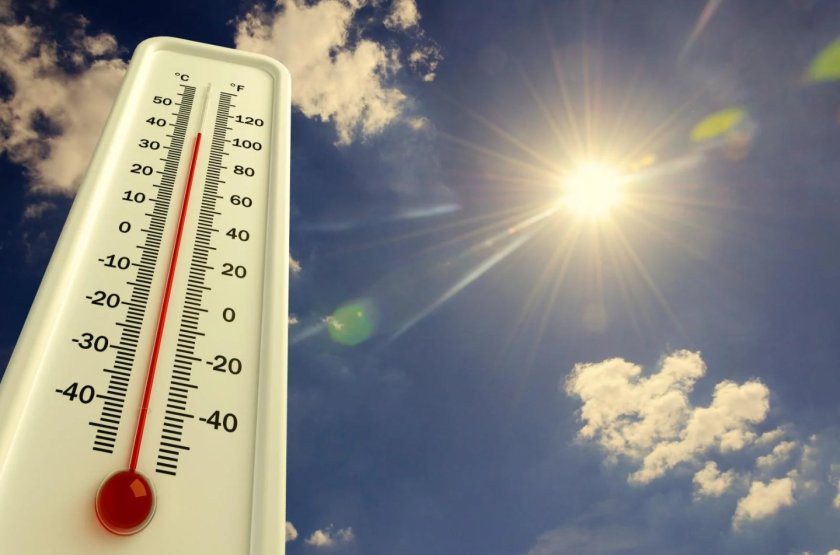


You must be logged in to post a comment.