AI Part II: Power-hungry AI data systems will follow cheap, reliable energy, no matter what the fuel is

In the good old days of 2021, the price of Bitcoin reached $60,000 apiece, and the frenzy to ‘mine’ coins was palpable. If you’ve managed to successfully expunge the mania from the space between your ears, recall that crypto mining “requires three basic things: servers to solve complex mathematical problems, a way to keep those servers cool, and huge amounts of electricity.” 

From The BOE REPORT

Terry Etam

“Crypto mining has been described as running your car in neutral all day so it can solve crossword puzzles in exchange for an occasional coupon that’s mostly useful for buying heroin online.” – Vice

In the good old days of 2021, the price of Bitcoin reached $60,000 apiece, and the frenzy to ‘mine’ coins was palpable. If you’ve managed to successfully expunge the mania from the space between your ears, recall that crypto mining “requires three basic things: servers to solve complex mathematical problems, a way to keep those servers cool, and huge amounts of electricity.” 

The Vice article hilariously documented what was purported to be Europe’s weirdest crypto mining site, a section of North Kosovo that was paradise for miners because, due to governmental infighting, local governance simply ceased to function. Police were around, but not enforcing rules, and people simply stopped paying their utility/electricity bills. Thus was created the world’s biggest welcome mat for crypto mining – free power, no harassment over noise, no one complaining about an environmental footprint.

The point of recanting these tales is not to get into crypto debates, but to summon forth from history the lesson in what happens when an ‘industry’ appears out of nowhere, requires vast amounts of energy, can be located anywhere, and is growing rapidly. 

Two years ago, that title went to crypto mining. In 2023, it’s all about AI. And it’s going to get much bigger.

Bitcoin mining as an industry never went mainstream; we did not see Fortune 500 companies setting up mining operations to cash in (even if they tacitly supported Bitcoin). AI is something else entirely.

AI shares a similar profile, in a few ways, with Bitcoin mining. First, it requires monstrous amounts of energy. As discussed last week, Tesla’s Dojo AI computer, once fully up to planned maximum size, will consume as much power as 165,000 homes. 

Second, it is growing rapidly. Almost every industry is pursuing AI advantages. Medicine, agriculture, automotive, you name it, all sorts of industries are or will be using AI.

Third, AI data centres can be located anywhere. This is a key aspect that is going to overwhelm energy planning like a tsunami.

The link to global energy flows should not be underestimated. AI data centers and server farms will be created and used by countless organizations and companies around the world. As discussed last week, Lyn Alden speculated quite rationally that hackers might find AI to be a godsend; breaking into computer systems around the world seems like a supremely fitting function for AI which will use machine learning and massive databases to scan for weaknesses (for example, a miscreant with enough computer power might be able to comb your Facebook or other social media account, cross reference it with all references you make to holidays/where you live/dine, what you do for hobbies, etc., and come up with much better algorithms for cracking passwords).

We should therefore expect to see a similar energy-gold-rush, where AI power-hungry data centers seek out a location – any location – that can provide cheap, reliable power. 

Which brings us back to the dream-site first discussed above, North Kosovo, which was perfect because power was cheap and scrutiny non-existent. Why would we assume AI would be any different? In other words, California might fret at allowing construction of hundreds of massive AI computers because their fragile grid cannot handle it. In many other parts of the world, it will work the other way around – their fragile (or non-existent) grids might suddenly grow massively to take advantage of a global demand for AI power.

Take for example a small, impoverished developing country that may have access to abundant coal, oil, or natural gas. Current western pressure is limiting the ability of these nations to develop hydrocarbon resources because of the war on ‘climate change’ – for example, Europeans and North Americans are joining arms to oppose projects like the East African Oil Pipeline. 

So what is to stop a small impoverished nation that perhaps doesn’t feel all that inclined to help London or Brussels or Washington or Ottawa with their emissions battles? What is to stop them from utilizing any available hydrocarbon resources directly to attract global data centers and servers?

What happens to power demand then? What happens to emissions then? And who will stop it? Or, before the west tries to answer that question for non-degreed class, who has a right to stop it?

Two great big tectonic plates are moving that provide some indication of how things are going to happen in coming years. 

One is the rise of BRICS, the affiliation of nations that wants to create its own trading block in order to steer a path that Washington or Belgium might not prioritize. BRICS – Brazil, Russia, India, China, and South Africa – recently welcomed six new member countries: Argentina, Egypt, Ethiopia, Iran, Saudi Arabia, and the United Arab Emirates. 

The new expanded BRICS (possibly to be called BRICSAEEISAUAE but probably not) is an entity of considerable clout. Brazil, Russia, Saudi Arabia, Iran, and UAE are major exporters of various industrial materials the world can’t live without, including oil, natural gas, metals, minerals, etc. India and China alone provide a monstrous market with 2.5 billion people between them. Developing countries/economies like Ethiopia, Argentina and Egypt bring a lot to the table as well in terms of natural resources and, perhaps more critically, space and people and lower industrial cost structures than the west. China largely controls the ability to turn raw materials into processed metals and minerals.

The only thing this group really seems to be missing is a pontificating Euro or American voice telling them what to do, how to do it, and when to do it. I suspect that absence is not a coincidence.29dk2902lhttps://boereport.com/29dk2902l.html

The second big tectonic shift was on full display at the recent G20 summit. The African Union was admitted as a member, which was kind of a big deal, particularly for Africa, but also for the world in general. The addition acknowledges that other voices need to be on the world stage, a sense of humility the G7 has long lacked. The final communique issued at the end of the G20 summit included doses of common sense lacking from typical utterances of the G7: “We affirm that no country should have to choose between fighting poverty and fighting for the planet…It is also critical to account for the short, medium, and long term impact of both the physical impact of climate change and transition policies, including on growth, inflation, and unemployment.” 

Contrast that with the west’s bizarre self-lobotomization when it comes to energy, as best personified by the entity furthest along the rapid-transition path, Germany: the dwindling economic powerhouse is chained to a green freight train it insists is under control, has shut down nuclear power plants with no low-emissions baseload to replace it, and in a final stunning swan dive to the pavement, is orchestrating the installation of 500,000 heat pumps per year to the grid, which will be in most demand in cold weather and will perform worst in cold weather, and will add a potential 10 gigawatts of cold-weather demand at the very instant the grid is least able to afford it, and for which there is no supply available anyway. A German energy economic university think tank says the additional cold-weather demand could only be met by new gas-fired power plants, which are not being built. In sum: Germany has shuttered its cleanest, most reliable energy; it has or is trying to banish hydrocarbons and replace them with intermittent power; and finally is hastening adoption of devices that will function very well in 80 percent of conditions when it doesn’t matter much but will fail in a spectacularly deadly way at the point in time when they are needed the very most, because heat pumps will be turned up to 11 at the very time the grid will be the most taxed. German engineering isn’t what it used to be.

Now put those two things together: the rise of BRICS as a formidable global alliance, and the rise of developing nations in the stature of the G20 in a manner that clearly indicates they have a set of priorities that do not align with the west, and they don’t really care. Contrast the recent G20 communique (“We affirm that no country should have to choose between fighting poverty and fighting for the planet”) with the climatic musings from most recent G7 meeting in May, the western ruling class, putting out a bucket of gibberish chock full of climate change platitudes and wishful thinking (verbatim: “We task the Finance Ministers to turn their “High-level Policy Guidance for Public Finance Tools to Build Resilient Supply Chains in the Era of Decarbonization” into specific actions by developing the “Partnership for RISE (Resilient and Inclusive Supply-chain Enhancement)” in collaboration with interested partners and international organizations, especially the World Bank Group.” The whole document is a blueprint for G7 governments and finance ministers to imprint their hair-shirt goals on the developing world. The fact that the G20 statement came only a few months after the G7 statement tells us all we need to know about what the G20-G7=G13 think of western elite scheming.)

Put this all together. The world’s appetite for AI is going to proceed, in all likelihood, at breakneck speed, with a corresponding power appetite to match. To the extent that AI processing can be erected quickly, we are going to see AI data server farms pop up wherever there is reliable power, no matter the energy source, much like Bitcoin mining did at peak frenzy.

Energy demand is going to skyrocket, and the world’s AI machinery will come to life in whatever corner of the world that stands ready with an industrial site and a reliable power source. While energy transition development happens at warp speed, the world appears set to increase total energy demand in lockstep.

The general public’s attitude is already teetering from the daily contradictions they must live as functioning members of modern society that consume ever larger quantities of energy, while simultaneously suffocating on climate change news. Just wait til they have to choke down this bolus as well.

Energy conversations should be positive and, most of all, grounded in reality. Life depends on it. Find out more in  “The End of Fossil Fuel Insanity” at Amazon.ca, Indigo.ca, or Amazon.com. Thanks!

Read more insightful analysis from Terry Etam here, or email Terry here.

The BRICS and CO₂ are reshuffling the geopolitical deck

The BRICS+ and the Global South are therefore objective allies for economic growth and will therefore consume more energy. Meanwhile, in the EU, which is the big loser in this BRICS development, the raison d’être is decarbonisation.

From Friends of Science Calgary

by Samuel Furfari – originally published in Factuel in French. Republished here in English translation with permission of the author.

As the BRICS countries have expanded to include six new members, economic commentators have focused on the role of currencies. This is understandable. But we should not lose sight of the power of the BRICS+, which stems from their control over oil and gas reserves. These countries are also concerned about their own economic growth and that of their customers in the Global South, so next November’s COP28 is already shaping up to be a failure for the EU’s anti-growth agenda.

Image sourced from the original article:
https://factuel.media/blogs/blog-articles/brics-et-co%E2%82%82-rebattent-les-cartes-de-la-geopolitique_ba_20552247

More BRICS… Powerful

The BRICS group of countries has decided to expand: Argentina, Egypt, Ethiopia, Iran, Saudi Arabia and the United Arab Emirates will join founding members Brazil, Russia, India, China and South Africa on 1 January 2024.

The other candidate countries will have to wait to join, because this club of countries attracts a lot of people. Some ‘political’ researchers scoffed, arguing in particular that there are huge disparities between the countries of what I will call the BRICS+. Aren’t there huge disparities in the EU, for example between the economies of Germany and Cyprus? After all, there is no question of a union or institutions between the BRICS countries, as there is in the EU.

The BRICS+ are an informal grouping, just like the G7 or the G20. These groups have emerged because formal multilateral cooperation, sublimated in the United Nations, has become ineffective, unnecessary and costly. The strategic competition between the great powers is growing and can no longer be reduced to the great UN convolutions and lost in agencies or bodies such as the COPs, which have sufficiently demonstrated their emptiness.

These 11 countries carry considerable weight on a global scale. They account for 36% of the world’s landmass, compared with 16% of the G7. With 45% of the world’s population, they are almost five times as populous as the G7. In economic terms, the BRICS+ are also larger than the G7 (37% of world GDP compared to 30% of the G7). In terms of food, they are also better off than the G7: they produce almost half of the wheat and 55% of the rice. Brazil, India and Argentina are among the top five beef-exporting countries. They are also dominant in steel and aluminium production. Steel, so vital to the construction and automotive industries, is 70% produced in the BRIC+ countries, including five of the world’s top eleven producers. Aluminium, an essential metal for modern life, especially in the mobility sector, is almost 80% in the hands of this group of countries. We will see later on their strategic importance in terms of energy, but it is worth remembering that without coal there is no steel production and without electricity there is no aluminium production. Not surprisingly, energy is of strategic importance to these consumer giants.

Clearly, China is the heavyweight in almost all of these comparisons. Most economists, both inside and outside China, expect its economy to grow by 5% a year. This growth cycle has been impressive over the years, but we are seeing a shift in pace that could be worrying if confirmed. The problems facing the Chinese economy are political and systemic. China’s economy is struggling because its authoritarian demons are catching up with it and crippling the private sector. This possible decline in China’s influence will affect the internal balance of the BRICS+, which will not displease the other members of the group, but will not call into question the predominant and growing weight of this grouping, because one way or another, China will not collapse.

United Nations Pond

The BRICS meet at the highest leadership level to further consolidate and strengthen mutual trust in order to influence the world’s major strategic directions. It is clear that this group intends to mark its difference from the G7, the main leaders of the OECD countries (and NATO, with the exception of Japan and Australia). Indeed, how can we not see the BRICS as an alter ego of the OECD, which no longer accepts the dominance of the United States? The war in Ukraine has brought this opposition to the fore, so much so that Vladimir Putin was unable to travel to Johannesburg due to sanctions imposed by the West and had to participate via videoconference. He will have his revenge next year when the BRICS meet in Moscow.

But the bridges have not been completely burned, because beyond bilateral relations, which remain largely intact, the G20 is an opportunity for the BRICS+ and the G7 to talk to each other. Argentina, Brazil, China, Russia, India and Saudi Arabia are members of these two informal groups, and the latter will host the annual G20 meeting on 9–10 September.

New geopolitics

Western media often speculate about whether China wants to introduce the yuan to compete with the dollar, or whether the BRICS want to have a common currency. The state of the Chinese currency discredits this hypothesis. In fact, it is a distraction because it is not the real issue.

It is becoming increasingly clear that the geopolitical cards are being reshuffled.

The rise of the ‘workshop of the world’ — China – and the ‘office of the world’ — India – thanks to the enormous firepower of a population that is at last educated and no longer dependent on subsistence farming is arousing the interest of what is now called the ‘Global South’. This neologism refers to countries that have been described as ‘emerging’, ‘developing’ or even, ‘less developed or underdeveloped’. The majority of these countries are located in the global south, mainly in Africa, Asia and Latin America.

These countries, their leaders, their populations and, above all, their young people, who are discovering the reality of the rich world thanks to the Internet, only want to live well, like the G7 countries. There is only one condition for this: economic growth.

China shows that economic growth is possible even in a dictatorship.

The corollary of economic growth is the growth of energy consumption, because the physical concept of work is exactly the same as that of energy. Without energy, there can be no work, and without work, there can be no economic growth and therefore no social development.

The rise of India

In contrast to Russia’s failed moon landing on 19 August, the successful landing of the Indian lunar module near the moon’s south pole on 23 August confirms India’s mastery of space technology. This gives India the right to claim to be a leading power. Of the four countries that have successfully landed on the Moon, three are BRICS members (China and Russia before India). The success of the Chandrayaan-3 lunar landing confirms India’s place in the Artemis Agreement, the multilateral initiative led by the US NASA to send men to the Moon by 2025.

Another area in which India has surprised is the extraordinary progress it has made in electrifying the country, a key parameter of prosperity. Millions of Indians suffered from backward economic development, negatively affecting health care and quality of life. Poor lighting prevented people from working after dark, and a lack of water pumps limited the use of modern toilets. Since 2000, successive governments have been determined to end this energy poverty, manifested primarily in the lack of electricity. Today, 99% of Indians are connected to the grid, even as the population has grown from 926 million in 1993 to 1,428 million today. Thirty years ago, that figure was only 50%. How has this been possible? It was the massive use of coal that made this electricity revolution possible. Thirty years ago, India consumed 5.36 exajoules (EJ) of coal, compared with 20.09 EJ today.

Seventy-five percent of India’s electricity is generated by coal, so much maligned in the EU. There can be no economic miracle without abundant and cheap energy, as China has shown.

Obviously, unlike Brussels-Strasbourg, the Indian authorities are not obsessed with reducing CO₂ emissions. That is why India, along with China, opposed the inclusion in the Glasgow COP26 conclusions of the need to reduce coal consumption.

On August 25, India’s Minister of Electricity and New and Renewable Energy, Shri R. K. Singh, called for a change in the discourse and argument on global climate change, shifting the focus from total emissions to per capita emissions in each country. On the Ministry of Energy’s website, his call is clear: ‘India’s per capita emissions are one third of the global average, one of the lowest in the world; despite this, developed countries have until recently pressured large countries like India to reduce their emissions. Their per capita emissions remained three to four times higher than the global average. The speech was [so far] about each country’s total emissions.’

Shri Singh delivered the coup de grace by declaring that ‘the housing stock of developing countries will multiply, as we grow; We will need more cement, steel and aluminium to build these buildings and factories. This will lead to an increase in emissions. So we need to develop [to be allowed to develop].’

High-risk COP28

The Global South has understood that if it wants to develop, it must do so by consuming fossil fuels and thus emitting CO₂.

The United Arab Emirates – a new member of BRICS+ – has chosen to include the colour black in its flag as a reminder that its prosperity is due to black gold.

MEPs have asked the Emir of the United Arab Emirates to remove Sultan al Jabal from the presidency of COP 28, to be held in Dubai in November 2023, because – the ultimate sin – he is the president of ADNOC, the company that manages the country’s hydrocarbon production. Federal Council member Ali bin Rashid al-Nuaimi did not hesitate to criticise these lessons: European lawmakers, ‘advocate international intervention in a sovereign decision – the latest effort in a long series of Western efforts to impose their will on global governments in the Global South for national political gain.’

With 46% of world consumption, the BRICS+ are major energy consumers: 35% of world oil, 36% of natural gas and 72% of coal.

They hold 42% of oil reserves, 50% of gas reserves and even 40% of coal reserves. Their energy future is therefore secure, which is clearly not the case for the EU, which is isolated in this area because its privileged ally, the United States, has also secured its energy future thanks to shale oil and gas. There is not enough space here to highlight the blow of Iran’s admission to this group at a time when the country is still being roundly criticised by the US and, to some extent, the European Union. With 9% and 17% of the world’s oil and gas reserves respectively, the BRICS+ have secured a significant proportion of their hydrocarbon needs.

The decline of the EU

Not only are the BRICS+ big consumers, as we have seen, but they also need customers to ensure their growth. The Global South does not want to consume for consumption’s sake, as some of the G7 countries do, but out of a need to get out of poverty or even to limit emigration, which, if it continued, would have harmful consequences for African countries.

The BRICS+ and the Global South are therefore objective allies for economic growth and will therefore consume more energy.

Given that, after fifty years of research and promotion, wind and solar PV account for only 3% of primary energy demand globally and in the EU, the demand for conventional energy (fossil fuels, nuclear and hydro) will only increase.

Meanwhile, in the EU, which is the big loser in this BRICS development, the raison d’être is decarbonisation.

But because it is utopian, it has to resort to economic and demographic decline. Is it because it knows that its energy future is not green but gloomy that it is funding studies on degrowth? The Flemish media Doorbraak has just reported that three activists from the degrowth movement have been awarded a contract worth 9.9 million euros to write pamphlets and campaign for six years at the expense of the European Union to defend their retrograde political choice. Will MEPs speak out against this political abuse of the so-called Horizon Europe research programme? It reminds me of what an Italian MEP once said: ‘If you think you are a leader and nobody follows you, you are a loser.’ The BRICS+ demonstrate this obviousness.

~~~~

Prof. Samuel Furfari’s books available on Amazon.

Recent work:

https://www.amazon.ca/Samuel-Furfari/e/B00DW7D5KU/ref=dp_byline_cont_book_1

New World Order: International Coalition Led By China Russia Admits Six New Members

Brazil, Russia, India, China and South Africa (BRICS), a group of emerging countries combatting traditional Western dominance, added six new member countries, it announced at its summit on Thursday.

From dailycaller.com

JASON COHEN

CONTRIBUTOR

Brazil, Russia, India, China and South Africa (BRICS), a group of emerging countries combatting traditional Western dominance, added six new member countries, it announced at its summit on Thursday.

Saudi Arabia, Iran, Ethiopia, Egypt, Argentina and the United Arab Emirates are the six new countries BRICS welcomed into the coalition and they will become official members on Jan. 1, South African President Cyril Ramaphosa said at the summit hosted in his country, according to Reuters. Leaders of the original BRICS countries described the historical and geopolitical significance of the new member additions and suggested this is only the beginning.

“BRICS has embarked on a new chapter in its effort to build a world that is fair, a world that is just, a world that is also inclusive and prosperous,” Ramaphosa said, according to Reuters. “We have consensus on the first phase of this expansion process and other phases will follow.”

Dozens of other countries including Bolivia, Cuba and Kazakhstan also want to join BRICS, according to Reuters.

“This membership expansion is historic,” Chinese President Xi Jinping, said, according to Reuters. “It shows the determination of BRICS countries for unity and cooperation with the broader developing countries.” (RELATED: More Countries Flock To China’s Anti-US Dollar Alliance Ahead Of Major Meeting)

Russian President Vladmir Putin did not attend the summit because of an International Criminal Court arrest warrant for his alleged crimes in Russia’s war with Ukraine, according to Reuters.

“BRICS is not competing with anyone,” Putin said in remotely recorded remarks, according to Reuters. “But it’s also obvious that this process of the emerging of a new world order still has fierce opponents.”

The BRICS coalition, which has expanded to encompass 11 nations, consists of a combined population of 3.7 billion people including three authoritarian states, two autocratic monarchies and a theocracy, according to The New York Times.

Representatives from several countries railed against the dollar, suggesting a desire to decrease dependence on the U.S. currency at the summit on Tuesday, according to reports.

Iran, Saudi Arabia, UEA and other invited to join BRICS group

Expansion is a victory for Russia and China who want to bolster the bloc against competition from the West

Brazil’s President Luiz Inacio Lula da Silva, China’s President Xi Jinping, South Africa’s President Cyril Ramaphosa, India’s Prime Minister Narendra Modi and Russia’s Foreign Minister Sergei Lavrov pose during BRICS summit in Johannesburg, South Africa August 22, 2023. Russian Foreign Ministry/Handout via REUTERS ATTENTION EDITORS – THIS IMAGE WAS PROVIDED BY A THIRD PARTY. NO RESALES. NO ARCHIVES. MANDATORY CREDIT

From NOT A LOT OF PEOPLE KNOW THAT

By Paul Homewood

Expansion is a victory for Russia and China who want to bolster the bloc against competition from the West


JOHANNESBURG—The Brics group of emerging nations has invited six additional countries to join the bloc in an effort to grow its global importance and ability to challenge the West on key political and economic issues.


Saudi Arabia, Egypt, Argentina, Iran, Ethiopia and the United Arab Emirates have been invited to join Brics, which currently comprises Brazil, Russia, India, China and South Africa, the bloc’s leaders said on Thursday, the final day of a summit in Johannesburg.

The expansion of Brics is a victory for Chinese President Xi Jinping and Russia’s Vladimir Putin, who had pushed to grow the bloc in the face of intensifying geopolitical and economic competition with the West. They argued that a bigger club would give the developing world a stronger voice that is more equal to its size.


“Let us work together to write a new chapter of emerging-market countries… working together for development,” Xi said in translated remarks at a news conference at the end of the summit.


Xi has been wooing developing nations at the summit this week, as Beijing looks to shore up friendships among African nations, as well as countries in Latin America and parts of Asia that are traditionally suspicious of U.S. power.


Joining the summit by video link, Putin also welcomed the addition of new members and said they would help galvanize the bloc. “We all stand for the building of a new multipolar world order, one that is truly balanced,” said Putin.


The Russian president has boosted efforts to court developing nations as Russia seeks to expand into new markets and make new allies to lessen the impact of Western sanctions over the war in Ukraine.


Putin couldn’t attend the summit in person, as the host, South Africa, would have been obliged to arrest him under a warrant for his arrest issued in March by the International Criminal Court for alleged war crimes in Ukraine. He made no mention in his remarks of Yevgeny Prigozhin, the owner of the Wagner paramilitary group, who died in a plane crash on Wednesday.


Brazil and India had advocated for a more gradual expansion of Brics amid concerns that the group could become too far aligned against the West, morphing into an autocratic version of the Group of Seven major economies.


It appears that Brics is headed in that direction, with just one of the six newly-admitted nations—Argentina—ranked as “free” in Freedom House’s widely used global freedom index, with a score of 85 out of 100. The other five countries are all designated “not free,” with scores ranging from eight to 21.


Still, Brazil and India voiced their support for the expansion at the summit on Thursday. “India has always believed that the addition of new members would further strengthen Brics as an organization,” Prime Minister Narendra Modi said.
Bracketed together originally by the clip of their economic growth, the current Brics nations account for more than a quarter of the global economy and some 42% of the world’s population.


The Brics leaders said the admission of six new members was a first step and further nations would be invited to join in the future. More than 20 countries, including Nigeria, Indonesia, Venezuela and Argentina, had formally expressed interest in joining the bloc ahead of the summit. The first six new members will join at the start of next year.


Analysts said the addition of new countries could further undermine coherence and decision-making in the bloc, whose current members already represent vastly different economic and governance systems and ideologies and who have taken divergent approaches to their relationship with the U.S.
Full story

BRICS and Nukes and LNG – the energy transition few are expecting

In the energy world, we are told relentlessly that an energy transition is underway, and that the rate of change is dizzying and unprecedented. To a certain extent that is true, and new technologies are being developed that might be quite revolutionary – assuming we can integrate them in anything resembling a cost effective manner.

From BOE REPORT

 By Terry Etam

Sometimes I hear people going on about how rapidly the world is changing. “The pace is unbelievable, who can keep up…” Most times I roll my eyes a fair bit, a good 80 degrees I’d say. Obviously things are changing, but a new app that helps order pizza or a tool that writes an essay for us instead of doing the hard work ourselves is not that revolutionary given the context of the last century (in case you ever wonder, there will always be enough f-bombs and crappy analogies around here so that you’ll know ChatGPT is not present in this column). Our grandparents or great grandparents – now that’s change. Imagine growing up with no power, no plumbing, no autos… and then finding yourself in an old folks home with a cell phone the kids gave you to master and those old people are thinking “wow I used to have to go outside to take a crap” (see what I mean?) And now, there’s an app actually called Poop Map that the kids love (?). That is real change in one’s lifetime.

In the energy world, we are told relentlessly that an energy transition is underway, and that the rate of change is dizzying and unprecedented. To a certain extent that is true, and new technologies are being developed that might be quite revolutionary – assuming we can integrate them in anything resembling a cost effective manner.

But while we’re facing the blinding light show that is the media hype over the energy transition many want – wind and solar and battery tech and Tesla -, spellbound and hypnotized by the spectacle (because our ethnocentricity and lemming-media limits exposure to anything else), behind our backs 7 billion people are putting together their own show that will dwarf ours. And brave souls here in the west are making enormous progress in a direction that a lot of people don’t want to see.29dk2902lhttps://boereport.com/29dk2902l.html

Here’s a quick rundown of some of the bigger components that are largely met with unease, hostility, or shouting, and yet they are the future.

The first is the global rise of LNG as a fuel of choice for the coming decades. Country after country is signing LNG supply deals for 20 years or even more, contracts which are supporting the construction of infrastructure at either end – terminals to load LNG onto ships, and receiving terminals to distribute it to energy-starved countries. The US is expected to go from exporting zero LNG a decade ago towards exports of up to 30 billion cubic feet per day by the end of the decade, and the list of consuming nations is long and desperate to get what they can.

Emissions-wise, this makes total sense, because for much of the developing world the choice is coal, LNG, or nothing. Offers of endless solar fields are not amusing when the population wants refrigerators and air conditioners, at a minimum. But these developing countries must face the juggernaut of policy emanating from the west that does not want them to develop hydrocarbons of any sort. What to do? 

And that brings us to BRICS, one of the big developing geopolitical entities that is being forced into existence. 

Ten or fifteen years ago, a group of countries – Brazil, Russia, India China, and South Africa – formed what should have been BRICSA but for whatever reason they settled on BRICS. The original group took shape only as a method of attracting investment by highlighting opportunities, but over time it morphed into a more concrete organization, with their governments meeting regularly to develop policies that would benefit all members.

All well and good, however one would think – particularly here in the west – that the BRICS organization would be somewhat on its back heels and hiding behind a shrub with Russia being one of the key members. Russia’s invasion of Ukraine has been the biggest, worst setback to global peace in a long time.

It was with some surprise then that stories appeared in the news earlier this year about how multiple countries were looking to join BRICS. Bloomberg ran a story in April 2023 outlining 19 countries that submitted bids for membership.

In a startling sign of some of that change people talk about, the number of BRICS applicants reading for the hazing rituals has grown to a shocking 41 countries. The original BRICS group had about 3.2 billion citizens; the new applicants will add another 1.7 billion bringing the total BRICS population – if all join – to almost 5 billion people.

Compare this total to ‘the west’s’ population; if one includes philosophical teammates like Japan and Australia in the count along with western Europe, the US and Canada gives a population of under 1 billion. 

The rush to join BRICS is from everywhere. South America, Africa, the Middle East, Asia… even Mexico. The group is holding a summit in August with plans to potentially introduce a new currency.

This group is willing to join with the west’s pariah, Russia, because it sees a path towards defining its own future, and you can bet that energy is a large part of that. Why should 5 billion people take orders from the west with regards to what is and what is not allowable in terms of energy development? 

Western stances on energy are absolutely bizarre, and from the other side of the developmental wall, must be at best perplexing and at most infuriating. Activists groups from Europe and the US push to prevent development of the East African Oil Pipeline, while Canada builds one, President Biden urges American producers to drill more, and Europeans build LNG terminals and burn coal. 

The most bizarre western energy antics however seem to revolve around nuclear energy, another piece of the energy puzzle that appears to be poised for rapid and significant growth even while the west ties itself into knots as to whether or not nuclear energy should be allowed. 

In ‘the west’, or westernized society, nuclear is generally a dirty word. The potential devastation of a bad nuclear accident is seared in every brain. We all know the words Three Mile Island, Chernobyl, Fukushima…not as tourist destinations but as locations of bad nuclear juju. 

Germany and Belgium recently shut down a number of perfectly good nuclear reactors for some sort of ‘environmental reasons’ at the same time other countries in Europe, such as the Netherlands, rush to build new ones within a hundred miles of where the old ones were shut down. California and New York State shut down nuclear reactors, and then just the other day Ontario announced a massive new nuclear power development.

Ontario’s nuclear announcement is huge. Actually, there were two announcements, both huge. On July 5, the province announced plans to construct new nuclear capability at the existing Bruce Power site, adding 4,800 MW of power capability, enough to power 4.8 million homes. 

Two days later, Ontario announced plans to build three small modular reactors (SMR) at the Darlington site, adding a further 1,200 MW of capacity. 

Ontario went through a phase of green madness some 15 years ago, pledging to go all-renewable or some such, and it was a disaster. Now, the province is showing leadership in meeting climate goals with true baseload, reliable power, the exact sort of thing renewables can’t do.

Ontario isn’t alone; many governments around the world are brushing aside the nuclear naysayers (of which there are many, including Greenpeace). Nothing is perfect, but in a world that is apparently willing to go carbon-free or die trying, nuclear is the clearest long-range plan.

Ontario is also pushing the frontier with SMRs, a very important development. If these small reactors become widespread, the market would be enormous – they are quicker and cheaper to construct, and (appear to) make economic sense at small scale. Proponents have flagged, for example, that SMRs could be used in the oil sands to generate steam and replace a lot of natural gas combustion.

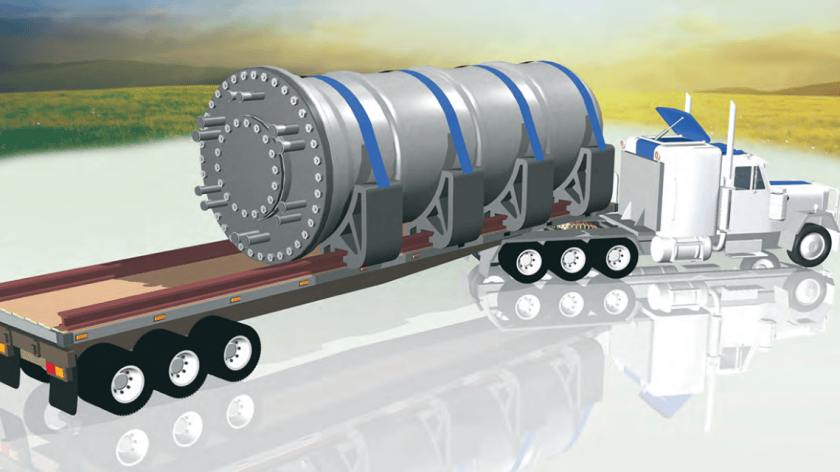
The US military is taking it one step further. The Eielson Air Force Base in Alaska is looking to pilot a micro-reactor. Per their website, “…Micro-reactors are a simple and compact form of nuclear reactor capable of producing between 1-20 megawatts (MW) of carbon free electricity.” Another US government website notes: “These compact reactors will be small enough to transport by truck and could help solve energy challenges in a number of areas, ranging from remote commercial or residential locations to military bases.”

The nuclear part is an oddity that fits in to the picture in the weirdest of ways. Nuclear power is the only real option for zero emissions power at a scale large enough to meet the world’s needs. In yet another geopolitical curiosity, the west has tied itself into knots over nuclear energy; one camp sees it as a threat to mankind, the other camp seeing it as energy’s salvation in a world that wants lower emissions. One recent study showed that 57 percent of global systemically important banks explicitly exclude nuclear power from financing considerations.”

These might seem like disparate energy threads, and in some way they are. But what is becoming clear when one adds them together is the following. 

The rapidly growing BRICS group is looking to forge its own path as a way to counter the influence of the west and/or have a more active voice in ‘how they should be developing’. 

One of the key developments for much of the world is the rise in LNG, which is happening against a backdrop of very powerful western voices that do not want that to happen. 

Beyond that, we are seeing nuclear power on the ascendence in a number of forms – large reactor development (Netherlands, Ontario), small modular reactors (Ontario announcement 2), and even micro-reactors (US military base). These nuclear developments are happening against a backdrop of animosity, negative media coverage (the two CBC stories linked above devote half the space to nuclear opponents), and ferocious lobbying by certain renewables interests, the exact sort of thing those renewable interests accuse oil/gas industry participants of doing.

Well, I’m an oil/gas industry participant, and this trajectory is, to me, inevitable. First, people in charge of actually making things work will start to assume control, on a global basis. That will mean the rise of LNG over the coming decades as the shortest, easiest path to decarbonize (as the US has proved; they have been more successful than most nations in cutting emissions by switching from coal to natural gas).

Next, because energy demand never ceases to stop growing, as the cheapest and easiest-to-extract natural gas reserves are developed, nuclear power will grow in stature to provide the reliable baseload power the world needs in huge and growing quantities. 

Alongside this path will most likely be developments in hydrogen and batteries and other peripherals that fill the gaps that the main building blocks can’t meet. There is always the possibility that there will be a major technological breakthrough in one of these energy system components, but we can’t plan on that. We have to go with what is proven.

That’s the energy transition that appears most inevitable. 

Energy conversations should be positive and, most of all, grounded in reality. Life depends on it. Find out more in  “The End of Fossil Fuel Insanity” at Amazon.ca, Indigo.ca, or Amazon.com. Thanks!Read more insightful analysis from Terry Etam here, or email Terry here.

End the Casino Economy Before It’s Too Late — Panel 3

The systemic collapse of the trans-Atlantic financial system is destroying the physical economy of entire nations, and is driving the world towards war.

Schiller Institute

The systemic collapse of the trans-Atlantic financial system is destroying the physical economy of entire nations, and is driving the world towards war.

There is a renewed discussion about the need for a Glass-Steagall bankruptcy reorganization of the international financial system in order to end the casino economy, as well as the need for Lyndon LaRouche’s Four Laws.

The world and every nation in it must move back to physical economy instead of monetarist values.

A key example of that is the farm sector, which needs to be able to provide for the international food requirements of the world’s population.

A manifesto of farmers from around the world is in preparation, and will be discussed during this panel.

#dollar #dollarcollapse #brics

Column: Wake Up, West – a new energy world order is building, fast

The BRICS alliance – Brazil, Russia, India, China and South Africa – is apparently no longer willing to stand by and have someone else dictate how their world will go (so to speak).

From BOE REPORT

By Terry Etam

Here in the weird West, where we set aside our vast wealth, bountiful resources, technological prowess, best-in-history medical/safety establishments, and other assorted existential victories to get into fistfights about whether more racism will eliminate racism and who can go to the bathroom where, we are used to watching ancient conflicts take place on the other side of the world, shaking our head, and wondering either “Why can’t they all just get along” or “Well that’s unacceptable, better step in.”

The weird west has long gotten involved in many of these conflicts because of, well, o-i-l. It’s been that way since the 1950s, probably longer; the west’s insatiable thirst for hydrocarbons has driven a lot of international shenanigans and weird relationships. Recall that after a gang of terrorists hijacked four planes and flew them into the US’ most fundamental landmarks on home soil, and that more than half of those terrorists were from Saudi Arabia, the US promptly and expectedly retaliated – by invading two other countries, and going for tea with Saudi Arabia. Kind of transparent, that one.

But that established hydrocarbon-based camaraderie is fading fast, and it doesn’t look like the West has a game plan in response. That’s about as far as I’ll wade into geopolitics because the whole mess is grossly complicated (who hates who again this week?), other than to point out how rapidly things are changing and how that is impacting the energy world.

As a backbone or framework for this whole discussion, keep in mind that low gasoline prices are of paramount importance to US politicians. They trump everything. No matter what tub is being thumped or what policy is being terror-drilled into the minds of citizens (climate emergency, for example), it will be dropped like a hot potato if it means higher gasoline prices.

Consumers don’t really care about big geopolitical things in their day-to-day life, and they aren’t really scared by the weather (tornado alley excepted). But gasoline prices are on every huge sign in every town in every state; nothing else has its price shoved in your face so vehemently. And those consumers really get up in arms when gasoline prices get too high.

To show how seriously politicians take this, the US half-drained the strategic petroleum reserve last year for the sole purpose of lowering domestic gasoline prices before an election. 

The west has befriended some fairly dubious characters in the past to ensure access to big juicy oil fields (see 9/11 example above). Much of the world order as we know it has been built around access to cheap energy. For the longest time, it was the US’ might economic engine, the biggest by far in the world, that moved the big chess pieces around.

29dk2902lhttps://boereport.com/29dk2902l.html

Everything went through the US – either through Washington, or through Wall Street. That’s not necessarily a critique; that’s what superpowers do. 

But storm clouds are on the horizon for the existing superpower order.

Just this past weekend, OPEC – led by Saudi Arabia – announced another production cut in a bid to shore up oil prices. Now, on its own, this isn’t a big deal; OPEC/Saudis have been doing that for decades (both real cuts and sabre-rattling false charges). But this cut was a big deal – it was huge, possibly 1.6 million barrels per day (probably less, but still significant), and it was directly in the face of the US administration which wants to see more oil, and not less. Increased oil prices are like a new tax on everyone, a tax that hits poor people hardest, and politicians seldom want to be associated with that.

Not very long ago, the US government was admonishing producers to produce more, urging OPEC to open the taps, and then finally draining strategic reserves, all in effort to drive down gasoline prices.

A few months into 2023, with oil prices far lower than last year, the US is supposed to be refilling the SPR, which would have had the effect of stabilizing oil prices in this range. But they won’t do it, and Saudi Arabia + buddies said ‘enough’ and acted voluntarily in a move that seemed to surprise almost everyone. 

This isn’t just oil market machinations; this is the tip of a very big iceberg. It is a new big kid on the block flexing its muscles. I’m not referring to Saudi Arabia here, but a whole new context in which Saudi Arabia appears to be quite comfortable in going its own way. Here’s why they are feeling that chipper. 

The BRICS alliance – Brazil, Russia, India, China and South Africa – is apparently no longer willing to stand by and have someone else dictate how their world will go (so to speak). They are flexing their muscles, and bringing in other nations as well. The following countries have expressed an interest in joining BRICS – Iran, Saudi Arabia, Argentina, the United Arab Emirates, Algeria, Egypt, Bahrain and Indonesia, along with two nations from East Africa and one from West Africa, according to a Bloomberg article. There is talk that Mexico wants to join as well, which is quite the thunderbolt considering the leaky border it shares with the US.

The repercussions of this development are hard to understate. Consider Iran, historically viewed as a troublemaker here in the West, dubbed a member of the “Axis of Evil” by George W. Bush some 20 years ago. Iran has been (at least theoretically) shut out of global oil markets because of their tinkering with nuclear weapons and their animosity towards neighbours that have a lot of oil (more than Iran anyway, which is the equation that matters).

Iran has been sanctioned, yelled at, barred from oil markets, and viewed as a pariah. Even many in the neighbourhood can’t stand them; per a 2019 BBC article, Saudi Arabia and Iran are ‘bitter rivals’ fighting for regional control, and probably have been for a thousand years ever since someone forgot to take their boots off in somebody’s house or something (history is not my strong suit).

They are even riven by religion, and we all know how those spats turn out. Perhaps you prefer Time magazine’s infinitely more eloquent take: “In the pantheon of intractable, visceral conflicts, the feud between Iran and Saudi Arabia sits below few: rooted in doctrine, enmeshed in history, and waged via proxies across the Middle East.” 

But holy crap look at what just happened. China has just brokered a peace deal between Saudi Arabia and Iran. Well, maybe not a peace deal, that would be quite the accomplishment, but did manage to reestablish diplomatic ties, and has made incredible headway in healing that relationship, which seems even more bizarre than if Dr. Phil actually was to do that for once.

It gets even more eye-opening: China has stepped into the Russian war to try to broker a peace deal with Ukraine, and reportedly both Putin and Zelenskyy welcomed the move.

Bizarrely, or maybe not, the US admin turned up its nose at both diplomatic coups; with respect to the Saudi-Iran deal, the Biden admin downplayed it as insignificant and preferred to talk about China’s threat to the “rules-based international order.” Is the “rules-based international order” designed to keep conflicts going? And of course, the Russia-Ukraine talks were a nonstarter for the West, a point which I totally get since Ukraine wants its territory back, but that’s beside the point.

The point is that the axis of the world is shifting. Western Europe and the US no longer call all the shots; the old powers that spend a century or two civilizing and carving up the world to their satisfaction no longer may be in the driver’s seat. A thousand books could be written on that topic, but here I am sticking to the energy aspect because, you know, this is the BOE Report, and not Chauncy Goodfeather’s Oxford Guide to the Management of Barbarians, Boors and Yokels (don’t bother Googling that), and besides that it is worth noting how the energy world is being shaken up. 

Actually, it might not be shaken up in a global sense as much as we’d think, but here in the West we’re going to get a good metaphorical whack on the side of the head. Cast your mind back to the list of countries either in BRICS or applying to join. In that group are billions of people, many of whom have insufficient power, nutrition, clean drinking water, etc. Even a significant number of Russians apparently don’t have indoor toilets, which maybe their leadership should have worried about that crappy situation rather than invading countries. 

And amongst that crowd, Iran is set to potentially join the club. A few billion people don’t find them so evil, I guess. I’m not defending that regime, just sayin’.

For all these billions of BRICS people, energy security and availability are pretty high up on their list of priorities, in stark contrast to the West’s obsession with reducing CO2 levels at absolutely any cost. It is the sheer quantity of energy available (or not available) that is a problem for the BRICS gang, which is one reason China is the world’s leader in installing renewable energy but also is building new coal-fired power plants hand over fist. They need it all. India also builds a lot of solar, but relies on coal, and buys oil from Russia without a care in the world. Hungry mouths come first.

Here in the West, we generate research reports by credible institutions that point out that we don’t have enough minerals and metals to perform the energy transition that we flamboyantly carve into law, and then we just shout “Who cares” and bring the net zero timelines even closer.

We adopt grandiose plans to develop our own critical minerals supply chains, acting completely obliviously to the fact that segments of our very own citizenry will protest the bejeezus out of any new mine application, out of any new large infrastructure development, out of any new messy and environmentally unfriendly metals/minerals processing industry that the Chinese currently have a lock on, and that we can’t do a thing without.

In the rest of the world where hundreds of millions would be ecstatic to have a refrigerator, their aspirations are somewhat more grounded and less insane. 

That vast group, the one that is scrabbling for survival and sees a chance for a better future by joining BRICS, has a far different take on what their most pressing emergency is. 

Don’t dismiss BRICS as the ‘developing world’ or any such label as we like to scribble on foreheads at our whim; the BRICS group, even without all the new recruits, has surpassed the G7 in GDP. The founding BRICS group has a combined population of well over 3 billion, versus less than one billion for ‘the west’, which means a lot of consumers, a very big market, and a good chunk of the world’s resources.

Now that even the likes of the filthy rich Saudis are looking to join the BRICS party, it should be apparent to us over here in the West that maybe we have better things to worry about than that which is amplified by our preoccupation with our Victim of the Week Wailing Club.

Energy dialogue should be exciting and positive – if you’re going to wade into the current energy mess, might as well enjoy it. Pick up  “The End of Fossil Fuel Insanity” at Amazon.ca, Indigo.ca, or Amazon.com. Thanks!

Read more insightful analysis from Terry Etam here, or email Terry here.