Global warming, climate change, all these things are just a dream come true for politicians. I deal with evidence and not with frightening computer models because the seeker after truth does not put his faith in any consensus. The road to the truth is long and hard, but this is the road we must follow. People who describe the unprecedented comfort and ease of modern life as a climate disaster, in my opinion have no idea what a real problem is.
Vauxhall owner Stellantis’s sales have plunged by more than a quarter amid production issues and an electric vehicle slowdown in Europe. The Telegraph has the story.
Stellantis, which also owns Citroen, Fiat and Peugeot, said revenues slumped from €45.1bn (£37.7bn) to €33bn (£27.6bn) in the third quarter of 2024.
The number of vehicles shipped by the company fell from 1.5 million to 1.3 million over the period.
Bosses have blamed delayed model launches and tough competition in Europe, as well as lower numbers of cars shipped to the U.S. – where the company is seeking to shift a surplus of vehicles that have piled up in sales lots.
In Europe, Stellantis and other car makers have complained about tough new regulations aimed at boosting take-up of EVs, even as inflation has battered households and led to softer demand for the cars.
Sales in Europe dropped from €14.1bn (£11.8bn) to €12.5bn (£10.5bn) in the third quarter, while vehicle shipments fell from 599 million to 496 million.
Stellantis and its European peers face what many analysts see as an existential struggle with Chinese electric car manufacturers for control of the passenger vehicle mass market.
This has prompted Volkswagen, Europe’s biggest car maker, to propose huge workforce cuts and the closure of German factories for the first time, partly in an effort to plough more investment into EV development.
Italy has called for a review of the European Union’s 2035 petrol car ban amid fears it risked triggering the industry’s “collapse”.
Rome calls for review of ‘absurd’ EU target amid slowdown in electric car sales
Italy has called for a review of the European Union’s 2035 petrol car ban amid fears it risked triggering the industry’s “collapse”. The Telegraph has the story.
Ministers from Giorgia Meloni’s government claimed the “absurd” policy was ideologically driven and required change to reflect the realities of the market.
There are also concerns that Europe’s car industry is falling increasingly behind manufacturers in China and the US, which have benefitted from a flood of government subsidies.
Last week, car giant Volkswagen warned it might close factories in Germany for the first time owing to issues such as high energy prices. This has prompted calls in some quarters for a rethink of tough EU climate goals which build up to a ban on internal combustion engine cars by 2035.
Gilberto Pichetto Fratin, the Italian energy minister, told Bloomberg: “The ban must be changed.”
Adolfo Urso, the industry minister, added: “In an uncertain landscape, which is affecting the German automotive industry, clarity is needed to not let the European industry collapse.
“Europe needs a pragmatic vision, the ideological vision has failed. We need to acknowledge that.”
Remember the American love for the open road? That paean to American freedom built on the automobile but made possible by highways that also enabled trucks to deliver goods to just about any location quickly and safely?
Remember the American love for the open road? That paean to American freedom built on the automobile but made possible by highways that also enabled trucks to deliver goods to just about any location quickly and safely?
Hot cars are still popular today, as evidenced by the fact that the “Fast and Furious” movies have generated about $2 billion in ticket sales in the U.S. and another $5 billion worldwide. Formula 1 reported revenues of more than $3.2 billion in 2023, with profits up by 64%.
In 2021, the Fédération Internationale de l’Automobile (FIA), which governs world motorsports, including touring, sportscar, drag racing, and rally car events, commissioned the first-ever report on the global market impact from motorsports. In the first year after the COVID pandemic, the industry generated over $200 billion in business impact on the world’s economy, directly and indirectly supporting over a million jobs.
Electric vehicles arrived concurrently with the internal combustion engine – and were quickly rejected as impractical. During their brief heyday, electric vehicles were marketed as “the ideal woman’s car,” but gasoline engines provided more energy per unit mass and could travel greater distances.
Gasoline could also be easily transported to filling stations in rural areas, many of which lacked electric power lines. Not until the 1930s did affordable electricity become available nationwide. After World War II, the gasoline-powered automobile became as popular as apple pie.
“See the USA in your Chevrolet!” and similar slogans echo the days of muscle cars and hot rods – along with convertibles and even sedans with good radios. Working people had pickup trucks, and the driver’s license was the first badge of adulthood.
Then came the minivan, now largely replaced by the sport utility vehicle. Cheap American gasoline or diesel (even with ethanol added) made even transcontinental trips possible for millions of Americans.
And then came the Progressives to spoil all the fun.
First, they hopped on the “climate emergency” bandwagon to justify massive subsidies for “clean” vehicles to “save the planet,” emphasizing no tailpipe emissions while ignoring the darker realities of cobalt and lithium mining, Chinese labor camps, or the cost of an entirely new infrastructure the private sector was not about to underwrite.
Backed by climate hype, politicians authorized massive subsidies that, to date, have gone mostly to the trendy urban rich, often purchased to show support for “green” technology and thus gain brown-nose points, but sometimes just because of the “zoom” factor.
As long as EVs were a novelty luxury item, no one really cared that the rich got a discount on their new toys. [Remember when the “toy of the month” was the Hummer?] It may come as a surprise that Tesla did not even enter the marketplace until 2008. The EV fad also engulfed the European subsidy market in very short order.
Not satisfied with the speed of the “transition” to electric vehicles, governments began imposing mandates on manufacturers to force them to shutter long-successful product lines and switch to electric vehicles only within a very brief timeframe.
In August 2021, President Biden signed an executive order setting a national goal that, by 2030, half of all new sales must be zero-tailpipe-emissions vehicles – regardless of cost and without evidence that the buying public would, or even could, choose an EV.
The order also called on the Environmental Protection Agency to put the squeeze on manufacturers to virtually eliminate gasoline engines. And just last month, the EPA unveiled its grand scheme to force the majority of American auto buyers into EVs within the next eight years – though the final rules have a slightly slower timetable than the version proposed a year ago.
Initial reaction to the bureaucrat-written rules was mixed, as Politico reported. While President Biden gushed that he was pleasing the climate police, auto manufacturers said that “this wildly unpopular policy is going to feel and function like a ban,” noting that it comes as “Americans are struggling with high costs and inflation.”
Transportation Secretary Pete Buttigieg, announcing the new rules, boasted that, “We estimate that today’s rule will prevent 5.5 trillion pounds of carbon dioxide from going into our atmosphere between now and 2050.” Citing the tougher mileage standards, Papa Pete also claimed that the new rules will “save a typical American household hundreds of dollars.”
“That’s a lot of lipstick smeared on this pig,” one can imagine someone saying. In the real world, EV sales are declining across Europe such that the European Union has backed away from its lofty goals – and may have to retreat further, based on recent election results.
In the U.S., auto rental giant Hertz is selling its entire 20,000-EV fleet, citing high repair costs and weak demand. Ford lost $4.7 billion in its EV division last year and has slowed or stopped production of its EV Lightning pickup.
The Biden-Buttigieg EV mandates are already taking away factory jobs and threatening to devastate motorsports (even though there is a burgeoning Formula E racing circuit).
Yet Buttigieg could not wait to insult the vast majority of Americans who have expressed little or no desire to trade in reliable gasoline-powered vehicles for an electric vehicle – for many of the same reasons Americans rejected them a century ago.
Many of the scarce EV charging stations rely on diesel or natural gas generators or even coal-fired power plants, only adding to the perceived absurdity of forcibly imposing an unwanted technology on an already financially stressed populace.
But Papa Pete, fresh from admitting the collapse of a bridge he once deemed “racist” was “unimaginable” (proving his incompetence), had no problem mocking Americans who willingly abandoned landlines yet “cling” to their “old-fashioned” [our words] “gas guzzlers.”This unthinking knee-jerk spirit, which permeates Western officialdom, is sparking citizen revolts against a bloated ruling class that evokes memories of a French monarch whose response to the cries of those her policies made poor was “Let ‘em eat cake” – when they had no bread.
And, while landline phones may seem old-fashioned, they still offer a level of reliability and voice quality unmatched by cell phones. There just are not enough cell phone towers (sound familiar?) to ensure 24/7/365 reliable service in every community.
One more thing. Papa Pete should know that cell phones first appeared in 1973 and only became popular two decades later, but not until the arrival of the iPhone in 2007 did people begin to ditch their landlines rather than pay for both technologies at the same time. That voluntary timetable is a lot longer than the one Buttigieg and his masters are forcing upon Americans.
Little known to the voting public, Conservatives, Labour and Lib Dems have all signed up to legally binding five-year plans, known as ‘carbon budgets’, which stipulate a “detailed programme to re-engineer society to cut emissions by a specific amount”, writes Allister Heath in the Telegraph.
Little known to the voting public, Conservatives, Labour and Lib Dems have all signed up to legally binding five-year plans, known as ‘carbon budgets’, which stipulate a “detailed programme to re-engineer society to cut emissions by a specific amount”, writes Allister Heath in the Telegraph. And any deviation could be open to legal challenge, meaning Governments have almost zero leeway to delay or cancel extreme measures like bans on boilers and petrol cars, no matter how unpopular or impoverishing.
Did you know, dear reader, that we are now on our fourth such carbon budget, valid from 2023 to 2027? Did you realise that the next two – up until 2037 – have already been enshrined in law, making a mockery of the next two or even three general elections? Were you aware that all of the consumer-facing changes – in 18 months, no newly built home will be fitted with a gas boiler, in seven years’ time, it will be illegal to buy new petrol cars, in 12 years, you will no longer be allowed to replace your existing boiler like-for-like – have been accounted for in the plans, gravely limiting room for political manoeuvre? Did you realise that any significant deviation from these carbon budgets could trigger legal action from pressure groups?
As Energy Secretary, Ed Miliband pushed through the Climate Change Act in 2008, committing to cut emissions by 80% on 1990 levels by 2050, with the support of all but five MPs. It was the equivalent of another Maastricht Treaty, a huge shift that will, in time, trigger a furious reaction from the electorate when it realises that it is no longer in control. It was apposite that, in 2019, Theresa May, fresh from sabotaging Brexit, amended the Climate Change Act by statutory instrument, increasing the target to a 100% cut in emissions by 2050.
That distant date has lulled many into a false sense of flexibility. Why can’t we delay the ban on combustion engines to 2035 or even later, naïve souls ask, and still meet Net Zero on time? The reality is that it could well be unlawful because cuts to emissions must be phased in according to a strict timetable.
The Government is obliged to set binding, five-year carbon budgets that cap the maximum amount of emissions allowed during each period; each budget is much tougher than the previous one. Meeting them is no joke: they need to be legislated 12 years in advance and be accompanied by credible policies to deliver them in full. Miliband’s Act created the Climate Change Committee (CCC), a ridiculously influential quango which advises the Government on the level of each budget and how much of a contribution each sector should make.
Through a combination of a recession, continued deindustrialisation, insufficient house and infrastructure building and the shift towards renewable energy, the UK met its first (2008- 2012), second (2013-2017) and third (2018-2022) carbon budgets without needing to try too hard. We are now into our fourth budget, requiring a 52% fall in emissions compared with 1990; this, too, could be manageable, partly because of stronger than expected sales of electric cars. But the pain is starting, and the backlash – from landlords, from motorists – is beginning.
Real, Brexit-intensity political warfare will undoubtedly break out ahead of the fifth budget (2028-2032) and especially sixth (2033-37), which will include aviation and shipping, coincide with the ban on new petrol cars and all new gas boilers, a massive, hugely costly insulation drive and require a cumulative 77% cut in emissions.
The Government has very little leeway if it wishes to continue to accept the strictures of the Climate Change Act.
Ferrari 125 S replica. By Herranderssvensson – Own work, CC BY-SA 4.0, link
h/t Breitbart; “… I don’t want to be arrogant and impose a choice on our client …”
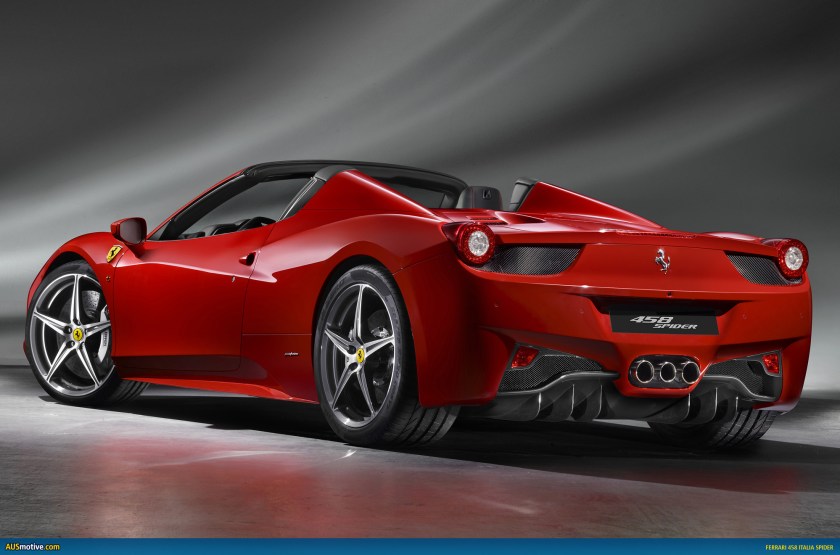
Ferrari resists pressure to phase out combustion engine
By Theo Leggett
Business correspondent, BBC News
Ferrari will continue to build cars with internal combustion engines into the late 2030s, despite efforts by governments around the world to phase out the technology.
The boss of the Italian manufacturer said it would be “arrogant” to dictate to customers what they can buy.
For Ferrari, as for many other premium brands, the move towards electric cars presents a steep marketing challenge.
But the company is due to introduce its first electric supercar in 2025.
…
In a BBC interview, Ferarri boss Benedetto Vigna pointed to this decision as a sign that technology was evolving, and denied doing so would undermine the company’s environmental credentials.
“I don’t want to be arrogant and impose a choice on our client,” he said.
“It is the client who must choose if they want an ICE (internal combustion engine), a hybrid or an electric car.”
What can I say – Ferrari we love you. I’d buy one of your cars if I could afford it.
Imagine if other car makers focussed on what customers want, instead of focussing on being woke.
The government 2030s 100% EV target is nonsense, unless there are radical improvements in EV technology, and a complete overhaul of our roads.
For example, my second hand 4WD diesel can easily get 600 miles per tank, “recharges” in minutes, is light enough to climb and descend difficult slopes, and is mechanically good for at least another 100,000 miles. I bought it because I was fed up with my road vehicle being shaken to pieces on our failing roads.
The thought of current generation EVs being driven regularly on such roads is absurd.
Correction (EW): Corrected the quote from Ferrari boss Benedetto Vigna
Ronald Steinis an engineer, senior policy advisor on energy literacy for the Heartland Institute and CFACT, and co-author of the Pulitzer Prize nominated book “Clean Energy Exploitations.”
California has almost 400,000 miles of roadways used by the State’s 31 million vehicles. Those roadways are heavily dependent on road taxes from fuels that contribute more than $8.8 billion annually, the same gas tax revenues that also funds many environmental programs. That revenue source will be diminishing in the decades ahead as EV’s begin to replace internal combustion engine vehicles.
California Governor Gavin Newsom has mandated no sales of internal combustion engine (ICE) vehicles after 2035 but appears incapable of acknowledging EV’s currently contribute nothing for road maintenance and repairs and that EV’s are heavier than ICE vehicles and will be inflicting more wear and tear on California roadways.
Newsom’s silence on how California will finance the billions of dollars for the roads being used by those heavier EV’s is an indication that he will just pass that problem on to his succesor. Newsom will not even discuss funding for future road maintenance as the EV mandate starts to negatively impact the revenue stream to maintain California roadways.
Regarding the high cost of energy in California, voters continue to be complacent with the state governments hidden taxes and mandates that contribute to the highest energy costs in America:
Fuels that are more than a dollar a gallon higher than the national average and
Electricity rates that are more than 60 percent higher than the national average and
Natural gas rates are more than 30 percent higher than the national average.
The California Governor may be experiencing a “dangerous delusion” of a global transition to “just electricity” that eliminates the use of the fossil fuels that made society achieve so much in a few centuries. From the proverb “you can’t have your cake and eat it too” tells us that:
you can’t rid the world of fossil fuels and
continue to enjoy the products and fuels manufactured from fossil fuels.
Newsom may not be well read that there is little to compare between fossil fuels and renewables as fossil fuels are primarily used to manufacture products and fuels for humanity, while renewables manufacture nothing for humanity.
Fossil fuels make products for humanity that allowed the world to populate from 1 to 8 billion in 200 years.
To add insult to injury, those so-called renewables of wind and solar are 100 percent made from the products manufactured from fossil fuels!
The above insult pales to my disappointment that our elite leaders are oblivious to the fact that fossil fuels made it possible for humanity to grow from 1 to 8 billion in 200 years, because they can be manufactured into thousands of usable, life-enhancing and life-saving products. On the other hand, renewables can only generate occasional electricity, but cannot manufacture anything for humanity, while fossil fuels manufacture everything for humanity.
By contrast, “transitioning” humanity to just electricity means converting to wind and solar systems that can manufacture none of the vital products now being used by humanity. That will very likely cause the death of BILLIONS of people from diseases, malnutrition, lowered living standards and weather-related disasters, whereas projections of millions of fatalities from “carbon emissions” and climate change are based on computer models that take none of these realities into account.
In any event, you cannot run households, businesses, hospitals, and the military on occasional electricity and no products from fossil fuels!
EV buyers beware that the “tax equalizer”, higher electrical rates and/or the “VMT” is coming. The Vehicle Mileage Tax (VMT) that has been discussed for years sounds like a logical idea – requiring the users of the highways to pay the fees to maintain those highways. The VMT tax will be needed to replace the $8.8 billion annually from fuel sales that will be diminishing in the decades ahead.
You may not know it if you rely solely on American media, but there is a growing revolt across much of Europe against Net Zero mandates in general and electric vehicle mandates in particular.
Planet Earth Europe zone. Elements of this image furnished by NASA
You may not know it if you rely solely on American media, but there is a growing revolt across much of Europe against Net Zero mandates in general and electric vehicle mandates in particular.
It seems that, led by luxury carmakers, the future may be bright for the venerable internal combustion engine if new synthetic fuels technologies can produce an affordable replacement for gasoline and diesel fuels.
The revolt had been brewing ever since Europe got a wakeup call with Russia’s invasion of Ukraine that upset the Net Zero applecart and led even Germany to reopen coal-fired power plants. Still, the EU last November had struck a provisional deal on a new vehicle emissions law that would have banned the sale of internal combustion engine (ICE) vehicles by 2035.
Two months later, though, the new Meloni government in Italy began to raise objections. The forced transition to EVs has already hit the Italian auto industry with job cuts, leading Transport Minister Matteo Salvini to argue that it makes no sense to put thousands of jobs at risk when there are plenty of reasons to keep ICE vehicles on the road with a carbon-neutral fuel.
Italy’s balking opened the door for German Finance Minister Christian Lindner to switch his government’s position to demand an exception for hydrogen-derived, carbon-neutral synthetic e-fuels (produced by electrolysis with added carbon) that can power ICE vehicles. Porsche, which has invested $75 million in a pilot plant to make e-fuels, and Ferrari could preserve their rich heritage and iconic models and still comply with zero-emissions requirements with e-fuels.
German Transport Minister Volker Wissing agreed, stating that, “We need e-fuels as there is no alternative if we want to operate our vehicle fleet in a climate-neutral way. Whoever is serious about climate-neutral mobility must keep all technological options open and also use them. I don’t understand this fight against the car and why people want to ban some technologies.”
Polish Prime Minister Mateusz Morawiecki has long objected to the EU ban and had pledged to do “anything” to stop the “pseudo-green idea by rich countries and bureaucrats from Brussels” to ban gasoline and diesel engines. Polish families, he contended, cannot afford these expensive vehicles, and an ICE ban would cause Polish firms producing car components for well-known global brands to suffer irreparable harm.
As by simply abstaining from a final vote on the hard ICE vehicle ban, Germany could have killed the proposed EU legislation, the European Commission agreed to draft a compromise to allow the sale of ICE vehicles capable of running on e-fuels after 2035. Environmental groups objected, claiming that – because gasoline and diesel will still be available to power older vehicles – owners of e-fuel capable vehicles will cheat and fill up with gasoline.
Alex Keynes, clean fuels manager for the NGO Transport & Environment, claimed that e-fuels are too expensive to be given a seat at the table. He cited a T&E study that concluded that e-fuels would be 47 percent more expensive than petrol in France in 2030. [What he did not say was whether even that fuel cost differential would make e-fueled ICE vehicles more expensive to own and drive than lithium-battery EVs.]
Ferrari’s Benedetto Vigna scoffed at the T&E rhetoric. He expects the price of e-fuels to fall as they become more popular and that these fuels would allow carmakers to focus on producing lower cost e-fuels instead of expensive battery-powered cars that have their own limitations. Besides, suggested car industry veteran Andrew Graves, e-fuels may also be the answer for keeping older model vehicles on the road while further reducing emissions.
In the United Kingdom (no longer in the EU), former Prime Minister Boris Johnson, in a move to one-up the EU, decreed a ban on new ICE vehicles by 2030 and on new hybrid vehicles by 2035.The adoption of this modified ban by the EU is putting pressure on the British government to follow suit.
Former Tory cabinet minister Sir John Redwood urged the Sunak government to consider the fact that, “Britain is in a desperate struggle to keep its car industry, and if we insist on phasing petrol and diesel out well before anyone else, we will find it harder to attract investment. The fewer bans there are,” he added, “the better to promote growth.” Like their Italian and German counterparts, British carmakers Aston Martin and McLaren are both investigating e-fuels for their future models.
There are other reasons that these bans on ICE vehicles are impractical. Graves says there is already a risk that there will not be enough EV charging stations or battery-making plants to satisfy demand in such a short timeframe. The still-fledgling industry remains beset with performance and safety concerns – as well as concerns over the environmental and societal damage done from the mining of critical metals used in EV batteries.
Another concern is cost, and thus popularity. EV sales have fallen across Europe with the lifting of subsidies. EV sales in Germany fell by a third from January 2022 to January 2023, and the market share fell from 55 percent of all car sales in December 2022 to just 15 percent in January 2023. The EV market share in the United Kingdom and the Netherlands fell by 50 percent month-to-month.
Automakers are still losing money in their quest to build all-EV fleets. Ford reported that its U.S. EV business had losses totaling $2.1 billion, a figure expected to rise to $3 billion in 2023. Ford finance chief John Lawler said it was normal for a startup to rack up losses, but if people have alternatives, not even the Inflation Reduction Act subsidies may be sufficient to turn car loving Americans into passive drivers of vehicles they cannot repair.
Finally, Europeans may be waking up to the realities of Chinese domination of the EV market and their attempted takeover of the European [and American] auto industry as well. The largest British auto dealership, Pendragon, has agreed with Chinese EV manufacturer BYD to sell its cars in the United Kingdom.
According to Ben Marlow, the Telegraph’s chief city commentator, the Chinese plan is to flood Europe with their own cheaper EV models to undercut European automakers and increase their market share. Not only does China control the market for many EV components, the Beijing government has thrown billions of dollars in subsidies to its EV industry.
And as Italy’s Matteo Salvini so eloquently put it, EU countries need to avoid “giving China entire industries and hundreds of thousands of jobs.”
Duggan Flanakin is a Senior Policy Analyst with the Committee For A Constructive Tomorrow.
A former Senior Fellow with the Texas Public Policy Foundation, Mr. Flanakin authored definitive works on the creation of the Texas Commission on Environmental Quality and on environmental education in Texas.
A brief history of his multifaceted career appears in his book, “Infinite Galaxies: Poems from the Dugout.”




You must be logged in to post a comment.