Global warming, climate change, all these things are just a dream come true for politicians. I deal with evidence and not with frightening computer models because the seeker after truth does not put his faith in any consensus. The road to the truth is long and hard, but this is the road we must follow. People who describe the unprecedented comfort and ease of modern life as a climate disaster, in my opinion have no idea what a real problem is.
Less than a year ago, Elon Musk sounded the alarm that “people are going to start hitting challenges with power generation by the middle of next year, end of next year.”
That’s just months down the road.
Futuristic Digital Technology Network and Artificial Intelligence Data Communication Background.
Less than a year ago, Elon Musk sounded the alarm that “people are going to start hitting challenges with power generation by the middle of next year, end of next year.”
That’s just months down the road.
And Musk is hardly the only voice crying out in the politically charged Mad Max atmosphere that features calls for shutting down existing power generation facilities before new power generation is in place. Such people are begging for a disastrous collapse.
President Trump, by contrast, has called for a quadrupling of nuclear electric power generation to meet the demands of artificial intelligence, data centers, and national security. That call followed his cancellation of electric vehicle mandates as unsustainable and threatening a national electricity shortfall.
But Trump was wise enough to demand that data centers serving big tech companies build out their own generation capacity rather than tax the already overstressed grid. “We have an old grid [that] could never handle the kind of numbers, the amount of electricity that’s needed,” he said.
Cybersecurity expert Fred Bailey last fall reported that many still-active U.S. power lines were built in the 1950s and 1960s and have already reached or exceeded their original 50-year design life. Many miles of high-voltage transmission lines have been operational for over 25 years.
Bailey says key components of older transmission lines — conductors, insulators, even steel towers — are showing signs of wear. Metal fatigue can cause conductor sag; corrosion of tower foundations can accelerate — and if minions delay maintenance, faulty components increase their risk of sparking wildfires.
Failure to constantly monitor and upgrade existing transmission lines can be fatal, as many in California found out in 2018 (and many times since). In the aftermath of the notorious Camp Fire, evidence surfaced that Pacific Gas & Electric had admitted to the U.S. Forest Service months earlier that 59 aging steel towers on one of its transmission lines needed replacement, as did hardware and aluminum lines on another 57 towers.
But PG&E reportedly decided that giving shareholders $5 billion in dividends was far more important than repairing aging transmission lines, including some that were 80 years old. Instead, unchecked fires wiped out the entire town of Paradise, killing 85 people; one insurer reported overall losses of $16.5 billion.
Over in Texas, winter storm Uri (2021) exposed the fragility of the Texas grid, independently operated by the Electric Reliability Council of Texas (ERCOT). Uri left operators unable to import power when they needed it most, thanks to the absence of modern, flexible interregional connections.
A year later, winter storm Elliott forced rolling blackouts across much of the South despite an oversupply of generation in the plains states. Had there been sufficient interregional transmission ties between the two regions, blackouts could have been prevented, saving billions of dollars and many lives.
Bailey cited a mix of policy, permitting delays, and market dynamics as problems the U.S. needs to overcome to strengthen what is as much a national security threat as it is a burden on underserved electric utility customers.
As high-voltage transmission lines often cross multiple jurisdictions, winning approval from each jurisdiction and completing construction can take up to a decade. And, as economist Timothy Taylor wrote in 2023, shareholders in utility companies are often unwilling to invest in grid maintenance and upgrades because taking on new debt does little for short-term returns.
Simply put, caps on pricing and profit have little impact on shareholders but are major impediments to modernization — a problem that heavily regulated utilities share with actual government entities. That fragmentation of the utility industry also inhibits any effort for a coordinated nationwide transmission planning framework.
But that’s America, the land of the free.
Besides, giant megaliths are often no more efficient (and just as often totally wrong-headed) than even the stingiest of local utilities. Big government under previous administrations went about shutting down “polluting” generation stations and building intermittent wind and solar power willy-nilly — virtue signaling rather than focusing on growing real-world energy demand.
The Trump administration, however, has taken a proactive, national security-focused approach to expanding and upgrading America’s electric grids that goes far beyond his push for nuclear energy and self-funded localized grids for big tech and AI data centers.
Just last month, the Department of Energy announced a $26.5 billion loan package, funded by the Working Families Tax Cut law, to two wholly owned subsidiaries of the utility Southern Company to develop over 16 gigawatts of grid power — whether from natural gas, nuclear (via upgrade licensing), hydropower modernization, or battery electric storage.
The White House claims the DOE loan will save Americans $7 billion in energy costs while creating thousands of jobs and increasing grid reliability in Alabama and Georgia. It also allows data center development, which in turn will support reshoring of American manufacturing and prevent price jolts for ratepayers.
DOE Energy Dominance Finance Director Greg Beard says that this partnership can be replicated across the nation. “What we’re looking for is partners, business partners that are competent and good at what they do, will deploy their own capital and just partner with them if their overriding agenda is to hold flat or drive utility prices and enable growth in the capacity of the grid so more industries can locate” in their service areas — whether AI or modern manufacturing.
The loan package aligns with President Trump’s centrist policy of collaborations between public and private institutions that serve the national interest, augment national security, and add value measured in personal incomes and affordability — and on recoverable loans rather than open-ended grants.
That policy Trump outlined on the first day of his second term via an executive order on Unleashing American Energy. There he cited “burdensome and ideologically motivated regulations” that worked against ensuring sufficient reliable energy at affordable prices and instead drove up costs of heating, transportation, utilities, farming, and manufacturing while weakening national security.
The Trump initiatives specifically excluded support for wind and solar projects, which Beard said would create a less reliable grid and raise energy costs due to necessary redundancy. Critics, like Georgetown University sustainability professor Roshanak Nateghi, complained that up to $24 billion in canceled renewable energy projects was a sign that Trump would continue Washington’s pattern of investing too little in the national grid.
But if Trump continues to promote public support for long-term private grid projects, his critics will have little to whine about. This single loan is by itself larger than the $24 billion in lost renewable “investment” lamented by Nateghi.
And it could be just the first drop in a very deep bucket.
“The Deep State is cancer-like in nature. Like cancer, it must be rooted out before it metastasizes—as it would have if subject to another four years of a Harris (Obama 4.0?) Administration.”
“It’s time to go big. Scrap DOE and part-out whatever missions are worth saving. And whatever missions are deemed worth saving should be saved only with thorough scrutiny of zero-based budgeting.”
Our March 2017 post, DOE’s EERE: Reform Ideas for Secretary Perry, stated that while “a trace of consumer focus still exists,” the department’s heavy bias was towards society-wide electrification under the guise of “Net Zero”.
Whatever trace of consumer focus may be remaining within DOE is not worth salvaging. In fact, eliminating the pipe dream of an all-electric society would likely save US citizens $18 to 29 trillion in capital costs alone. Other analysts have estimated far higher cost inflation, while others conclude that total electrification cannot be accomplished at any cost.
While there was some initial lip service about DOE reform from a few politicians (which we documented in the above article), little actual reform took place. Congress slow-walked appointments, while DOE ‘s so-called “career professional” staff resorted to traditional tactics of placating eventual appointees. And what reforms did occur under then Assistant Secretary of Energy Efficiency & Renewable Energy (EERE) Daniel Simmons (not sworn in until January 16, 2019) were quickly jettisoned by the Biden (mis)Administration.
Brouillette has also been mentioned as possibly resuming being at DOE as Secretary. If so, since EEI stands to gain immensely through vehicle and building electrification, Brouillette at least has some major explaining to “we the people” for differentiating himself from the swamp.
Real Reform Opportunity
The incoming Administration can and should do far more than just trim back the overgrown greenery; it should serve the legitimate interests of the American citizenry and American prosperity. However. details in our previous recommendations (cited above), are worth reviewing by the incoming Trump Administration if for no other reason than to document historical mistakes and avoid them going forward. Regardless, our old recommendations are no longer sufficiently ambitious in terms of best serving the American public and drastically reducing the National Debt’s deadly inflation.
But how should we move forward for “deep reform” versus the meager results from before? After all, the incoming Trump 2.0 Administration much better understands the depth and breadth of the Deep State and its joined-at-the-hip “Uniparty” cohorts. The options range from modest “reform” to scrapping DOE and parting out its truly vital missions to other Federal agencies or private sector competition.
In essence, it’s time to go big. Scrap DOE and part-out whatever missions are worth saving. And whatever missions are deemed worth saving should be saved only with thorough scrutiny of zero-based budgeting.
Given we the people hold the House, and lead the Senate, this is a unique opportunity that must be exploited to the full extent feasible. After all, the world has fundamentally changed since DOE was formed to address certain issues: low supplies and scarcity, coupled with cartel behavior by foreign actors. Today we have robust supplies that mainly just need regulatory relief.
“With money we will get men”
A little Thomas Jefferson and Karl von Clausewitz guidance may provide instruction to get us started. Thomas Jefferson cited those words “With money we will get men” in Volume 4 of Notes on Virginia. In full context:
Nor should our assembly be deluded by the integrity of their own purposes and conclude that these unlimited powers will never be abused, because themselves are not disposed to abuse them. They should look forward to a time, and that not a distant one, when a corruption in this, as in the country from which we derive our origin, will have seized the heads of government, and be spread by them through the body of the people; when they will purchase the voices of the people, and make them pay the price.
Human nature is the same on every side of the Atlantic and will be alike influenced by the same causes. The time to guard against corruption and tyranny, is before they shall have gotten hold of us. It is better to keep the wolf out of the fold, than to trust to drawing his teeth and talons after he shall have entered.
Moving on to Clausewitz:
The statesman who, seeing war inevitable, hesitates to strike first is guilty of a crime against his country.
The first, the supreme, the most far-reaching act of judgment that the statesman and commander have to make is to establish the kind of war on which they are embarking; neither mistaking it for, nor trying to turn it into something that is alien to its nature.
Many assume that half efforts can be effective. A small jump is easier than a large one, but no one wishing to cross a large ditch would cross half of it first.
At least arguably, we are living Jefferson’s prophecy. We need to fully consider how the Deep State has been scheming to force its “Great Reset” upon our country. The “Deep State” is cancer-like in nature. And like cancer, it must be rooted out before it metastasizes—as it would have if subject to another four years of a Harris (Obama 4.0?) Administration.
Deep State Foe
Clausewitz was all about winning. If Trump is too (he is), rearranging DOE’s “deck chairs” is just a short step across a large chasm. The Deep State cancer would likely just go into a four-year remission only to return with a vengeance with a return of another Democrat Administration down the road someday.
Ultimately, the choice comes down to serving the Deep State/Uniparty or serving the legitimate best interests of “we the people.” There is no “live and let live” middle ground as the present Biden (mis)Administration has abundantly demonstrated in words and deeds. Nor is there sufficient funding for “all electric” or even “all the above” energy policies.
We can’t afford the self-indulgence of environmental virtue signaling. We need only to pursue energy policies that objectively and comprehensively focus on economic least-cost planning (and bidding) so we can avoid the looming reality of economic collapse. And yes, there is still room for objective energy efficiency; if it is market-based (as opposed to “big brother” dictates to throw money at an illusionary problem). There is even room for least-cost environmental progress. As RFK Jr. knows, soil regeneration is one of these.
It is imperative that the Trump 2.0 Administration achieve and demonstrate tangible and substantial results for energy consumers as soon as possible. Immediate actions should include clawing back the tragic Inflation Reduction Act, an all-you-can eat funding buffet for a myriad of parasitic “clean energy” zealots. These zealots have already received enough (unwitting taxpayer) IRA funding to plague “we the people” for decades to come.
The most efficient tactic (but not necessarily easiest) would be to simply eliminate DOE departments that oversee such funding. And along with that, repeal equally corrupted legislation that authorized DOE’s regulatory mission creep, such as the obsolete Energy Policy and Conservation Act of 1975 (EPCA) and self-serving, loophole riddled revisions thereof.
In short and in closing, DOE is not worth trying to salvage, because its cancer culture is immune to modest political reforms and intervention. Thus, like a junk car, part out what can be safely and economically salvaged and eliminate the rest. Assuming control of the House and Senate, this is, for the first time, entirely doable; given the will to persevere. So let’s declare victory over the gas lines of the 1970s and move on to overcoming House and Senate resistance for dramatically reducing the economic threatening cholesterol of excessive spending.
————————–
Mark Krebs, a mechanical engineer and energy policy consultant, has been involved with energy efficiency design and program evaluation for over thirty years. Mark has served as an expert witness in dozens of State energy efficiency proceedings, has been an advisor to DOE and has submitted scores of Federal energy-efficiency filings. His many MasterResource posts on natural gas vs. electricity and “Deep Decarbonization” federal policy can be found here. Mark’s first article was in Public Utilities Fortnightly, titled “It’s a War Out There: A Gas Man Questions Electric Efficiency” (December 1996). Recently retired from Spire Inc., Krebs has formed an energy policy consultancy (Gas Analytic & Advocacy Services) with other veteran energy analysts.
Tom Tanton (tantontwitter@gmail.com) is Director with Energy and Environmental Legal Institute. Mr. Tanton has 45 years in energy and environmental policy, focused on enabling technology choice and economic development. Mr. Tanton has testified to numerous state Legislatures and Congress as an expert on energy policy. He formerly served as Principal Policy Advisor at the California Energy Commission.
Florida Attorney General Ashley Moody is leading a 23-state coalition of attorneys general opposing another Biden administration regulation on home appliances, this time on washing machines.
Editor’s Note: As part of President Joe Biden’s all-of-government approach to fighting climate change, his administration has imposed dozens of new regulations limiting peoples’ choices in appliances and fixtures, modes of transportation, and housing. As of January 2024, Congress had passed 14 Congressional Review Act (CRA) resolutions overturning regulations adopted by the Biden administration, including seven environment related regulations. Among the latter Congress passed a CRA concerning oil and gas emission standards, which Biden signed, and vehicle emission standards and electric vehicle charging station rules, which Biden vetoed among 11 other CRA resolution vetoes he issued. The states have also been active in opposing the Biden administration’s climate regulations, arguing in multiple court cases that the rules are illegal expansions of executive authority and impose unnecessary and expensive limits on consumer freedom. For example, a coalition of 25 state Attorney Generals (AGs) have sued to block the Biden administration’s electric vehicle mandates and 11 state AGs have sued to block new water and energy efficiency standards for dishwashers. Now, even as Congress is considering CRA resolutions overturning administration rules on gas furnaces, dishwashers, and refrigerators, a group of 23 state AGs have sent a letter to U.S. Department of Energy Secretary Jennifer Granholm asking her to withdraw recently finalized energy and water efficiency rules for washing machines. The Center Square’s Bethany Blankly discusses the AGs’ efforts in the guest post below.
By Bethany Blankley | The Center Square contributor
(The Center Square) – Florida Attorney General Ashley Moody is leading a 23-state coalition of attorneys general opposing another Biden administration regulation on home appliances, this time on washing machines.
They did so as the U.S. House is poised to vote on two bills this week that would restrict Biden administration regulations on dishwashers and refrigerators, among other household appliances. Republicans say the regulations will only further drive up costs and make them less affordable than they already are, The Center Square reported. House Democrats have been encouraged to vote against the bills, arguing they are a political ploy.
A new U.S. Department of Energy regulation on washing machines is the “latest overreach into the livelihoods of middle-class Americans,” Moody said. The administration is now “weaseling its way into laundry rooms in an attempt to further its radical energy policies by implementing harmful and costly standards on washing machines.”
The AG coalition sent a letter to DOE Secretary Jennifer Granholm, asking her to abandon a new rule the DOE promulgated or “proceed with notice and comment rulemaking” before enacting it.
The DOE proposed new energy conservation standards for residential clothes washers in March 2023 through a new federal rule as part of an overall energy conservation program. The DOE received numerous comments supporting and opposing it and after months of impasse the rule went nowhere. Then, advocacy organizations and home appliance manufacturers agreed to a joint statement in September 2023 and the DOE finalized the rule in March 2024.
The Energy Policy and Conservation Act “grants DOE the power to regulate residential clothes washers for energy conservation,” the AGs explain. “That grant of authority is not limitless. DOA must also consider the economic burden such regulations will impose on consumers and manufacturers, and whether such burden is economically justified.”
By statute, DOE “may only issue direct final rule if a joint statement is submitted by interested parties who fairly represent the relative points of view and satisfy the standards,” they said. Because the joint statement “was the result of administrative arm-twisting, it did not address issues raised by important stakeholders during the period for comments on the proposed rule,” they wrote to Granholm.
The Association of Home Appliance Manufacturers stressed the rule would “eliminate consumer features, reduces choice, significantly increases cost, and/or negatively impacts product performance.”
A study it conducted with Bellomy Research found that the rule would negatively impact low-income households. More than half of U.S. households wouldn’t be able to afford purchasing a more energy efficient washer, the research found, resulting in households purchasing used washers or not purchasing one at all.
Whirlpool argues the rule is not economically justified. Its research found a 25% increase in cost for consumers and a potential 31% loss in industry net present value, which could result in more than 8,000 American job losses. It also criticized DOE for failing to conduct a supply chain analysis in North America.
The joint statement includes advocacy groups like the Alliance for Water Efficiency, the Natural Resource Defense Council, Earthjustice and Others that “do not represent the interests of everyday consumers, and their input should not be given significant weight by DOE,” the AGs argue.
While states like California and Massachusetts support the rule, “many states do not,” the 23 AGs argue. “DOE cannot cherry pick the States with which it is politically aligned to circumvent the ordinary rulemaking process.”
Referring to the rule as “Biden’s war on washing machines,” Louisiana Attorney General Liz Murrill said the president “continues his attack on Louisiana citizens. This time, his bureaucratic tyrants want to dictate how you wash and dry your clothes. I’ll continue to push back on these ill-conceived policies that only hurt hardworking Louisianans and how they operate their households.”
U.S. Rep. Debbie Lasko, R-Arizona, who introduced the Hands Off Our Home Appliances Act, said she was “saddened that we would need such a bill.” After the U.S. House passed the bill in May, she said, “No government bureaucrat should ever scheme to take away Americans’ appliances in the name of a radical environmental agenda, yet that is exactly what we have seen under the Biden administration.”
The bill requires that any new energy efficiency standards be cost-effective and prevents household appliances from being banned by the federal government based on fuel usage. It is unlikely to pass the Democratic-controlled Senate.
Depending on Granholm’s response, the coalition is expected to sue to ask a federal court to halt the rule from going into effect, arguing it is illegal.
Originally published by The Center Square. Republished with permission.
The Biden administration has paused new Department of Energy (DOE) approvals of proposed liquefied natural gas (LNG) export projects. This decision will not affect current export projects or those under construction.
WASHINGTON, Jan 26 (Reuters) – U.S. President Joe Biden on Friday paused approvals for pending and future applications to export liquefied natural gas (LNG)from new projects, a move cheered by climate activists that could delay decisions on new plants until after the Nov. 5 election.
The Department of Energy (DOE) will conduct a review during the pause that will look at the economic and environmental impacts of projects seeking approval to export LNG to Europe and Asia where the fuel is in hot demand.
[…]
Biden said in a statement: “During this period, we will take a hard look at the impacts of LNG exports on energy costs, America’s energy security, and our environment.”
The pause “sees the climate crisis for what it is: the existential threat of our time,” said Biden, a Democrat.
Administration officials vowed that the pause would not hurt allies, as it has an exemption for national security should they need more LNG.
Biden’s pause of new LNG export approvals will have no effect on:
Bad weather (AKA climate change)
Short-term US energy prices
Global natural gas consumption
This has to be the most idiotic sentence in US presidential history:
My Administration is announcing today a temporary pause on pending decisions of Liquefied Natural Gas exports – with the exception of unanticipated and immediate national security emergencies.
They paused the permit approvals for new LNG facilities. It can take ten years to go from permitting, to construction to loading up the first LNG tanker. This “pause” does not apply to currently operation LNG facilities or those under construction.
The Biden administration has paused new Department of Energy (DOE) approvals of proposed liquefied natural gas (LNG) export projects. This decision will not affect current export projects or those under construction.
The Pause Violates the Natural Gas Act and Administrative Procedure Act
LNG 21 Mar 2024 | 23:01 UTC
Sixteen US states challenge White House ‘pause’ on LNG permits
Author Corey Paul Editor Giselle Rodriguez Commodity LNG
Louisiana, Texas and more than a dozen other Republican-led states sued the Biden administration March 21 seeking to overturn its suspension on issuing key new LNG export permits.
The lawsuit in a federal Louisiana court argued that the White House ran afoul of the Natural Gas Act and flouted the Administrative Procedure Act when it hit “pause” on the permits in late January. The suit, filed in the US District Court for the Western District of Louisiana by sixteen state attorneys general, names President Joe Biden, the Department of Energy and agency officials as defendants.
The Biden maladministration has lost nearly every oil & gas related lawsuit filed in Western District of Louisiana and the Fifth Circuit. The fact that the Natural Gas Act effectively requires the Department of Energy to approve LNG permits should make this one a piece of cake.
Under the Natural Gas Act, the DOE is required to approve such authorizations unless it finds that doing so would not be in the public interest.
The United States exported more liquefied natural gas (LNG) than any other country in 2023. U.S. LNG exports averaged 11.9 billion cubic feet per day (Bcf/d)—a 12% increase (1.3 Bcf/d) compared with 2022, according to data from our Natural Gas Monthly.
LNG exports from Australia and Qatar—the world’s two other largest LNG exporters—each ranged from 10.1 Bcf/d to 10.5 Bcf/d annually between 2020 and 2023, according to data from Cedigaz. Russia and Malaysia were the fourth- and fifth-highest LNG exporters globally over the last five years (2019–23). In 2023, LNG exports from Russia averaged 4.2 Bcf/d, and exports from Malaysia average 3.5 Bcf/d.
U.S. LNG exports increased in the first half of 2023 after Freeport LNG returned to service in February and ramped up to full production by April. Relatively strong demand for LNG in Europe amid high international natural gas prices supported increased U.S. LNG exports during the year. U.S. LNG exports set monthly records late last year: 12.9 Bcf/d in November, followed by 13.6 Bcf/d in December. We estimate that utilization of U.S. LNG export capacity averaged 104% of nominal capacity and 86% of peak capacity across the seven U.S. LNG terminals operating in 2023.
The countries that imported the most U.S. LNG were the Netherlands, France, and the UK, with a combined 35% (4.2 Bcf/d) of all U.S. LNG exports. LNG imports increased in the Netherlands after the Gate LNG regasification terminal was expanded and two new floating storage and regasification units (FSRUs) were commissioned. Germany began importing LNG in 2023 when three new FSRUs were commissioned. We expect another four terminals (three of which are FSRUs) to come online between 2024 and 2027.
In Asia, Japan and South Korea each received 0.8 Bcf/d of LNG exports from the United States, the fourth- and fifth-highest U.S. LNG export volumes by country in 2023. Japan, China, and India increased LNG imports from the United States by a combined 0.6 Bcf/d compared with 2022. The Philippines and Vietnam started importing LNG in 2023; the Philippines imported LNG cargoes from the United States only in October and November.
In Latin America, U.S. LNG exports to Brazil continued to decline last year as Brazil continued to primarily use hydropower for electricity generation. U.S. LNG exports to Brazil peaked in 2021, when the country experienced its worst drought in more than 90 years.
Data source: U.S. Energy Information Administration, Natural Gas Monthly Note: Percentages shown denote year-on-year change in U.S. export volumes. Europe includes Türkiye.
Let this sink in: The United States oil & gas industry went from zero-point-zero LNG exports in 2016 to becoming the “world leader” in LNG exports (~14 Bcf/d) in 2023. This is akin to the New York Mets going from cellar dwellers from 1962–1968 to World Series champions in 1969… Or NASA going from JFK’s 1961 goal “of landing a man on the moon and returning him safely to the earth” before 1970, to Neil Armstrong’s “one giant leap” 84 days prior to the Mets’ World Series victory.
New York Mets? Moon landing? LNG exports???
Former Mets manager Casey Stengelhad such low expectations for the still-fledgling Mets that he once said man would walk on the moon before the Mets win a championship. As Steven Marcus of Newsday aptly points out, Stengel was correct, but by only three months.Metsmerized
“When those astronauts landed on the moon,” said Mets relief pitcher Tug McGraw, “I knew we had a chance. Anything was possible.”Throneberry Fields Forever
The Amazing (or Miracle) Mets and Apollo 11 were examples of incredible achievements… Essentially going from startups to world champions in less than a decade. In less than eight years, the US oil & gas industry went from net importers of to the world champions of LNG exports. Putting the brakes on LNG exports would be as dumb as cancelling the Apollo program after its most successful mission, Apollo 17, or the New York Mets trading away a young Nolan Ryan for a washed up infielder in 1971.
Increased U.S. Natural Gas Exports” ≠ Higher U.S. Prices
We are able to export natural gas because we produce more than we consume. If natural gas exports were prohibited, we wouldn’t have excess natural gas production.
While short-term disruptions in supply and demand can trigger short-term upward and downward spikes in prices, as in 2022, prices were far higher when the US was a net importer, rather than exporter, of natural gas.
What would happen if the Biden maladministration did actually halt LNG exports? The US market would suddenly be oversupplied by almost 12 Bcf/d of production. This would cause natural gas prices to collapse, shale gas producers would slash production and oil producers would ramp up flaring of associated gas. The largest Marcellus producer recently announced production cuts due to natural gas falling below $2/mcf.
PITTSBURGH, March 4, 2024 /PRNewswire/ — EQT Corporation (NYSE: EQT) (“EQT” or the “Company”) today announced it made the strategic decision to curtail approximately 1 Bcf per day of gross production beginning in late February in response to the current low natural gas price environment resulting from warm winter weather and consequent elevated storage inventories. The Company expects to maintain this curtailment through the month of March and will reassess market conditions thereafter. Curtailments are expected to total approximately 30 to 40 Bcf of net production during the first quarter.
Other Marcellus and Haynesville operators have also recently announced production cuts.
Making Russia Great Again
API on LNG Permit Pause: A ‘Win for Russia’ and ‘Broken Promise to U.S. Allies’
WASHINGTON, January 26, 2024 – The American Petroleum Institute (API) today released the following statement from President and CEO Mike Sommers on the Biden administration’s announcement to pause approvals of new LNG export facilities, unnecessarily increasing project wait times at a time of geopolitical turmoil and rising coal use around the world.
“This is a win for Russia and a loss for American allies, U.S. jobs and global climate progress. There is no review needed to understand the clear benefits of U.S. LNG for stabilizing global energy markets, supporting thousands of American jobs and reducing emissions around the world by transitioning countries toward cleaner fuels. This is nothing more than a broken promise to U.S. allies, and it’s time for the administration to stop playing politics with global energy security.”
The announcement undercuts President Biden’s own pledge to send increased U.S. LNG supplies to our allies overseas to help end dependence on Russian gas. The pledge also committed the United States to “maintaining an enabling regulatory environment” for LNG.
WASHINGTON, April 2 (Reuters) – U.S. officials are open to ending President Joe Biden’s pause on approvals of liquefied natural gas exports to get a Ukraine aide package passed in Congress but want to wait to see the entire proposal before making any decisions, two White House sources said on Tuesday.
Biden, a Democrat, in late January had paused approvals for pending and future applications to export the supercooled fuel after protests about the booming industry from activists concerned about its impact on climate change.
I tend to think that the “sources” were just floating a trial balloon. This tradeoff doesn’t seem to make sense for anyone.
Conclusion
I stand corrected. This is actually the most idiotic sentence in US presidential history:
This pause on new LNG approvals sees the climate crisis for what it is: the existential threat of our time.Let’s Go Brandon!
If the response to “the existential threat of our time” is to transfer future (beyond 2030) LNG sales from US companies to Russia, Qatar, etc… And they might be willing to trade the pause for another $95 billion for Ukraine… It just might not be very “existential.”
“While gas appliances may presently be losing some market share to electricity due to Green New Deal discrimination, there are also increasing indications that the public is both weary and wary of such ‘watermelon’ policies. It’s not about saving the planet from the ravages of fossil fuels; it’s about enslaving the planet by banning fossil fuels.”
Yes, the President of the United States has pulled out a Korean War authority (Defense Production Act) to fight against American energy that Americans prefer. It is an overreach that is being noted widely, as outlined below as well as here and here.
The American Gas Association (AGA) started this latest flurry with a press release November 17, 2023. The same day, Reuters and Fox News published their articles. Epoch Times published its article (and video) on November 20, 2023. The Reuters article most noteworthy contribution is that it names recipients of the Biden Administration’s [mis]appropriations of DPA funding. Both the Reuters article and Fox News article cite the AGA’s press release.
It is a good sign that news outlets are at least beginning to read AGA press releases.
This May 09, 2022, article for RealClearEnergy 1) discussed DPA funding for electric heat pumps, 2) strongly refutes the inherently flawed “energy efficiency” claims still being made by DOE for electric heat pumps and 3) does not blindly adhere to LNG as the best use of our nation’s irreplaceable natural gas inheritance. It received nearly 200 comments.
Discussion:
The AHRI data clearly shows that gas appliances are losing at least some ground to electric equivalents as evidenced by the above graphs. Moreover, this trend appears to have accelerated under the Biden Administration. AHRI’s discussion of the IRA and DPA is non-committal advocacy (an oxymoron?).
The likely reason is that AHRI has members on both sides of these issues. As my good friend Ed Reid commented on today (Nov 21, 2023), there are many reasons to be thankful this holiday season. Unfortunately, the war of attrition against consumer choice for non-electric appliance may not be one of them. On the other hand, at least Biden hasn’t (yet) invoked the DPA in total in what his Administration continues to equate to the most existential threat to humanity of all; anthropogenic global warming.
And in other related news:
A consortium of the AGA, the Natural Propane Gas Association (NPGA) and the American Public Gas Association (APGA) has just issued what could be “a shot across the [DOE’s] bow” in the form of what they titled a “PETITIONERS’ NON-BINDING STATEMENT OF ISSUES TO BE RAISED.” (Click here for the for a PDF of an official copy.)
Footnote 1 to their “petition” indicates that it is aimed at a recently ended Notice of Proposed Rulemaking (NOPR) titled “Energy Conservation Program: Energy Conservation Standards for Commercial Water Heating Equipment.” However, there is no reason apparent (to me at least) why this petition could not equally apply to other recent DOE NOPR’s. For example. DOE’s recently ended NOPR for “Consumer Boilers” which I published an update on MasterResource dated October 24, 2023. Regardless, their petition clearly indicates that the retail distribution part of the “gas industry” intends to appeal a Final Rule that would eliminate at least one type of non-condensing gas appliances.
Since the body of that petition is relatively short, it is shown below (in italics) in its entirety:
Did the Department of Energy (“DOE”) exceed its authority under the Energy Policy and Conservation Act by imposing new energy conservation standards for commercial water heaters without a separate class for non-condensing commercial water heaters?
Did DOE exceed its authority under the Energy Policy and Conservation Act by imposing new energy conservation standards for commercial water heaters that will result in the unavailability of noncondensing gas-fired water heaters?
Did DOE exceed or arbitrarily or capriciously exercise its authority under the Energy Policy and Conservation Act by failing to consider important “performance characteristics (including reliability, features, sizes, capacities and volumes” that are currently provided by non-condensing commercial water heaters, which will be made unavailable by the Final Rule?
Did DOE lack “clear and convincing evidence” to justify new energy conservation standards for commercial water heaters that will result in the unavailability of noncondensing gas-fired water heaters?
Was DOE’s decision to make non-condensing gas-fired commercial water heaters unavailable to consumers arbitrary and capricious?
Was the DOE’s consideration and treatment of fuel switching contrary to its authority under the Energy Policy and Conservation Act?
Did DOE act arbitrarily, capriciously, or contrary to law by failing to follow its own Procedures, Interpretations, and Policies for Consideration in New or Revised Energy Conservation Standards by, among other things, failing to consider the negative consequences of accelerating fuel switching from natural gas to electricity?
Did DOE lack “clear and convincing evidence” to support its conclusion that the new standards for commercial water heaters in the Final Rule are economically justified?
Was DOE’s determination that the new standards in the Final Rule are economically justified arbitrary and capricious?
Conclusions
While gas appliances may presently be losing some market share to electricity due to anticompetitive and counterproductive Green New Deal’s energy and environmental travesties under the Biden Administration, there are also increasing indications that the public is both weary and wary of such “watermelon” policies (green outside, red inside). It’s not about saving the planet from the ravages of fossil fuels; it’s about enslaving the planet by banning fossil fuels.
The eighteenth-century naval hero John Paul Jones was doing battle with a British ship when his own ship was badly damaged, and the British commander called over to ask whether Jones had surrendered. He answered, “I have not yet begun to fight.” He and his crew then captured the British ship. While regulatory capture of the “administrative state” appears to be the rule and not the exception at present, this bit of history should be remembered so we do repeat it and recapture a government “for the people” as our Founding Fathers intended.
————————-
Mark Krebs, a mechanical engineer and energy policy consultant, has been involved with energy efficiency design and program evaluation for over thirty years. Mark has served as an expert witness in dozens of State energy efficiency proceedings, has been an advisor to DOE and has submitted scores of Federal energy-efficiency filings. His many MasterResource posts on natural gas vs. electricity and “Deep Decarbonization” federal policy can be found here.
Biden-Harris Administration Announces $325 Million For Long-Duration Energy Storage Projects to Increase Grid Resilience and Protect America’s Communities. DOE Funding for 15 Projects Will Help Advance Energy Storage Technologies, Enhance Clean Energy Adoption, and Reduce Impacts on the Grid from Climate Change-Fueled Extreme Weather Events.
Long duration storage is the current rage. As an example of long term energy storage, consider the venerable alkaline AAA primary battery. It has a shelf life of ten years. If discharged at only 25mA it will deliver 1200 mAhr of charge before it is completely spent. Using its nominal 1.5V rating, it will deliver about 1.8Whr of energy. AAA cells cost around a buck ($1 USD); so, in other words, its cost of stored energy is $556 per kWhr. “How can a person afford such expensive energy?” one wonders. The obvious answer is, by using it only in tiny amounts.
Now for the $24,000 question. Will grid scale energy storage remain so expensive that people can afford it only in tiny amounts or will it become as inexpensive as, say, cheap coal or hydro power?
On September 25, 2023 the Department of Energy and Biden-Harris Administration Announced awards amounting to $325 Million For Long-Duration Energy Storage Projects. By long duration DOE means intraday (10 to 36 hours) or multiday (36 to 160+ hours) storage solutions.
According to the press release DOE funding for 15 projects will do the following:
Increase Grid Resilience and Protect America’s Communities
Help Advance Energy Storage Technologies,
Enhance Clean Energy Adoption, and
Reduce Impacts on the Grid from Climate Change-Fueled Extreme Weather Events
In an unusually candid admission, the press release says that today’s energy storage technologies are not sufficiently scaled or affordable to support the broad use of renewable energy on the grid. Yet, despite this clear rationale for a focussed effort, the press release betrays the defocussing politics.
“Funding applicants were required to submit a community benefits plan to outline how proposed projects will support community and workforce engagement, invest in the American workforce, advance energy and environmental justice, and promote diversity, equity, inclusion, and accessibility, and deliver benefits to disadvantaged communities as part of the Justice40 Initiative. These key requirements, when incorporated comprehensively into project proposals and executed upon, will help de-risk these projects to ensure that the transition to a clean energy economy benefits all Americans.”
The press release is here. Unfortunately it is short on specifics, as are documents it references, and as are the websites of the various participants.[1] Here is a summary of the projects DOE chose:
Projects recycling EV batteries
Communities Accessing Resilient Energy Storage (CARES)
Second life sMARt sysTems (SMART)
New Li-ion batteries are far too expensive to provide inexpensive backup, but decommissioned electric vehicle batteries are widely available. Why not use them for grid storage?
Two projects propose to repurpose batteries as stored energy for two affordable housing complexes. The problem is that decommissioned batteries have varying capacity, which means varying charge/discharge characteristics. Each project approaches a solution to this problem differently. One proposes to use extensive testing to identify batteries that can be paired together; the other proposes to use control electronics (monitoring/buck-boost) to integrate battery packs from different manufacturers at varying states of health.
There is no doubt that either tactic can solve this problem at the small project scale of about 7MWhr. Yet a general rule is that complicated efforts to make widely varying input materials meet very specific objectives would submerge a grid scale effort in O&M costs.
Rechargeable Zn/MO2 Batteries
Project: STOred Rechargeable Energy Demonstration (STORED)
This project location is Oneonta and Westchester County, New York. Anyone who has read the guest blogs of the Manhattan Contrarian or the Pragmatic Environmentalist of New York will understand that energy storage is critical to New York’s idea of a clean energy future. If non-dispatchable power sources like wind and solar are ever to provide a significant portion of New York State’s electricity, storage has to be made available. This project aims to demonstrate the viability of its zinc/manganese dioxide (Zn and MnO2) batteries in large scale and long-duration. The proposed batteries will provide load management and power resilience at a scale of more than 600kW of power for more than 12 hours per discharge.
Zinc is an inexpensive anode material. Zinc anode batteries have been used in a variety of designs since the late 1800s and the alkaline electrolyte version of these batteries has a well-established industrial base and supply chain. Yet, despite these advantages, rechargeable versions of the alkaline batteries suffer from two issues. First, the alkaline electrolyte MnO2 yields a discharge product of ZnO which passivates the zinc anode inhibiting recharge. Second, Zinc anodes in cyclic operation develop dendrites. [5,6,7]
Three projects using Flow Batteries
Rural Energy Viability for Integrated Vital Energy (REVIVE),
Children’s HospitAl Resilient Grid with Energy Storage (CHARGES) and Front-of-the-meter Utilization of Zinc bromide Energy Storage (FUZES)
Flow batteries are a clever solution to the problem of matching fuel quantity against the cross-sectional area of the electrode stack. Design a stack appropriate to the power demand (MW) and then make reservoirs of electrolyte with capacity for the MWhr required. Circulate the electrolyte as needed. Because these batteries may be unfamiliar I have included a schematic in Figure 1.
Figure 1. Reactions in the electrode stack at the electrode surfaces produce a current through the load. A compensating ionic current flows through the membrane to complete the circuit. In contrast to the limited capacity of a typical battery the flow battery has electrolyte tanks of a size designed for energy capacity.
The technology provider for REVIVE proposes to place vanadium redox flow batteries at five rural locations. The batteries have nominal discharge ratings of 700kW to 3.6MW and discharge capabilities of up to 20 hours. So, these are not large batteries by any means and not long duration.
What one finds when researching vanadium flow batteries is, first, they have been around for a surprisingly long time. The idea was first advanced by NASA in the 1970s. Sumitomo Electric advertises that they began developing these batteries in 1985 and commercialized them in 2001;[2] second, there are a stunning number of companies involved.
One would think that such a long history of development and so many competitors would have led to broad deployment already. However, the issue here may be one of cost.[3] I’ll examine this issue more fully in the Discussion section. Meanwhile, Figure 2, using data from the U.S. Geological Survey, shows the cost of vanadium pentoxide per thousand kilograms over the past twenty years or so. The average price is $27 (nominal USD) per kilogram. Vanadium is not cheap and its price is volatile. Much like lithium, the deposits are widespread and of low grade. In fact, a leading source of vanadium is petroleum refining; another is uranium mining.
Figure 2. Price of vanadium (V2O5) over the past 40 years. Data is from the USGS.
Two other teams propose to install zinc/bromide flow batteries for grid backup. The CHARGES project will install a 34.4MWh behind-the-meter, zinc bromide flow battery system as backup for a children’s hospital.This project will allegedly replace diesel generators with cleaner, and allegedly more cost-effective resources. Is the cost claim credible without subsidies?
Similarly the FUZES project proposes to place ahead of the meter zinc/bromide flow batteries at sites in Oregon and Wisconsin. These batteries provide a mere 10 hours of duration. So, they aren’t really long duration or grid-scale storage.
Columbia Energy Storage Project
Columbia County, Wisconsin is the site of a project proposing a closed-loop CO2-based energy storage system. Energy Dome will supply the technology for the project. They have already demonstrated their scheme at a scale of 2.5MW. The idea is to use excess electrical energy to compress CO2 from a large storage dome to a supercritical fluid held in high pressure vessels. When energy is needed the high pressure CO2 is heated and allowed to expand through a turbine back into the dome. Thus, the working fluid remains in a closed circuit.
The project plan calls for using a brownfield site of a coal-fired thermal plant that should be closed in 2026. This site will provide facilities, electrical substation probably, to lower the project cost. There are few details on the technology suppliers site to evaluate the scheme.
Polar heat pumping
Healy, Alaska is a small town along the highway connecting Fairbanks to Anchorage. The area currently gets electrical energy from a coal-fired plant that is soon to retire. Apparently the replacement will be wind energy, but to firm-up this non-dispatchable source, the POLAR project seeks to develop and deploy a Pumped Thermal Energy Storage system. In effect, this system is a very large heat pump that converts excess wind energy into heat stored in inexpensive concrete blocks. This stored energy is then converted back into electricity using a heat engine.
Multiday Iron air Demonstration (MIND)
I find this project to be the most interesting among the lot because it represents true long duration storage – 100 hours at 10MW. The battery chemistry is iron-air which at least promises low-cost materials. The proposed energy storage system is larger in terms of energy than the Hornsdale battery (1000 MWhr vs. 194 MWhr) though it is smaller in terms of power (10MW vs. 150MW). These batteries are proposed to be sited at retiring coal plants in Minnesota and Colorado which will reduce project costs by reusing facilities like transmission lines and substations.
Discussion
Only one project can be called a long-duration project. Most plan for small power output or small stored energy or both. There are few details at this time to analyze the potential for success and what constitutes a success isn’t all that clear. There are some glaring issues. For example, though zinc anode batteries offer many advantages, including low material cost, they are prone to developing dendrites during the recharge cycle and a loss of capacity.[6] Vanadium electrolyte may have an “infinite” life as claimed, but it is surprisingly expensive. At the peak price shown in Figure 2, the cost of a kWhr of electrolyte capacity would exceed $450 (USD); that is, exceeds the cost of lithium batteries in whole by a factor of three.
The two projects making use of thermo-mechanical cycles are vague.[8] One project tries to store energy as heat in a subarctic location. This doesn’t seem like a good choice. The other involves large quantities of stored CO2 which upon a catastrophic release would risk smothering people and animals. It could arguably present a bigger hazard than fire or explosion.
However, a general principle of making and delivering compressed gasses is that one usually reduces the work to accomplish this goal by throwing away the heat it produces. In this CO2 project the objective is not to compressed gas, but to store energy efficiently and that different goal demands something useful has to be done with the heat produced. Let’s just say that schemes to store energy in compressed gasses abound but none appear effective.
One clear goal of all this is to realize a goal of reducing the cost of long duration storage by 90%”, or what is stated elsewhere as $0.05 (USD) per kWhr of delivered energy. Let’s examine basic finance.
Consider this hypothetical situation. Each kWhr of energy storage is fully used each day. Energy is purchased at $0.02 per kWhr at night, and sold each day for $0.05. Efficiency each direction is 80%. Thus, we have gross profit of $0.015 per kWhr or, on an annualized basis, $5.48 per annum. What first cost, capital cost essentially, and interest rate can we withstand to just break even? In other words, what interest rate and first cost make it possible to deliver energy at $0.05 per kWhr.
An interest rate is a measure of a person’s time preference for money. An interest rate discounts the distant future and accentuates the near future. An interest rate of zero is not remotely reasonable as it implies a person can wait forever to be repaid, even beyond their lifetime – a ludicrous suggestion. A reasonable interest rate is 4% per annum. Let’s see what principal amount allows us to break even in 30 years – long past the life of most energy system components.
The factor that converts a present value to an annualized amount is (A/P) or vise versa (P/A) and is a function of interest rate and duration. At 4% per annum and 30 years, the conversion factor is 0.0578 or 17.3 respectively. Thus, $5.48 times 17.3 converts an annualized value to a present value, a first cost in this case, of $94.72. In this incredibly low bar scenario, with no O&M costs and no depreciation or taxes, we cannot allow the capital cost or first cost to exceed $94.72 per kWhr of capability or a delivery cost from storage of $0.05 per kWhr is never possible. A person can explore other interest rates, and time periods by looking up conversion factors on a suitable table like this one.
Using the average cost of vanadium over the past twenty years, and a factor of 7.2 to turn V2O5 price into cost of electrolyte, the cost of electrolyte alone precludes ever delivering stored energy at $0.05 per kWhr – its alleged infinite life matters not at all.
Conclusions
These projects may change form significantly as DOE says “Selection for award negotiations is not a commitment by DOE to issue an award or provide funding. Before funding is issued, DOE and the applicants will undergo a negotiation process, and DOE may cancel negotiations and rescind the selection for any reason during that time.”
Nonetheless, I don’t see how any but one of the projects actually demonstrates long duration storage. Most provide a couple of days storage at most, at small power, and without guarantee that a facility relying on them for backup wouldn’t have to resort to rationing. In several cases the technology supplier has already built projects to the proposed scale, meaning that these are not really “technology demonstrations” in the ordinary use of that term. The lack of truly long term projects in this list may reflect that there were almost no long duration proposals to choose from.
A large number of recent essays or analyses have shown that a goal of 100 hours of replacement energy, though called long duration, is far below adequate capability to avoid rolling blackouts and grid collapse. Some estimates run above 1,000 hours. Projects cited here are too small and too burdened with politics to “accelerate the development of long-duration energy storage (LDES) technologies”.
Alas, we await true demonstrations of capability and cost.
References:
1-One of the most grating aspects of government projects is the perceived need for cute acronyms – in this case even including FUZES. Fuzes are what set off bombs. Long ago our energy projects had fun names, like, say “Project Gasbuggy”, that really did employ a fuze.
4-The two MIT researchers highlighted in [3] make a perfectly reasonable point that the low capital cost of a battery system can be negated by a high lifetime cost. However, even if the only cost of a battery system is its fixed first cost, if that cost is very high then time preference of money, reasonable interest rates in other words, make a long pay-back period untenable.
5-Zhicheng Xu, et al, Review of zinc dendrite formation in zinc bromine redox flow battery, Renewable and Sustainable Energy Reviews Volume 127, July 2020, 109838
6-Hyeon Sun Yang, et al, Critical rate of electrolyte circulation for preventing zinc dendrite formation in a zinc–bromine redox flow battery, Journal of Power Sources Volume 325, 1 September 2016, Pages 446-452
7-Yuchuan Shi, et al, An Overview and Future Perspectives of Rechargeable Zinc Batteries, Small 2020, 16, 2000730, DOI: 10.1002/smll.202000730
Therefore, Congress must change DOE. What Congress giveth, Congress can taketh. The above list is intended as a modest start. Please weigh-in with your recommendations in the comment section below. Legal reality checking will be especially appreciated.
“All three Notice of Proposed Rulemakings demonstrate the same anti-consumer biases of the Executive Branch’s Department of Energy: to ban non-condensing appliance products. Each suffers the same analytic and procedural defects that caused the Circuit Court to vacate DOE’s Final Rule for commercial boilers. DOE’s continued flaunting of its authority, despite the Court’s action inspired my post title (above).”
On July 10, 2023, MasterResource published Energy Appliance Victory! (DC Circuit vs. DOE). The “victory” was overturning a DOE Final Rule that would have banned non-condensing commercial boilers. In so doing, it also rejected the long-standing assumptions with the administrative state’s super weapon; its cherished “Chevron Deference.”[1]
The opening paragraph of my July 10th article read:
“The ‘wheels of justice turn slowly,’ but they indeed turned, even within the District of Columbia’s ‘uni-party.’ As for holding on to this victory, it is far from a slam-dunk for preserving consumer choice and free markets. I expect the struggle to escalate in Biden’s all-of-government war against natural gas and other fossil fuels.”
I had a gut feeling DOE would do something reactionary, and it didn’t take long. The DC Court vacated DOE’s commercial boiler efficiency rule on July 7. On July 28, DOE issued three notices for more stringent appliance efficiency mandates. One of these has been published in the Federal Register as a Docket EERE-2017-BT-STD-0019: Energy Conservation Standards for Consumer Water Heaters; Notice of Proposed Rulemaking (NOPR), thus starting a comment period (closing August 28, 2023). The other two are pre-publication versions yet to be published in the Federal Register. Once final versions of these are published in the Federal Register, they become official and posted to regulations.gov under their corresponding Docket ID. Then, the comment period starts.
All three of these notices demonstrate the same anti-consumer biases of the Executive Branch’s Department of Energy: to ban non-condensing appliance products. Each suffers the same analytic and procedural defects that caused the Circuit Court to vacate DOE’s Final Rule for commercial boilers. DOE’s continued flaunting of its authority, despite the Court’s action begs the question of this article’s title.
This is a big deal. It speaks to the separation of powers between two ostensibly co-equal branches of government: the Executive and the Judicial. The third branch, Legislative, has a significant role to play here. The Energy Policy Conservation Act (EPCA) should be modified to effectively mitigate the chronic regulatory failures and self-serving nanny state behaviors that are chronic within DOE’s administration of EPCA.
Three Rulemakings
The escalation didn’t take long. On July 28, 2023, DOE issued three new notices for more stringent appliance efficiency mandates. One of these has been published in the Federal Register as a Docket EERE-2017-BT-STD-0019: Energy Conservation Standards for Consumer Water Heaters; Notice of Proposed Rulemaking (NOPR), thus starting a comment period (closing August 28, 2023). The other two are pre-publication versions yet to be published in the Federal Register. (Once Federal Register versions are published, they’ll be posted to regulations.gov under their corresponding Docket ID and the comment period started.)
All three of these notices demonstrate the same sort of anti-consumer biases of the Executive Branch’s U.S. Department of Energy: to ban non-condensing appliance products. Each also suffers the same defects that caused the Circuit Court to rule against DOE in the commercial boilers case. Behavior driven by that bias that led to the DC Circuit vacating a Final Rule. DOE’s apparent disregard of the Court’s action begs the question of this article’s title.
Going forward, the third branch, legislative, also has a significant role to play here. Specifically, it is to exercise control and restraint of the Energy Policy and Conservation Act (EPCA). Enacted in 1975 as a reaction to oil embargoes, EPCA has been subject to constant “mission creep” ever since. EPCA should at least be modified by the legislative branch to correct DOE’s regulatory failures and self-serving gaming of its analytical processes that are endemic within its administration of appliance efficiency standards. Alternatively, Congress should “reimagine” EPCA. Perhaps EPCA should be scrapped given how it has been hijacked by scores of renewable energy eco-warriors and electrotechnology zealots.
Overview of DOE’s Three July 28th Appliance Efficiency Standards
The following discussion provides a rudimentary summary of these three notices:
While residential gas storage heaters for the most popular sizes (20 to 55 gallons) would not require condensing technology, minimum efficiency levels being proposed could adversely affect consumer safety due to increased condensation within conventional exhaust systems.
Specifically, reduced temperatures of exhaust gases can, over time, result in excessive condensation within venting systems that could eventually lead to corrosion and leakage of combustion products (including carbon monoxide) into homes. Additionally, new mandates being proposed call for an additional inch of insulation on the sides, top and bottom of storage tanks.
Accommodating larger tanks (due to additional insulation) can and will significantly increase replacement costs and, at least in typical “tight-fit” situations, prevent replacements with like-sized water heaters. Additional hassle factors being proposed include the addition of flue dampers and electronic ignition (eliminating continuous pilot light) thus requiring gas water heaters to have electric connections.
These increased cost issues are especially important for low-income consumers, and comments are already being filed that express such concerns (20230724_Kramer Subject_Proposed water heater rules). The following is an excerpt:
I believe these new standards will HARM a very high percentage of the poor population in our nation. The long term cost will certainly be lower, that’s why we install them in weatherization, however the upfront cost will be so significantly higher that a great deal of the poor population will go without hot water simply because they cannot afford the additional cost of the unit and the increased cost of the installation.
DOE is also proposing to ban non-condensing instantaneous (a.k.a., wall mounted, tankless) gas fueled water heaters; specifically, those that share conventional venting systems with non-condensing gas furnaces as well as non-condensing power vented instantaneous water heaters.
On the electric side, the most popular electric storage water heaters (from 20 to 120 gallons) will replace electric resistance heating and force the use of immensely more expensive heat pump technologies.
Also on July 28th, DOE issued a pre-publication Federal Register Final Rule pertaining to energy conservation standards for commercial water heating (CWH).
Note: The term “pre-publication means that it is not yet posted on regulations.gov as it has not been published in the Federal Register and may therefore be changed
Note that required efficiencies are predicated upon usage patterns. Less hot water consumption equates to less stringent minimum efficiency requirements. How DOE will go about determining individual household hot water consumption is not explained. Like their recent notice of proposed rulemaking (NOPR) for cooking products, DOE’s objective for establishing usage patterns may include a move towards rationing controls.
Also on July 28th, 2023, DOE issued a pre-publication Federal Register NOPR pertaining to energy conservation standards for consumer boilers.
Note: The term “pre-publication” means that it is not yet posted on regulations.gov as it has not been published in the Federal Register and may therefore be changed.
In this NOPR, DOE is proposing a 95% AFUE (condensing) minimum efficiency requirement for consumer (residential) hot water boilers that are gas-fired. For gas-fired steam boilers, an 82% AFUE minimum efficiency requirement. This places such boilers on the same “bleeding edge” of safety to guard against vent corrosion (as previously explained above under 1: Energy Conservation Standards for Consumer Water Heaters).
Regarding non-gas boilers, DOE is proposing a slight increase for consumer oil boilers but no increase for consumer electric boilers. According to DOE in several previous rulemakings, electric resistance heating is so close to 100% efficient, there is essentially no room for additional improvements. And banning electric resistance is apparently not an option DOE cares to pursue.
The following table, extracted from DOE’s pre-publication Federal Register NOPR, provides additional details:
Vindictive, Rogue DOE
Has DOE, a taxpayer organization working against consumers, gone rogue? The answer is affirmative because DOE has clearly demonstrated its vindictive nature towards anyone legally challenging their “authority” in the past.
Case-in-point: DOE’s actions after the “settlement” with the American Public Gas Association (APGA). This case was documented with a July 15, 2015, article of mine published in MasterResource titled Gas Furnace Rule Part II: Return of the “Scorched Gas” Policy. The following is extracted from that article to show how DOE vindictively reacted to that settlement when DOE tried to ban non-condensing furnaces by increasing their claimed benefits by (in some cases) thousands of percent:
To graphically illustrate what appears to be DOE’s vindictive behavior, the following table compares key differences in DOE’s official “determinations” within its Life Cycle Cost (LCC) spreadsheets between the 2011 DFR and this [then] current NOPR.
Comparison of 2011 & 2015 Life Cycle Cost (LCC) Spreadsheet
ResultsNon‐Weatherized Residential Gas Furnaces
Notes to table:
2011 data from EERE-2011-BT-STD-0011-0010 LCC spreadsheet, summary tab, cells K9:K58, L9:L58 & AI9:AI58
2014 data from EERE-2014-BT-STD-0031-0021 LCC spreadsheet, summary tab, cells O8:O41, AE8:AE41 & AT:AT41
[This table was presented to DOE at the continuation of its public meeting on April 13th, 2015 and subsequently entered into regulations.gov on April 30th, 2015. At that time, I asked DOE to account for these changes. At page 127, line 21-22, of the transcript, DOE’s explanation was:
BROOKMAN: Okay. We’re going to move on now to manufacturer impact analysis.]
Clearly (to me at least), DOE can and does hold grudges and the above table aptly demonstrates a certain vindictiveness. I expected that our “victory” of July 7th, 2023 would at least cause DOE going forward to think twice about its unsubstantiated claims based upon misleading and opaque models. But it apparently didn’t even slow DOE down. The similarities between DOE’s energy efficiency models and IAM models used to justify the “existential threat’ of global warming appear to be cut from the same centralized “command and control” cloth; but I digress (somewhat).
The same “errors” made by DOE in the commercial boiler rule that was just vacated by the CD Court also exist in the present batch of edicts issued on July 28th. Apparently, DOE’s lawfare tactic is to wear out their opposition. After all, they have a ‘weaponized” Department of Justice on their side with virtually unlimited legal budgets (assuming the Federal printing presses keep printing money and unwitting consumers continue to pay for such waste). In stark contrast, “industry” has limited legal resources and funding. This is a war of attrition where “industry” must litigate or capitulate (likely followed by elimination shortly thereafter).
I realize that the documents issued on July 28th, 2023, were already in the que for release prior to the July 7th “victory.” Regardless, DOE decided to simply go with what they have rather than avoid making the same mistakes that led to the Court vacating the commercial boiler rule. For whatever reason, DOE chose not correct its errors, so to me, that is tantamount to rendering the middle-finger salute.
Path(s) Forward
So now what? Back to square one of appealing more biased Final Rules as they are “determined” by DOE? Or will “industry” begin to comply with the Borg-like administrative state? There are other (non-mutually exclusive) alternatives that can fundamentally correct DOE’s rampant abuse of its congressionally granted authority.
One possibility may be filing for a temporary restraining order holding DOE from adopting anything until the technical and procedural issues from the commercial boiler are ‘resolved’. We could easily argue that the faults in the just vacated commercial boiler are still occurring in this and other rulemakings, thus perpetuating regulatory failure.
Additionally, Congress could defund DOE’s ability to conduct activities that limit consumer choice as this recent letter from Senator Grassley to DOE may be implying.
Another possibility is to get Congress to revoke (or at least overhaul) the appliance efficiency authority they vested with DOE via EPCA way back in 1975 (at a time when world energy situation was way different) and rebalance the powers of the three branches. Given the present buzz about gas stove bans (etc.), and “administrative state” tactics, this might get traction. Senator Grassley and Cruz, are you listening?
Expand H.R.1640, the Save Our Gas Stoves Act, to protect other gas fueled appliances that DOE plans to replace with electric appliances. That said, H.R. 1640 has a slim chance at best getting through the Senate and probably zero chance of Biden signing it if it were to get through the Senate. Consequently, it may have to wait for a more conservative/free-market oriented Administration.
Again, none of the alternative strategies are mutually exclusive. Many if not all of them can be executed simultaneously to increase effectiveness. Even though more members of both the House and Senate sound willing to take on the administrative state, they need more understanding of what it will take to correct an errant DOE.
I was interviewed by Thomas Catenacci, a Fox News journalist for an article published on July 26th, 2023 titled Experts warn Biden admin’s water heater crackdown will hike prices, reduce consumer choice. Representative Bill Johnson (R-OH) was also interviewed. The video clip of that interview clearly demonstrates that Rep, Johnson has a solid grasp of the situation and is remarkably fluent in expressing his knowledge about it. We hope Rep Johnson can spread his knowledge and enlist more like-minded Congress members then take decisive action to change the course from the self-serving nanny/administrative state culture that is manifested by DOE s chronic overreach within its appliance efficiency programs.
Consider the opening of DOE’s press release for these new notices: DOE Announces Efficiency Standards to Save Americans More Than $1 Billion Annually in Utility Bills. It states: Congressionally-Mandated Appliance Standards Will Save Americans Nearly $20 Billion Over 30 years and Slash Carbon Pollution in Communities Across the Nation. The purpose of that sentence is to give DOE cover that it is simply implementing the will of Congress.
What the “victory” accomplished by getting DOE’ commercial boiler rule vacated was to display that DOE couldn’t exhibit its burden of proof for its “regulatory determinations.” This judicial action adversely impacted the administrative state’s cherished Chevron Deference. DOE wasn’t then and still isn’t now playing by the rules to expand their regulatory domain over appliance efficiency (and/or they change the rules as they deem fit on the go). DOE is not going to change its ways.
Therefore, Congress must change DOE. What Congress giveth, Congress can taketh. The above list is intended as a modest start. Please weigh-in with your recommendations in the comment section below. Legal reality checking will be especially appreciated.
————–
[1] For those not familiar with the Chevron Deference, it basically assumes that federal agencies (such as DOE) are uniquely qualified through the expertise of “career professionals” to interpret ambiguous legislative language for then carrying-out policy objectives. For more information, the Daily Caller published Bureaucrats ‘Don’t Give a Damn’: Ted Cruz EVISCERATES Chevron Deference in New Supreme Court Filing on July 27, 2023. It makes a strong case how the Chevron Deference is being abused by the “administrative state” to exert control over consumers.
——————
Mark Krebs, a mechanical engineer and energy policy consultant, has been involved with energy efficiency design and program evaluation for over thirty years. Mark has served as an expert witness in dozens of State energy efficiency proceedings, has been an advisor to DOE and has submitted scores of Federal energy-efficiency filings. His many MasterResource posts on natural gas vs. electricity and “Deep Decarbonization” federal policy can be found here.
Mark’s first article was in Public Utilities Fortnightly, titled “It’s a War Out There: A Gas Man Questions Electric Efficiency” (December 1996). Recently retired from Spire Inc., Krebs has formed an energy policy consultancy (Gas Analytic & Advocacy Services) with other veteran energy analysts.
The Biden administration introduced a new proposal for water heater efficiency standards Friday, becoming the latest widely-used household appliance to be singled out by the Energy Department.
The Biden administration introduced a new proposal for water heater efficiency standards Friday, becoming the latest widely-used household appliance to be singled out by the Energy Department.
The Department of Energy (DOE) claims the new water heater standards will curb carbon dioxide emissions and save Americans billions in the long-term, according to a Friday press release. The proposed rules are the latest advancement in the Biden administration’s wider push to regulate household appliances in pursuit of its climate agenda.
The regulation would mandate higher efficiency standards for new water heaters that use heat pumps, and would require new gas heat pumps to gain efficiency by using condensing technology, according to the DOE press release. Gas water heaters are smaller and less expensive, and thus carry cheaper installation costs than alternatives, according to FOX News.
“It’s just spreading to more and more appliances. It seems that almost everything that plugs in or fires up around the house is either subject to a pending regulation or soon will be,” Ben Lieberman, senior fellow at the Competitive Enterprise Institute, said of the administration’s efficiency regulations push, according to FOX News. (RELATED: Biden Admin Proposes Nearly $15 Billion In New Regulations Over Just One Week)
EXCLUSIVE: Climate Experts Give GOP Roadmap For ‘Reining In’ Biden’s ‘Rogue’ Green Regulationshttps://t.co/4dZ20ix32p
“Consumers aren’t going to like any of it,” Lieberman continued, according to FOX News. “These rules are almost always bad for consumers for the simple reason that they restrict consumer choice.”
The efficiency regulations would take effect in 2029 if they are finalized, according to the press release. Other appliances that the Biden administration is planning to issue updated energy standards for include dishwashers, residential laundry machines, refrigerators and boilers, according to the Office of Information and Regulatory Affairs.
The Biden administration has also attempted to regulate gas stoves, which led the Republican-controlled House to pass a bill in June that would bar any prospective federal ban on new gas stoves if it became law.
The DOE estimates that the new rule will save American consumers $198 billion in energy costs and reduce carbon dioxide emissions by 501 million metric tons over 30 years, according to the press release. The projected emissions reduction is equivalent to the combined annual amount of emissions generated by more than 60 million homes, or about half of the homes in the U.S., according to the press release.
“This proposal reinforces the trajectory of consumer savings that forms the key pillar of Bidenomics and builds on the unprecedented actions already taken by this Administration to lower energy costs for working families across the nation,” Energy Secretary Jennifer Granholm said Friday, according to the press release. The rule would “improve outdated efficiency standards for common household appliances, which is essential to slashing utility bills for American families and cutting harmful carbon emissions,” she added.
The DOE did not immediately respond to the Daily Caller News Foundation’s request for comment.
The US Court of Appeals for the District of Columbia has recently decided two cases which indicate that federal district courts are prepared to roll back the relentless onslaught of regulatory overreach advanced by the Biden Administration.
The US Court of Appeals for the District of Columbia has recently decided two cases which indicate that federal district courts are prepared to roll back the relentless onslaught of regulatory overreach advanced by the Biden Administration.
For years, meaningful judicial oversight of the regulatory deep state bureaucracy has been stymied by a legal doctrine known as “Chevron Deference”, named after the 1984 Supreme Court case, Chevron v. National Resources Defense Council, which held that courts should defer to bureaucratic “expertise” when deciding cases where the underlying law and facts are ambiguous.
In American Public Gas Association v. US Department of Energy, decided July 7, 2023, the District Court specifically rejected Chevron Deference in a case involving DOE’s regulation of the commercial gas boiler market, and ruled that the DOE failed to provide “clear and convincing” evidentiary support for a rule that would have upended that market in the name of energy efficiency.
Similarly, in Maine Lobstermen’s Association v. National Marine Fisheries Service, decided June 16, 2023, the same court specifically declined to adopt “aggressive Chevron deference” and ruled that NMFS misapplied the Endangered Species Act when it passed a rule which would have effectively shuttered the lobster fishing industry in the name of saving the endangered North Atlantic Right Whale.
Both decisions required the Court to dig deep into the weeds of the market mechanics underlying two private sector markets – lobster fishing and commercial gas boiler manufacturing – in order to conclude that the bureaucrats of DOE and NMFS did not interpret facts properly in applying the underlying law. The intricacies and details of these markets are not commonly known and required detailed investigation. In the case of gas boilers, the Court was not afraid to devote pages of its opinion to the intricacies of “Monte Carlo simulation and the probability distributions” of DOE’s market demand models. Similarly, in the lobstermen case, the Court took pains to research the history of the Right Whale as a species and undertake a detailed investigation into its relationship to the NMFS rule regarding lobster fishing equipment, which would purportedly reduce Right Whale deaths.
This rejection of Chevron Deference will be critically important in upcoming cases where the plaintiffs will be seeking to have the courts employ the Endangered Species Act to halt offshore wind development. The ESA requires the government to “ensure” that the leasing of offshore federal waters is “not likely to jeopardize the continued existence” of a protected species – in this case the critically endangered North Atlantic Right Whale.
The huge Virginia offshore wind project is a case in point. In the Draft Environmental Impact Statement for that project, NOAA has admitted that “it is not possible to predict with certainty the potential long term behavioral effects on marine mammals of the project-related pile-driving or other activities [vessel movements, vessel noise, high resolution geophysical surveys, geotechnical drilling, dredging activity, and operational noise]”. “The exact level and extent of impacts on the North Atlantic Right Whale is impossible to predict with certainty”. In other words, the answer of NMFS to the question of whether the Virginia offshore wind project will jeopardize the continued existence of the Right Whale as a species is: We don’t know.
Based on the Lobstermen’s and American Public Gas Association cases, that defense, while forthright and accurate, would be met by the DC Circuit (and other federal courts which follow its lead) with a resounding rejection. The “we don’t know” defense not only fails to meet the “clear and convincing” standard, it doesn’t come close to meeting the “not likely” to jeopardize standard.
So from a legal standpoint, a case brought in the DC circuit by a plaintiff against NMFS, based on the ESA, challenging the Virginia (or other East Coast) wind projects would have these two powerful precedents to rely on, and the government would be burdened with an admission that it lacks critical facts to support any decision approving the project.
There is ample room for hope that the federal courts will at least slow down, if not halt, the insane rush to destabilize the US electricity grid in the name of resolving “climate change”.
Johnson has spent the last four decades working in the public and private sectors in Virginia, primarily in the fields of project finance and maritime transportation.
He began his career in public service as Chairman of the Board of the Virginia Port Authority.
He was appointed by President George W. Bush, and confirmed by the Senate, as a member of the Overseas Private Investment Corporation, and most recently, as Administrator of the St. Lawrence Seaway Development Corporation.
In that capacity, he became knowledgeable in the field of climate and its impact on the Great Lakes.
He currently serves on CFACT’s Board of Advisors. Johnson holds a B.A. degree from Yale University, and a J.D. from the University of Virginia.
Nuclear power doesn’t depend on the weather, and it doesn’t depend upon the whims of despots and cartels. Uranium, the highly-concentrated energy source at its heart, is abundant and readily extracted. All it takes is the wit and the will to do so.
Nuclear power doesn’t depend on the weather, and it doesn’t depend upon the whims of despots and cartels. Uranium, the highly-concentrated energy source at its heart, is abundant and readily extracted. All it takes is the wit and the will to do so.
On the other hand, the USA has been using it for generations, but has dropped the ball when it comes to extracting and profiting from its own extensive reserves.
As Robert Bryce outlines below, if America wants to make good on its declaration of energy independence, it needs to start by exploiting its very own uranium bounty.
No U Substack Robert Bryce 9 June 2023
Ever since the Arab Oil Embargo of 1973, American energy policy has largely orbited around the hackneyed idea of “energy independence.”
I put that phrase in quotes because the concept has never had a clear definition or concrete goal. The idea of energy independence has been used to justify a myriad of policies including oil shale (not shale oil), corn ethanol, cellulosic ethanol, and many others. As I explained in my third book, Gusher of Lies: The Dangerous Delusions of Energy Independence, the phrase provides a “prized bit of meaningful-sounding rhetoric that can be tossed out by candidates and political operatives eager to appeal to the broadest cross-section of voters… With energy independence, America can finally dictate terms to those rascally Arab sheiks from troublesome countries. Energy independence will mean a thriving economy, a positive balance of trade, and a stronger, better America.”
I went on to explain that the concept gained traction after the September 11 attacks and that many Americans got “hypnotized by the conflation of two issues: oil and terrorism” and the claim that buying oil from the Persian Gulf means that “petrodollars go straight into the pockets of terrorists like Mohammad Atta and the 18 other hijackers who committed mass murder on September 11.”
But here’s the rub: over the past 50 years (it’ll be exactly 50 years in October) the dubious concept of energy independence has only been applied to oil. No other energy commodities were given the same weight or consideration. That blindness to our reliance on foreign supply chains for critical energy commodities is about to bite back in a big way.
A looming shortage of enriched uranium and HALEU (short for high assay low enriched uranium), could derail the nuclear renaissance before it gets started. And that shortage will be particularly problematic for the United States, which operates the world’s biggest fleet of reactors and accounts for about 30% of global nuclear electricity generation.
As can be seen in the graphic below, four decades ago, the U.S. nuclear sector was largely self-sufficient in uranium and nuclear fuel supplies. In 1980, the U.S. produced a record 43 million pounds of uranium oxide. Today, it isn’t producing any uranium oxide. Over the past four decades or so, the U.S. went from being the world’s biggest exporter of nuclear fuel to its biggest importer. And much of that fuel (about 14%) is coming from Russia, the world’s biggest enricher of uranium. About 46% of the world’s enrichment capacity is controlled by Russia.
The U.S. wants to get off of Russian suppliers and a bill introduced in the Senate in March, authored by Sen. John Barrasso (R-WY) and three other Republicans, aims to prohibit imports of Russian nuclear fuel. But there are no credible scenarios that will fix the nuclear-fuel supply problem in short order. Reducing our reliance on foreign uranium supplies will likely take a decade or more if – and that’s an enormous if – Congress acts quickly to address the problem.
Before going further, let me be clear, there’s plenty of good news coming from the nuclear energy sector. Consider these recent developments:
In January, NuScale Power — which went public a year ago and now trades on the New York Stock Exchange under the ticker SMR — won approval for its SMR design from the Nuclear Regulatory Commission.
On May 11, X-energy and Dow announced plans to build four of X-energy’s high-temperature, 80-megawatt gas-cooled reactors at the chemical company’s plant in Seadrift, Texas. The companies said they will submit a construction permit application to the Nuclear Regulatory Commission and that they expect construction “to begin in 2026 and to be completed by the end of the decade.” (X-energy plans to go public sometime this year.)
On May 29, the Unit 3 reactor at Plant Vogtle in Georgia reached 100% of its designed power output of 1,100 megawatts, making it the first new reactor to come online in the U.S. since 2016. Further, Georgia Power expects fueling of the Unit 4 reactor to begin over the next few weeks. The generator should begin producing juice later this year.
There’s also plenty of positive news coming out of Europe. Last month, in Paris, 16 European countries met in what’s being called a new “nuclear alliance” that aims to reduce their reliance on Russian nuclear fuel. The group includes Belgium, Bulgaria, Croatia, the Czech Republic, Estonia, Finland, France, Hungary, Italy, the Netherlands, Poland, Romania, Slovakia, Slovenia, Sweden, and the U.K. The group, according to one French official, aims to “relaunch” the nuclear industry in Europe. That launch is already underway. Romania, Poland, and Estonia have all announced plans to build new reactors and Britain gave approval for construction of the 3,200-megawatt Sizewell C plant last year and the government is issuing the needed permits.
But those European countries are going to be competing with the U.S. for new supplies of uranium, enriched uranium, and nuclear fuel assemblies. And they will be doing so in a business that’s dominated by a handful of countries: Kazakhstan, Canada, Australia, and Russia. And of those, the U.S. may only be able to count on Canada and Australia.
Kazakhstan, which mines about 43% of the world’s supply of uranium, has a deal to supply China with nuclear fuel and it delivered a second batch of that fuel earlier this month. Furthermore, last month, Kazakhstani authorities allowed a Russian firm to take control of a key Kazakh uranium mine. As reported by OilPrice.com “Once this mine is fully operational, Kazatomprom’s control of the uranium industry in Kazakhstan will be reduced from its current 50% dominance and will ensure that Moscow can acquire at least some of the supplies it needs. Currently, Russia uses more than twice as many tons of uranium as its domestic mines produce, 5,500 tons against 2,500 for last year.”
Thus while there’s no shortage of interest, positive media coverage, and capital, the nuclear sector is facing an impending shortage of the fuels needed to run both the existing reactor fleet and the fleet of future reactors, including SMRs.
The best reporting on this topic has been done by Matt Wald, who has written two excellent articles about the fuel-supply issue for the American Nuclear Society. See here and here. On April 14, he wrote, “The American nuclear industry adheres to a philosophy of analyzing every conceivable ‘what if,’ at least for hardware. But at the moment, with nuclear fuel, the industry is in what the engineers might call an ‘unanalyzed condition.’”
Wald came on the Power Hungry Podcast last week and told me that the lack of fuel “has certainly delayed” the nuclear renaissance because so many of the new generation of reactors need HALEU. “There’s no place to get it,” he said. “It’s not a technical problem, it’s a commercial problem and especially a problem of commercial inertia.”
The lack of HALEU has already led to at least one public announcement of a delay. In December, TerraPower, a nuclear startup that plans to build an advanced reactor in Wyoming on the site of an old coal plant, said it was delaying the expected start of its reactor for two years due to the lack of fuel. “Russia’s invasion of Ukraine caused the only commercial source of HALEU fuel to no longer be a viable part of the supply chain for TerraPower, as well as for others in our industry,” said Chris Levesque, the company’s CEO. “Given the lack of fuel availability now, and that there has been no construction started on new fuel enrichment facilities, TerraPower is anticipating a minimum of a two-year delay to being able to bring the Natrium reactor into operation.”
Two years? Given current conditions, it will more likely take four years, or even longer.
In February, Centrus Energy, the only domestic producer licensed to produce HALEU, said that “A full-scale HALEU cascade, consisting of 120 individual centrifuge machines, with a combined capacity of approximately 6,000 kilograms of HALEU per year, could be brought online within about 42 months of securing the funding to do so.” But Centrus hasn’t secured the needed funding. And six metric tons won’t be nearly enough to meet demand. The Department of Energy estimates that more than 40 metric tons of HALEU will be needed by 2030.
This week, I talked to a nuclear engineer who has spent decades in the industry and asked not to be named. “It’s a classic chicken-and-egg problem,” said the engineer. “You can’t produce the HALEU without solid orders for new reactors. But you can’t get reactor orders if you can’t be sure you’ll have fuel.”
Congress has recognized the problem. The Senate Energy and Natural Resources Committee held a hearing on nuclear fuel in March. At that hearing, Joseph Dominguez, the CEO of Constellation Energy, the biggest producer of nuclear electricity in America, was blunt, saying the U.S. is “on the verge of a crisis in conversion and enrichment” of nuclear fuel. Constellation operates 23 reactors in five states with a total capacity of 21 gigawatts. On June 1, it bought NRG’s stake in the South Texas Project. (Austin Energy owns 16% of STP.)
Dominguez said “It is critical that we re-shore our capability to overcome global dominance by Russia in these areas. We do not have time to wait…Congress must authorize and fund a $3.5 billion investment as part of a public-private cost-share partnership with conversion and enrichment suppliers.”
The DOE appears to be waking up. The agency released a report last month called the “Critical Materials Assessment, 2023.” It ranked uranium as a “near critical” material that is facing substantial supply risk. On Monday, the agency said it is seeking “feedback” on two requests for proposals to acquire HALEU. In a June 5 press release, it noted that last year’s Inflation Reduction Act provided $700 million for the HALEU Availability Program which was authorized under the Energy Act of 2020. But $700 million won’t be nearly enough. A full-scale enrichment project to produce HALEU will likely cost about $5 billion.
Furthermore, the U.S. doesn’t just need enrichment, it needs to be mining for uranium. But, as can be seen in the graphic below, domestic uranium mining has collapsed. Of course, lots of other countries have bigger uranium reserves than the U.S. Nevertheless, the U.S. ranks 16th in overall reserves, with about 102,000 tons. And the U.S. has large undeveloped deposits including the Coles Hill Uranium Project near Chatham, Virginia.
But even if investors wanted to mine for uranium in the U.S., the Biden administration has shown it’s unwilling to permit any new mines, of any kind, anywhere.
The punchline here is clear: the U.S. cannot hope to decarbonize its electric sector without nuclear energy and lots of it. Yes, the Nuclear Regulatory Commission, and its cumbersome and over-long approval procedures, are a major hindrance. (NuScale Power got its reactor approved in January, but the approval process took six years and cost the company more than $500 million.) But the nuclear renaissance will not happen if the U.S. is wholly dependent on imported uranium and imported nuclear fuel.
In short, Congress is going to have to formulate a comprehensive national industrial policy focused on nuclear energy. That policy will have to include domestic mining for uranium. It will also have to, as Wald said on the Power Hungry Podcast, create the nuclear equivalent of the Strategic Petroleum Reserve so that the U.S. nuclear fleet is assured of fuel security. Affordable, reliable, and resilient electricity from our reactor fleet should be seen as a national security imperative. Having a secure source of nuclear fuel for our most important energy network, the electric grid, isn’t a luxury. It’s essential.
Wald has another good idea: Congress should fund a program that creates a floor price for enriched fuel so that domestic producers can be assured that the bottom won’t fall out of the market and leave investors in enrichment facilities with worthless assets. I’d go a step further and provide a floor price for domestically mined uranium. As Wald concluded in his May 19 article for the American Nuclear Society, the events of the past few years, combined with Russia’s invasion of Ukraine, have created a “new consensus: that institutions bigger than corporations — namely, governments — should be involved.”
Getting Congress to act — and act quickly — on these issues will be difficult. But it is increasingly clear that the future of nuclear energy in America must have strong, decades-long, bipartisan support from Congress and whoever is sitting in the White House. It will also require some rethinking about the meaning of energy independence.
Clarification: Much of this article focused on the need for HALEU. I neglected to note that some of the SMR designs now aiming for commercialization don’t need HALEU. Instead, they will use low-enriched uranium, or LEU. As my friend, Rod Adams notes there are about half a dozen new reactor designs that use LEU instead of HALEU. He explains those reactors “won’t put a significant new burden” on the available supplies of nuclear fuel and should be able to build first-of-a-kind reactors and early commercial units using existing supply chains. Substack


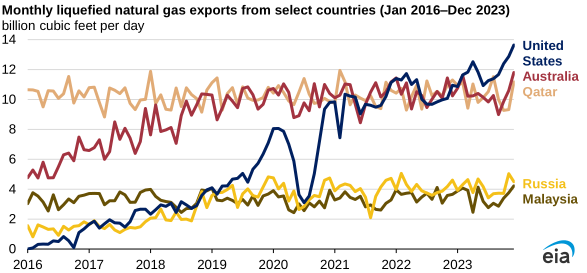
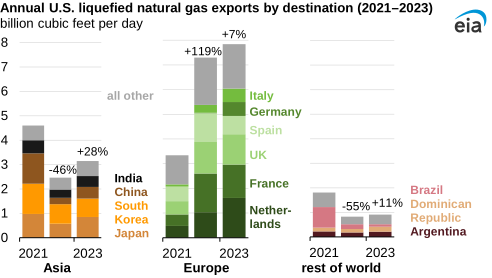


You must be logged in to post a comment.