Attenboroughโ€™s โ€œFactsโ€ Seven Yearsย On

In the 2019 film, Attenborough presented a stark warning: humanity faced its “greatest threat in thousands of years” from climate change, with risks of irreversible damage, societal collapse, extreme weather, sea level rise displacing people, ice melt, and biodiversity loss if emissions weren’t slashed dramatically within a decade.

From NOT A LOT OF PEOPLE KNOW THAT

By Paul Homewood

Attenboroughโ€™s โ€œClimate Change- The Factsโ€ was aired in 2019. How do his claims of climate doom look now, seven years on?

Climate Change – The Facts – BBC iPlayer

At the start of the broadcast, Attenborough states:

โ€œRight now we are facing our greatest threat in thousands of years โ€“ climate changeโ€

โ€œWhat weโ€™re doing right now is weโ€™re so rapidly changing the climate, for the first time in the worldโ€™s history people can see the impact of climate changeโ€

โ€œGreater storms, greater floods, greater heatwaves, extreme sea level riseโ€

โ€œAll of this is happening far faster than many of us thought possibleโ€

.

Seven years on, how are those claims looking now?

Letโ€™s begin therefore with the IPCCโ€™s AR6, published three years ago.

The IPCC reviews thousands of scientific studies, and naturally there are all sorts of minor climate changes and trends around the world over time.. Many depend on the time scales used and disappear over longer periods, many are merely regional variations, many are beneficial and many are so small as to be inconsequential or statistically significant.

To sort out the chaff, the IPCC attempts to identify and evaluate climatic-impact drivers, defined as  physical climate system conditions (e.g., means, events, or extremes) that directly affect elements of society or ecosystems:

The IPCC admitted that it could detect very little change in these CIDs, other than increases in extreme heat, offset by a reduction in cold extremes.

They could find no evidence of trends in storms, floods, droughts, hurricanes or sea level rise.

This, of course, makes a nonsense of Attenboroughโ€™s claim that:

What weโ€™re doing right now is weโ€™re so rapidly changing the climate, for the first time in the worldโ€™s history people can see the impact of climate changeโ€

โ€œGreater storms, greater floods, greater heatwaves, extreme sea level riseโ€

โ€œAll of this is happening far faster than many of us thought possible

On the contrary, if anything at all is happening, it is happening so slowly and imperceptibly that even the IPCC cannot measure it.

Letโ€™s look at some of the specific claims made on the programme:

Heatwaves and Droughts

Peter Stott โ€“ โ€œItโ€™s having a dramatic effect on our weatherโ€ โ€œThe frequency of extreme temperatures is increasingโ€

Michael Mann โ€“ โ€œYouโ€™re going to get more frequent and intense heatwaves. Youโ€™re going to get worse droughtโ€

A new study this year confirms that heatwaves used to be much more severe in the past in the USโ€“ but also noticeably that cold waves have also become much less extreme.

Global warming, it appears, does not make temperatures more extreme, as the Met Officeโ€™s Peter Stott would like you to believe. It actually makes them less extreme.

Declines in hot and cold daily temperature extremes in the conterminous US, 1899โ€“2025 | Theoretical and Applied Climatology | Springer Nature Link

Sticking with the US, it clear that Mannโ€™s claims of worsening droughts were just a lie:

Storms and Floods

Michael Mann โ€“ โ€œYouโ€™re going to get more rainfall, more superstorms, worse flooding. Weโ€™re seeing the effects of climate change now play out in real timeโ€

Rainfall is not increasing, nor is the incidence of extreme rainfall. We are certainly โ€œseeingโ€ anything of the sort.

As for โ€œsuperstorms”, they are a figment of Mr Mannโ€™s fevered imagination; the frequency of EF-3+ tornadoes has fallen sharply in the last decade or so. It is thirteen years since the Moore tornado, the last EF-5 to have taken place. That is by far the longest such period on record.

Tornado Review 2024 | NOT A LOT OF PEOPLE KNOW THAT

As for hurricanes, there continues to be no trend in major hurricane activity:

Global Statistics compared with climatology

Greenland Ice Sheet

Attenborough told us that ice loss in Greenland was โ€œworse than expectedโ€

Yet another lie, I am afraid.

Annual ice loss has actually been reducing since 2012; losses are at a similar level to the 1920-40 period and are consistent with the natural recovery from Little Ice Age ice maximums.

TDS Catalog

Wildfires

David Attenborough โ€“ โ€œAs temperatures rise, the threats we face multiply. Last year saw record breaking wildfires take hold across the globe. โ€œ

Michael Mann โ€“ โ€œWeโ€™ve seen wildfires break out in Greece, even in the Arctic. Weโ€™ve seen a tripling of the extent of wildfire in the western USโ€

Nice scare stories, but baseless yet again.

US wildfire acreage shows no increasing trend, nor the tripling claimed by the unreliable Mann nationally or regionally:

Meanwhile, wildfire acreage has been declining around the Mediterranean.

Wilfires Below Average Last Yearโ€“Met Office Says Global Warming Has Made Them Worse! | NOT A LOT OF PEOPLE KNOW THAT

Sea Levels

Attenborough โ€“ โ€œrising seas are already displacing hundreds of thousands of people from already vulnerable coastal areas.โ€

An outright lie, of course. As for his โ€œextreme sea level riseโ€, the data shows seas are still rising at the same slow pace as they were a century ago.

Corals

Attenborough โ€“โ€œIn the last three years, repeated heat stress has caused a third of the worldโ€™s corals to first bleach, and then dieโ€

Perhaps next time, David Attenborough might check the actual data with reef experts such as Peter Ridd:

Scientists โ€œsurprisedโ€ that 200-year-old corals are adapting to climate change just fine

Everyone was sure that corals would be degraded by our โ€œincreasingly acidic oceansโ€ (a political-activist-term for โ€œslightly less alkalineโ€). But when a team took cores from 200 year old corals in the ocean โ€” instead of studying them for a few months in a laboratory โ€” they discovered some corals have adjusted to the pace of โ€œacidificationโ€ much more effectively than anyone thought. The corals actively manage the chemistry of the thin layer of fluid next to the skeleton as the ocean chemistry shifts.

From CFACT

By Joanne Nova

Underwater scene featuring vibrant coral reefs and marine life, including two large fish swimming near a green coral formation.
The Pristine and Colorful Coral Reefs of Komodo, Indonesia

Everyone was sure that corals would be degraded by our โ€œincreasingly acidic oceansโ€ (a political-activist-term for โ€œslightly less alkalineโ€). But when a team took cores from 200 year old corals in the ocean โ€” instead of studying them for a few months in a laboratory โ€” they discovered some corals have adjusted to the pace of โ€œacidificationโ€ much more effectively than anyone thought. The corals actively manage the chemistry of the thin layer of fluid next to the skeleton as the ocean chemistry shifts.

Who would have thought that corals would have the ability to cope with rapid changes in the climate?

In the last 4 million years, corals have only survived 90 or more ice-age cycles.

Graph showing climate change data over five million years, illustrating equivalent Vostok temperature changes and sediment core analysis.
L. E. Lisiecki and M. E. Raymo (2005)

If only someone had thought to test actual corals at sea before they spent twenty years scaring little children at school?

Thanks to Oldbrew at Tallbokeโ€™s.

From the Press Release: Corals are โ€œMore resilient than previously thoughtโ€

Corals, the foundation of ocean biodiversity, are threatened by climate change. But new research suggests that these organisms might be more resilient than previously thought.

In a study published August 27 in Science Advances, a CU Boulder researcher showed that despite a gradual increase in ocean acidity levels over the past 200 years, some corals seem to be able to adjust and continue to generate their hard, stony skeleton structures.

While it remains unclear how the corals adapted to the changing environment, Hankins said the secret might lie in their calcifying fluid.

โ€œIt could be that the processes corals use to modify and regulate their calcifying fluid are more complex than weโ€™ve been able to constrain previously,โ€ said Hankins. โ€œMore studies are needed to determine if different species, or if the same species in a different location, have similar responses,โ€ she said.

The ocean absorbs about 30% of carbon dioxide emissions from human activities. As more CO2 dissolves in the ocean, the seawater undergoes a chemical reaction that makes the ocean surface more acidic. Previous studies suggest that ocean acidity has increased by 40% since the Industrial Revolution and is likely to rise further.

Corals use aragonite, or calcium carbonate to build their skeleton. It turns out that pH of the water is so important that corals donโ€™t leave it up to chance but manage the right pH in the calcifying fluid around the skeleton. Corals build their skeleton in a microscopic compartment between the coralโ€™s tissue and the skeleton. The area is only micrometers thick, and they use proton pumps to get rid of H+ molecules and control the pH themselves.

In the graph below, in part A we can see that the aragonite in the calcifying fluid (ฮฉcf) has been increasing since about 1840 in the oldest coral. In B the aragonite in the seawater starts to fall rapidly from about 1970 onwards, which ought to โ€œchange everythingโ€.  However, in D, despite all that, the annual calcification rate stays remarkably similar.

Graph showing changes in aragonite saturation and temperature, with data from the Coral Sea and Yonge Reef over time. Includes trends for calcification rates, linear extension, and density of corals.
Fig. 2. Multidecadal time series of coral growth parameters and seawater conditions.
Coral Sea (blue) and Yonge Reef (red) core (A) calcifying fluid ฮฉArย (ฮฉcf), (B) seawater ฮฉArย (ฮฉsw), (C)ย sea surface temperature, (D)ย annual calcification rate, (E) linear extension (i.e., annual vertical growth), and (F)ย skeletal density. In each panel, monthly (for ฮฉcf) or annual (all other parameters) data are plotted along with linear regression trendlines. Significant (Pย value <0.05) trends are plotted as solid lines, and nonsignificant trends are plotted as dashed lines. Shading in (A) indicates ยฑ1 standard error of the mean among three replicate down-core sampling transects. The ฮฉcfย data were treated with change-point analysis, hence the two trendlines per coral record (see Materials and Methods).

Just because one study in one type of coral shows that corals may be more resilient than thought doesnโ€™t mean the whole Great Barrier Reef will be fine. But it does show that the experts have been talking out of their hats, whipping up dramas they really didnโ€™t understand.

REFERENCES

Jessica Hankins and Thomas M Decarlo (2025) Multidecadal decoupling between coral calcifying fluid and seawater saturation states, Science Advances, 27 Aug 2025 Vol 11, Issue 35 DOI: 10.1126/sciadv.adr0264

L. E. Lisiecki and M. E. Raymo  (2005) โ€” A Pliocene-Pleistocene stack of 57 globally distributed benthic ฮด18O records, Paleoceanography 20, 1003

This article originally appeared at JoNova

Fake News BBC Push Reef Scareย Again

Now I wonder why 2C has so much significance? Or 2050? Could it be that they are crucial elements of the Paris Agreement?
Why not 2060, or 2070, or 2045?

Colorful coral formations and tropical fish underwater, showcasing the biodiversity of a coral reef.

From NOT A LOT OF PEOPLE KNOW THAT

By Paul Homewood

h/t Ian Cunningham

Just in time for COP30 โ€“ what a coincidence!

Screenshot of a BBC news article headline discussing the Great Barrier Reef and the potential for recovery if global warming is limited to below 2 degrees Celsius.

The Great Barrier Reef is headed for a “grim future” and will suffer a “rapid coral decline” by 2050 but parts may recover if global warming is kept below 2C, a new study has found.

Researchers at the University of Queensland (UQ) used modelling to simulate the lifecycles of certain coral species and found that some were better at adapting to warmer oceans and could help new coral grow.

Reefs near cooler-water currents were also more resilient, giving a “glimmer of hope” to the natural wonder, which has suffered severe climate-induced heat stress in recent years.

The study warned that curbing carbon emissions was crucial to allow coral to recover and avoid a “near collapse” of the reef.

Dr Yves-Marie Bozec, who led the research, said the modelling of more than 3,800 individual reefs that make up the Great Barrier Reef looked at their “eco-evolutionary dynamics”. This included how corals interact with each other, how they deal with warmer water and corals in naturally cooler areas.

“We ran all of those factors with the most up-to-date climate projections โ€“ and the news was not good,” he said.

“We forecast a rapid coral decline before the middle of this century regardless of the emissions scenario.”

The Great Barrier Reef is one of the worldโ€™s most biodiverse ecosystems, stretching more than 2,300km (1,400 miles) off Australiaโ€™s north-east coast.

It has suffered four significant marine heatwaves between 2016 and 2022, causing much of its coral to expel the algae which gives them life and colour โ€“ a process called bleaching, which is often fatal.

A recent report found that parts of the Great Barrier Reef had suffered the largest annual decline in coral cover since records began nearly 40 years ago.

Dr Bozec said some parts of the reef “may partially recover after 2050, but only if ocean warming is sufficiently slow to allow natural adaptation to keep pace with temperature changes”.

“Adaptation may keep pace if global warming does not exceed two degrees by 2100. For that to happen, more action is needed globally to reduce carbon emissions which are driving climate change.”

Dr Bozec said: “The window for meaningful action is closing rapidly but it hasnโ€™t shut”.

Under the Paris agreement, almost 200 nations have pledged to limit global temperature rises to 1.5C and to keep them “well below” 2C above those recorded in pre-industrial times, generally considered to mean the late 19th Century.

https://www.bbc.co.uk/news/articles/cx274lj661lo

Illustration depicting various animated characters around a sign that reads 'FAKE NEWS GENERATOR', highlighting themes of misinformation.

Now I wonder why 2C has so much significance? Or 2050? Could it be that they are crucial elements of the Paris Agreement?

Why not 2060, or 2070, or 2045?

And given that we have supposedly already has 1.5C of warming since the 1800s and the worldโ€™s coral remains as abundant ever, I hardly think another half a degree will make the slightest difference.

This newย study, as seems to be the case with every alarmist study these days, does not analyse historical data. Instead it, in its own words, simulates coral eco-evolutionary dynamics across 3800 reefs of Australiaโ€™s Great Barrier Reef under current climate projections.ย In other words, good old computer modelling!

You might have thought that if the worldโ€™s coral, or the Great Barrier Reef itself, was already under so much stress, the data would be readily available to prove it. After all, we have supposedly had four significant marine heatwaves in the last decade alone on the GBR.

But the study does attempt to analyse or present this data, because the authors know full well the answers would destroy their agenda โ€“ not to mention the chance for more grant money.

The whole basis of their argument is, in any case, illogical. The worldโ€™s coral has been in existence for thousands of years. The GBR, for instance, is believed to have started growing about 8000 to 10000 years ago, as sea levels rose at the end of the Ice Age. It actually sits atop older limestone platforms from Pleistocene-era reefs.

The reef is remarkably resilient, having endured multiple cycles of bleaching and recovery and climate swings. The same of course applies to reefs elsewhere in the world.

Corals would in fact thrive in a warmer world, spreading to seas that are currently too cold.

But this study misunderstands the science of ocean warming. Seas are not warmed by the atmosphere, but by the sun. That is why tropical seas are warmer than the North Sea โ€“ because the sunโ€™s energy is more concentrated in the Tropics. Indeed, seas warm the atmosphere not the reverse.

Also, the higher sea levels predicted would offset higher sea temperatures. Corals are most affected by heat when exposed to the sun when sea levels drop, which occurs during El Nino on the GBR. Higher sea levels would therefore protect the reef from excessive exposure to the sun.

Iโ€™ll leave it to Dr Peter Ridd to summarise the facts, rather then the myth the BBC peddles:

Cover of the report 'Coral in a Warming World: Causes for Optimism' by Peter Ridd, featuring vibrant underwater coral and two yellow butterflyfish.
Executive summary highlighting the reliability of long-term coral cover data from the Great Barrier Reef, noting fluctuations in coverage and emphasizing no major loss across its individual reefs.
A text excerpt discussing coral bleaching and recovery in the Great Barrier Reef, emphasizing recent findings and challenges related to climate change and coral resilience.

Climate Tipping Points โ€œMay Already Have Arrivedโ€ Claims New Report โ€“ Just in Time for COP30

Also last week, theย Guardianย commented on the Green Blob-funded โ€˜Global Tipping Points Report 2025โ€™ and reported its contention that the planetโ€™s first catastrophicย climate tipping pointย had been reached with โ€œcoral reefs facing widespread diebackโ€. About time too,ย Guardianistas might have felt. In June 1999, the newspaperโ€™s veteran eco loon George Monbiot wrote that โ€œthe imminent total destruction of the worldโ€™s coral reefs is not a scare storyย but a factโ€.

An artistic representation of a large gathering at the COP30 conference, featuring numerous people in formal attire amidst a lush green landscape with mountains and blue skies.

From The Daily Sceptic

Byย Chris Morrison

A person standing outdoors wearing a navy sweater, with a natural landscape of green and purple vegetation under a partly cloudy sky.

Writing in the Spectator last week, the Daily Scepticโ€™s Esteemed Editor-in-Chief Lord Tobes noted that eco-activists were fond of plucking numbers out of the air and claiming thatโ€™s how long we have left to save the Earth. But, he added, โ€œit looks like they are now facing a โ€˜tipping pointโ€™ of their ownโ€. Also last week, the Guardian commented on the Green Blob-funded โ€˜Global Tipping Points Report 2025โ€™ and reported its contention that the planetโ€™s first catastrophic climate tipping point had been reached with โ€œcoral reefs facing widespread diebackโ€. About time too, Guardianistas might have felt. In June 1999, the newspaperโ€™s veteran eco loon George Monbiot wrote that โ€œthe imminent total destruction of the worldโ€™s coral reefs is not a scare story but a factโ€.

Toby went on to observe Sun Tzuโ€™s maxim that you should never interrupt your enemy when heโ€™s making a mistake, โ€œbut Iโ€™m beginning to feel sorry for the climate hystericsโ€. There is none more hysterical (G. Monbiot excepted) than the annual โ€˜Global Tipping Points Reportโ€™, which is primarily bank-rolled by the Bezos Earth Fund. Along with numerous other scare reports, it is timed to lift mass climate psychosis ahead of the annual COP conference. Humanity will soon be in a danger zone where โ€œmultiple climate tipping points pose catastrophic risks to billions of peopleโ€, it wails. Already warm water coral reefs are crossing their โ€œthermal tipping pointsโ€, it is claimed.

Map illustrating global climate tipping points, including regions at risk such as the Amazon Rainforest, Atlantic Meridional Overturning Circulation, and various ice sheets, with color-coded indicators for tipping likelihood based on temperature rise.

The work is headed by Professor Timothy Lenton from the University of Exeter and is said to draw on research from scientists across the world. In fact, the agitprop is mostly climate-catastrophising codswallop produced by wishful thinking activists consulting their modern-day crystal balls, otherwise known as climate computer models. In the case of the coral reefs, the scare is risible. Tropical coral has existed for millions of years in waters between 24ยฐC-32ยฐC. Small local increases in temperature can lead to a natural process called bleaching, but there isย solid scientific evidenceย that recovery is rapid when temperatures stabilise. Despite significant bleaching on the Great Barrier Reef over the last two decades, coral cover is currently at its fourth highest level since serious observations began about 40 years ago.

The so-called โ€œcentral estimateโ€ of coralโ€™s โ€œthermal tipping pointโ€ is claimed to be 1.2ยฐC of global warming and this threshold is now said to have been passed. There is nothing right about this claim given the wide range of current temperatures that coral grows in today. In fact, coral grows faster in warmer waters as evidenced by comparing growth near the equator and the southern Great Barrier Reef. Sceptics might also ask how such temperature tipping point precision is available given what is now known about the lamentable state of much Government-organised meteorological measurement activity.

Net Zero is dying in many parts of the world, but the politically motivated settled science crowd is desperate to keep the fantasy alive by holding up the pseudoscientific results of computer models as some kind of convincing evidence. However, the report is not just about what is incorrectly referred to as โ€˜theโ€™ science. High politics is on show with the COP30 President Designate Andrรฉ Aranha Correa do Lago writing the foreword and claiming: โ€œUnited, we can reverse the dangerous trend towards a sequence of systems collapse in domino effectโ€. There is something for mโ€™learned friends as well with the report suggesting: โ€œTipping points science should be used to strengthen future litigation efforts related to human rights.โ€ Similar ambitions are shared by single weather โ€˜attributionโ€™ agitators using computer model findings to pump up the claims in climate lawfare cases.

The report observes that climate communications can be instrumental in generating political momentum, particularly when targeted to policy advocacy and โ€œtrusted messengersโ€. Few messenger are trusted more than the BBC and its fellow climate bedwetters at theย Guardian. In July 2023, Georgina Rannard of the BBC reported that โ€œscientists sayโ€ a weakened Gulf Stream, which is a major part of the Atlantic Meridional Overturning Circulation (AMOC),ย could collapse by 2025. Most people are aware of the filmย The Day After Tomorrowย when such a collapse caused the onset of Arctic weather conditions across the northern hemisphere. The AMOC collapse remains the gold standard of climate fearmongering. Computer models are worked hard to produce the often-outlandish claims.

โ€œWe cannot exclude that an AMOC tipping point may already have been passed,โ€ states the report. Many computer models are said to predict the AMOC declining to a weak state by 2050. The tipping brigadeโ€™s answer to imaginary global disaster is of course to shorten Net Zero timelines, โ€œand the immediate investment in the developing and scaling of sustainable carbon removal technologiesโ€.

Meanwhile back in the real world, where unlimited pots of money are not available for ridiculous schemes like carbon capture and where the product of agitprop-narrated computer models is taken with a large pinch of salt, there is good news on the Gulf Stream. A group of scientists recently found that the AMOC had shown no decline since at least the 1960s. In a paper published recently in Nature, the scientists noted that many of the AMOC observations arise from examining sea-surface temperature anomalies, but these records โ€œare not long enough to differentiate between low-frequency variability and long-term trendsโ€. In other words, much alarmists copy is little more than opinions based on short-term variability.

In the detailed body of the โ€˜tipping pointsโ€™ report, a median AMOC temperature tipping point of 1.8ยฐC is established based on the latest computer modelling incorporating reduced overturning strength. Another tempting story here for the BBC/Guardian perhaps. Admittedly it comes with โ€œlow confidenceโ€, but โ€œscientists sayโ€ their scenario indicates imminent collapse of the AMOC from 2025 onwards.

Chris Morrison is the Daily Scepticโ€™s Environment Editor. Follow him on X.


Climate Fact-Check September 2025

This summary serves as a fact check on the top false claims madeย about climate change by the media in September 2025.ย 

Aerial view of a dense forest with a text overlay that reads 'Climate Fact Check: September 2025 Edition'.

From ClimateRealism

By Guest Contributor

Guest Post by: The Committee for a Constructive Tomorrow, The Heartland Institute, the Competitive Enterprise Institute, the Energy & Environmental Legal Institute, and the International Climate Science Coalition, and Truth in Energy and Climate.

Editorโ€™s note: This summary serves as a fact check on the top false claims made about climate change by the media in September 2025. 

Debunking the latest unscientific fearmongering on the hottest year, wildfires, โ€˜bigger hailโ€™, corals & alleged climate-caused insurance rate increases!

Infographic showing global mean temperature changes from 1850 to 2024 with a graph and key dates highlighted. Includes WMO logo and a claim about the temperature record.
Links: World Meteorological Organizationย post, Dr. Rohdeย counter.
Infographic about China's efforts in curbing climate change, referencing the University of Michigan and presenting claims and fact-checks regarding solar power capacity and coal consumption.
Links:ย X comment, Chineseย installed solar capacity claims, coalย record, newย Chinese coal plants.
A screenshot of an article titled 'September 5th: No, Al Jazeera, climate change is not resulting in more air pollution from wildfires', featuring a fact-check and claim related to wildfires and air pollution, with the Al Jazeera logo.
Links: Al Jazeeraย post, NASA satelliteย data, otherย satelliteย data andย reconstructions.
A fact check on a claim from Realtor.com discussing the effects of climate change on homeowners insurance rates, highlighting that rising costs are due to property value increases rather than climate risk.
Links: Realtor.comย article,ย wildfires, flood damageย data, hurricaneย data, wildfireย severity.
A summary of claims and fact-checks regarding climate change, featuring a header from the New York Times discussing heat-related deaths in Europe and a detailed breakdown of claims versus factual data.
Bar chart depicting annual average excess deaths due to non-optimal temperatures by region from 2000 to 2019, showing categories for moderate cold, extreme cold, moderate heat, and extreme heat.
Links:ย The New York Timesย article,ย temperature risk.
Fact-check on coral survival claims, debunking assertions from a New York Times article about climate change impacts on coral reefs.
Links:ย The New York Timesย article,ย 60 million years of coral, runoffย information, chemicalย information, UVย exposure,ย local sea level drop.
An article excerpt discussing claims about climate change and hail size, featuring sections titled 'Claim' and 'Fact-Check', with references to a study published in Nature Communications.
Links:ย Nature Communicationsย paper,ย RCP8.5 issues.

Until next month, enjoy these and other great climate fact checks at:

ClimateRealism.com

  • Climate Change Is Not Causing New Englandโ€™s โ€˜Creepyโ€™ Bacteria and Bugs, Boston Globe
  • False, New York Times, Climate Change Isnโ€™t Causing More European Heat Deaths
  • Get the Facts Straight, The Independent, Island Nations Are Growing, Not โ€œSinking Into the Seaโ€

ClimateDepot.com

  • The climate agenda has entered the operating room. From anaesthesia to heart surgery, medical procedures are now being scrutinised based on their climate impact
  • NYT: โ€˜It Isnโ€™t Just the U.S. โ€” The Whole World Has Soured on Climate Politicsโ€™ โ€“ โ€˜The retreat from climate politics has been widespreadโ€™
  • UK Lord Brooke promotes assisted suicide bill to limit population & climate change: โ€˜Just think what the 2025 (population) numbers would be if abortion had not been legalizedโ€™

Wattsupwiththat.com

  • Claim: Climate Change is Making Amazon Rainforest Trees Fatter
  • Germany Sees Bumper 2025 Harvest As Earlier Climate Forecasts Of A โ€œHellish Summerโ€ Fail
  • Rigged Report By National Academies Aims To Thwart Trump Energy Agenda

Originally posted at JunkScience.com, reposted with permission.

Corals Wonโ€™t Disappear, Contrary to What the New York Times Claims

In a recent The New York Timesโ€™ article, โ€œCorals Wonโ€™t Survive a Warmer Planet, a New Study Finds,โ€ Sachi Kitajima Mulkey reports that nearly all Atlantic corals will cease growing by the end of this century due to projected rising temperatures. The article claims that over 70 percent of reefs will begin dying by 2040, and that 99 percent could vanish if global warming exceeds 2ยฐC. This is false. The piece frames corals as doomed victims of climate change, unable to adapt to increased temperature, but paleoclimate data and peer reviewed research refute the NYTโ€™s assertions.

A vibrant coral reef underwater, featuring various species of colorful corals in shades of purple, yellow, and blue, with small fish swimming around.

From ClimateRealism

By Anthony Watts

Screenshot of a New York Times article titled 'Corals Won't Survive a Warmer Planet, a New Study Finds' with the word 'WRONG' prominently displayed.

In a recent The New York Timesโ€™ article, โ€œCorals Wonโ€™t Survive a Warmer Planet, a New Study Finds,โ€ Sachi Kitajima Mulkey reports that nearly all Atlantic corals will cease growing by the end of this century due to projected rising temperatures. The article claims that over 70 percent of reefs will begin dying by 2040, and that 99 percent could vanish if global warming exceeds 2ยฐC. This is false. The piece frames corals as doomed victims of climate change, unable to adapt to increased temperature, but paleoclimate data and peer reviewed research refute the NYTโ€™s assertions.

From an interview, the NYT article quotes University of Exeter geoscientist Chris Perry, one of the authors of a new study on coral, which was published recently in the journal Nature. Perry claims, โ€œWeโ€™ve seen off-the-scale warming, the magnitude and longevity of which has never been seen in the region.โ€ Study co-author Alice Webb adds that โ€œthe reefs have changed so much that theyโ€™re not even slightly doing what the reefs of the past used to do.โ€ These sweeping statements, framed as scientific consensus, form the backbone of the NYT narrative that corals are incapable of surviving the modest warming projected this century.

But both history and peer-reviewed science show otherwise. Corals are among the most ancient and resilient organisms on Earth. As explained in Climate at a Glance: Coral Reefs, coral thrive in warm water, not cold water and have existed continuously for the past 60 million years, surviving temperatures and carbon dioxide levels significantly higher than what is occurring today. They have survived mass extinctions, ice ages, and periods far hotter than today.

During the Holocene Climate Optimum, roughly 7,000โ€“5,500 years ago, global and regional sea-surface temperatures were warmer than present. A 2025 study in The Holocene found that corals in Indonesiaโ€™s Spermonde Archipelago not only endured these conditions but thrived, growing at rates of around 6 mm per year as sea levels rose more than two meters above current levels. Rather than collapse, reefs expanded, demonstrating adaptability to precisely the kinds of environmental shifts now being portrayed as existential threats.

Similarly, Climate Change Weekly #556 summarized multiple lines of research confirming that corals have long flourished in warmer seas. The weekly bulletin noted that Indo-Pacific reefs grew more vigorously during past warm phases, while growth slowed during cooler intervals. Far from proving fragility, the paleoclimate record shows corals are highly adaptable, but in general better suited to warmer conditions than cooler ones. This historical evidence undermines the claim that todayโ€™s modest warming spells certain doom.

Another distortion in the NYT article is the treatment of coral bleaching as synonymous with coral death. Bleaching, the temporary expulsion of symbiotic algae, can result from multiple stressors, including salinity changes, sediment, or solar radiationโ€” and cold temperatures, not just heat. More importantly, in most instances, coral recover from bleaching events, often quite quickly. As Climate at a Glance: Great Barrier Reef documents, the Great Barrier Reef has repeatedly bounced back from bleaching episodes, and in recent years it reached record-high coral cover. Bleaching is not a death sentenceโ€”it is a stress response in coral ecosystems that have evolved to recover from it.

The NYT also leans heavily on climate models to project catastrophic futures, while downplaying observations. Asย Climate Realismย has shown, model-based predictions of coral decline have consistently failed. In the 1990s, models warned the Great Barrier Reef would be in terminal decline by the 2020s. Yet recent observational surveys show it thriving, with coral cover expanding in multiple subregions as seen in the figure below. Models that treat corals as passive victims ignore their demonstrated capacity to adapt through natural selection, range shifts, and symbiotic adjustments.

Graph showing coral cover levels in the Great Barrier Reef from 1985 to 2024, highlighting recent unprecedented high levels of coral cover.

Even the oft-cited โ€œocean acidificationโ€ threat is overstated. Oceans remain firmly alkaline, and as Climate at a Glance: Ocean Acidification explains, corals are found thriving in areas with naturally lower pH, such as volcanic COโ‚‚ seeps. The simplistic claim that incremental pH change will dissolve coral reefs ignores decades of field evidence that show, once again, that coral are adaptable, having evolved flexible responses to changing conditions.

What emerges from this broader context is a story of resilience, not fragility. Corals survived and thrived during past warm periods such as the Holocene Climatic Optimum and the Eemian interglacial, when temperatures and sea levels exceeded todayโ€™s. Contemporary studies, such as Hynes et al. in The Holocene, reinforce that corals kept up with rapid sea-level rise and warmer waters. Climate Change Weekly #556 highlights that they are better adapted to warmth than to cold. And real-world data from the Great Barrier Reef shows rapid recovery from bleaching and record-high cover in recent years.

By contrast, the NYT article presents model-based predictions as inevitabilities, conflates bleaching with death, and ignores the wealth of easily available paleoclimate and observational evidence that corals endure environmental variability. The result is a narrative of doom unsupported by history or data.

Corals are not vanishing relicsโ€”they are survivors. They have lived through climatic extremes that dwarf todayโ€™s slight changes. They adapt, recover, and often thrive when conditions warm. The doomsday storylines promoted by outlets like the The New York Times are not science, but speculation dressed as scientific certainty. Readers deserve the full truth: corals have survived millions of years, and slightly warmer waters donโ€™t threaten their existence.


Anthony Watts

Anthony Watts is a senior fellow for environment and climate at The Heartland Institute. Watts has been in the weather business both in front of, and behind the camera as an on-air television meteorologist since 1978 and currently does daily radio forecasts. He has created weather graphics presentation systems for television, specialized weather instrumentation, as well as co-authored peer-reviewed papers on climate issues. He operates the most viewed website in the world on climate, the award-winning website wattsupwiththat.com.

Coral Climate Absurdity: Spending Millions Breeding Heat Tolerance Which Already Exists in Nature

Persian Gulf extremophile coralsย can tolerate temperatures far higher โ€“ and lower โ€“ than open ocean corals. But we totally have to spend millions breeding new corals which can replicate this feat.

A researcher in a lab coat and safety goggles uses a pipette to extract a sample from a coral in a glass aquarium containing sand and various laboratory equipment.

From Watts Up With That?

Essay by Eric Worrall

Persian Gulf extremophile corals can tolerate temperatures far higher โ€“ and lower โ€“ than open ocean corals. But we totally have to spend millions breeding new corals which can replicate this feat.

Scientists hope planting Palauโ€™s โ€˜super coralsโ€™ will save reefs from climate change

By Hugo Hodge
Sat 6 Sep

Palauโ€™s idyllic waters hide an experiment that scientists hope will save the worldโ€™s reefs from climate change-induced collapse.

At an outer reef, ceramic cribs are holding thousands of baby corals growing underwater.

Theyโ€™re โ€œsuper coralsโ€, selectively bred to survive hotter ocean temperatures.

And theyโ€™re providing hope in global efforts to stop marine heatwaves from wiping out reefs.

โ€ฆ

โ€œHopefully theyโ€™ll be able to grow and weโ€™ll be able to tell if theyโ€™re able to withstand the next coral bleaching event here in Palau,โ€ Lauren Piot, a French-American researcher at the Palau International Coral Reef Centre (PICRC), says.

โ€ฆ

However, there are doubts theyโ€™re being deployed fast enough and can withstand increasingly severe marine heatwaves into the future.

โ€ฆRead more:

 https://www.abc.net.au/news/2025-09-06/palau-corals-selective-breeding-climate-change-reefs/105728666

Back in the real world, such corals already exist, and the scientists who study them have already proposed such corals could be used to save other reefs if global warming ever threatens corals.

MARCH 3, 2015

Hot Water Corals in the Persian Gulf Could Help Save the Worldโ€™s Reefs

The species may hold genetic clues that could help reefs worldwide adapt to warmer ocean temperatures

BY MICHAEL CASEY

Just down the road from the worldโ€™s tallest tower, in the shadow of monster sand dunes, marine biologists from around the world clamored onboard a boat for a visit to some of the Persian Gulfโ€™s coral reefs.

โ€ฆ

Most coral reefs in temperate climates can withstand temperatures only as high as 29 degrees Celsius before they bleachโ€”a process in which corals expel their symbiotic algae living in their tissue, causing them to turn white and increasing their vulnerability to disease and death.ย Corals in the Persian Gulf reefs, however, typically tolerate temperatures as high as 36 degrees C during summer and as low as 13 degrees C in winter.ย โ€œThese temperatures exceed what we are expecting anywhere else in the world in the tropics over the next century,โ€ says John Burt, a marine biologist at a branch of New York University in the Emirates, who led the reef tour in 2012. Burt also helped organize an international conference in February on Persian Gulf reefs at NYU, which brought together 250 scientists. The Persian Gulf corals โ€œoffer hope,โ€ he says. Some of the genetic mechanisms they use could help others survive these extreme temperatures.

โ€ฆRead more:ย 

https://www.scientificamerican.com/article/hot-water-corals-in-the-persian-gulf-could-help-save-the-world-s-reefs/

Persian Gulf corals can handle temperature extremes, along the pollution and turbidity which comes from being located in one of the worldโ€™s busiest shipping lanes. But Iโ€™m sure, you know, theyโ€™re too Persian or something, because it is obviously absolutely necessary for well funded reef scientists to ignore natural reservoirs of extremophile corals and spend millions of taxpayer dollars breeding their own varieties.

Do I need a /sarc tag?

Before you think itโ€™s just Australian money being blown on this absurd and pointless project, the Biden administration also threw some cash at South Pacific coral resilience projects, including Palau. I mean why wouldnโ€™t they? Biden threw taxpayer cash at everything else with the word โ€œclimateโ€ in it.


You are welcome to comment on this article, but WUWT is still in the middle of an upgrade. When that completes in a few days the comments will be lost. This post may or may not survive.
See this post for more information.

Great Barrier Reef in great health, but climate change is killing science institutions

Despite record high emissions of carbon dioxide, and hottest ever temperatures, the Great Barrier Reef was again enjoying one of its best years yet. In the 40 years that AIMS has been studying it, the last four years are great results.

Underwater scene of vibrant coral reefs featuring purple and yellow corals, with several colorful fish swimming among them.

From JoNova

By Jo Nova

A vibrant underwater scene showcasing diverse marine life, including colorful corals, various fish species, and a starfish, highlighting the beauty of a healthy coral reef.

The biggest and best studied reef in the world is looking good

Despite record high emissions of carbon dioxide, and hottest ever temperatures, the Great Barrier Reef was again enjoying one of its best years yet. In the 40 years that AIMS has been studying it, the last four years are great results.

Judging by the data, corals are coping fine with todayโ€™s heat and CO2. But the more money we spend finding a climate crisis, the worse our science institutions get. One-sided money and monopoly science can turn any institute into a tax-grabbing-machine, that serves the Blob, not the people. Thus, is it so.

The AIMS annual reef survey for 2025, tells us that the Great Barrier Reef had suffered โ€œa sharp decline after a record breaking heatwave โ€œ. Worse, mass coral bleaching is becoming more frequent as the world warms, and the time between events is shrinking, giving corals less time to recover.

Soย Peter Riddย took the same data and did the graph that AIMS, withย $90 million inย taxpayer dollars, couldnโ€™t do, so we can all appreciate the full disaster. And here it is:

Graph showing the normalized coral cover of the Great Barrier Reef from 1985 to 2025, indicating a record high in coral cover in 2025, with the title 'Great Barrier Reef still doing fine in โ€˜25' prominently displayed.

AIMS also tells us that theย โ€œreef is more volatileโ€, and has suffered the tragedy of declining from record highs all the way back to โ€œnear long term average trendsโ€, which sounds awful, I mean, โ€œnormalโ€. Like regression to the mean.ย  Though it doesnโ€™t look very โ€œaverageโ€ in the long term graph that AIMS donโ€™t want you to see.

The Blob Media promptly took the one-sided, politically-convenient AIMS press release, investigated no claims, asked no hard questions and churned out the worst possible interpretation of a good result. Which is apparently exactly what AIMS expected, because they didnโ€™t complain.

The ABC, with a billion-dollar budget, could have done the graph Peter Ridd did. They could have asked AIMS for it. Heck, they could have just phoned Peter, he would have given it to them, and with a smile.ย  Instead they pressed the โ€œClimate Alarm: Give us Your Moneyโ€ button.

Collage of news headlines concerning the Great Barrier Reef's coral decline, featuring articles from The Guardian, BBC, and ABC News, with an image of a turtle on the seabed and corals in the background.
The ABCย ย ย |ย ย The BBCย  |ย ย The Guardian

Itโ€™s clear that The Australian Institute of Marine Scienceโ€™s (AIMS) is not even trying to give Australians the most meaningful information they can on the reef.  When the media exaggerates the crisis, the experts are happy. AIMS donโ€™t ring up the journalists and correct them. They donโ€™t explain the bigger perspective.

AIMS researchers surely know, but wonโ€™t mention things like the extraordinary genetic adaptability of reefs:  corals already have the genes to survive another 250 years of climate change. They can use epigenetic tricks to adapt to warmer and โ€œmore acidicโ€ water and that the Great Barrier Reef has 112 protected tough spots that survive and replenish after the bleaching.

Corals got bleached way back in 1862, before the first coal plant, and long before the Ford Model T. Most likely corals have been bleached on and off for millions of years, itโ€™s just that there were not many scuba divers around to take a photo or collect an ARC grant in 2 million BC.

After millions of years of asteroids, volcanoes, wild temperature changes and dramatic shifts in atmospheric gases, (plus sea level swings of 125m) it would be a shock if corals did not have a full toolkit to cope with a bit of climate change.

REFERENCES

The Australian Institute of Marine Scienceโ€™s (AIMS) annual reef survey 

Peter Ridd, Reef Rebels

Mainstream Naysayers Gather As Hopes Rise for Fourth Year of Record Coral on the Great Barrier Reef

In the next few days, the Australian Institute of Marine Science (AIMS) will issue its annual report on the state of the Great Barrier Reef (GBR). For alarmists promoting the Net Zero fantasy the news has been dire over the last three years, with record coral reported across the largest reef in the world. Such is the obvious despair even daft excuses suggesting it is the wrong type of coral have been heard. Faced with inconvenient facts, the usual groomed game plan in mainstream media has been to issue dire warnings of possible imminent collapse and then keep schtum when the sensational figures surface.

Aerial view of the Great Barrier Reef showing vibrant coral formations and clear blue waters.

From The Daily Sceptic

Byย Chris Morrison

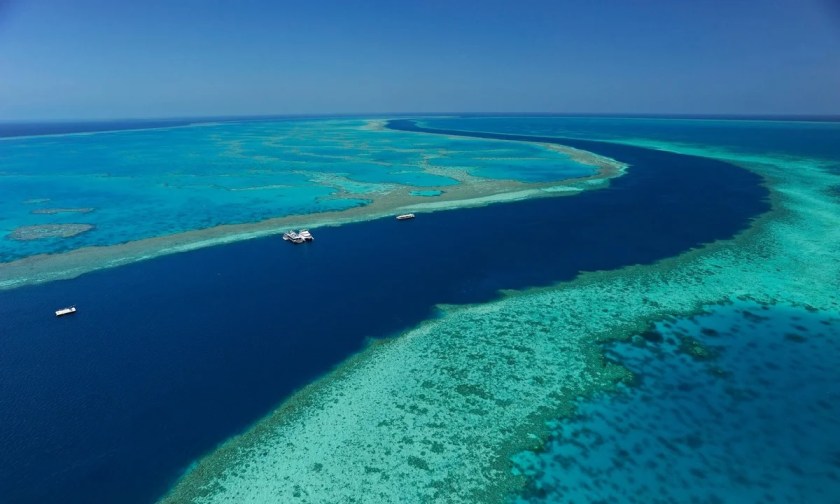
Aerial view of the Great Barrier Reef showcasing vibrant blue and turquoise waters, with coral formations and a couple of boats visible in the distance.

In the next few days, the Australian Institute of Marine Science (AIMS) will issue its annual report on the state of the Great Barrier Reef (GBR). For alarmists promoting the Net Zero fantasy the news has been dire over the last three years, with record coral reported across the largest reef in the world. Such is the obvious despair even daft excuses suggesting it is the wrong type of coral have been heard. Faced with inconvenient facts, the usual groomed game plan in mainstream media has been to issue dire warnings of possible imminent collapse and then keep schtum when the sensational figures surface. Recently the BBC gave us its โ€œโ€™underwater bushfireโ€™ cooking Australiaโ€™s reefsโ€. Alas, the Australian Governmentโ€™s Reef Authority is less cataclysmic in its reporting, noting indications in June this year that there were โ€œno current heat stresses across the Reefโ€. Between April 14th and May 31st, 342 impact inspections were carried out which found coral bleaching on just three of the 34 reefs surveyed.

We must wait for a fuller picture from the upcoming 2024/25 AIMS survey but available details suggest another healthy year for the GBR. The BBC agitprop reported on dire conditions at the Ningaloo Reef off the Australian north-west coast, but it linked the GBR by noting a โ€œworrying superlativeโ€. Reefs on both sides of the continent have been bleached for what is claimed to be the first time. โ€œItโ€™s like a raging bushfire that has persisted for months now, wreaking harm right across the coastโ€, said Paul Gamblin, who heads up the Australian Marine Conservation Society. โ€œItโ€™s an absolutely devastating event and people are reeling from it. It is enormous. Itโ€™s unprecedented. Itโ€™s absolutely not normalโ€.

Quite how the BBC can witness a current underwater โ€œbush fireโ€ raging across the GBR is not immediately clear. Nor is it clear how the BBC can report first time bleaching across all of Australiaโ€™s main reefs when the process is a natural event that has certainly occurred over hundreds of millions of years of coral development. The BBC reports that the โ€œheatwavesโ€ in Australia are all part of something called the โ€œfourth global bleaching eventโ€ which โ€œexperts sayโ€ has swept across large areas of the globe affecting more than 80% of the worldโ€™s coral reefs.

Meanwhile, back in the world of observational science, the Reef Authority reports that in June 2025 most of the observed GBR coral bleaching was at low levels of 1โ€“10% and only in the northern region. No bleaching was observed in the central and southern regions. The biggest current threat appears to be the ever-lurking crown-of-thorns starfish, with outbreaks impacting a number of regions. Work continues on culling operations. Drops in ocean temperatures have been reported across the Reef, although they are still said to be above average โ€“ an average, of course, based on just a few decades of measurement. Short-term rises in temperature can induce coral bleaching but they appear to quickly recover. Tropical coral grows in waters between 24ยฐC and 32ยฐC, and growth is generally quicker in warmer seas. Short-term natural spikes come and go, leaving a politicised trail of shrieking headlines in their wake.

The AIMS annual survey usually runs up to June, so it is of interest to observe what the Reef Authority has been reporting during the year. In February, summer sea temperatures were falling across most of the Reef with impact surveys showing low levels of bleaching across almost the entire area. Back in September 2024, the surveys revealed that most of the 31 individual reefs observed โ€œshowed no signs of coral bleaching, with very few cases of minor bleaching reported in each regionโ€. In October, it was noted that temperatures across the marine park were around 0.6ยฐC higher than average but they were โ€œnot at levels that typically cause impacts such as coral bleachingโ€.

The mainstream grooming over coral on the Great Barrier Reef, once a poster event for inducing mass climate psychosis, is plain for all to see. Ahead of 2024โ€™s third record-breaking growth year, a convenient non-story appeared in Nature that claimed โ€œclimate changeโ€ posed an โ€œexistential threatโ€ to the GBR. โ€œThe science tells us that the GBR is in danger โ€“ and we should be guided by the scienceโ€, Professor Helen McGregor from the University of Wollongong told Victoria Gill of BBC News. The existential threat is โ€œnow realisedโ€ reported the gibbering Guardian. In fact the Nature paper used proxy temperatures and climate models to suggest temperatures around the vast reef area were the highest recorded in 400 years.

Your correspondent might have missed subsequent reports in both the Guardian and BBC about the three record-breaking years of coral growth. I asked Grok for help and the reply came back: โ€œI couldnโ€™t find reports from the Guardian and the BBC specifically stating that the Great Barrier Reef has shown โ€˜three record-breaking years of growthโ€™.โ€ Grok further noted that there was no coverage of last yearโ€™s performance but rather it focused on challenges due to โ€œglobal heatingโ€. Just four months before last yearโ€™s announcement, the Guardian noted that the GBR faced its worst summer on record with widespread bleaching.

Will this be a record fourth year of a news blackout on the amazing resilience of one of the great wonders of the natural world?

Chris Morrison is the Daily Scepticโ€™s Environment Editor. Follow him on X.

We couldnโ€™t kill the worlds corals if we wanted to: They already suffered for two thousand years and recovered

We panic over the odd bit of bleaching here and there, but itโ€™s nothing compared to mother nature. The shallow edges of the oceans of the world are savage places.ย  And the best place to study this mayhem is the Red Sea. Not only is it hot, but long, thin, deep, and itโ€™s tectonically active too. In the depths of the last ice age, it was cut off from the Indian Ocean and the salinity rose to a death defying 47% at the Southern end, and 57% in the north. For thousands of years, the Red Sea was pickled.

JoNova

By Jo Nova

The Red Sea

Corals around the world stopped growing in 2000BC and the pause lasted two thousand years before they returned like the Phoenix.

Each polyp might be fragile, but coral ecosystems are the couch-grass of the oceans.

A new paper rather puts the man-made panic about corals into perspective.

The most terrible events that could happen to corals have already happened,  and the corals appear able to bide their time for two thousand years and return in all their glory.

The worst thing for the worlds corals is not rising seas but falling ones.

We panic over the odd bit of bleaching here and there, but itโ€™s nothing compared to mother nature. The shallow edges of the oceans of the world are savage places.  And the best place to study this mayhem is the Red Sea. Not only is it hot, but long, thin, deep, and itโ€™s tectonically active too. In the depths of the last ice age, it was cut off from the Indian Ocean and the salinity rose to a death defying 47% at the Southern end, and 57% in the north. For thousands of years, the Red Sea was pickled.

When the world finally warmed and waters came back 18,000 years ago, baby corals had to travel 2,400 kilometers from the Gulf of Aden to get to Eilat, at the far northern end of the Red Sea, yet they easily did. And the seas kept on rising for thousands of years, and that was all fine and dandy, until disaster struck 4,000 years ago when the seas started to fall, and presumably those delicate polyps were left to bake in the sun.

Feldman et al, studied this phenomenon in the Red Sea and noticed that other scientists have already reported coral growth stagnated in all the major oceans at roughly the same time. For two thousand years there are almost no new fossil corals in any of the cores they drilled. Then somehow, the distinct coral communities that had thrived long before, all reappeared.

Imagine if seas were falling by a few millimeters a year today? The government funded scientists would be raging against the falling of the tide. Whole institutes would be established to move corals to baby nurseries, or special zoos, or to set up seed banks, or to wall off whole reefs. People would be dreaming up schemes to heat the oceansโ€ฆ

But like couch-grass, we couldnโ€™t kill the corals off in the oceans if we wanted to.

Thanks to Kenneth Richard at NoTricksZone for finding this paper:

In this study,ย we propose not just a local sea level condition causing specific reef turn-offs or hiatuses, but rather a global phenomenon of sea level fall. In light of our findings from Eilat and examining the reports from different locations around the globe (discussed above), we identify a global hiatus in reef growth between approximately 4000- and 2300-years BP (Figure 5).ย The available studies found almost no fossil corals dated to this time interval at sites across the Atlantic, Indian, and Pacific Oceans (Cortes et al. 1994; Dechnik et al. 2019; Gischler et al. 2008; Perry and Smithers 2011; Shaked et al. 2004, 2005, 2011; Toth et al. 2012),

FIGURE 5 | Reconstruction of global sea levelโ€”Compilation of radiocarbon dates from seven sites vs. mean below sea level (MBSL). Possible global sea level curve is presented with demonstrated fall between ~4000โ€“2300 years BP.

Reading the paper is like trawling through an epic biblical drama. Corals want to grow near the surface to harvest the sunlight, so as the seas rise, they just grow upward. When seas stabilize they spread outwards. But the Red Sea has steep sides and the corals canโ€™t expand far. The reef they studied at Eilat at the far northern end, was 1 kilometer long, but only 20m wide. Then just when those delicate corals get settled, a tectonic upheaval blows it away.

(d) Pictures of all seven cores extracted from the lagoon, reef flat and fore reef of the Nature Reserve in Eilat, and some of the coral species that have been found (e) A sketch of Eilatโ€™s Nature Reserve coral reef with all seven extracted cores and their locations. Black arrows on coreโ€™s sides represent if were taken from the north (up) or south (down) jetty.

So Feldman et al drill all these cores, and find all the remnants of different species, but when they date the samples they discover there is a kind of Bermuda triangle there in the history of corals.  All corals below a certain depth are 4400 years or older, and just above that they are 700 years old. For thousands of years on this reef, the corals were effectively dead.

At some point the corals must have been baked in the sun, and a millennia or two later, they have been reseeded. Perhaps a few remnants struggled on somewhere nearby, or maybe they come from a thousand miles away. But somehow, they still came back. The whole ecosystem just resumes where it left off.

FIGURE 2 | (a) Core lithology and coarse coral community structure of all seven cores from the Nature Reserve Eilat. 14C dates (calibrates year BP) as well as U-Th dates are presented at the right side of each core. Dates in red represent age reversals. The upper dashed line separate between recent samples and 4000 yr. dated samples. The middle part separates the 4000 yr. dates and the 5000 yr. samples. Everything beneath the lower line is 6000 yr. and older. (b) Age depth model for cores NR05, NR07 and NR10. Measured ages are marked by colored symbols and error bars (dR = โˆ’8 and uncertainty = 33). The model is the black line with error in matching color. Accordingly, the hiatus spans between ~4400 y cal BP and ~ 700 y cal BP.

Spare a thought for all those poor little polyps when the next real crisis comes and we get another Ice Age. Spare a thought for us, tooโ€ฆ

REFERENCE

Feldman B, Torfstein A, Oโ€™Leary M, Blecher NS, Yam R, Shaked Y, Shemesh A, Huang D, Levy O. (2025)ย Late Holocene โ€œTurn-Offโ€ of Coral Reef Growth in the Northern Red Sea and Implications for a Sea-Level Fall.ย Glob Chang Biol. 2025 Feb;31(2): e70073. doi: 10.1111/gcb.70073. PMID: 39936330; PMCID: PMC11815541.