Net Zero is a Downer, Choose the Way Up

How did Britain get to where it did? How did this damp little corner of northwestern Europe become the economic superpower of the Victorian age? A lot of people point to our temperament, our system of government, our heritage, our scientific tradition. But I’d offer a rival explanation. It’s because of this.

An abandoned street lined with old, rusted cars and scattered debris, leading to a large building shrouded in mist, featuring the text 'NET ZRO' prominently displayed.

From The Science Matters

By Ron Clutz

In this Net Zero Watch video, Colin Brazier takes us on a journey through Britain’s energy transformation as he looks at how energy abundance spawned the modern world. For those who prefer reading, below is a transcript with my bolds and added images. H/T Not a Lot of People Know That.

How did Britain get to where it did? How did this damp little corner of northwestern Europe become the economic superpower of the Victorian age? A lot of people point to our temperament, our system of government, our heritage, our scientific tradition. But I’d offer a rival explanation. It’s because of this.

Stacked area chart showing the evolution of energy sources from 1700 to 2014, including biomass, coal, oil, natural gas, hydroelectricity, nuclear electricity, and new renewables.

This battery, like coal before it, represents energy and Britain’s story is a story of energy, a story of how people climbed out of the cold and darkness and built a girdle around the earth. And it’s a story which began here.

Iron bridge arching over a river surrounded by lush greenery and cloudy skies.

This is Ironbridge Gorge, the Silicon Valley of the 18th century, where coke was first smelted with iron and where the industrial age really began.

A warm, inviting fireplace with a roaring fire, set against a rustic brick wall, accompanied by a broom and firewood.

For centuries, life was fragile. Families lived by candlelight, worked the land, subject to storm and famine. In this truly organic green economy, energy was provided by muscle, by wind, water and wood. And life was constantly on the brink of collapse.

Three men in historical mining attire standing near a mine entrance, pushing a mining cart on tracks.

Then came something extraordinary, coal. Dense, powerful, reliable. Unlike wood or wind, coal delivered more power, more consistently and with a surplus. That surplus transformed Britain. It wasn’t just fuel, it was freedom.

A vintage steam locomotive illustration featuring a large cylindrical boiler, chimney, and wooden wheels, showcasing early 19th century engineering.
One of the early steam engine locomotives.

Coal powered factories, cities and ships. It broke the stranglehold of the aristocracy because land was no longer the source of all wealth. Energy abundance spread prosperity, dignity and opportunity far beyond the manor house.

Life expectancy rose, death rates fell, cities grew. Children left fields, found trades, found schools, found new futures. Coal wasn’t just about energy. It was the very beginning of the modern world. Energy abundance spread opportunity, dignity and choice. Energy is the fuel of civilisation.

Infographic illustrating the various industries supported by oil and gas, including vehicles, fuels, construction, medical, electronics, agriculture, and more.

Freedom requires means, the ability to travel, to act, to think, to choose. All of it depends on energy. Energy is not just another input to the economy. It is the foundation of every input. It’s the key to every human action. This was the way up.

Graphic featuring a red circular design with a blue horizontal bar displaying the text 'ZERO CARBON'.

But from the late 20th century onwards, something changed. A new philosophy took hold. Instead of celebrating energy as the lifeblood of prosperity, it was recast as the villain. Coal was demonised. Oil and gas became suspect.

Energy abundance, once a mark of progress,
was rebranded as a threat to the planet.

Net zero requires us to make big changes today. “Net zero is our best chance for a sustainable future.” The logic of net zero spreads into almost every aspect of daily life. What cars we drive, what we eat, how we heat our homes, even how many children we are encouraged to have. Petrol and diesel cars banned. Gas boilers ripped out. Smart meters to ration our use of power. Meat consumption cut. Families told to fly less, to travel less, to live with less.

This is not abundance. This is managed decline. Think about it. Not power when you need it, but when the state sees fit. That’s not freedom. That’s rationing. Net zero isn’t about emissions. It’s about control. It is central planning extended into every aspect of life.

Logo featuring a green globe with 'NET ZERO' prominently displayed, along with various symbols representing environmental initiatives and political affiliations.

The state tells you what you can and what you can’t eat, how to travel, when to use power. They call it green, but to me it feels like a command economy. And like all command economies across the world, it ends up in the same way, in poverty and in misery.

We cannot let it happen here. Claire Coutinho was Secretary of State for Energy Security and Net Zero and retains the brief in opposition. She knows just what effect such a policy will have on the country.  Claire, what does net zero mean for growth overall?

A political cartoon depicting two knights on horseback looking at a windmill with the words 'GREEN ECONOMY' on it. One knight expresses concern about a 'dragon' being the answer to economic issues.

The problem with net zero is it’s making us all poorer. Every time a business leaves this country for another country with more polluting energy regime, we are losing jobs, we are losing growth. And for what? So, we can become more reliant on other countries for the products that we used to make here. That means fewer jobs here, but higher carbon emissions. It simply doesn’t make sense. And if we carry on down the route that we’re currently travelling, what does the future from a pessimistic position begin to look like? Higher energy bills, fewer jobs. I mean, it simply is not the right path for this country.

Sometimes this whole conversation can be so steeped in declinism. What is the positive vision if we change direction on net zero?

Look, for the last 200 years, Britain has been at the forefront of every industrial revolution. And we can do that again, whether it’s AI, whether it’s robotics, whether it’s space. There are so many things that this country could do if we have access to cheaper energy. Britain is there. We can do this. But we need ministers and governments to focus on providing that cheap energy the country needs.

Bar chart and line graph showing greenhouse gas emissions in 2021 and trends since 2000 for various countries including China, the USA, India, EU27, Russia, Brazil, and Indonesia. The left side displays emissions in a stacked bar format, while the right side shows trend lines for each country over time.

And here is the twist. Britain gets to make the sacrifice while others get to race ahead. Our emissions in the global scheme of things are negligible.

China’s annual increase alone dwarfs our entire output.


We get to pay the cost. They get to enjoy the growth. What we’re left with is the worst of both worlds.


Economic decline at home. No meaningful effect on the climate abroad.

An individual tending to a fire in a hearth, with a map of the UK overlay showing varying levels of fuel poverty and statistics indicating that 69% of surveyed individuals are affected by fuel poverty.

And yet we’re told this is virtuous. That living with less is noble. That accepting decline is moral. But ask yourself, is poverty moral? Is coldness in winter moral? Is telling working families they cannot afford to travel or eat moral? This is not morality. This is coercion dressed up as compassion.

And this is the way down. But decline is not inevitable. We can choose the way up again. Britain has the resources, the ingenuity and the history of leading the world in energy innovation. Coal, oil, gas, nuclear. These are not enemies. They are the foundation stones of modern life. And yes, new technologies can play a part. But they must serve freedom and prosperity, not restrict them.

We need energy abundance, not energy rationing.
Competition, not central planning.
Innovation, not authoritarian diktats.

A person in a lab coat walking down a corridor in a facility, with the text 'Electronics Weekly' and 'UK EXCELLENCE IN THE SPACE INDUSTRY' overlayed.

Britain’s national story really is a story all about energy. Abundance built our freedom. Scarcity may well yet destroy it. We now face a choice. Energy prosperity the way up, or energy poverty the way down. Which future will we choose?

Hybrid Horror – You are 3x More Likely to Die in a Hybrid Vehicle than a Gasoline Vehicle

Recently released UK government stats suggest Hybrid vehicles are significantly more dangerous to vehicle occupants than gasoline vehicles.

A hybrid vehicle on fire on the road at night, with thick smoke and flames visible from the rear of the car.

From Watts Up With That?

Essay by Eric Worrall

Recently released UK government stats suggest Hybrid vehicles are significantly more dangerous to vehicle occupants than gasoline vehicles.

Death rates in hybrids ‘three times higher than petrol cars’ as road safety experts call for inquiry

By GABRIEL MILLARD-CLOTHIER 

PUBLISHED: 10:33 AEDT, 28 December 2025 | UPDATED: 19:32 AEDT, 28 December 2025 

Road safety experts were calling for an inquiry on Saturday night as it was revealed motorists are three times more likely to die in hybrids than in petrol cars.

A total of 122 people died in hybrid car crashes last year, compared with 777 in accidents involving petrol cars, according to Department for Transport figures analysed by The Mail on Sunday.

But as hybrids are outnumbered by almost 20 to 1 on Britain’s roads by petrol models, that means hybrids are three times more likely to be involved in a fatal crash.

Experts believe the higher death rates could be explained by hybrids’ combination of petrol engines and batteries and electric motors, which can be harder to control and more prone to fires.

…

The cars’ batteries may also be to blame. They can be damaged by the heat of the engine, which burns at extremely hot temperatures, making them more liable to set ablaze.

…

Hybrids were found by a leading insurer of company cars, Tusker, to burst into flames at higher rates than others. Among their fleet of 30,000 cars, hybrid vehicles had an almost three times’ higher risk with 3,475 fires per 100,000​​​​.  

…Read more: https://www.dailymail.co.uk/news/article-15416671/Death-rates-hybrids-three-times-leading-road-safety-experts.html

If anyone has a link to the original report please post in comments.

It makes sense that hybrids are more dangerous than other vehicle categories. While gasoline fires are probably more likely than a battery vehicle fire, I strongly suspect EV fires are less survivable. That big battery is a mobile thermite bomb.

Mix the higher probability of a gasoline fire and hot engine components with a battery, and I suspect you are combining the worst of both worlds.

Since the report focussed on Britain, it is also possible local conditions in Britain contributed to this risk. Frequent wet weather with lots of loose road salt in winter, poorly maintained roads, a lack of undercover parking, and in winter extreme cycles from freezing cold to hot might all play a part.

I once survived a gasoline vehicle fire, it was nasty, but I had a good minute to escape the vehicle – I had time to pull over, safely get out of the vehicle through the passenger door, and stroll a hundred yards from the vehicle before the fire reached an intensity which would have been life threatening. After the fire was put out by the fire crew, I even managed to recover and salvage my plastic laptop computer. It was scorched and the battery was destroyed, but after a month of drying out it actually booted and survived enough for me to recover my files.

Battery fires are a little more spectacular. From MGUY.

Combine a gasoline fire with a battery fire, and you have a potential recipe for disaster.

And it might not even have to be a fire. Gasoline engine components frequently operate normally at temperatures above the ignition temperature of Lithium batteries, so even say a small leak in the exhaust system might be enough to cause a battery explosion.

There was a brief moment when I considered buying a hybrid. After Covid gasoline prices in Australia shot up, and hybrids started to look attractive. But let’s just say I’m going to defer that purchase decision.

Claim: Climate “Pragmatism” is Cover for Climate Delay

“Pragmatism” allegedly allows politicians to be in favour of climate action without actually having to do anything.

A smiling woman wearing a blue jacket stands in front of an orange oil rig against a clear blue sky.

From Watts Up With That?

Essay by Eric Worrall

“Pragmatism” allegedly allows politicians to be in favour of climate action without actually having to do anything.

Politicians now talk of climate ‘pragmatism’ to delay action – new study

Published: September 5, 2025 3.28am AEST

Steve Westlake
Lecturer, Environmental Psychology, University of Bath

Conservative leader Kemi Badenoch has described her plan to “maximise extraction” of the UK’s oil and gas from the North Sea as a “common sense” energy policy.

Politicians are using language like this increasingly often – calling themselves “pragmatic” on climate change and invoking “common sense”. It sounds reasonable, reassuring, and grownup – the opposite of “hysterical” campaigners or “unrealistic” targets. 

But new research my colleagues and I conducted, calling on a decade of interviews with UK MPs, shows that political “pragmatism” is fast becoming a dangerous form of climate delay. By framing urgent action as “extreme” and steady-as-she-goes policies as “pragmatic”, leaders across the political spectrum are protecting the fossil-fuel status quo at the very moment scientists warn we need rapid, transformative change.

…

The flawed assumption underlying these calls to pragmatism is that the public will not support ambitious, transformative climate policies. We concluded that whereas a few years ago MPs promoted climate policies “by stealth”, meaning they did it on the quiet, now they turn to ideas of pragmatism in an attempt to maintain a fragile political consensus in favour of net zero – a consensus that is already fracturing.

…Read more:

 https://theconversation.com/politicians-now-talk-of-climate-pragmatism-to-delay-action-new-study-264317

The flawed assumption is the public will not support climate ambition, even though the consensus is “already fracturing “. The linked already fracturing article blames – you guessed it – President Trump.

The most intriguing part of the article for me is what Author Steve Westlake didn’t mention, the reason why politicians would even want to evade the issue of “transformative change” and keep the fossil fuel status quo in place.

The explanation for the need to keep the status quo is obvious – renewable energy is a colossal failure.

Despite 10s, likely hundreds of billions of pounds thrown at Britain’s Net Zero transformation, all Britain has achieved is large scale impoverishment of the working class, gutting entire regions of British industrial heartlands, and offshoring those manufacturing jobs to “developing” countries which are still allowed to emit CO2.

Climate “pragmatism” is somewhere between an admission of failure and a cry for help, by politicians who don’t have the guts to openly admit they got it wrong.

I was Wrong – Green Europe is Building at Least One US Scale AI

A 230MW AI campus to be powered by Norwegian Hydro has been announced – but competition for electricity and rising prices are already causing political unrest.

Workers in safety gear observing large hydro turbine systems near a riverbank, surrounded by a forested area.

From Watts Up With That?

Essay by Eric Worrall

A 230MW AI campus to be powered by Norwegian Hydro has been announced – but competition for electricity and rising prices are already causing political unrest.

July 31, 2025 Global Affairs

Introducing Stargate Norway

We’re launching Stargate Norway—OpenAI’s first AI data center initiative in Europe under our OpenAI for Countries⁠ program. Stargate is OpenAI’s overarching infrastructure platform and is a critical part of our long-term vision to deliver the benefits of AI to everyone.

AI is a foundational technology that can boost productivity, drive economic growth, and power new industries. Large-scale compute capacity in Europe will help ensure that this transformation benefits people and communities including developers, researchers, scientists, and startups across Norway and Europe.

…

Stargate Norway is planned to deliver 230MW of capacity, with ambitions to expand by an additional 290MW. The facility will target to deliver 100,000 NVIDIA GPUs by the end of 2026, with the intention to expand significantly in the years ahead. OpenAI welcomes the opportunity to be an initial offtaker with the option to scale over time under the OpenAI for Countries program.

This is one of the most ambitious AI infrastructure investments in Europe to date. Narvik’s abundant hydropower, low-cost energy, cool climate, and mature industrial base make it an ideal location to deliver large-scale, sustainable AI capacity.

The facility will run entirely on renewable power and is expected to incorporate closed-loop, direct-to-chip liquid cooling to ensure maximum cooling efficiency. Additionally, excess heat from the GPU systems will be made available to support low-carbon enterprises in the region.

…Read more: https://openai.com/index/introducing-stargate-norway/

Sounds like a great idea in principle – if you have abundant hydro energy, and it ticks all the green boxes, why not use it?

The problem is there is not enough Norwegian hydroelectricity.

From February this year;

Blackout Britain threat rises on collapse of Norwegian government

Hannah Boland
Sat, February 1, 2025 at 12:07 AM GMT+10

Britain risks being left more vulnerable to blackouts as a political row in Norway over power exports escalates.

The Norwegian government collapsed this week following a row over EU green energy laws. A junior coalition partner in the government quit in protest at plans to implement the policies, amid a broader rise in energy nationalism in the country.

Experts said the collapse raised questions over Britain’s reliance on Norwegian energy imports to keep the lights on. Last weekend, Norway accounted for 4pc of the UK’s power, coming via cables that run under the North Sea.

…

Britain is expected to become increasingly reliant on electricity imports under Ed Miliband’s net zero push as Labour seeks to decarbonise the grid by switching to intermittent renewables, with wind power forming a crucial pillar of its plans.

…

Electricity exports have become a flashpoint in Norway, where the public has been facing soaring energy prices in recent years. Critics have claimed the undersea interconnector cables force prices higher.

…Read more: https://www.yahoo.com/news/blackout-britain-threat-rises-collapse-140740392.html

If Norwegians feel this strongly about sending a few gigawatts of electricity to Britain, how will they feel about foreign owned AI systems slurping all their hydroelectricity?

If the Norwegian hydropower runs short, as it did in 2022 when a severe drought threatened water supplies, who will be the first to have their power cut? Will Norwegian industry be sacrificed to keep the OpenAI campus running?

Hydropower is a great starter energy system. As Willis once pointed out hydro truly is the cheapest form of power and can help kickstart industrial development in poor countries. But once all the easy hydro sites have been exploited, it is difficult to expand hydro capacity. And when competition for electricity heats up, as it already has in Norway, someone is going to walk away disappointed.

‘Snowfalls are now just a thing of the past

One argument against the climate alarmism is the failed predictive record of the scientist-activists themselves. One salient example can be found in The Independent (March 20, 2000), “Snowfalls are now Just a Thing of the Past. The prediction belonged to David Viner, a senior research scientist at the climatic research unit (CRU) of the University of East Anglia (yes, of Climategate infamy).

From Master Resource

By Robert Bradley Jr.

“Children just aren’t going to know what snow is.”

– David Viner, Climatic Research Unit, University of East Anglia (2000)

One argument against the climate alarmism is the failed predictive record of the scientist-activists themselves. One salient example can be found in The Independent (March 20, 2000), “Snowfalls are now Just a Thing of the Past. The prediction belonged to David Viner, a senior research scientist at the climatic research unit (CRU) of the University of East Anglia (yes, of Climategate infamy).

The Independent has deleted this article, but secondary sources have captured it for posperity. As in: never forget….

“Britain’s winter ends tomorrow with further indications of a striking environmental change: snow is starting to disappear from our lives,” the article began. Continuing:

Sledges, snowmen, snowballs and the excitement of waking to find that the stuff has settled outside are all a rapidly diminishing part of Britain’s culture, as warmer winters – which scientists are attributing to global climate change – produce not only fewer white Christmases, but fewer white Januaries and Februaries.

Recent, anecdotal evidence was controlling.

The first two months of 2000 were virtually free of significant snowfall in much of lowland Britain, and December brought only moderate snowfall in the South-east. It is the continuation of a trend that has been increasingly visible in the past 15 years: in the south of England, for instance, from 1970 to 1995 snow and sleet fell for an average of 3.7 days, while from 1988 to 1995 the average was 0.7 days. London’s last substantial snowfall was in February 1991.

The UK’s global warming was winter-oriented:

However, the warming is so far manifesting itself more in winters which are less cold than in much hotter summers. According to Dr David Viner, a senior research scientist at the climatic research unit (CRU) of the University of East Anglia, within a few years winter snowfall will become “a very rare and exciting event”. “Children just aren’t going to know what snow is,” he said.

Back to (then) recent, anecdotal evidence:

The effects of snow-free winter in Britain are already becoming apparent. This year, for the first time ever, Hamleys, Britain’s biggest toyshop, had no sledges on display in its Regent Street store. “It was a bit of a first,” a spokesperson said.

Fen skating, once a popular sport on the fields of East Anglia, now takes place on indoor artificial rinks. Malcolm Robinson, of the Fenland Indoor Speed Skating Club in Peterborough, says they have not skated outside since 1997. “As a boy, I can remember being on ice most winters. Now it’s few and far between,” he said.

Michael Jeacock, a Cambridgeshire local historian, added that a generation was growing up “without experiencing one of the greatest joys and privileges of living in this part of the world – open-air skating”.

Winter warming would seem to have distinct benefits, from lower energy bills to fewer cold deaths. But not so, the article stated.

Warmer winters have significant environmental and economic implications, and a wide range of research indicates that pests and plant diseases, usually killed back by sharp frosts, are likely to flourish. But very little research has been done on the cultural implications of climate change – into the possibility, for example, that our notion of Christmas might have to shift.

The end of snow was considered a sure thing.

Professor Jarich Oosten, an anthropologist at the University of Leiden in the Netherlands, says that even if we no longer see snow, it will remain culturally important.

“We don’t really have wolves in Europe any more, but they are still an important part of our culture and everyone knows what they look like,” he said.

David Parker, at the Hadley Centre for Climate Prediction and Research in Berkshire, says ultimately, British children could have only virtual experience of snow. Via the internet, they might wonder at polar scenes – or eventually “feel” virtual cold.

Heavy snow will return occasionally, says Dr Viner, but when it does we will be unprepared. “We’re really going to get caught out. Snow will probably cause chaos in 20 years time,” he said.

The chances are certainly now stacked against the sort of heavy snowfall in cities that inspired Impressionist painters, such as Sisley, and the 19th century poet laureate Robert Bridges, who wrote in “London Snow” of it, “stealthily and perpetually settling and loosely lying”.

Not any more, it seems.

Like the Climategate emails, you cannot undo the words, sentences and paragraphs of this article.

Elsewhere, SkepticalScience was concerned about too much snow:

The 2009/2010 winter saw a number of dramatic, record-breaking snowstorms. Early February saw two “once in a 100 years” snowstorms hit Philadelphia, now being dubbed “Snowmageddon”. Does record snowfall prove that global warming isn’t happening? What do observations say? 2009 was the second hottest year on record. January 2010 was the hottest January in the UAH satellite record. Satellites data indicates last month was the second hottest February in the satellite record. Observations tell us that rumours of global warming’s death have been greatly exaggerated. 

Exaggeration Backfires

With plenty of snow and even record chills, we are told that “climate change” is the reason. Such a dodge is too little, too late. Chronic exaggeration creates a credibility problem, as documented in Michael Shellenberger’s Apocalypse Never, which referenced his Forbes column, Why Climate Alarmism Hurts Us All.

Bjorn Lomborg’s best-seller, False Alarm: How Climate Change Panic Costs Us Trillions, Hurts the Poor, and Fails to Fix the Planet,” hits upon the same theme. And do not forget a 16-year-old piece by the then New York Times climate scribe Andrew Revkin, In Climate Debate, Exaggeration Is a Pitfall.

The last word belong to Fred Krupp, former head of the Environmental Defense Fund, who stated in 2011:

There has to be a lot of shrillness taken out of our language. In the environmental community, we have to be more humble. We can’t take the attitude that we have all the answers.”

New CCGT Plant at Eggborough Cancelled

Britain’s blackout prevention system has been dealt a blow after the billionaire known as the “Czech Sphinx” scaled back plans to build a new gas-fired power station in Yorkshire.

From NOT A LOT OF PEOPLE KNOW THAT

By Paul Homewood

Britain’s blackout prevention system has been dealt a blow after the billionaire known as the “Czech Sphinx” scaled back plans to build a new gas-fired power station in Yorkshire.

EPH, controlled by Daniel Kretinsky, previously set out plans to spend more than £1bn on redeveloping Eggborough’s coal power station by building two combined cycle gas turbine plants there, along with new battery storage.

The gas-fired plants secured government contracts to provide 1.5 gigawatts (GW) of power from 2026 onwards through the capacity market, a backup system meant to keep Britain’s lights on. This would be enough to power more than 2m homes.

However, EPH last month terminated one of the contracts, halving the amount of electricity it would guarantee to the grid, according to regulatory filings seen by The Telegraph.

Experts said the withdrawal threatened UK energy security unless the capacity was swiftly replaced, creating a headache for Ed Miliband, the Energy Secretary.

They also warned that Mr Kretinsky’s decision to scale back his ambitions was potentially an ominous sign about the viability of other gas plants, given the relatively high payments the Eggborough plants had secured.

Mr Miliband’s plan for a clean power system by 2030 relies on maintaining a fleet of gas power plants that function as last-resort generators, firing up when wind farms cannot provide enough power.

These generators are deployed through what is known as the capacity market and EPH secured contracts at Eggborough to provide power at £63,000 per megawatt starting from 2026 to 2027.

Tom Edwards, of the consultancy Cornwall Insight, said the contracts were some of the highest ever awarded. Under the 15-year deals, generators are paid a retainer on the understanding that they must be ready to switch on at a few hours’ notice if the National Energy System Operator (Neso), which manages the grid, orders them to.

He said: “We are expecting several [gas plants] to come to the end of their lives before 2030, so there would need to be new capacity to replace them and maintain security of supply.”

Kathryn Porter, an independent analyst at Watt Logic, said the Eggborough withdrawal had come “at a bad time” and could force grid operators to pay out even bigger sums.

https://uk.yahoo.com/finance/news/blow-energy-security-czech-sphinx-130000389.html

Political Turmoil in Norway Threatens Britain’s Green Energy Fantasy

The Norwegian ruling coalition government just collapsed due to public anger at energy exports to Britain driving up domestic Norwegian prices.

From Watts Up With That?

Essay by Eric Worrall

The Norwegian ruling coalition government just collapsed due to public anger at energy exports to Britain driving up domestic Norwegian prices.

Blackout Britain threat rises on collapse of Norwegian government

Hannah Boland
Sat, February 1, 2025 at 12:07 AM GMT+10

Britain risks being left more vulnerable to blackouts as a political row in Norway over power exports escalates.

The Norwegian government collapsed this week following a row over EU green energy laws. A junior coalition partner in the government quit in protest at plans to implement the policies, amid a broader rise in energy nationalism in the country.

Experts said the collapse raised questions over Britain’s reliance on Norwegian energy imports to keep the lights on. Last weekend, Norway accounted for 4pc of the UK’s power, coming via cables that run under the North Sea.

…

Britain is expected to become increasingly reliant on electricity imports under Ed Miliband’s net zero push as Labour seeks to decarbonise the grid by switching to intermittent renewables, with wind power forming a crucial pillar of its plans.

…

Electricity exports have become a flashpoint in Norway, where the public has been facing soaring energy prices in recent years. Critics have claimed the undersea interconnector cables force prices higher.

…Read more: 

https://www.yahoo.com/news/blackout-britain-threat-rises-collapse-140740392.html

This Norwegian development is a disaster for the British economy, an economy which is already dancing on the brink of a recession.

At the very least Norway will likely demand a savage price increase which allows the Norwegian government to subsidise domestic prices from profits made by exporting electricity. At worst Britain will permanently lose 4% of its electricity supply.

Britain’s only hope of overcoming the imminent electricity shortfall is to activate demand management plans – shutting down factories and other businesses during peak periods – and to purchase expensive electricity from hospitals and other facilities which have their own diesel generators, who have agreed to act as a backup supply. Either of these options would be expensive for the British economy.

I am not in any way blaming Norway for wanting a better deal. The Norwegian Government’s first duty is to the people of Norway, and if shutting down the interconnector to Britain can help achieve a better outcome for ordinary Norwegians, this is what the government of Norway should do.

But Britain has been caught with its pants down by this latest development, thanks to their insane pursuit of unreliable renewables backed by unreliable imported electricity.

I’m sure the politicians whose energy illiterate policies made Britain vulnerable to external interruptions of supply won’t suffer blackouts, nor will they personally suffer the financial consequences of coming energy price increases. Ordinary British people might not be so lucky.

Blackout Britain threat rises on collapse of Norwegian government

Britain’s increasingly dangerous reliance on imported electricity has just gone up another notch with the collapse of Norway’s Government.

From NOT A LOT OF PEOPLE KNOW THAT

By Paul Homewood

 Blackout Britain threat rises on collapse of Norwegian government

Britain’s increasingly dangerous reliance on imported electricity has just gone up another notch with the collapse of Norway’s Government.

The Telegraph reports:

Britain risks being left more vulnerable to blackouts as a political row in Norway over power exports escalates.

The Norwegian government collapsed this week following a row over EU green energy laws. A junior coalition partner in the government quit in protest at plans to implement the policies, amid a broader rise in energy nationalism in the country.

Experts said the collapse raised questions over Britain’s reliance on Norwegian energy imports to keep the lights on. Last weekend, Norway accounted for 4pc of the UK’s power, coming via cables that run under the North Sea.

Kathryn Porter, an energy consultant at Watt-Logic, said there was “increasing pressure” on Oslo to re-evaluate its relationship with the UK on electricity.

Before the Norwegian coalition’s collapse, both governing parties had signalled they wanted to end a deal to supply Denmark with electricity and renegotiate deals with the UK and Germany.

Norway is a key source of electricity for Britain when the nation’s own power supplies dip. Norway generates energy from its hydroelectric power facilities, which offer a stable source of electricity in contrast to intermittent solar and wind.

A backlash over high energy prices in the country has increased pressure to cut electricity links into Europe. The country is set to go to the polls in September, with the issue expected to be front and centre of debates.

https://uk.finance.yahoo.com/news/blackout-britain-threat-rises-collapse-140740933.html

The 1400 MW North Sea Link is currently running flat out.

The issue is a very simple one, as far as Norway’s voters are concerned.

When electricity is in short supply in Germany, Denmark or Britain, demand for Norway’s power rises, pushing up prices for Norway’s consumers as a result.

It is unlikely that Norway would simply switch the interconnector off, but we may have to pay a lot more for it.

University of Reading Professor Tells Everyone the World is Really Hot

As Britain endures extreme cold and near miss blackouts, apparently now is the right time for an English scientist to tell everyone how hot it is.

From Watts Up With That?

Essay by Eric Worrall

As Britain endures extreme cold and near miss blackouts, apparently now is the right time for an English scientist to tell everyone how hot it is.

My new dark red climate stripe for 2024 shows it’s the hottest year yet

Published: January 10, 2025, 10.00pm AEDT
Ed Hawkins
Professor of Climate Science, University of Reading

…

These “warming stripes”, adopted around the world as a symbol of climate awareness, action and ambition, have just been updated to include a new dark red stripe for 2024. It was a colour that I had to add for the first time last year when 2023 shattered the previous records.

No one experiences the global average temperature directly. But we can use the same approach to represent how we have lived through our own climate experience, locally. The UK had it’s fourth-warmest year on record. Other countries, such as Germany, had their warmest year on record.

…

Well done humanity. For it is us who have caused this rapid warming of the planet, and the devastating consequences for people and ecosystems that are so visible today and every day. Many extreme weather events have been made even worse by our reliance on burning fossil fuels, causing misery around the world.

…Read more: 

https://theconversation.com/my-new-dark-red-climate-stripe-for-2024-shows-its-the-hottest-year-yet-246914

The article goes into all the bad things Ed Hawkins thinks global warming has caused, such as the Los Angeles fire. Strangely Ed forgot to include Britain’s current extreme cold snap in his list of climate disasters.

Given a choice between affordable home heating or climate action, I’m guessing most Brits right now would choose the affordable home heating option.

If an extreme cold snap with near zero wind and solar can occur at 1.5C global warming, it can obviously occur at 2C global warming or even 3C global warming. In fact, if Ed’s prediction of more extreme weather is correct, that could make cold snaps such as Britain is currently enduring more likely or more extreme.

Of course, given the failure of climate models to predict the current bump in global temperature, there are clearly substantial climate forcings which have not been captured by the models. So, it is anyone’s guess where global temperature will go next.

Let us hope Britain doesn’t vote their way out of a survivable future; by embracing so much global warming action they all freeze to death. Because Britain’s ongoing effort to sabotage their own industrial competitiveness and energy affordability is having no impact on India and China’s determination to lift their people out of grinding poverty, by providing low cost fossil fuel electricity as quickly as they can build the coal plants.

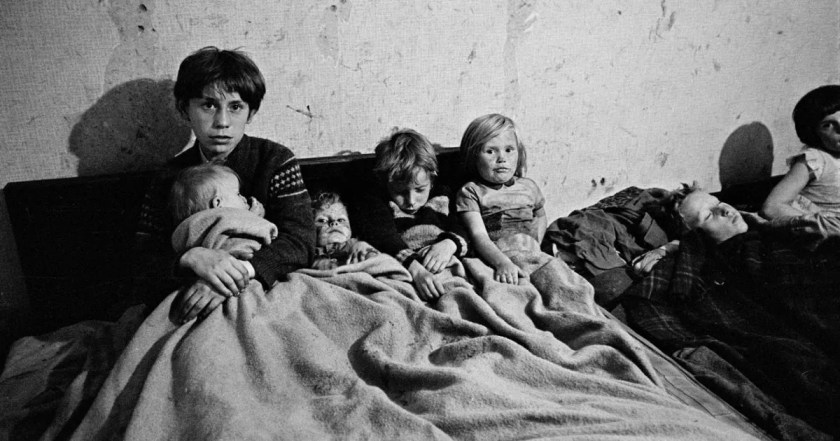
“Hygiene Poverty”: The Brutal Reality of Life in Net Zero Britain

Imagine being so poor you have to send your kids to school wearing dirty clothes. Because this is happening right now in Britain.

From Watts Up With That?

Essay by Eric Worrall

Imagine being so poor you have to send your kids to school wearing dirty clothes. Because this is happening right now in Britain.

Teachers forced to wash school students’ uniform and install washing machines in schools due to ‘hygiene poverty’

16 November 2024, 11:59 | Updated: 16 November 2024, 14:05

By Shannon Cook

Teachers in some parts of the UK have been left to personally wash students’ school uniforms and install washing machines to combat students’ poor hygiene. 

The findings were laid out in a survey by smol – a cleaning brand – and the Hygiene Bank charity.

The teachers believe that students’ poor hygiene can lead to increased bullying or isolation from peers. 

40% of teachers who responded to the survey confirmed that they had washed a school student’s uniform themselves, meanwhile nearly 90% of teachers said they had assisted students with hygiene products.

…

Lisa Cropper, a family support practitioner at St Cuthbert’s Academy in Blackpool, told Sky News that parents had confided in her that they felt they had to make a “choice” between washing and the electricity.

…Read more: 

https://news.sky.com/story/teachers-washing-students-school-uniforms-amid-hygiene-poverty-worries-13254639

Much of Britain tends to have cold, dripping wet winters, so It can be difficult to dry clothes without a fireplace or an electric clothes dryer (or an oil heater). Poor people are unlikely to have more than one or two school uniforms, so the inability to dry clothes likely means kids have to wear the same uniform for the entire week, perhaps longer in inclement weather.

Using an electric heater to dry clothes, even if they can afford the electricity, can result in a dripping wet home, especially in older buildings. It is a truly horrible sight watching a slug or snail appear behind your baby basket, crawling up a glistening wet wall near where your baby is sleeping.

People can live with wearing smelly, unwashed clothes and bad hygiene – our ancestors lived this way for centuries. But you cannot live without adequate warmth.

Thanks to Net Zero’s skyrocketing energy prices, Britain appears to be well on the way to establishing Victorian England levels of poverty in some communities. The poorest people in Britain have been forced to make a choice, between the humiliation of sending their kids to school in unwashed clothes, or risking their health in even worse ways by providing inadequate food and warmth.

In some ways it is worse today than it was in the late 1800s during Queen Victoria’s reign. At least the Victorian poor were allowed to burn scrap wood for warmth. Most homes in Victorian times had some kind of fireplace or hearth where people could burn wood or whatever else they could get their hands on to stay warm.

In today’s Britain, even if you have a fireplace, only expensive low sulphur smokeless fuel is permitted since a 2020 crackdown on burning firewood in urban areas. In any case, people who can barely afford electricity are unlikely to be living in a home with a safe fireplace. Lightning a fire in a hovel with a cracked and crumbling fireplace and chimney is unlikely to end well for anyone concerned.

Blackpool, which was quoted in the article above, has a thriving prostitution industry. While Blackpool tries to portray itself as a family friendly holiday destination, and a lot of families do visit and enjoy the seaside amenities of Blackpool, if you leave your hotel at night, you may find the streets filled with a very different crowd. It is not difficult to understand why people in impossible circumstances sell themselves to try to give their kids at least some of the necessities of life, or stop borderline criminal debt collectors from battering their door, trying to collect on the desperate high interest payday loans which have consumed their income. But with family home heating bills exceeding £3000 / year (US $3700 / year) for a one bedroom flat in some of the poorest quality properties, and all the competition from other desperate Britons, along with economic refugees from Germany’s train wreck economy and other financially stricken parts of Europe, that occasional Saturday night some mums and dads spend turning tricks to boost the family income likely just covers the heating bills and other basic necessities.

The saddest part of this for me is it is all so unnecessary. Blackpool is in Lancashire, which has one of Britain’s largest reserves of frackable gas. Test wells have been drilled which prove the viability of the reserve. But nobody is allowed to extract the gas, because Britain is committed to Nut Zero.