Red Ed Strikes Again โ€“ OpenAI Abandons ยฃ31bn UK AI Push Over Miliband’s Energy Nightmare

OpenAI has officially paused its Stargate UK data centre project โ€“ part of the ยฃ31 billion US tech investment package announced last September with partners like Nvidia and Nscale โ€“ citing high energy costs and regulatory uncertainty as the deal-breakers.

OpenAI has officially paused its Stargate UK data centre project โ€“ part of the ยฃ31 billion US tech investment package announced last September with partners like Nvidia and Nscale โ€“ citing high energy costs and regulatory uncertainty as the deal-breakers.

This isn’t a vague rumour: OpenAI’s own statement is crystal clear. They’re still “exploring” the project (initially up to 8,000 Nvidia GPUs at sites like Cobalt Park in the North East, with potential to scale) but will only commit when “the right conditions such as regulation and the cost of energy enable long-term infrastructure investment.”

AI data centres are electricity guzzlers โ€“ think gigawatts for training and inference. UK industrial power prices are among the highest in the developed world (often cited as several times US levels), thanks to a grid strained by intermittent renewables, grid connection delays, and policy-driven costs.

AI data centres are electricity guzzlers โ€“ think gigawatts for training and inference. UK industrial power prices are among the highest in the developed world (often cited as several times US levels), thanks to a grid strained by intermittent renewables, grid connection delays, and policy-driven costs.

Labour sold the September deal (timed with Trump’s UK visit) as proof Britain could become an “AI superpower.” Starmer’s team hyped it hard. Now it’s unravelling on their watch.

Ed Miliband (Energy Secretary, long nicknamed “Red Ed” for his green-left stance) leads the push for rapid Net Zero by 2030, emphasizing renewables like wind and solar while winding down North Sea oil and gas.

Critics argue this has contributed to higher costs through:

  • Heavy subsidies and grid integration challenges for intermittent sources.
  • Regulatory hurdles and planning delays.
  • A reluctance to prioritize dispatchable baseload power (gas, nuclear, or otherwise) that AI facilities need for 24/7 operation.

Labour came into office promising to make Britain an “AI superpower,” with Keir Starmer highlighting tech investment and growth.

Yet this pause lands as a direct contradictionโ€”top-tier AI talent and research exist in the UK, but energy realities are pushing capital elsewhere (or delaying it). Conservatives and other critics have been quick to link it to Milibandโ€™s policies, calling the Net Zero timeline “suicidal” for energy-intensive industries.

This fits a broader pattern: data centres globally are exploding in demand due to AI training and inference, but the UKโ€™s energy systemโ€”already strainedโ€”faces questions about whether green targets can coexist with massive new electricity loads without price spikes or blackouts.

Miliband has acknowledged data centre demand adds “uncertainty” to net-zero modelling, which hasn’t reassured investors seeking predictability.

_____________________________________________________________________________________

Red Ed strikes again! Miliband blamed as OpenAI pulls out of ยฃ31bn investment plans over high energy costs in huge blow to Labour’s bid to make Britain an ‘AI superpower’

Labour’s Ed Miliband was being blamed today afterย OpenAIย โ€“ the tech giant behindย ChatGPTย โ€“ put its UK data centre on hold.

Byย GREG HEFFER, POLITICAL CORRESPONDENT

The California-based firm pointed to high energy costs and regulatory uncertainty for its decision to pause its Stargate UK project. The Daily Mail Online has the story.

Stargate UK was announced in September last year as part of a combined ยฃ31billion investment in Britain by US tech firms.

The announcement of the investment, as well as a UK-US tech prosperity deal, was made during US Presidentย Donald Trump‘s state visit to Britain.

Stargate UK is a data centre planned for the North East in partnership with British firm Nscale.

The delay to the project is a huge blow to Prime Ministerย Keir Starmer‘s bid to turn the UK into ‘one of the greatย AIย superpowers’, as Labour scrambles for economic growth.

The Tories heaped blame on the ‘Net Zero’ agenda of Mr Miliband, the Energy Secretary,ย for harming Britain’s AI ambitions.

Senior Conservative MP Andrew Griffith, the shadow business secretary, said: ‘Ed Miliband’s suicidal energy policy has just cost us another huge investment.

‘The UK has top AI talent and labs but huge energy costs because of Labour’s mad Net Zero agenda.

‘If Labour let us fall behind on AI, British businesses will lose out to competitors.’

Mel Stride, the shadow chancellor, said OpenAI’s decision was a ‘damning verdict’ on Chancellor Rachel Reeves’ ‘economic mismanagement’.

‘Britain should be leading the AI revolution,’ Sir Mel said.

‘Instead, Labour are delivering high costs and lost opportunity.

‘The message to investors is clear: under Keir Starmer, Britain isn’t open for business.

‘We need cheaper energy, smarter regulation, and a government that actually understands how to attract jobs and investment.’

Read the full story here.

I was Wrong โ€“ Green Europe is Building at Least One US Scale AI

A 230MW AI campus to be powered by Norwegian Hydro has been announced โ€“ but competition for electricity and rising prices are already causing political unrest.

Workers in safety gear observing large hydro turbine systems near a riverbank, surrounded by a forested area.

From Watts Up With That?

Essay by Eric Worrall

A 230MW AI campus to be powered by Norwegian Hydro has been announced โ€“ but competition for electricity and rising prices are already causing political unrest.

July 31, 2025 Global Affairs

Introducing Stargate Norway

Weโ€™re launching Stargate Norwayโ€”OpenAIโ€™s first AI data center initiative in Europe under our OpenAI for Countriesโ  program. Stargate is OpenAIโ€™s overarching infrastructure platform and is a critical part of our long-term vision to deliver the benefits of AI to everyone.

AI is a foundational technology that can boost productivity, drive economic growth, and power new industries. Large-scale compute capacity in Europe will help ensure that this transformation benefits people and communities including developers, researchers, scientists, and startups across Norway and Europe.

โ€ฆ

Stargate Norway is planned to deliver 230MW of capacity, with ambitions to expand by an additional 290MW. The facility will target to deliver 100,000 NVIDIA GPUs by the end of 2026, with the intention to expand significantly in the years ahead. OpenAI welcomes the opportunity to be an initial offtaker with the option to scale over time under the OpenAI for Countries program.

This is one of the most ambitious AI infrastructure investments in Europe to date. Narvikโ€™s abundant hydropower, low-cost energy, cool climate, and mature industrial base make it an ideal location to deliver large-scale, sustainable AI capacity.

The facility will run entirely on renewable power and is expected to incorporate closed-loop, direct-to-chip liquid cooling to ensure maximum cooling efficiency. Additionally, excess heat from the GPU systems will be made available to support low-carbon enterprises in the region.

โ€ฆRead more: https://openai.com/index/introducing-stargate-norway/

Sounds like a great idea in principle โ€“ if you have abundant hydro energy, and it ticks all the green boxes, why not use it?

The problem isย there is not enough Norwegian hydroelectricity.

From February this year;

Blackout Britain threat rises on collapse of Norwegian government

Hannah Boland
Sat, February 1, 2025 at 12:07 AM GMT+10

Britain risks being left more vulnerable to blackouts as a political row in Norway over power exports escalates.

The Norwegian government collapsed this week following a row over EU green energy laws. A junior coalition partner in the government quit in protest at plans to implement the policies, amid a broader rise in energy nationalism in the country.

Experts said the collapse raised questions over Britainโ€™s reliance on Norwegian energy imports to keep the lights on. Last weekend, Norway accounted for 4pc of the UKโ€™s power, coming via cables that run under the North Sea.

โ€ฆ

Britain is expected to become increasingly reliant on electricity imports under Ed Milibandโ€™s net zero push as Labour seeks to decarbonise the grid by switching to intermittent renewables, with wind power forming a crucial pillar of its plans.

โ€ฆ

Electricity exports have become a flashpoint in Norway, where the public has been facing soaring energy prices in recent years. Critics have claimed the undersea interconnector cables force prices higher.

โ€ฆRead more: https://www.yahoo.com/news/blackout-britain-threat-rises-collapse-140740392.html

If Norwegians feel this strongly about sending a few gigawatts of electricity to Britain, how will they feel about foreign owned AI systems slurping all their hydroelectricity?

If theย Norwegian hydropower runs short, as it did in 2022 when a severe drought threatened water supplies, who will be the first to have their power cut? Will Norwegian industry be sacrificed to keep the OpenAI campus running?

Hydropower is a great starter energy system. As Willis once pointed out hydro truly is the cheapest form of power and can help kickstart industrial development in poor countries. But once all the easy hydro sites have been exploited, it is difficult to expand hydro capacity. And when competition for electricity heats up, as it already has in Norway, someone is going to walk away disappointed.

Biden Lives! Nuclear Power Welfare from U.S. Department of Energy

โ€œWhatโ€™s lacking are the products โ€“ the SMRs. Itโ€™s not the governmentโ€™s job to pick winners and losers in the race to develop the products. Thatโ€™s how free markets are supposed to work.โ€

From Master Resource

By Kennedy Maizeย 

โ€œWhatโ€™s lacking are the products โ€“ the SMRs. Itโ€™s not the governmentโ€™s job to pick winners and losers in the race to develop the products. Thatโ€™s how free markets are supposed to work.โ€

The Department of Energy last Tuesday (March 24) announced a $900 million pot of money to โ€œde-risk the deployment of Generation III+ light-water small modular reactors (Gen III+ SMR).โ€ Energy Secretary Chris Wright said (although itโ€™s more likely someone wrote the words for him), โ€œAmericaโ€™s nuclear energy renaissance starts now.โ€

Really? The new solicitation is a dead ringer for the Biden administrationโ€™s October 2024 $900 SMR solicitation, in many cases word-for-word, including a โ€˜two-tierโ€™ structure: $800 million for the first, $100 million for the second. The residue of the Biden initiative has been scrubbed from DOEโ€™s website, probably in hopes that no one would remember it.

But Wright gave away the secret in his news release, which stated, โ€œApplications are due on April 23, 2025, at 5:00 p.m. ET. Previous applicants who applied to the 2024 solicitation must resubmit their proposals following the new guidance to receive consideration. New applications are also welcome.โ€

It either case, itโ€™s bad government policy. It puts taxpayer money into enterprises that are fully capable of succeeding or failing without it.

Mirage of SMRs

Anyone who has been paying attention to small modular reactors over the years, as The Quad Report has done, knows that lack of investment is not a problem for serious SMR developers. TerraPower, a Bill Gates venture, has close ties to the United Arab Emirates. The company recently announced it is going global with its unique SMR design. Gates is not out on a corner with a tin cup.

Oklo is backed by Sam Altman of OpenAI and is publicly traded. Chris Wright surely knows this. He sat on the Oklo board before being named the head DOE. Okloโ€™s stock took a beating on Monday, Baronโ€™s reported, โ€œafter the nuclear start-up posted a widening annual loss and noted that โ€˜significantโ€™ financial losses were expected for the near future.โ€ Thatโ€™s the market speaking.

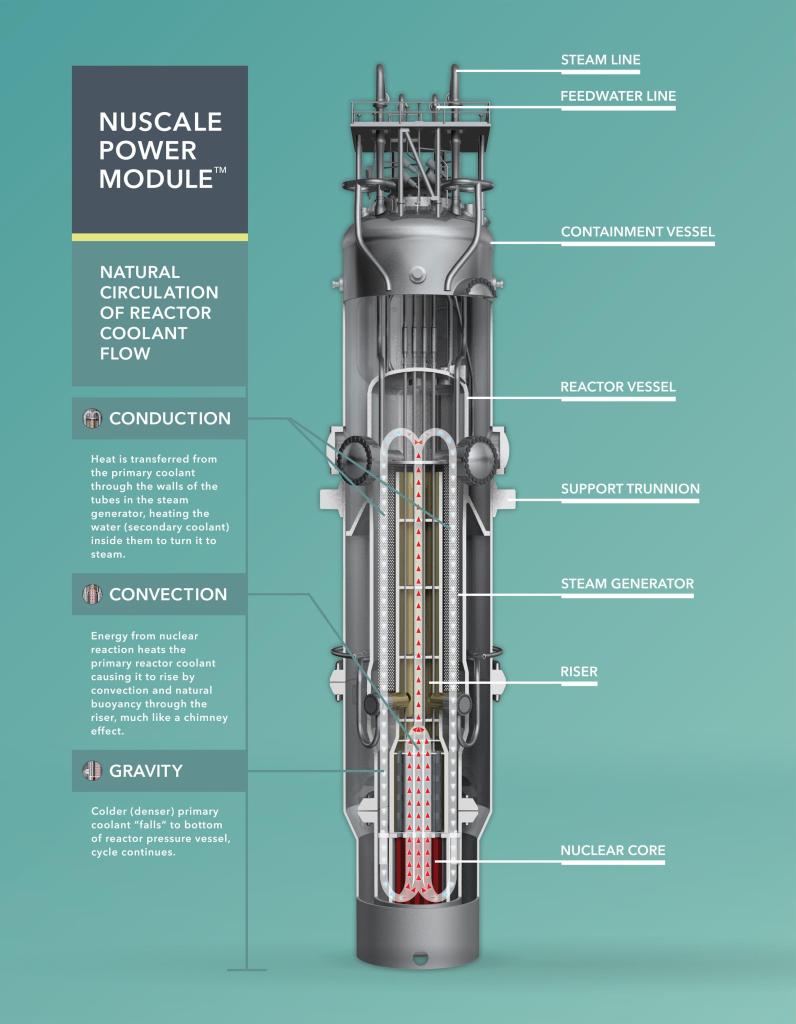
NuScale Power has Fluor money and is publicly traded. The customers for the power โ€“ particularly the data center developers, including Microsoft and Amazon โ€“ have plenty of money.

Whatโ€™s lacking are the products โ€“ the SMRs. Itโ€™s not the governmentโ€™s job to pick winners and losers in the race to develop the products. Thatโ€™s how free markets are supposed to work.

But thatโ€™s not the way the federal government has worked for the last 50+ years when it comes to energy, particularly nuclear energy. The new, allegedly โ€œconservativeโ€ administration is no different. Their practice is no-fault capitalism.

The first nuclear era died for a number of reasons, many of them decisions made by the partnership of government and industry โ€“ the vendors and the utilities โ€“ who were determined to overcome market forces. They were seduced by the concept of โ€œeconomies of scale,โ€ which they didnโ€™t understand. โ€œLearning by doingโ€ was swamped by a rush to differentiate what were experimental designs. [1] They deluded themselves about the pace of growth of demand (sounds familiar today). They were blinded by engineering hubris.

DOE will likely go forward with its almost billion-dollar boondoggle. The reactor vendors will certainly take the public money. But it will surely make no difference in whether they succeed or fail. The pressure will be on the DOE to posture about its โ€œsuccesses,โ€ while the market will tell the tale.

โ€”โ€”โ€”โ€”

[1] As Vaclav Smil noted (Energies, 1999: p. 152):

As the U.S. utilities opted for many individualized designs, rather than for a standard reactor, and as they began to build concurrently dozens of new plants, construction costs escalated, and they were pushed up further by changing requirements of new safety regulations.โ€


This is a slightly revised version of what was originally posted at The Quad Report, the blog site of electricity expert Kennedy Maize. Other posts by Maize at MasterResource are here.