Dangerous EPA GHG Endangerment Finding

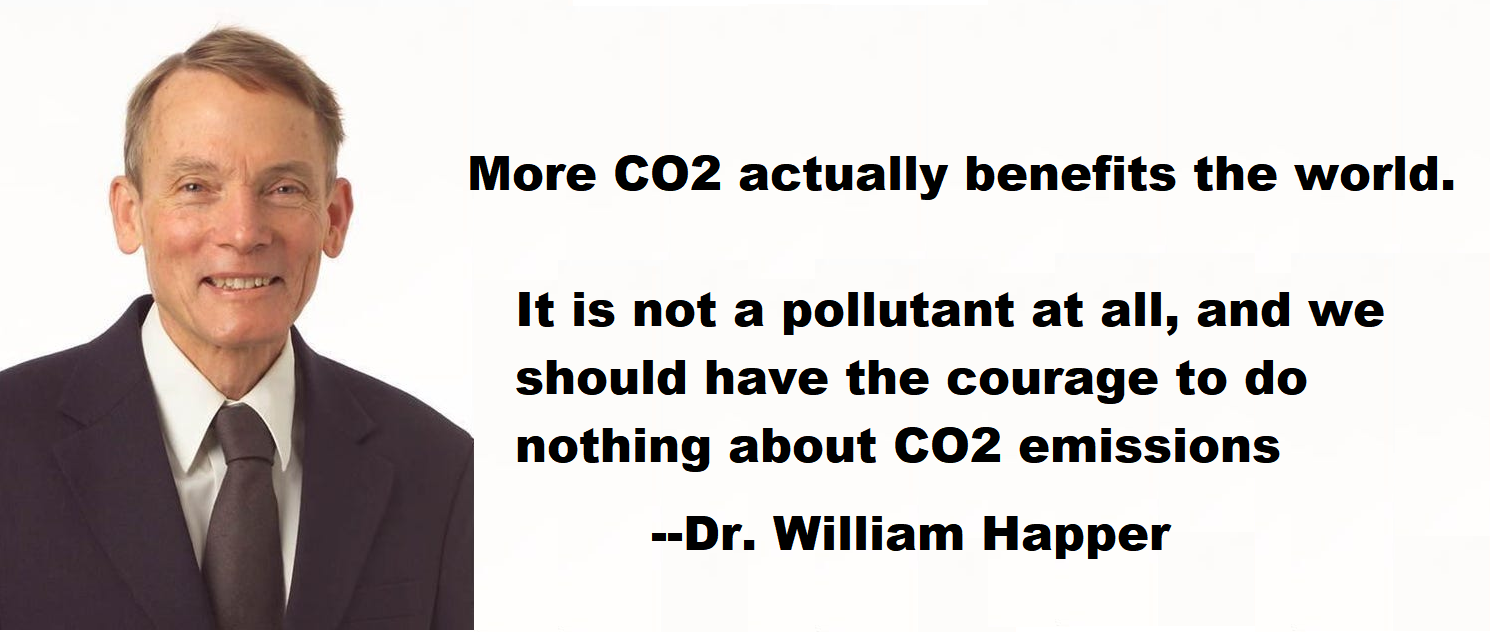
Most Americans have probably never heard of the Endangerment Finding, however, this obscure rule has effectively allowed the federal government to label carbon dioxide a harmful “pollutant” that can be regulated under the Clean Air Act. This is a prime example of government gone wild. The Clean Air Act was never intended to allow the EPA to declare carbon dioxide to be a dangerous pollutant.

From Science Matters

By Ron Clutz

The news is EPA Director Zeldin has submitted recommendations to President Trump but the content has not yet been made public. How significant is this issue for climate activists? Just read the hysterical response by Sierra Club Trump, Zeldin Must Publicly Release EPA’s Endangerment Finding Recommendation on Climate Pollution.  In italics with my bolds.

People deserve to know if their government plans
to terminate their right to breathe clean air

Sierra Club Executive Director Ben Jealous released the following statement:

“The EPA’s mission is to protect human health and the environment, and any revocation or weakening of this life-saving action would endanger both. Denying both science and the Supreme Court to further unravel the Clean Air Act would be a slap in the face to the children and elderly suffering from asthma or COPD, the victims of extreme weather-fueled wildfires and floods, and to every person wanting clean air to breathe. The American people deserve answers from this administration on whether or not they plan to further ignore the law and science to put polluters over people. The Sierra Club is prepared to pursue all legal avenues and use every tool at its disposal to protect the American people and avert the very worst of the climate crisis.”

And then there’s the facts:

The origin of this insane mass delusion, it’s spurious codification into regulations and the necessity of dumping it once and for all is explained by Chris Talgo in his Town Hall article The EPA’s Endangerment Finding Belongs on the Ash Heap of History. Excerpts in italics with my bolds and added images.

Most Americans have probably never heard of the Endangerment Finding, however, this obscure rule has effectively allowed the federal government to label carbon dioxide a harmful “pollutant” that can be regulated under the Clean Air Act. This is a prime example of government gone wild. The Clean Air Act was never intended to allow the EPA to declare carbon dioxide to be a dangerous pollutant. Rather, it was designed to “address the public health and welfare risks posed by certain widespread air pollutants.”It is important to note that in 1963, when the Clean Air Act was initially passed, carbon dioxide was not listed as an “air pollutant.”

Figure 1. Change in Gross Domestic Product
and Six Common Air Pollutants, 1980–2018

Source: Federal Reserve Economic Data | Federal Reserve Bank of St. Louis. *The index begins at 1 in 1980, with the exception of PM2.5, which was measured beginning in 2000. The index for each year is the actual value divided by the initial value.

Fast-forward to 1999. As the EPA notes, “On October 20, 1999, the International Center for Technology Assessment and 18 other environmental and renewable energy industry organizations filed a petition seeking the regulation of greenhouse gas emissions from on-road vehicles under the Clean Air Act.”

As happens all too often in our over litigious modern society, this “petition” eventually became a lawsuit. In 2007, the U.S. Supreme Court ruled in Massachusetts v. EPA that “greenhouse gases are air pollutants covered by the Clean Air Act and that EPA must determine whether or not emissions of greenhouse gases from new motor vehicles cause or contribute to air pollution which may reasonably be anticipated to endanger public health or welfare.”

Although this is the standard interpretation of the Supreme Court’s ruling,
it is not necessarily the correct interpretation.

According to the majority opinion, authored by former Justice John Paul Stevens, “We need not and do not reach the question whether on remand EPA must make an endangerment finding, or whether policy concerns can inform EPA’s actions in the event that it makes such a finding. We hold only that EPA must ground its reasons for action or inaction in the statute.”

In other words, the Supreme Court decision did not determine that carbon dioxide is a harmful air pollutant. Instead, it simply stated that the EPA has the authority to decide whether carbon dioxide is a harmful greenhouse gas if and only if that is supported by unequivocal data.

A more recent Supreme Court decision in 2022, West Virginia v. EPA, provides even more grounds for the Endangerment Finding to be rescinded. In this landmark ruling, the Supreme Court decided that the Obama-era Clean Power Plan was unconstitutional because it violated the letter of the law under the aforementioned Clear Air Act. Specifically, the Court cited the “Major Questions Doctrine,” which clearly states “that if an agency seeks to decide an issue of major national significance, its action must be supported by clear congressional authorization.”

Incredibly, this is the first time the Supreme Court
had cited the Major Questions Doctrine in a ruling.

The fact that the U.S. Supreme Court ruled in favor of West Virginia and essentially reprimanded the EPA to stay strictly within its constitutional guardrails, bodes well for those who believe the Endangerment Finding is unconstitutional and should be eliminated.

But if that is not convincing enough, consider that the Endangerment Finding is predicated on flawed science to begin with. Despite the insistence by the EPA that carbon dioxide is a harmful pollutant that is driving an existential climate crisis, the facts and data say otherwise.

Over the past few decades, climate alarmists and environmental zealots have been somewhat successful in fooling too many Americans into believing that carbon dioxide emissions must be eliminated no matter the cost.

However, the cost of demonizing carbon dioxide as a harmful pollutant is immense. By vilifying CO2 and attempting to regulate it to death, the EPA has absolutely harmed tens of millions of Americans with higher energy bills. Moreover, the EPA’s absurd notion that carbon dioxide is a harmful air pollutant has put the entire U.S. energy grid at risk.

As we enter the AI age, there will be an enormous demand for dependable and affordable energy. The only energy sources that can deliver reliable and cost-effective energy (aside from nuclear) for the United States to remain the global leader in the AI arms race necessarily produce carbon dioxide emissions. Put simply, if we do not eliminate the Endangerment Finding and free ourselves from its shackles, the United States will not be able to keep pace with the Communist Chinese Party in the worldwide battle for AI supremacy.

Trump Reportedly Mulling Exec Order to Shield Americans’ Gas Stoves from Bureaucrats

President-elect Donald Trump is reportedly considering taking executive action to protect gas stoves from regulatory overreach, Reuters reported Tuesday.

From Watts Up With That?

From The Daily Caller

Nick Pope
Contributor

President-elect Donald Trump is reportedly considering taking executive action to protect gas stoves from regulatory overreach, Reuters reported Tuesday.

The executive order being considered would also cover other gas-powered appliances, including heaters, after Democrats and the Biden administration spent years advancing regulations that would restrict their use over time, according to Reuters. The details of the action under consideration are not yet clear, but the policy would likely be in line with a Congressional push to cut funding to dissuade state and local governments from pursuing gas appliance phase-out policies.

“It speaks volumes when an order from the White House is needed to stop our own government from banning natural gas furnaces and water heaters,” Karen Harbert, president of the American Gas Association, told Reuters in a statement. (RELATED: Biden Official Behind Gas Stove Crackdown Admits She Has No Clue What It Takes To Install An Electric Stove)

Interesting little tidbit from @EENewsUpdates this morning.

It came as a surprise, especially since we have all been reliably informed that Democrats are not trying to get rid of gas stoves. pic.twitter.com/nEyEUWfqhm

— Nick Pope (@realnickpope) December 20, 2024

Approximately 75 million American households used natural gas to power at least one appliance as of 2020, according to the U.S. Energy Information Administration. Approximately 47 million U.S. households used gas for cooking purposes in 2020, an increase from 39 million households in 2015.

Over its one term in office, the Biden administration pushed forward energy efficiency rules for stoves, portable generators, pool pump motors, water heaters and more, many of which would gradually guide markets toward electric or energy-efficient models and away from gas-powered versions. Consumer Product Safety Commission Commissioner Richard Trumka Jr. suggested in 2023 that gas stoves could potentially be banned after studies linked the appliances to cases of childhood asthma, though the Department of Energy declared in May 2023 that the notion the federal government is targeting gas stoves is “misinformation.”

Moreover, the Biden administration also worked to spend hundreds of millions of dollars to help state and local governments devise building codes that effectively amount to backdoor efforts to phase out gas-powered appliances, energy policy experts explained to the Daily Caller News Foundation in December 2023.

Environmental activists and blue state officials are still working to find ways to force the phase-out of gas-powered appliances despite the country’s rightward shift in the 2024 elections, according to E&E News.

The Trump-Vance transition team did not respond to a request for comment.

All content created by the Daily Caller News Foundation, an independent and nonpartisan newswire service, is available without charge to any legitimate news publisher that can provide a large audience. All republished articles must include our logo, our reporter’s byline and their DCNF affiliation. For any questions about our guidelines or partnering with us, please contact licensing@dailycallernewsfoundation.org.

How To Fix US Energy After Biden Broke It

How a Donald Trump second term could reshape energy policy

From Science Matters

By Ron Clutz

The Energy Bad Boys provide a road map at their blog 7 Quick Energy Takeaways from the 2024 Election.  Excerpts in italics with my bolds and added images.

How a Donald Trump second term could reshape energy policy

Donald Trump’s comeback victory in the presidential election, which included carrying all seven swing states and winning the popular vote, along with Republican majorities in the Senate and potentially the House of Representatives, means big changes are coming to our nation’s energy policies.

Here are 7 quick takeaways for what might change in the next administration.

1. Regulatory Rollback

The incoming Trump administration will take concrete steps to repeal or scale back the regulatory overreach emblematic of the Biden-Harris administration’s energy and environmental policy.

Some of the regulations that could see a repeal or rework under the Trump administration include the tailpipe emission standards (which were effectively an electric vehicle mandate), the Mercury and Air Toxics Standards (MATS), and of course, the rules on carbon dioxide emissions on power plants. 

The D.C. Circuit Court is set to hear arguments on the Clean Power Plan 2.0—which we determined would leave millions of Americans in the dark—in the coming months.

Capacity shortfall events – or blackouts – in Southwest Power Pool (SPP) when we modeled EPA’s proposal for carbon mandates, stemming from the agency’s use of 80% or higher capacity values for solar energy.

The U.S. Supreme Court declined to stay the rules at this time, so the outcome of the case will likely impact the Trump administration’s strategy in addressing these rules. They may opt to do a scaled-down version of the rules, similar to when they replaced the Clean Power Plan 1.0 with the Affordable Clean Energy rule. Time will tell.

What we know now is this: the Biden Administration’s goal
of imposing carbon dioxide limits on existing
natural gas plants is dead in the water.

2. A Re-emphasis on Federalism

The repeal or reworking of several of the electricity-sector mandates imposed by the Biden-Harris administration will mean states have more say in their energy affairs.

This is both a blessing and a curse, as blue states pursue aggressive renewable buildouts, and utilities in red states attempt to boost their corporate profits by “green plating” their grids. Utilities do this by enacting internal carbon-free goals that are similar to policies in blue states, hoping it goes unchecked by regulators and lawmakers.

Xcel Energy’s profits in Minnesota have been skyrocketing since the state’s first renewable energy mandate, signed into law in 2007.

Policymakers in moderate and conservative states need to understand that the utilities pursuing wind and solar in their resource portfolios are not working in the interest of their constituents, and appropriate market signals are desperately needed through reforms that value reliability and affordability.

This is why we are seeing a groundswell of interest in our “Only Pay for What You Get Act,” where utility companies would only be allowed to charge their customers for the reliable portion of a power plant that will bolster grid reliability while keeping costs as low as possible.

This shows the difference between profits earned by utility companies under normal regulation and what profits would be under Only Pay legislation.

Please feel free to reach out to us if you are interested in learning more about how Always On Energy Research can help policymakers in your state understand the stakes of getting their energy policy correct, and offer forward-looking solutions to the challenges we’ll all face in the coming years.

3. Repeal the IRA?

As we noted in our piece, Grassley v. The Grid, subsidies paid to wind and solar operations are no longer harmless feel-good incentives for alternative energy. Today, these subsidies are actively undermining the reliability of our nation’s electric grid.

IRA subsidies paid to wind and solar developers are used as an excuse by utility companies to justify closing down reliable coal, natural gas, and nuclear plants while pretending that their plans to replace them with wind, solar, and battery storage facilities are better for consumers.

As Travis Fisher has noted at his Substack, he estimates that the IRA will cost more than $1 trillion over the next 10 years and between $2 trillion and $4 trillion by 2050. These massive subsidies are so lucrative that companies are pursuing projects that only make sense if the subsidies exist, irrespective of whether they make any sense for customers. This is a recipe for enormous malinvestment of taxpayer dollars.

Repealing the investment tax credits and production tax credits for wind and solar facilities will be an indispensable part of reversing this trend and restoring rational market signals to the electricity sector.

4. Keystone Pipeline

During his appearance on the Joe Rogan Podcast, President Trump said he liked Robert F. Kennedy Jr.’s ideas on a lot of things, but we were relieved the President said he would need to keep him away from environmental policy decisions because he was hostile to “the black gold.”

Always On Energy Research’s oil and gas analyst, Trevor Lewis, notes that beginning day one, the Trump administration can take several steps to ensure America’s economy will have enough oil and gas to fuel decades of growth.

Restarting construction on the Keystone XL pipeline should be at the top of the list of priorities, which would bring job opportunities and economic activity to countless small towns from North Dakota to Kansas while simultaneously bolstering America’s energy security.

While America has vastly improved its energy independence from the rest of the world, our nation is still importing several million barrels of heavy sour crude from OPEC and other foreign nations. Restarting Keystone will allow American refineries to friend-source crude from Alberta and would, as an added benefit, reduce SO2 emissions from tanker ships, which negatively impact air quality and contribute to ocean acidification.

5. Drill Baby Drill

For domestic production, Trump’s Bureau of Land Management (BLM) will reverse the Biden Administration’s disastrous drilling policies.

In the first two years of the Biden Administration, total leases offered declined by 70 percent. By 2023, Biden’s BLM leased 95 percent fewer acres than Trump in 2019. Trump’s BLM can reverse this trend and award prime oil-rich lands to eager drillers in Wyoming, Montana, and Colorado. Offering these leases will replenish acreage inventories and reverse the 20-year decline in active acres, and the royalties paid on federal lands will be distributed through BLM’s oil and gas revenue splitting program with state governments and local communities.

Trump will also likely reverse the Biden Administration’s pause on permitting new liquefied natural gas (LNG) export facilities and appoint commissioners to the Federal Energy Regulatory Commission (FERC) that will approve the construction of new natural gas pipelines.

6.  Solar and Wind on Federal Lands

In 2023, the Biden Administration’s Department of Interior (DOI) gave renewable energy developers a sweetheart deal slashing the annual lease rate for wind and solar on federal lands by 80 percent. Months later, Biden’s BLM announced the Western Solar plan which will bridle 31 million acres of Federal lands – most of which in Western States thousands of miles from Washington D.C. – with 25 gigawatts of solar power.

Unless reversed by the Trump Administration’s BLM, the Western Solar Plan will erect inefficient solar panels over pristine western landscapes while damaging fragile ecosystems in the process. Worse still, communities would not be compensated for the damages done by these solar developers because, unlike oil and gas leases, BLM does not share the revenues paid by wind and solar lease rents or bonus payments on the Federal lands with local communities.

The revenues communities receive from royalties strengthen local budgets, create jobs, and support the care and maintenance of the local environment, which wind and solar currently don’t contribute to. Trump’s BLM will have an opportunity to end Biden’s free ride for wind and solar developers. President Trump can advocate for western lands and their inhabitants by leveling the playing field by ensuring renewable energy developers pay rates equivalent to those paid by oil and gas producers.

7. Halting Offshore Wind

The Biden Administration has pledged to install 30 gigawatts of offshore wind capacity by 2030. To meet this target, the Bureau of Ocean Energy Management (BOEM) offered 10 offshore wind leases and scheduled auctions for 12 more leases through 2028.

Offshore wind energy is one of the most expensive energy sources on the grid—even before accounting for the hidden costs of maintaining reliability with intermittent electricity generation.

Additionally, offshore wind has been the center of ongoing environmental controversies, from killing whales to the breakdown of blades in the middle of the ocean, only to washup onshore

To prevent another Vineyard wind disaster, in addition to saving consumers from expensive and unreliable energy, Trump should direct the BOEM to terminate the 12 scheduled leases. As for the 10 auctioned leases, Trump could (and should) rescind these leases from offshore developers, in a similar move to Biden rescinding Alaskan oil and gas leases.

French Fishermen Join U.S. Fishermen in Fighting Offshore Wind – IER

Conclusion

Biden Bad, Trump Good.

After 4 years of one of the worst presidencies for reliable and affordable energy, the Trump administration has the opportunity to unleash energy dominance by ensuring a level playing field for all energy resources, ending the subsidies and handouts to renewable and battery developers, repealing egregious regulations aimed at prematurely retiring coal and natural gas plants, and promoting an energy dominant policy which will help end Bidenomic’s policy of energy inflation.

Oil Giant’s Massive Impairment Could Be The Latest Sign Of Trouble For California’s Economy, Experts Say

Chevron announced Tuesday that it could face billions of dollars in impairments due in part to California’s regulatory environment, a development which some energy policy experts told the Daily Caller News Foundation could spell trouble for the energy industry’s prospects in the state.

From The DAILY CALLER

NICK POPE

CONTRIBUTOR

  • Chevron announced Tuesday that it is anticipating up to $4 billion in asset value reductions for its 2023 fourth quarter results, a development which the firm attributes in part to California’s robust environmental regulatory structure, according to a regulatory filing.
  • The impairment is a sign of trouble for California’s industry sector writ large, energy policy experts told the Daily Caller News Foundation.
  • “Hundreds of small businesses at every aspect of oil and gas development are at risk, and sadly that is contributing to the state’s overall decline,” Daniel Turner, founder and executive director of Power the Future, an energy advocacy group, told the DCNF. “If the majors are unwilling to bend to Sacramento’s never-ending lust for regulation, how can small family-run businesses with limited resources begin to comply?”

Chevron announced Tuesday that it could face billions of dollars in impairments due in part to California’s regulatory environment, a development which some energy policy experts told the Daily Caller News Foundation could spell trouble for the energy industry’s prospects in the state.

Chevron said that it anticipates taking asset value reduction charges of up to $4 billion for the fourth quarter of 2023, an impairment that is partially related to oil and gas production in the U.S., especially in California, a state with a burdensome environmental regulatory structure that the company has highlighted in the past, according to a regulatory filing. The impairment charges are a troubling sign for California’s energy industry, as more companies could follow suit in a trend that would potentially imperil tens of thousands of jobs in the state, energy policy experts told the DCNF. (RELATED: Here’s How State Regulators Played A Role In California’s Rolling Blackouts, Wildfires)

“Chevron’s operations in California include its major refinery in Richmond, California, along with upstream operations producing heavy oil via steam injection in the San Joaquin Valley in the central part of the state. California’s increasingly strict air quality regulatory structure and other operational regulations have significantly raised costs related to both operations and rendered them less profitable,” David Blackmon, a 40-year veteran of the oil and gas business who now consults and writes regularly about the energy industry, told the DCNF. “The regulations in question apply industry-wide and impact any company trying to do business in the state. I would expect to see other operators announce similar impairment actions in the coming months … The oil industry’s struggles with the regulatory and business climate in California are reflective of the state’s entire population. The heavy-handed control from central planners has been the main cause of the massive population and business flight out of California in recent years.”

California was one of the leading states of the U.S. in terms of oil production in 2022, with operators in the state pumping more than 124 million barrels that year, according to data from the U.S. Energy Information Administration (EIA). The state saw its local oil and gas production drop by nearly 30% over the course of the last four years, according to EIA data, a trend which Californians for Energy Independence attributes primarily to “state and local energy policies shutting down production.”

Chevron has previously highlighted the adverse impact that California’s policy has on its operations in filings with state officials. “Two decades of policy choices have reduced supply elasticity and severely limited refiners’ ability to react to higher prices,” the firm wrote in December comments to the California Energy Commission (CEC) regarding a state regulatory proposal.

“California’s policies have made Chevron’s investments in its home state riskier than investing in other states,” Chevron’s President of Americas Products Andy Walz wrote to state officials in November, according to Reuters. “In the past year, we have cancelled several projects due to permitting challenges.

On the state level, California is widely considered to be on the leading edge of climate policy, according to Stateline. Away from the regulations focused on oil and gas production, the state has pushed aggressive electric vehicle and truck rules, filed a climate change lawsuit against Chevron and other oil majors alleging that they deliberately tried to mislead the public about the nature of climate change and enacted a landmark corporate emissions disclosure requirement.

California’s local oil and gas production supports an estimated 50,000 jobs across the state, including 31,000 jobs in the otherwise economically depressed San Joaquin Valley, according to Californians for Energy Independence.

“Hundreds of small businesses at every aspect of oil and gas development are at risk, and sadly that is contributing to the state’s overall decline. If the majors are unwilling to bend to Sacramento’s never-ending lust for regulation, how can small family-run businesses with limited resources begin to comply?” Daniel Turner, founder and executive director of Power the Future, an energy advocacy group, told the DCNF. “What you will see over time is the talent leave for oil fields in oil states that reward hard work and expertise, and many businesses will close their doors for good. This is all reversible, all preventable and sadly completely foreseeable, yet California uses forward with these radical policies despite the ruin it brings their state.”

Neither Newsom’s office nor the CEC responded immediately to requests for comment.

All content created by the Daily Caller News Foundation, an independent and nonpartisan newswire service, is available without charge to any legitimate news publisher that can provide a large audience. All republished articles must include our logo, our reporter’s byline and their DCNF affiliation. For any questions about our guidelines or partnering with us, please contact licensing@dailycallernewsfoundation.org.