UAE’s OPEC Exit: Pragmatic Oil Policy, Not ‘Stranded Assets’ Panic

The United Arab Emirates’ announcement on Tuesday that it will leave OPEC and OPEC+ effective May 1st sent shockwaves through the energy world. As the cartel’s third-largest oil producer, with a production capacity approaching five million barrels per day and ambitions to push higher, the UAE was no peripheral player. Abu Dhabi joined OPEC back in 1967 — before the UAE federation existed in its modern form — and the unified UAE carried that legacy for nearly six decades.

From Tilak`s Substack

By Tilak Doshi

The United Arab Emirates’ announcement on Tuesday that it will leave OPEC and OPEC+ effective May 1st sent shockwaves through the energy world. As the cartel’s third-largest oil producer, with a production capacity approaching five million barrels per day and ambitions to push higher, the UAE was no peripheral player. Abu Dhabi joined OPEC back in 1967 — before the UAE federation existed in its modern form — and the unified UAE carried that legacy for nearly six decades.

The exit decision was framed by Emirati officials as a “policy-driven evolution” in pursuit of “long-term strategic and economic vision”. Within hours, a familiar trope emerged among media commentators: the UAE, fearing the inexorable global march towards Net Zero, is racing to avoid ‘stranded assets’. Oil will be left in the ground, you see, because electric vehicles in China and Europe’s Green Deal will soon render the black stuff obsolete.

Watch out for stranded assets!

The stranded assets narrative is the climate alarmists’ weapon of choice. In behavioural economics, the tenet of loss aversion suggests that the fear of a tangible loss is far more effective than hope for putative gains in shaping actions. For over two decades, climate activists and financial pundits have argued that fossil fuels — coal mines, oil and gas fields, pipelines, refineries — would soon suffer the fate of the buggy whip on the eve of the automobile age. The energy transition, they insisted, would ‘strand’ trillions of dollars in hydrocarbon assets as the world turns away from carbon-intensive fuels.

Climate activists have long claimed that technological progress in energy efficiency and renewable energy technologies combined with climate policies pursued by governments around the world will lead to substantial falls in demand for fossil fuels. A Financial Times column in 2020, for instance, claimed that the pursuit of climate change policies would “evaporate” a third of the current value of the big oil and gas companies. If countries met their Paris Agreement commitments and kept to the “no more than 2°C above pre-industrial levels” target, 50% of all coal, oil and gas resources would be “stranded” and, by definition, have zero value. If the stricter 1.5°C maximum is aimed for, then 80% of the world’s fossil fuels would be stranded.

Citing ‘consensus science’ (an oxymoron), climate change models purportedly linking carbon dioxide emissions with ‘climate risk’ are used to calculate the necessary cuts in oil, gas and coal production. Hence BlackRock, the world’s largest asset manager and an early purveyor of the ESG movement, warned over a decade ago that “the majority of fossil fuel reserves will need to be left in the ground” if global warming is not to exceed 2°C. Along the same lines, consultants for the OECD asserted that “vast quantities of resource reserves will need to remain underground in order to stabilise the climate”.

Turning to UAE’s decision to exit OPEC this week, an Oxford don in “energy systems” captured the climate-focused zeitgeist in a commentary published on Wednesday. He argued that as China electrifies transport, demand for oil will “plateau”, and the UAE — already ahead of the Saudis with its 2050 Net Zero target versus Riyadh’s 2060 — is wisely sidestepping the risk of unsellable reserves. This, we are told, explains why the Gulf heavyweight is ditching the cartel’s quotas for production flexibility. The UAE can then, in this narrative, produce oil as rapidly as possible before it goes out of fashion.

A Middle East expert from Rice University’s Baker Institute for Public Policy in Houston commented in Channel News Asia on Thursday that the UAE’s decision to exit “reflects a desire to monetise its reserves and move the oil to market to avoid the risk of stranded assets should global demand fall in any future transition away from fossil fuels. Shorn of the constraints of OPEC quotas… officials in Abu Dhabi will be able to increase production should it wish to do so once the impasse with Iran is broken and the Strait of Hormuz fully reopens.”

To more conventional oil analysts, the “stranded assets” theme is worn and threadbare. Fatih Birol, Chief Executive of the IEA, published the astonishing Net Zero “roadmap” with much fanfare in May 2021, calling for a global stop to all new investments in fossil fuels since they were going to be “stranded” anyway. It duly attracted its share of derision from Gulf oil producers with skin in the game, as in the case of the Saudi oil minister who called the report a sequel to “La La Land”. There is perhaps no player as big as Saudi Arabia that can claim ‘skin in the game’.

Barclays PLC dropped a bombshell white paper in February titled ‘Transition Realism: A Stranded Asset Perspective on the Energy Transition’. The report pulls no punches. After years of being lectured that fossil fuels are the quintessential stranded assets — trillions in oil, gas and coal reserves doomed to remain unused underground as the world races to Net Zero – we now learn that the real risks now lurk in the renewable sector. “Stranded-asset risk is becoming system wide. … Historically, stranding meant coal plants. Today, renewables facing multi-year interconnection queues, curtailment and congestion risks are increasingly likely to be impaired.”

The question of national interest

The UAE has chafed for years under OPEC quotas that capped its output at around 3.4 million barrels per day while its sustainable capacity sits at 4.8 million and climbing. Abu Dhabi National Oil Company (ADNOC) has invested heavily to expand, only to be restrained by OPEC quotas under Saudi-led discipline.

The Iran war and the closure of the Strait of Hormuz have compounded the frustration. UAE exports able to bypass the Hormuz chokepoint via the Habshan-Fujairah pipeline have a capacity to transport 1.5-1.8 million barrels of oil per day. By exiting OPEC, the UAE gains the freedom to ramp up on its own terms, redirect capital to secure export routes and align more closely with the US whose shale revolution has already done more to erode cartel power than any UN climate conference ever could. But in the short run, the UAE is constrained by the pipeline capacity until the Strait of Hormuz is released from blockades.

Climate zealots cannot see a sovereign nation’s rational self-interest without projecting their own apocalyptic fantasies onto it. The UAE is not some farsighted convert to the renewables revolution, nor is Saudi Arabia the dim-witted Arab cousin stubbornly clinging to a dying fossil fuels industry. Both are hard-nosed pragmatists operating in a world where oil demand remains robust, geopolitics trumps virtue-signalling and government promises of distant Net Zero targets are worth about as much as the paper they’re printed on.

The real story, buried beneath the stranded-assets hysteria, is one of production quotas, regional rivalries, wars and blocked maritime chokepoints for oil and gas trade, and the enduring power of market realities over green ideology. US fracking — 13.2 million barrels per day in January 2026, up from 5.4 million in 2010 — has achieved what decades of diplomatic arm-twisting could not. OPEC’s 2014 attempt to flood the market and crush American oil and gas producers backfired spectacularly, forcing US shale to become profitable at $50-$60 per barrel.

This is well below the fiscal break-even oil price for most OPEC members, that is, the price that helps balance government budgets. IMF projections indicate that Saudi Arabia requires roughly $95 per barrel to balance its 2025 budget, while the UAE maintains a lower breakeven around $50 per barrel.

And yet the stranded-assets mantra persists. Even as physical Brent crude spikes above $110 amid the Hormuz disruptions — reminding everyone that energy security is not a luxury but a necessity — the Oxford academic and his ilk insist the UAE is acting on long-term demand decline. Never mind that China’s electrification is built on a coal-fired grid that shows no sign of rapid decarbonisation. Government pledges 25 or 30 years out are worth less than used Tesla batteries.

The UAE, sitting atop some of the world’s lowest-cost oil reserves, is hardly about to abandon that absolute advantage on the altar of UN target ‘commitments’ for carbon mitigation. Saudi Arabia’s continued commitment to oil is no act of denialism either. Both Gulf powers understand what Western elites refuse to: global fossil fuel demand is not plateauing. The UAE’s exit is about flexibility — production policy, export security, and foreign policy autonomy — not a sudden conversion to the Church of Climate.

The UAE has distanced itself from cartel constraints while deepening US ties, a move accelerated by the Iran war which exposed the limited nature of the six-nation Gulf Cooperation Council solidarity. UAE Presidential adviser Anwar Gargash said the Gulf states supported each other logistically in the crisis, but he lambasted their political and military response: “The GCC’s stance was the weakest historically, considering the nature of the attack and the threat it posed to everyone.” Riyadh, for its part, retains the swing-producer role and the fiscal buffers to weather volatility. Neither are ‘unenlightened’; both are playing the long game in a multi-polar energy market where US shale, not solar panels, has humbled OPEC+.

Climate delusions vs petrostate statecraft

The broader lesson is one of persistent delusion. Anti-fossil fuel advocates have spent years portraying every market signal — OPEC cuts, price spikes, producer exits — as proof of their eschatology. Qatar left in 2019 for gas focus; Angola in 2024 over quota disputes; Ecuador and others before them. These were pragmatic adjustments, not harbingers of stranded reserves.

The UAE’s departure, the largest and most consequential since the cartel’s founding, weakens OPEC+ materially and reputationally, but it does so because of internal rifts, US supply abundance and regional conflict — not because Abu Dhabi’s planners have swallowed the IEA’s Net Zero Kool-Aid.

As the Hormuz crisis underscores, the world still runs on oil. Brent’s surge to over $110 after UAE’s exit notice was not a panicked farewell to fossil fuels but a reminder of supply vulnerability. The UAE will produce more, invest in bypass infrastructure and contribute to stability “in a measured and responsible manner”, as its statement noted. It appreciates OPEC’s past efforts while moving on. That is statesmanship, not surrender to the green transition fairy tale.

The climate establishment’s inability to see this reveals more about the ideology of its adherents than about Gulf energy strategy. They project their own wishful thinking — EU Net Zero by 2050, China’s miraculous pivot to renewables, an early plateau to global fossil fuel demand — onto rational actors who understand that energy abundance underpins prosperity and security.

Stranded assets? The only things truly at risk of stranding are the trillions squandered on intermittent renewables that cannot replace hydrocarbons at scale without massive economic losses. The UAE knows this. So does Saudi Arabia. It is high time the West’s virtue-signalling policymakers stopped lecturing them.

Dr Tilak K. Doshi is the Daily Sceptic‘s Energy Editor. He is an economist, a member of the CO2 Coalition and a former contributor to Forbes. Follow him on Substack and X.

Fifty years after the oil embargo crisis of 1973, no American policy for energy independence

The oil embargo of 1973 imposed by the Organization of Petroleum Exporting Countries (OPEC) and other Arab oil-producing nations was imposed in response to the United States’ support of Israel during the Yom Kippur War.

From CFACT

By Ronald Stein 

The oil embargo of 1973 imposed by the Organization of Petroleum Exporting Countries (OPEC) and other Arab oil-producing nations was imposed in response to the United States’ support of Israel during the Yom Kippur War.

The embargo led to a sharp increase in oil prices and a shortage of fuels for the military, airlines, ships, and vehicles in the United States and other countries, as well as a shortage of products from oil.

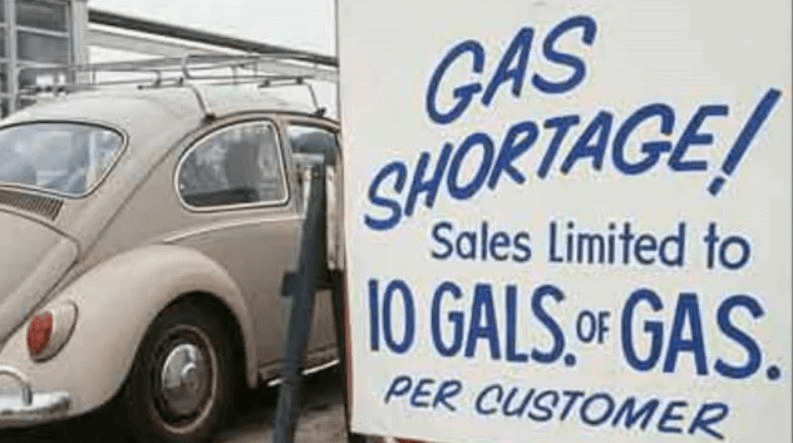
Few may remember the long lines at gas stations which were one of the most visible effects of the oil embargo. In some cases, people waited for hours to fill up their tanks. The shortage of oil also led to price increases, and many people were forced to make sacrifices to conserve fuel.

The oil embargo of 1973 was a major event in the history of the United States.  It led to a recession in the United States and other countries. It also led to thoughts of a needed energy policy in the United States. The United States began to develop alternative sources for oil and for electricity, such as solar and wind power.

President Richard Nixon played a key role in the construction of the Trans-Alaska Pipeline, which carries oil from Prudhoe Bay on Alaska’s North Slope to the port of Valdez. Nixon signed the Trans-Alaska Pipeline Authorization Act into law in 1973, and he worked to overcome environmental and political opposition to the project. The pipeline began operating in 1977 and has since transported more than 15 billion barrels of oil.

President Richard Nixon gave a speech on America’s energy policy on November 7, 1973, in which he outlined his plans to reduce national energy consumption and called on U.S. citizens to follow his lead in achieving energy independence. In his speech, Nixon acknowledged that the United States was facing an oil crisis for the American economy’s demands for fuels, and the products that are based on crude oil, and he blamed the crisis on several factors, including the Arab oil embargo, the growth of the U.S. economy, and the country’s continued reliance on foreign oil.

Now, 50 years later, none of the administrations that followed Nixon have done anything to establish a policy for America’s energy independence from another embargo disaster. We’re talking about a 50-year span of administrations from Presidents Ford, Carter, Reagan, Bush Sr., Clinton, Bush, Jr., Obama, Trump, and now Biden.

As World War I and II historians Russia, China, and OPEC know, the country that controls the minerals, crude oil, and natural gas, controls the world!  They all know there is no substitute for fossil fuel product dominance in the foreseeable future, even on a longer-term horizon. To believe a transition to just electricity from renewables is possible from the products manufactured from fossil fuels and act accordingly is suicidal for humanity. As former Congressman Don Ritter of Pennsylvania wrote  “It’s the real “existential threat.”

Today, President Biden and California Governor Newsom remain oblivious to the fact that wind and solar only generate electricity. Neither Biden or Newsom can identify one product that wind and solar can manufacture for mankind. And worse, neither has a backup plan to replace all the products and fuels that are based on oil!

Biden is campaigning to rid America of oil, and Newsom, by continually decreasing California’s in-state oil production, Newsom’s personal energy policies continue to force California, the 4th largest economy in the world, to be the only state in contiguous America that imports most of its crude oil energy from foreign countries. That dependence, via maritime transportation from foreign nations for the state’s crude oil energy demands, has increased imported crude oil from 5 percent in 1992 to almost 60 percent today of total consumption. California’s growing dependency on other nations, like Saudi Aramco is a serious national security risk for America.

Today, both Biden and Newsom campaign to go green with EV’s, and wind and solar for electricity generation. Through the encouragement of tax incentives and subsidies to go green, they are providing financial incentives to China, who already controls the supply chain for the minerals and metals to go green, furthering our total dependence on China to achieve the green goals of America.

In the 1970s, Nixon also took steps to increase domestic energy production. He opened more federal lands to oil and gas drilling, and he encouraged the development of new sources for electricity, such as solar and nuclear power. He also created the Energy Research and Development Administration (ERDA), which was responsible for researching and developing new energy technologies.

Nixon’s energy policies were not without their critics. Some argued that his policies were too focused on conservation and not enough on production. Others argued that his policies were too expensive and that they would harm the economy. However, Nixon’s energy policies were generally successful in helping the United States to weather the energy crisis of the 1970s.

Here is a list of some of President Nixon’s energy successes in the 1970s:

  • Opening more federal lands to oil and gas drilling
  • Created the Environmental Protection Agency (EPA) in 1970
  • Created the Occupational Safety and Health Administration (OSHA) in 1970
  • Created the National Oceanic and Atmospheric Administration (NOAA) in 1970
  • Created the United States Consumer Product Safety Commission (CPSC) in 1972
  • Signing the Trans-Alaska Pipeline Authorization Act into law in 1973
  • Creating the Energy Research and Development Administration (ERDA) in 1974
  • Passage of the Energy Policy and Conservation Act of 1975

Those 1970s agencies were created in response to several challenges facing the United States at the time, including environmental pollution, occupational safety and health hazards, and consumer product safety. The creation of those agencies helped to improve the quality of life for Americans and to protect the environment.

Today, America is offering tax incentives and subsidies to go green at any cost, and implementing policies to rid the country of oil with no backup plan for a supply chain of products from oil that are the basis of the economy. Instead of achieving energy independence, America continues to increase its dependence on China for “green”, and Russia and OPEC for oil products demanded by our economy.

With no policy for energy independence, God help America!

This article originally appeared at Heartland

Author

  • Ronald SteinRonald Stein
  • Ronald Stein is an engineer, senior policy advisor on energy literacy for CFACT, and co-author of the Pulitzer Prize nominated book “Clean Energy Exploitations.”

Peace Breaks Out In The Middle East As US Influence Declines: From OPEC To OPEC+

Historians will mark the low point of Pax Americana in the Middle East by several rather brutal humiliations that American prestige has undergone under President Joe Biden’s presidency.

Tilak Doshi writes at Forbes:

American president Franklin Delano Roosevelt (R, 1882 -1945) meets with King Ibn Saud (1880- 1953) … [+]GETTY IMAGES

Historians will mark the low point of Pax Americana in the Middle East by several rather brutal humiliations that American prestige has undergone under President Joe Biden’s presidency. Examples would include having phone call requests by the US president declined by Saudi Arabia and the United Arab Emirates in March last year and mass media pictures of the impersonal fist-bump between Joe Biden and de facto ruler and Crown Prince of Saudi Arabia Mohammed Bin Salman (or “MBS” as he is familiarly called) in July.

The US president had come to Riyadh with a begging bowl but failed to convince the Saudis to rescue the US gasoline market from high prices by opening the Arab oil tap in time for the mid-term US elections. This was after the President Biden had promised to make the Kingdom a “pariah” during his 2020 election campaign in response to the killing of Jamal Khashoggi.

With the decline of US dominance in Middle East security affairs, a spate of intra-regional diplomatic moves towards peace seems to have broken out. This might sound ironic to observers of American diplomacy and military power in the region. But an assertive Saudi foreign policy under its Crown Prince and the vastly altered circumstances caused by Western sanctions on Russia’s oil and gas exports saw Riyadh distance itself from Washington.

It instead turned to China in March 2023 to underwrite its security guarantees in return for diplomatic rapprochement with Iran. In the event, MBS favored restoring diplomatic relations with Iran without Washington’s assistance, a move described by an unnamed US diplomat as “giving Biden the middle finger”. At a stroke, MBS displaced the “oil-for-security” deal that has lasted over three quarters of a century between the US and Saudi Arabia since Franklin D. Roosevelt’s historic meeting with King Ibn Saud in 1945.

In a 1926 Hemingway novel, a character is asked how he went bankrupt to which he remarked “Two ways, gradually and then suddenly”. The loss of US prestige in the Middle East, marked by the protracted military debacles in Iraq, Syria, and Afghanistan, might be termed “gradual” by some historian’s metrics. But last month’s China-brokered resumption of diplomatic relations between Iran and Saudi Arabia — historical enemies across the millennia-old Shia-Sunni divide – is a sudden and profound turn of events in Middle East affairs. All CIA Director William Burns could do in a surprise visit to Saudi Arabia in early April was to express Washington’s “frustration” and feeling “blindsided” by Saudi Arabia’s sudden move to get along with its neighbors.

The Old Order

Roosevelt met with King Abdul Aziz Ibn Saud on February 14, 1945, aboard a U.S. Navy destroyer in the Suez Canal. It was the first time a U.S. president had ever met with a Saudi Arabian king, and the encounter laid the foundation for U.S.-Saudi relations that would continue for over 75 years encompassing 14 presidencies until Joe Biden’s. The celebrated quid pro quo traded US military power and regime security for the Ibn Saud family in return for the unhindered flow of Arabian oil to Western markets. This served as a key pillar of the Bretton Woods international economic order after the Second World War.

During the first phase of Bretton Woods (1945 – 71), the US dollar — backed by gold — served as the world’s international reserve currency. The US and Western Europe dominated the IMF and the World Bank, the twin Bretton Woods institutions overseeing the global economy outside the Iron and Bamboo curtains of the Soviet Union and Communist China. Under pressure from rising inflation and creditor nations wanting to redeem gold, President Richard Nixon was forced to remove the dollar from its gold peg in 1971.

In the second phase of Bretton Woods since 1971, the purely fiat US dollar — based on the “full faith and credit” of the US Federal Reserve — serves as the global reserve currency. At a national debt exceeding $30 trillion (117 per cent of US GDP in 2022), and increasing by $1 trillion a year, faith in the US debt market cannot be taken for granted. It took 215 years for US debt to reach $7 trillion; it has added another $7 trillion since March 2020. Political parties on both sides of the aisle do not seem too concerned about budget deficits and the national debt. This, to say the least, does not inspire confidence for lenders who want to hold dollar-denominated debt.

The Yom Kippur War (1973) and resultant OPEC embargo that led oil prices to skyrocket in the United States threatened the status of the fiat dollar. In the wake of the oil price shock, President Nixon empowered then secretary of the Treasury, William Simon, to get the Saudi monarchy “to finance America’s widening deficit with its newfound [oil] wealth.” In a further elaboration of the original Roosevelt-Ibn Saud “oil-for-security” deal, the Saudis under King Faisal promised to denominate global oil purchases only in dollars and in return Washington would provide military aid and materiel to the Kingdom. The quid pro quo came in the form of guarantees that the Saudis would “plow billions of their petrodollar revenue back into Treasuries and finance spending” of every US administration since.

A Spate of Peace Moves

The Middle East regional order has undergone a dramatic realignment under President Biden’s watch. Following the landmark Chinese-brokered deal between Saudi Arabia and Iran on resuming ties last month, the US was again left on the sidelines a few weeks later. It could only passively observe yet another major diplomatic initiative, this time between Saudi Arabia and Syria, mediated by Russia. After rounds of discussions in Moscow and Riyadh in recent weeks, the emerging Damascus-Riyadh rapprochement is signalled by a series of reciprocal state visits by the region’s leaders.

Following a previous trip to the United Arab Emirates last year, Syrian President Bashar al Assad arrived in the United Arab Emirates last month for his second official visit. Marked with greater ceremony this time, the March meeting in Abu Dhabi with UAEUAE +1.2% President Sheikh Mohammed bin Zayed al-Nahyan occurred when more Arab states have signalled openness to resumed relations with Damascus. Last week, President Bashar al-Assad received Saudi Foreign Minister Prince Faisal bin Farhan in Damascus in the “most significant step” yet towards ending Syria’s decade-long regional isolation. Even though Assad’s government remains under US and Western sanctions, Syria could be formally welcomed back into the Arab League at next month’s summit in Riyadh.

Since the Syrian civil war began in 2011, Gulf states including Saudi Arabia and the UAE joined the US in backing rebels fighting to overthrow President Assad. The turnaround by the Gulf Arab states to now support bringing Syria back into the Arab fold has accelerated hopes for wider regional peace in the Middle East. The Saudis and its Gulf allies have resumed diplomatic relations with Qatar and have begun improving ties with Turkey. The proxy wars in Yemen and Syria have de-escalated as part of the China- and Russia-brokered rapprochement processes in the regional order. The US is no longer the prime — or even peer — mover in the Middle East security stakes. One analyst of regional affairs was led to observe wryly that “Middle East nations are making peace without Washington.”

From OPEC to OPEC+

Following the Russia invasion of Ukraine just over a year ago, the U.S., U.K. and the European Union along with their closest allies imposed the most comprehensive and unprecedented set of sanctions on a sovereign nation in modern history. These included the expropriation of Russian Central Bank’s foreign exchange reserves held offshore and expulsion from the SWIFT international payments system. Expectations in Washington and Brussels that this would “rubble the rouble”, devastate the Russian economy, and help lead to regime change with the ouster of President Vladimir Putin quickly proved wishful.

The Russian economy is now slated by the IMF’s latest economic outlook to outperform Britain and Germany this year. Russia posted a record current account surplus of $227 billion in 2022, up 86% from 2021. Russia replaced revenues lost from its oil and gas exports to Europe with a pivot to China, India, UAE, Turkey and other countries not participating in the Western-led sanctions (i.e. the rest of the world outside the “collective West”). Its oil export levels have not seen any significant reduction. Last week, Reuters reported that oil loadings from Russia’s western ports in April rose to the highest since 2019. Though sold at discounted prices, Russian oil and gas exports to markets in the “Global South” have enjoyed relatively high international commodity prices even if below the peaks immediately after the Ukraine invasion.

Gone are the days when the OPEC cartel with its Saudi lynchpin played a role as the US-allied “central banker of oil”, opening the oil spigot if oil prices went too high for the Western-dominated global economy. It is the OPEC+ group that is now in the driver’s seat, combining Saudi Arabia (and its Gulf allies) with Russia. The former is the world’s largest exporter of crude oil while the latter is the world’s second largest oil exporter and largest natural gas exporter. Absurdly enough, the third heavy weight contender in the global oil and gas trade, the US itself, is hobbled by an administration which boasts a ‘whole-of-government’ commitment to anti-fossil fuel climate policies.

In March 2022, the IMF’s Economic Counsellor Gita Gopinath said that “sanctions on Russia could erode the dollar’s dominance by encouraging smaller trading blocs using other currencies.” That is precisely what has happened. An increasing number of countries are trading oil in currencies other than US dollars. Russia’s oil and gas exports have been paid for in roubles or gold, and now increasingly in yuan, as the US dollar and the Euro are “toxic” on its sanctioned books.

Indian refiners have started paying for most of the Russian oil purchased through Dubai traders in UAE dirhams (pegged to the US dollar) instead of US dollars. China has reportedly agreed to pay for imports of Russian oil, gas and coal in some combination of rubles and yuan. Speaking at an educational event this week, Anton Siluanov, Minister of Finance of the Russian Federation, said that the country is “actively working with partner countries in order to have its own ‘circulatory system’ of international payments” and that the ruble and yuan are increasingly replacing the dollar in trade between China and Russia.

Arriving At A Multi-Polar World

In a recent interview on Fox News, Senator Marc Rubio said that “In 5 years…there will be so many countries trading currencies other than the dollar that we won’t be able to impose sanctions on them.” Robert F. Kennedy Jr., who recently announced his candidacy as the democrat nominee for US presidency in 2024, described the decline in the efficacy of US financial sanctions more forcefully: “The collapse of U.S. influence over Saudi Arabia, and the Kingdom’s new alliances with China and Iran are painful emblems of the abject failure of the Neocon strategy of maintaining U.S. global hegemony with aggressive projections of military power.”

Peace has a chance of breaking out in the Middle East. OPEC now is better understood as OPEC+, the new oil cartel. Russia and China have emerged as full-fledged actors in the Middle East security outlook despite limits to their military force projection capabilities. And the US — the exceptional country or, to its critics, the hitherto global hegemon — now operates in a multipolar world.

Follow me on Twitter. 

Tilak DoshiFollow

I have worked in the oil and gas sector as an economist in both private industry and in think tanks, in Asia, the Middle East and the US over the past 25 years. I focus on global energy developments from the perspective of Asian countries that remain large markets for oil, gas and coal. I have written extensively on the areas of economic development, environment and energy economics. My publications include “Singapore in a Post-Kyoto World: Energy, Environment and the Economy” published by the Institute of Southeast Asian Studies (2015). I won the 1984 Robert S. McNamara Research Fellow award of the World Bank and received my Ph.D. in Economics in 1992.