Global warming, climate change, all these things are just a dream come true for politicians. I deal with evidence and not with frightening computer models because the seeker after truth does not put his faith in any consensus. The road to the truth is long and hard, but this is the road we must follow. People who describe the unprecedented comfort and ease of modern life as a climate disaster, in my opinion have no idea what a real problem is.
Wind and solar supporters have a nasty habit of pretending that their preferred energy sources are the “cheapest forms of energy.” The problem, of course, is that they use unrealistic Levelized Cost of Energy (LCOE) estimates—see Cooking the Books for wind and solar—and they conveniently forget to mention the large system costs needed to reliably serve electricity demand using these unreliable energy sources.
Editors’ Note: This guest post explains how nuclear is actually cheaper than wind and solar, contrary to what most renewables advocated claim. Climate Realism has explained previously how wind and solar are actually far more costly than activists claim, here and here, and that they are not as “green” as advertised, here.
Wind and solar supporters have a nasty habit of pretending that their preferred energy sources are the “cheapest forms of energy.” The problem, of course, is that they use unrealistic Levelized Cost of Energy (LCOE) estimates—see Cooking the Books for wind and solar—and they conveniently forget to mention the large system costs needed to reliably serve electricity demand using these unreliable energy sources.
That’s why, despite its high up-front capital costs, powering an electric grid with nuclear power is cheaper than using wind, solar, and battery storage.
Before we jump into the benefits of nuclear power, it’s important for our readers to understand that building a fleet of nuclear power plants will be very expensive, which will increase costs for ratepayers. A forced energy transition of any kind is going to increase costs inherently, and nuclear is no different.
If your main priority is reliable, low-cost power, keeping the existing coal and natural gas plants online and building new natural gas plants as needed will be the more affordable option. If decarbonizing the electric grid is your main priority, building new nuclear power plants will deliver a superior value to electricity customers, with reliable service at a lower cost than a grid powered largely by wind, solar, and battery storage.
The Benefits of Nuclear Power
American energy policy has been focused on “transitioning” to so-called cleaner energy sources for a number of years. However, even nuclear plants have fallen victim to this transition, even though they are the most reliable source of emission-less generation.
Nuclear power plants are a proven baseload and emission-free technology with the potential to offer low-cost electricity for decades longer than wind, solar, and battery storage facilities. As such, nuclear power plants are a much better replacement for coal or natural gas plants than wind, solar, and battery storage because they are reliable, inexpensive, and last a long time.
Below, we highlight a couple of the most important benefits of nuclear power and why it is, in fact, lower cost than wind and solar. This will show why energy policy in the states should be more focused on nuclear energy than wind and solar if policymakers are serious about reducing emissions reliably and affordably.
Dispatchability is King
Our definition of a reliable generator is dispatchability, meaning the unit can be turned on or off as needed.
Because nuclear plants are dispatchable, they don’t require backup generators or batteries like wind and solar facilities, and there is no need to overbuild and curtail the plants to ensure there is enough electricity available when the wind isn’t blowing very hard, or the sun isn’t shining.
In our 2022 report on the cost of Minnesota’s 100 percent carbon-free electricity mandate by 2040, we found meeting Minnesota’s electricity demand would require 100,455 megawatts (MW) of installed capacity under the renewable scenario. In contrast, this same job could be done by just 16,379 MW of new and existing nuclear plants, some battery storage, and retrofitting a North Dakota coal plant with carbon capture and storage technology.
The Renewable Scenario uses Minnesota’s existing nuclear plants and adds tens of thousands of MW of wind, solar, and four-hour battery storage.
Building excess wind, solar, and battery storage capacity in the Renewable Scenario was necessary to keep the lights on during periods of low wind and solar output, but it was also very expensive.
As part of our modeling, we analyzed the “all-in” system cost of each energy source, which is a much better representation of the cost of serving load than traditional Levelized Cost of Energy (LCOE) values, which leave out the cost of keeping the lights on with intermittent sources.
Our modeling found the additional costs of battery storage, referred to as “load balancing” in our report, and overbuilding and curtailment resulted in wind costing $272 per megawatt-hour (MWh) and solar costing $471 per MWh.
Load balancing is the cost of battery storage. Overbuilding and curtailment costs are so high because it was cheaper to overbuild wind and solar and curtail them than building more battery storage.
Meeting electricity demand with new nuclear power plants was much cheaper.
We modeled the cost of the APR-1400, a South Korean reactor, and found the cost of serving load was $69 per MWh. Small modular reactors (SMRs), based on EIA cost estimates, were modeled to generate electricity for $213 per MWh if used as peaking resources and $120 per MWh if used in a baseload capacity.1
The APR-1400 was modeled because it has a successful track record for completion, with four units being built in the United Arab Emirates in a 12-year span. SMR capital cost data were obtained from the U.S. Energy Information Administration.
Additionally, it’s important to note that the costs for new nuclear plants above are only for the duration of the model, which was through 2040. As will be shown below, these costs would decrease over time, unlike wind and solar facilities.
Nuclear is Very Cheap…In the Long Run
The other main benefit of nuclear power plants is their longevity, making them a long-term value play.
Nuclear plants are initially licensed for 40 years and can apply for 20-year extensions thereafter. For example, in its Integrated Resource Plan, Arizona Public Service assumes a 40-year book life for nuclear power plants. However, nuclear plants can last twice as long as this estimate, and a growing number of nuclear plants have applied to operate for 80 years, allowing them to generate very cheap electricity for decades.
The main cost for a nuclear plant is paying down the upfront capital cost of the plant. In a way, building a nuclear plant is a lot like taking out a big mortgage on a house. As you pay it off, it becomes cheaper to live there. When the mortgage is fully paid, the house is a very low-cost place to live. It’s the same with a power plant.
The graph below shows the annual cost of electricity from a nuclear power plant. The costs in the initial years are high, but once the capital costs are paid off, the only costs are fuel and operating expenses.
Nuclear is Lower Cost than Wind and Solar
The benefits of nuclear power – mainly, its dispatchability and longevity – result in far lower system costs than wind and solar.
We see this all the time in the real world. FERC Form 1 data consistently show existing nuclear plants generating electricity for $20.15 per MWh in Virginia, $21.71 per MWh in North Carolina, $37 per MWh in Minnesota, and $26.19 per MWh nationwide. Even without accounting for the system cost of incorporating wind and solar onto the system, the existing nuclear fleet in America is less expensive than existing wind and solar facilities, which cost $52 per MWh and $73 per MWh, respectively, according to FERC Form 1 data.
Conclusion
Nuclear power plants provide a superior value to consumers relative to wind and solar because of their dispatchable characteristics. This means less installed capacity can serve more load, more predictably. This eliminates the need for backup generators and overbuilding and curtailment.
Not accounting for system costs when considering which energy sources to build on the grid is one of the most egregious oversights in the energy industry, one that has led to incredible inefficiency and rising energy costs for many Americans.
When one does consider system costs and long-term value, nuclear plants are by far the most affordable carbon-free energy source that gives energy consumers the most bang for their buck. If the ongoing “energy transition” were serious, it would allow for more realistic timelines that stretch many decades into the future and the replacement of retiring coal plants more naturally with nuclear plants – instead of the premature retirements before suitable replacement capacity can even come online, as we have seen thus far.
Nuclear is the order that will inevitably spring from the wind and solar chaos being played out across the West. Every country that’s dialled into the grand wind and solar ‘transition’ is suffering rocketing power prices and weather-related power rationing.
Nuclear is the order that will inevitably spring from the wind and solar chaos being played out across the West. Every country that’s dialled into the grand wind and solar ‘transition’ is suffering rocketing power prices and weather-related power rationing.
Once weather-dependent wind and sunshine and weather-dependent solar exceed more than about 20% of a grid’s total generation capacity the fun and games begin.
Europeans are already ahead of the game when it comes to backtracking from their wind and solar obsessions.
The Swedes have joined the Finns in a nuclear power renaissance driven by the understanding that attempting to run on sunshine and breezes can only end in economic disaster. Last year, the Swedes ditched their impossible-to-meet 100% renewable energy target. The plan is to build 10 large-scale nuclear plants, with plans to lift their ban on uranium mining giving it access its own fuel supply, independent of Russia.
Half-witted bureaucrats (running on ideology) and opportunistic rent-seekers (running on subsidies) have all but destroyed Australia’s once affordable and reliable power delivery system, replacing it with something that can’t be described as a ‘system’, at all.
As The Australian’s Nick Cater points out below – alive to the fact that their grand wind and solar transition plans have no hope of coming to fruition – the crony capitalist class are terrified of the order promised by nuclear power. The always-on, ever-reliable power generation system that simply works, 24 hours a day, every day of the year, whatever the weather. No need for batteries. No need for back up. The very definition of order.
Nuclear power debate in Australia and transition to renewables is an omnishambles The Australian Nick Cater 25 May 2024
The Clean Energy Council describes itself as the peak body for the clean energy sector. It is not. It is a powerful, cashed-up lobby group promoting the interests of wind, water and hydro generators with a mission to kill nuclear energy stone dead in Australia.
Last month, the council launched a multimillion advertising campaign on animated digital billboards, airport lounges and lifts in prime Sydney and Melbourne locations with the message that the discussion about nuclear power was risking Australia’s future. It is merely a foretaste of a much larger campaign as the Coalition prepares to seek a mandate for removing the nuclear moratorium at the next federal election.
Opposition climate change and energy spokesman Ted O’Brien has been at pains to frame any discussion about nuclear around its place in the energy mix. Intermittent, disbursed generation technology such as wind and solar would continue to contribute to the grid. Gas also would be a crucial part of the mix, principally because of its agility to ramp up or down, compensating for the vagaries of renewable energy sources.
Yet the renewables sector has bought none of it. It regards the election of a Coalition government as an existential threat that would devalue its portfolios overnight. Implicit and explicit subsidies would be phased out. It would hasten the realisation that there was a threshold beyond which the saturation of renewables in the grid became more of a nuisance than a help and that we might already be in that territory.
“It is becoming increasingly clear that the nuclear push is designed to bring the rollout of renewables to a halt – not just temporarily, but for good,” wrote Giles Parkinson, the editor of Renew Economy, the sector’s equivalent of the China Daily.
Giles says there are fears the nuclear push will create more uncertainty for a sector already battling with bottlenecks and roadblocks in planning decisions, network capacity, connection delays, social licence and market regulations that are struggling to keep up with the transition.
At the end of the week, the announcement that the NSW government would pay Origin up to $225m to keep the Eraring Power Station operating for two years beyond its planned 2025 retirement confirmed that renewable energy had failed to deliver on its promise to provide the capacity required to survive without coal. The Victorian government has been negotiating similar extensions with EnergyAustralia, the owner of Yallourn, and AGL, which operates Loy Yong A. Climate Change and Energy Minister Chris Bowen belatedly has recognised the need for more gas in the system. The theory that the grid can operate on renewables alone in the medium term is now unambiguously discredited.
The Australian Energy Market Operator presented a dismal picture of the pace of the transition in its forecast for energy supply in the next 10 years, named somewhat optimistically as the Statement of Opportunities. AEMO said it had been advised of “numerous delays to the development and commissioning of committed and anticipated wind and solar projects”, meaning the amount of energy in the system would be lower than predicted between 2025 and 2028.
This would increase the likelihood of unserved energy events, or blackouts as most people would call them. It gets worse. The new turbines and solar panels are rolling out at a fraction of the rate Bowen anticipated 18 months ago, and they need to get connected to the grid. Building 10,000km of new transmission lines has not been quite the walk in the park the minister seemed to have expected. Planning and construction delays and community resistance are putting transmission projects way behind schedule and over budget.
There is no good news for Bowen or the sector in the AEMO report. Project EnergyConnect, the interconnection between NSW and South Australia, was regarded as the most straightforward high-voltage transmission link since it passed through sparsely populated territory. Yet construction delays mean it will not operate at full capacity until July 2027 at the earliest. That will be too late to compensate for expected shortfalls once the Torrens Island B and Osborne power stations shut. In NSW, delays to battery projects mean supply will be even tighter than expected, and Victoria will feel the pinch from constraints on interstate transmission.
Even if we accept AEMO’s optimistic claim that there are plenty of projects in the pipeline, this is hardly the fast-track transition the government promised. In October 2022, Bowen told a gathering of business leaders that meeting the government’s 82 per cent clean electricity target by 2030 would require the installation of 22,000 solar panels a day, 62 million in total, by the end of the decade. It would require a 7-megawatt wind turbine to be commissioned every 18 hours, each as high as Crown’s One Barangaroo tower in Sydney. About 10,000km of new high-voltage transmission lines would be needed to link up the vastly expanded network.
Yet investment in renewable energy is happening at a snail’s pace. Only a handful of projects have reached financial completion since Labor came to power.
Which puts the renewables sector in a weak position as it launches its campaign to fight nuclear. It claims nuclear is a distraction and an expensive white elephant that won’t be needed once renewables are in place. Yet the renewables sector is reneging on its side of the deal to provide a viable alternative to nuclear energy. The government’s road map, devised by AEMO, abandons the centralised baseload principles on which the electricity grid has operated since its conception. Instead, it proposes a highly distributed system combining wind and solar with storage.
It is a novel concept based on untried assumptions. The only countries that have come close to living the renewables-only clean electricity dream are countries such as Norway that have an abundance of hydro-electricity and the ability to build onshore wind generators in and around the Arctic Circle where they can operate for more than 40 per cent of the time, compared with figures in the mid-20s for wind projects in much of Australia.
It means the heavy upfront investment in turbines, transformers, inverters and transmission produces close to double the return of similar investments in Australia once subsidies are discounted.
The consistent message from countries with grids already operating on carbon-free energy is that nuclear energy must be part of the mix. The accompanying map of Europe illustrates the point. The countries in green are those with electricity systems that have emitted less than 100 grams of carbon dioxide equivalent per kilowatt hour of electricity consumed across the past year. Every one of them, except Iceland and Norway, uses nuclear power. Norway is powered almost entirely by hydro, with less than 3 per cent of the energy generated by biomass and wind. Iceland has the rare gift of accessible geothermal energy, contributing 28 per cent of the total mix. The rest came from hydro.
EU data shows retail electricity prices were consistently lower than the European average in these countries. For example, consumers in Sweden, Finland and Norway paid about half the cost of those in Germany, which abandoned nuclear power and invested heavily in wind and solar energy.
To counter this real-world evidence, the renewables sector leans heavily on the CSIRO’s controversial calculations in its GenCost report, which claims renewable energy is far cheaper than nuclear. GenCost’s chief limitation is that it compares the levelised cost of electricity at an individual project level, which inadequately accounts for system costs, including the costs of transmission and back-up.
This week, the CSIRO estimated that a large-scale nuclear power plant would cost at least $8.5bn to build in Australia. That figure seems credible based on the experience of Finland, where the Olkiluoto 3 reactor went online a year ago for $9.7bn.
The relevant question is not the size of the investment but whether it represents value for money and whether the owners (a private Finnish consortium) can expect a commensurate return across the life of the project.
The answer to both questions is unambiguously positive. Olkiluoto 3 can operate for 95 per cent of the time at a steady output of up to 1.6 gigawatts. It has a conservative lifetime of 60 years, but the owner is confident its life can be extended for at least 20 years beyond that and that there is a reasonable chance it will be operating at the turn of the century.
As a third-generation pressurised water reactor, it represents the first of its kind. The engineers overcame many challenges along the way, including the storage of nuclear waste, which will be packed in sealed copper capsules and buried 430m below the ground in stable rock 1.9 billion years old. Once complete, the containment tunnels will be filled with bentonite, the main ingredient in cat litter, and sealed with giant concrete plugs.
Having visited the site last week, I can confirm the tunnels are in place, testing is nearing completion, an elevator is installed and burial of waste is likely to begin in the European autumn.
Increasingly, the policy question is not whether Australia can clean the grid without it. For all its talk, the renewables sector is taking us nowhere fast.
How long can we afford to stick with a plan with uncertain potential that relies on numerous forms of new technology untested at scale? If the renewable energy sector is confident these things will work and can be delivered on budget and time, it will not fear nuclear as a competitor.
Yet the industry is well aware that the renewables-only path is precarious. The capital markets tell them so: private investors are unwilling to risk their money in renewable energy projects without compensation from the government. The Capacity Investment Scheme, in which the government guarantees a loan return, is a risk-shifting exercise, transferring uncertainty that the capital markets find intolerable to the taxpayers.
Real-time data from AEMO offers a sobering reality check. In the 24 hours that ended at 3.30pm on Thursday, the east coast grid (national electricity market) was running on 76 per cent fossil fuel and 24 per cent renewable energy, including 8 per cent hydro. If this represents an improvement on the mix when Labor came to power, it is too small to be visible to the naked eye. The Australian
Prize of the day for national policy research goes to Nick Cater, who managed to ridicule our billion dollar national science agency, the CSIRO, with a newspaper column.
Games with levelized guesses don’t take all the hidden costs into account
Prize of the day for national policy research goes to Nick Cater, who managed to ridicule our billion dollar national science agency, the CSIRO, with a newspaper column.
The CSIRO put out a report proclaiming that nuclear power would be impossible before 2040 and cost “twice as much” as renewables. But Nick Cater just compared electricity in New South Wales to Finland to prove their 129 pages of modeled costs were wrong:
On Saturday…. Electricity generation in NSW was releasing 750g of carbon into the atmosphere per megawatt hour of electricity. In Finland, it was 35g.
If the CSIRO’s GenCost report is to be believed, Finnish electricity prices should have gone through the roof a year ago when its newest reactor was turned on. They did not. The retail price of electricity in Finland, which is indexed to the spot market, came down almost immediately.
Were Energy Minister Chris Bowen to spend a few days in Finland, he might realise almost everything he says about nuclear is complete and utter nonsense. This might be why he spent his time in Europe last year trying to sell green hydrogen to the Germans.
All over Europe the countries with the most solar and wind power have the highest prices
Modeling electricity costs is ripe for the plucking, so the only costs that count are the real ones that customers pay. According to Eurostat data on electricity prices in the EU last year, some countries were paying twice as much as others. And the cheapest electricity was in countries using coal power or lands with lots of hydroelectricity and plenty of water.
And if nuclear power was “eight times” more expensive than solar and wind, why is that Germany pays so much more for electricity than France does?
Germany, Italy, Poland, and Greece are all pricey but none of them have nuclear plants (yet).
Serbia has cheap electricity and it is nearly 70% coal powered. Norway has cheap electricity and 100,000 natural Fjords for hydroelectricity.
Look who has solar power and expensive electricity:
Things aren’t working out well for Greece, Germany and Italy.
Look who has wind power too
Denmark has a lot of wind, but it also has seven interconnectors to countries with cheap reliable hydro and nuclear power. We don’t.
CSIRO artificially pumped up the cost of building a nuclear plant in Australia because it would be a new industry here. Did they do that for technologies that are barely invented like hydrogen and batteries too?
They claim it would take 15 years to build one plant, yet the French built 56 plants in 15 years, and that was 40 years ago. The average build time then, without faxes, flip phones and “the internet” was just 7 years, yet somehow they got it done.
Do the CSIRO think they can get away with publishing this kind of incompetent partisan hackery and Australians won’t find out?
Fusion energy powers our sun, all the stars in the universe, and sustains life on Earth. Fusion is the Holy Grail of energy – safe, sustainable, and carbon-free. Fusion fuel the size of a raisin, contains enough energy to power a typical home for several years displacing the burning of 12 tons of coal which would create 25 tons of carbon dioxide.
For more than 75 years, it has been a dream to recreate the sun’s fusion energy here on Earth. Even though tens of billions of dollars have been expended by teams of scientists and engineers working around the world on a variety of fusion approaches, there has been no experimental proof that the fusion energy dream could be realized.
That is, until a year ago when everything changed.
On December 5, 2022, at the Lawrence Livermore National Laboratory, in the National Ignition Facility (NIF), the world’s largest and most energetic laser, 192 laser beams were pointed at a peppercorn-sized target and a tiny sun was created on Earth. More fusion energy was produced than the laser energy needed to ignite the fusion fuel.
The significance of this breakthrough cannot be overstated. Energy Secretary Jennifer Granholm referred to it as “One of the most impressive scientific feats of the 21st century.” Some have likened it to the historic “Kitty Hawk moment” when the Wright Brothers were the first to successfully fly a manned aircraft. The Wright Brothers flight represented the first step towards commercial air travel and a vast aerospace industry.
Like Kitty Hawk, fusion energy gain at the NIF will be one of those historical “before and after” moments. The challenge now is to convert fusion physics to baseload commercial power, providing unprecedented megawatts of sustainable zero-emission electricity. Fusion energy can also be used for powering the hydrogen economy, creating low-carbon commodities including fertilizers, syn-fuels, cement, and steel, and de-carbonize the desalination of water. The fusion industry and its applications can be a multi-trillion-dollar business for decades to come.
As the former Director of the NIF, I am frequently asked what is the plan to accelerate the commercialization of this technological achievement and bring it to the marketplace?
During my time at the NIF, a laser fusion power plant design effort was initiated. Scientists and engineers, in collaboration with major U.S. utilities, leading technology vendors, NGOs, and regulatory experts, developed a fully integrated commercial laser fusion energy power plant concept and the plan for deploying it. It was founded on two basic assumptions — that fusion with energy gain would be proven — it has been, and that new laser and other technologies not available when the NIF was being built would be — they are. These include 30 years of parallel development of groundbreaking laser and associated technologies apropos to power plant construction and operation.
Of course, there is still more to do in all aspects of these technologies. The path ahead will require the same dedication and innovation that has been the hallmark of this field which, having been there, gives me great confidence. This will be instrumental in solving the most consequential challenges facing humankind — providing clean, renewable and sustainable energy, mitigating climate change, and providing for energy security.
The enormous potential for growth and opportunity in the emergent fusion industry requires that the U.S. maintains its clear leadership position and be aware of fusion energy efforts in China and around the world. Being ahead now reduces risk from foreign competitors later.
The Federal government, led by the Department of Energy and the National Nuclear Security Administration, has provided decades of funding and policy support for many fusion research approaches. Today’s breakthrough in laser fusion energy, and important advances in other fusion approaches, makes it essential that government and private capital work together to assure successful and accelerated fusion energy commercialization for our nation. The impact can be monumental.
As we celebrate the one-year anniversary of America’s fusion energy breakthrough, we are proud that the nation is still capable of doing big and important things.
Let us embrace a future underpinned by clean and sustainable fusion energy.
Dr. Edward Moses is the Chief Executive Officer of Longview Fusion Energy Systems. He was the Director of Livermore’s National Ignition Facility from 2000 to 2013 and was responsible for leading the design, technology development, construction and operation of the NIF.
What effect will Sir Keir Starmer’s ambition to turn Britain into a “clean energy superpower” and ban any further oil and gas exploration have on the price we will pay for our electricity, assuming he becomes our next Prime Minister?
At 47 U.S. cents per kilowatt hour (c/KWh) the U.K. has some of the highest household energy costs in the world. Countries like India (7 c/KWh) and China (8 c/KWh) and South Korea (9 c/KWh) pay around a fifth of U.K. prices. The U.S. at 18 c/KWh, France at 21 c/KWh, Singapore at 22 c/KWh and Japan at 25 c/KWh pay around half of the U.K.’s prices. Only Germany at a massive 52 c/KWh and Denmark at 53 c/KWh pay more than we do.
What effect will Sir Keir Starmer’s ambition to turn Britain into a “clean energy superpower” and ban any further oil and gas exploration have on the price we will pay for our electricity, assuming he becomes our next Prime Minister?
In general (there are some exceptions such as Germany) the more coal a country uses for its energy, the cheaper that energy is (source Our World in Data):
India energy cost 7 c/KWh, 57% of energy from coal China energy cost 8 c/KWh, 55% of energy from coal South Korea energy cost 9 cKWh, 24% of energy from coal USA energy cost 18 c/KWh, 11% of energy from coal Britain energy cost 47 c/KWh, 3% of energy from coal Germany energy cost 52 c/KWh, 17% of energy from coal
We have, of course, plenty of energy-rich coal in Britain. But we’re not allowed to use it because the CO2 emissions will supposedly cause a climate catastrophe possibly wiping out the human race. As Prince, now King, Charles warned us in May 2009, “The best scientific projections indicate that we have very little time left – indeed less than 100 months – in which to alter our behaviour drastically.”
There are many other analyses we could do. For example, you could compare how much nuclear energy a country uses with its energy cost. If we take three neighbouring countries – France, Britain and Germany — we see that France with energy costs of 21 c/KWh gets 36% of its power from nuclear, whereas Britain (47 c/KWh) only gets 6% from nuclear and Germany (52 c/KWh) 5% and is closing down the last of its nuclear power stations in the next few years.
However, as Sr Keir plans a massive increase in wind and solar power for Britain, an issue which might worry British households and businesses is that that the more renewables – solar and wind – a country uses, the higher its energy costs seem to be in spite of our politicians claiming that renewables such as solar and wind will give us a glorious green cheap energy future:
India energy cost 7 c/KWh, 3% of energy from solar and wind China energy cost 8 c/KWh, 6% of energy from solar and wind South Korea energy cost 9 c/KWh, 2% of energy from solar and wind USA energy cost 18 c/KWh, 6% from solar and wind Britain energy cost 47 c/KWh, 10% of energy from solar and wind Germany energy cost 52 c/KWh, 13% from solar and wind
But the situation with supposed ‘clean energy’ such as solar and wind may be much worse than the above figures suggest. Why? Because we’re not actually paying the full cost of unreliable, intermittent and expensive solar and wind. Instead, our rulers are hiding the full cost from us by giving massive subsidies from general taxation to solar and wind projects. For example, in the five years from 2016 to 2021, the British government was reported as paying £8.7 billion in subsidies to renewable energy companies. That’s £1.74 billion a year – a cost that should have appeared on households’ and companies’ electricity bills were there no subsidies from general taxation.
Moreover, the costs for ‘green energy’ don’t include the cost of keeping gas, oil or even coal plants available to be fired up on days when there is no sun or too little or too much wind.
The United States recently approved a $430 billion new green energy subsidy package labelled the Inflation Reduction Act (IRA), offering tax breaks for components used in renewable energy technologies on condition they’re made in North America, again hiding the true cost of ‘green’ energy to homes and businesses.
Looking at the figures, there appear to be two quite distinct energy worlds. There’s the real world in which countries which burn a lot of coal and use very little wind and solar have low energy prices of just a few cents/KWh and staggering growth rates as industry and jobs naturally gravitate towards countries with low energy costs. Then there’s the green energy fantasyland where massive taxpayer subsidies and hiding the true costs of green energy allow politicians to claim that the transition from fossil fuels to supposed ‘clean energy’ like wind and solar will give their countries cheap, reliable energy security.
It will be interesting to see what happens to the prices British households and businesses have to pay for their electricity as the country moves towards our politicians’ nirvana of carbon neutrality.
As for Sir Keir ‘Just Stop Oil’ Starmer’s boast that he’s going to make Britain a ‘clean energy superpower’ – the figures from many countries show this is complete nonsense. All he’s going to do is push up U.K. energy prices, export British jobs, crush the U.K. economy and bankrupt Britain.
David Craig’s latest book There is No Climate Crisis is available as a paperback or ebook from Amazon.
Stop Press: In a strong editorial, the Daily Mail warns that Keir Starmer’s “mad dash to Net Zero” will leave us all poorer.
♦ Europe’s hydro and nuclear output is declining, leading to mopre energy troubles. ♦ Renewables are struggling to fill the gap as wind and solar output increase. ♦ The EU may require increased LNG imports from the US to meet energy demands.
Last year, Europe was on the brink of an energy breakdown as Russian gas flows dried up and most of Europe doubled down on renewable energy.
The renewable energy bet paid off, in a way. Solar and wind electricity generation in Europe hit a record in 2022. In fact, for the first time in history, wind and solar together produced more electricity than natural gas-fired power plants.
There was just one problem with that. Lower hydro and nuclear output more than wiped out the significance of that record output.
Droughts were severe in Europe last year. They threatened major trade routes such as the Rhein in Germany and the Po in Italy. And they also caused severe declines in hydropower electricity output. For example, in Spain, hydropower output dropped by almost half because of the droughts. All this might repeat this year as well.
Meanwhile, nuclear wasn’t doing so swell, either. France suddenly found that years of underinvestment in maintenance would have consequences: emergency reactor shutdowns for repairs and maintenance.
The problems cost EDF a massive annual loss of $19 billion as half of its reactors had to be shut down for maintenance. Most blamed the pandemic, but nuclear experts such as Mark Nelson saw the roots of the problem much further into the past when France decided to bet on renewable over nuclear.
That might have been the case in 2022, but this year things are different. Wind and solar are still producing electricity at a record rate, it appears, but declines in hydropower and nuclear output are so severe they are more than offsetting those record output rates, Reuters’ Gavin Maguire reported in a recent column.
Maguire noted that Europe managed to boost its wind and solar power capacity by 9 percent last year to 57.29 GW, which was a record high. At the same time, however, the troubles of hydro and nuclear dragged total electricity generation down and are still doing it.
Over the first quarter, European power generation stood at 1,213 terrawatt-hours, which was 6.4 percent lower than output for the first quarter of 2023. That’s according to climate change advocacy Ember. According to Maguire, this is not necessarily alarming in itself. This time last year, Europe was coming out of pandemic lockdowns, and demand was soaring.
Where things could become problematic is later in the year as business activity across the continent begins to rebound after the energy crunch of last year, the Reuters columnist noted. And most of the Russian gas that was available last year is no longer an option.
French nuclear is a major source of hope, but it will be a while yet before output recovers. At the moment, French nuclear power plants are producing 17.5 percent less than the average output rate for 2020 and 2021. That’s down from 23 percent for last year, so there is some progress, and that’s a good sign.
Hydro is trickier because, although to a lesser extent than wind and solar, hydro is weather-dependent. With Europe’s mild winter that saw a lot less snow than usual, a repeat of last year’s drought is not out of the question. In fact, it is a distinct possibility.
What this means is that Europe may need to import a lot more LNG from its new top supplier, the United States. Some have worried that the EU is building too much LNG import infrastructure that would become stranded assets before too long, but right now, those assets appear to be vital for the bloc’s energy survival.
First from the Zero Carbon zealots at Resilience Record clean-power growth in 2023 to spark ‘new era’ of fossil fuel decline. Excerpts in italics with my bolds and added images.
The power sector is about to enter a “new era of falling fossil generation” as coal, oil and gas are pushed out of the grid by a record expansion of wind and solar power, according to new analysis by climate thinktank Ember.
Wind and solar power reached a record 12% of global electricity generation last year, according to Ember’s global electricity review 2023. This drove up the overall share of low-carbon electricity to almost 40% of total generation.
With even faster growth set to continue this year, Ember says 2022 is likely to mark a “turning point” when global fossil fuel electricity generation peaked and began to fall.
The thinktank forecasts that, by the end of 2023, more than 100% of the growth in electricity demand will be covered by low-carbon sources.
Experts broadly agree that global electricity generation needs to be completely decarbonised by 2040 if the world is to stay on track for its climate targets.
Our projected growth in associated natural gas production is mainly driven by three trends:
♦ Rising oil prices support increased production from unconventional oil formations with significant natural gas volumes. ♦ Many unconventional oil wells are aging, and as these wells age, they tend to produce a higher ratio of natural gas relative to oil. ♦ Associated natural gas resources are becoming more economical, driven in part by provisions in the IRA, which creates penalties for venting and flaring methane and encourages producers to capture more natural gas from oil formations.
We project that associated natural gas production will increase from 7.2 Tcf in 2025 to 8.8 Tcf in the United States by 2050 in the AEO2023 Reference case. In the AEO2023 High Oil Price case, associated natural gas production peaks at 13.6 Tcf in 2035, accounting for 30% of the total domestic natural gas supply. By contrast, in the AEO2023 Low Oil Price case, associated natural gas production falls to 4.2 Tcf by 2050.
Strong continuing international demand for petroleum and other liquids will sustain U.S. production above 2022 levels through 2050, according to most of the cases we examined in our Annual Energy Outlook 2023 (AEO2023). We project that the United States will continue to be an integral part of global oil markets and a significant source of supply in these cases, as increased exports of finished products support U.S. production.
In our AEO2023, we explore long-term energy trends in the United States and present an outlook for energy markets through 2050. We use different scenarios, or cases, to understand how varying assumptions about the future could affect energy trends. These cases include:
The Reference case, which serves as a baseline, or benchmark, case. It reflects laws and regulations adopted through mid-November 2022 but assumes no new laws or regulations in the future. It also assumes the Brent crude oil price reaches $101 per barrel (b) (in 2022 dollars) by 2050.
The High Oil and Gas Supply case, which assumes 50% more ultimate recovery per well for tight oil, tight gas, or shale gas in the United States compared with the Reference case. It also assumes 50% more undiscovered U.S. oil and natural gas resources and 50% more effective technological improvements than in the Reference case.
The Low Oil and Gas Supply case, which assumes 50% less ultimate recovery per well and undiscovered sources, and 50% more effective technological advancement than the Reference case.
The High Oil Price case, which assumes the price of Brent crude oil reaches $190/b (in 2022 dollars) by 2050.
The Low Oil Price case, which assumes the price of Brent crude oil reaches $51/b (in 2022 dollars) by 2050.
Although domestic consumption of petroleum and other liquids does not increase through 2040 across most cases, production of U.S. petroleum and other liquids remains high because of more exports of finished products. In the High Oil Price case, increased production leads to the most U.S. exports among all cases over the projection period at 9.13 million barrels per day (b/d) by 2050, more than double the 3.9 million b/d exported in 2022. The Low Oil Price case shows the opposite trend with the least 2050 export volumes of 407,000 b/d, nearly 90% less than 2022 exports.
Electric Power Outlook
The figure above illustrates the relationship between installed capacity (left panel) and electricity generation (right panel). Because wind, solar, and nuclear have the lowest operating costs, their electricity generation over time mirrors their trend in installed capacity: slightly declining for nuclear, and increasing for wind and solar. By contrast, natural gas and coal have higher operating costs, and so their generation can vary over time depending on demand levels and the relative operating cost of other technologies.
In our March Short-Term Energy Outlook, we forecast the wind share of the U.S. generation mix will increase from 11% last year to 12% this year. We forecast that the solar share will grow to 5% in 2023, up from 4% last year. The natural gas share of generation is forecast to remain unchanged from last year (39%); the coal share of generation is forecast to decline from 20% last year to 17% in 2023.
The electric power sector includes electric utilities and independent power producers. It does not include generators in the industrial, commercial, or residential sectors, such as rooftop solar panels installed on homes or businesses or some combined-heat-and-power systems.
Comment:
The statement above concerning capacity and operating costs is simplistic, and could be misleading. EIA actually has a more realistic method of comparing power sources. Example below:
EIA has developed a dual assessment of power plants using both Levelized Cost and Levelized Avoided Costs of Electricity power provision. The first metric estimates output costs from building and operating power plants, and the second estimates the value of the electricity to the grid.
“Flush with your cash, utilities tried to build plants with unproven technology; they launched projects with unfinished designs and unrealistic budgets; they misled regulators and the public with schedules that promised bogus completion dates; they hid damning reports from investors and the public; they tried to silence critics and whistleblowers.” (- Tony Bartelme, below)
“Flush with your cash, utilities tried to build plants with unproven technology; they launched projects with unfinished designs and unrealistic budgets; they misled regulators and the public with schedules that promised bogus completion dates; they hid damning reports from investors and the public; they tried to silence critics and whistleblowers.” (- Tony Bartelme, below)
The boondoggles below concern new nuclear projects and CO2 capture at coal plants, all made possible by federal subsidies and state regulatory treatment. Let the historical record note these quotations and observations from Bartelme’s article.
Tom Fanning, chief of Southern Company, in 2016 about its nuclear project in Georgia, which is years behind schedule: “It has gone beautifully. And we’re on schedule.” Kevin Marsh, CEO of SCANA, in 2016 about South Carolina’s V.C. Summer nuclear project a few months before it collapsed: “We’re excited about where we are.” Lewis Hay, CEO of Florida Power & Light, in 2011 about nuclear upgrades that cost twice as much as promised: “Our customers should greatly benefit.” And Fanning again in 2015, this time about his company’s clean coal project in Mississippi, which isn’t burning coal or cleaning it: “We’re on a real winning streak right now.
They should have said “thank you,” because money they torched on these and other power plants wasn’t theirs. It was yours.
———————-
Over the past decade, state legislatures across the country rewrote rule books for how power companies pay for new power plants, shifting financial risks away from electric companies to you and everyone else. This rule change ignited a bonfire of risky spending — $40 billion so far on new power plants and upgrades, a Post and Courier investigation found.
Flush with your cash, utilities tried to build plants with unproven technology; they launched projects with unfinished designs and unrealistic budgets; they misled regulators and the public with schedules that promised bogus completion dates; they hid damning reports from investors and the public; they tried to silence critics and whistleblowers.
Then, when delays and cost overruns couldn’t be ignored, they asked state regulators to charge you more for their failures. And what happened to these high-stakes gamblers? Over the past five years, executive teams of six utilities that bet on these plants won $520 million in salaries, bonuses and other personal compensation, the newspaper found.
——————–
For this story, a Post and Courier team of reporters interviewed more than 50 industry experts, utility and construction insiders, whistleblowers and others, as well as lawmakers from states that opened the doors to these risk-shifting laws. Reporters pored through tens of thousands of pages of reports, government filings and other documents.
The result is a tale about power — political and electric. It’s about how an industry helped change rules so it could make big bets with your money. These bets include the now well-documented boondoggle in South Carolina — the V.C. Summer nuclear expansion — $9 billion sunk into two abandoned reactors that may never produce enough juice to run a nightlight.
But they also involve bets on clean coal plants in Mississippi and Indiana. And nuclear reactors in Georgia. And projects in Florida and North Carolina that never got off the ground but still cost customers billions of dollars.
These rule changes largely flew under the public’s radar as industry insiders worked elbow-to-elbow with lawmakers to craft laws with obscure acronyms and benign language such as “advanced cost recovery.” But the results are as plain as the extra money you pay on your power bill, the fewer dollars you have for groceries.
Behind the scenes, Southern Company and Mississippi politicians had orchestrated a complex but potentially lucrative trade — courtesy of federal taxpayers. Southern Company and a Florida utility had been working on a government-subsidized “clean coal” project near Orlando, one that had fizzled. A Department of Energy memo acknowledged the plant was not “technically or economically feasible” in Florida.
Enter former Southern Company lobbyist Haley Barbour, the avuncular Republican Party stalwart. Elected governor of Mississippi in 2004, Barbour and Southern Company persuaded the Department of Energy to move the foundering project and its $270 million in federal grants from Orlando to Kemper County — and then make it much bigger, more expensive and pin costs mostly on federal taxpayers and Mississippi customers.
Public service commissioners, some elected, some appointed by lawmakers, are still responsible for balancing needs of consumers and utilities. Yet, when it comes to weapons of influence, consumers increasingly find themselves outgunned.
During the past decade, power companies and their allies spent $1.4 billion on federal lobbying, campaign records show. They gave $112 million to federal candidates. They shoveled millions more into statewide races. They poured money into campaigns of public service commissioners in Georgia, Mississippi and Alabama — states that elect regulators. Relationships got cozy.
In Georgia, electric industry lobbyists ply commissioners with expensive meals and send them smoked hams for Christmas, an Atlanta Journal-Constitution investigation found. Between 2014 and 2016, Georgia Power bought commission staffers and contractors more than 200 meals and refreshments, a review by the Energy and Policy Institute found. Most were small meals, though earlier this year, Georgia Power lobbyists spent $7,700 to feed commissioners and staff at a single dinner at the Lake Oconee Ritz-Carlton. In 2012, a commissioner asked a lobbyist to pave the way for his granddaughter to sing the national anthem at an Atlanta Braves game.
In South Carolina, the state Legislative Audit Council faulted public service commissioners for getting too close with lobbyists and other industry representatives. In response, lawmakers created the Office of Regulatory Staff to defend the “public interest” in cases before the Public Service Commission. But the law defines “public interest” as a balancing act between the needs of customers and “economic development” forces. And this reform push did away with the state’s consumer advocate, who had successfully fought rate increases in the past. Critics said the law tilted the balance against customers at a critical moment.
In the mid-2000s, power companies across the South, including SCANA, NextEra, Duke Energy and Southern Company, had their robust lobbying machines running at full throttle. An energy gold rush had begun….
But in the spring of 2007, operatives for South Carolina’s utilities often met behind closed doors, away from the public din of the Statehouse lobby. One meeting took place in a conference room of Haynsworth Sinkler Boyd, a politically influential law firm with an office then next to the Capitol grounds. Belton Zeigler, one of the firm’s lawyers at the time and former general counsel for SCANA, was the host. The subject: A new bill called the Base Load Review Act. Though he wasn’t a lawmaker, Zeigler had helped draft the bill. Its first words were: “An act to protect South Carolina ratepayers.” It was a dramatic break from the past.
Power companies in South Carolina had raised money for new plants by selling bonds and tapping other financial markets. Then, when the plants came online, they incorporated these borrowing costs in rates. Put another way, customers paid for new plants when they received something for their money — electricity. It was like buying groceries: You pay the store and get your food.
But traditional lenders were leery about backing nuclear plants given the financial failures of so many reactor plans in the 1980s. So power companies came up with another source of money — yours. And they had just the tool to pry it loose.
Legislative Lightning
This tool went by several tongue-twisting acronyms and terms: CWIP, short for “construction work in progress”; AFUDC, short for “allowance for use of funds during construction”; and “advanced cost recovery.” But they all did the same thing — shift risks of construction projects from power companies to their customers. Instead of billing you when new plants went online, power companies did it as they licensed, designed and built them.
This tool suddenly made you an investor in a future power plant. It was like paying a grocer as it builds its store — with the hope that groceries might be a little cheaper when it opens.
Water and sewer utilities routinely use cost recovery and CWIP laws for small or predictable upgrades, such as pipelines. But using these pay-as-you-go tools for nuclear reactors was another matter.
Supporters said new CWIP laws would generate billions of new dollars and help ease rate shock when plants came online. A handful of critics predicted they would encourage big bets on dicey projects.
“There are checks and balances when you pay something out of your pocket,” said Louie Miller, a lobbyist for the Sierra Club in Mississippi. “When it’s other people’s money, it’s easier to take a risk.” But power companies couldn’t collect any of this new money without help from elected officials. Which in South Carolina and across the South seemed inevitable.
‘Trust the people in authority’
Like other Southeastern states, North Carolina passed its own law letting utilities charge in advance for big power plants like nuclear reactors. Bobby Harrell, then-Speaker of the House, said power companies made a persuasive case: They needed more generating plants to keep up with future demand. “When you’re in the General Assembly, you have a need to be able to trust the people in authority,” Harrell, a Republican, said in a recent interview.
Glenn McConnell, then-Senate President Pro Tempore and another key supporter, warned: “We don’t need blackouts like in Baghdad here in South Carolina.” Tommy Moore, a Democrat from Aiken and a champion of the bill in the Senate, said a move toward nuclear energy made sense at the time: Costs of coal plants were rising and natural gas prices were still high. “I don’t remember anyone breathing any caution.”
The spring 2007 meeting with Belton Zeigler, the former South Carolina Electric & Gas lawyer, had been billed as a chance for manufacturers to weigh in. But some attendees left feeling the bill was a done deal. As industry representatives suggested tweaks, Zeigler cast most of them aside.
“I can remember when we hit a brick wall Belton would say ‘I hear you,’ ” said Scott Elliott, an attorney for the South Carolina Energy Users Committee, a group that represents industrial customers. “I hear you” really meant the language already was etched in stone, Elliott said. Zeigler declined to comment for this story.
By then, the bill was already filed in the House and Senate, and power companies had done their legwork. They had pumped more than $510,000 into lawmakers’ campaigns before the session. More than two-thirds of the lawmakers signed on as sponsors.
Greased by campaign cash, the bill sped through the Legislature at the political equivalent of lightning. “When you see the title, nothing about it seems controversial,” said Rep. Robert Brown, D-Hollywood, one of the law’s few opponents. “Some people probably went along and voted for it without really knowing what they were voting on.” The Senate passed it on a voice vote, wiping away fingerprints of those who supported or opposed it.
Chip Campsen, a Republican from the Isle of Palms, was one of the few senators who voiced a no. He’d studied the bill’s language and saw it shifted risks from utility shareholders to customers, which seemed wrong to him. “There are very few votes over the years that bother you, but this one … I could not believe we did that.”
Legislators once spent five months arguing about whether to name the right whale or the bottlenose dolphin the state marine mammal.But ittook just seven days to move the Base Load Review Act from a Senate subcommittee directly to a final vote on the House Floor. Only 6 of 104 House lawmakers opposed it. It contained no penalties if utilities messed up their projects. Or spending caps.
When the bill went to then-Gov. Mark Sanford for his approval, Sanford declined to sign or veto it, which meant it automatically became law. Tom Davis, Sanford’s chief of staff at the time and now a Republican senator in Beaufort, said it was a “foregone conclusion this was going to be law” no matter what Sanford did. “This bill was entirely industry driven — in the drafting of it, in the advocacy of it, in terms of putting pressure on legislators,” Davis said. “It was probably the clearest case I could ever see of a special interest using all of its power and leverage to get something passed.”
States of Influence
At least 11 states passed similar pay-as-you-build laws during the 2000s. Florida utilities lobbied for a nuclear “cost-recovery” bill that left Susan Bucher, a Democrat in the Florida House, wondering: “You’re going to make my senior citizens pay for something they will never see?”
She stood on the House Floor to voice her opposition: “What happens if they don’t complete the plant?” The Legislature answered with a vote of 158 to 1.
It was a heady time for power companies. In a short period, state elected officials across the country, and especially in the fast-growing South, had created new sources of money they didn’t have before. With an all-you-can-eat buffet of customer cash and taxpayer-funded subsidies, power companies proposed one expensive project after another. Early estimates called for more than $80 billion worth of new power plants and upgrades in the South alone, a Post and Courier analysis showed.
Industry cheerleaders said these plants could transform the South into an electricity powerhouse, one primed to take advantage of future laws that penalized generators for releasing large volumes of carbon dioxide, the primary cause of global warming.
Mississippi lawmakers went all in, passing a law that encouraged both nuclear and “clean coal” plants, including the project in Kemper County — a “home run for Mississippi and the nation,” Gov. Haley Barbour wrote the Secretary of Energy in 2010, shortly before the groundbreaking.
The Kemper County plan was ambitious. Massive diggers would strip mine lignite from the hills and fields around the plant. The lignite would then be converted into synthetic gas. This gas would be burned to spin turbines that generated 582 megawatts of electricity, enough to power 430,000 homes. Two-thirds of the carbon dioxide emissions would then be diverted from the plant’s stacks, captured and sold to oil extraction companies. Southern Company said the plant’s technology could be replicated and sold across the world.
Kemper’s potential was one of the reasons Brett Wingo was eager to work on it. His grandfather had been a coal miner in northern Alabama. Wingo did engineering work on the gasification island, the portion that turned lignite into gas. “I wanted to be part of a solution that saved the industry.” He never thought he’d end up calling the project a fraud.
Construction of a Whistleblower
Wingo … thought the gasification and carbon sequestration technology was sound, but by 2013, he knew the project was in trouble. Already, Mississippi Power had admitted to state regulators that it had hidden $366 million in cost overruns. Wingo suspected it was way behind schedule, which could add dramatically to its overall costs. Two important deadlines were fast approaching.
The first was May 14, 2014. If the plant wasn’t online then, Southern Company would lose $133 million in federal tax credits — money the company and its shareholders would have to eat instead of customers.
The second was Dec. 31, 2014. Miss that one, and Southern shareholders would swallow another $150 million in federal tax breaks. Wingo told his superiors that they’d likely never make those deadlines.
But they seemed to ignore his warnings. In public meetings with Wall Street analysts, Southern executives painted pictures of “tremendous progress.” They were on track to make those 2014 deadlines — and keep those federal tax breaks.
Then, during the summer of 2013, Wingo was told to build a new plan for the plant’s start-up, a chance to dig deep into the inner workings of the project’s overall schedule. He would soon learn whether his suspicions about the deadlines were right.
‘Impossible to make it’
Construction schedules for nuclear, coal, bridge and other major projects are typically done using powerful software programs such as Oracle’s Primavera P6 and Microsoft’s Project.
Much more complex than spreadsheets, these programs allow you to identify hundreds of thousands of tasks: inspections, supply purchases, man-hours, productivity rates and costs. Diligent managers then arrange these variables and many other tasks in logical sequences. For instance, to make reinforced concrete, a schedule might call for installation of rebar, inspections and then the pouring of concrete.
When the data is fully loaded, the program spits out bar charts, cost scenarios — and dates when tasks should be finished. It also gives you a final completion date, along with probabilities this date will be met.
Wingo and his colleagues worked for five weeks to craft their new schedule. They punched in data for more than 5,000 tasks. When they were finished, he sent his findings up the corporate ladder.
“I told them that it was impossible to make that May 1, 2014, deadline, and that it probably wouldn’t be finished well into 2015 or later.” But time and again, Fanning and other Southern Company executives reassured Wall Street analysts: Those deadlines were still good.
By early 2014, it was obvious that work at Kemper would continue far past its first deadline and lose the first batch of tax credits. Southern Company executives blamed the delay in part on bad weather. But the second deadline for those tax breaks would be met, Fanning said April 30, 2014. “Well, except for the unknown unknowns,” he added. “So what happens if, heaven forbid, there’s a tornado that comes across the site? Or what happens if there’s a major hurricane? Or what happens if, as we integrate the system, it’s just more complex, and we are not able to track it effectively or something?”
Wingo was bewildered by the contrast between the positive public story Southern executives told and the chaos at the work site. He said the company put pressure on engineers to speed up designs, sacrificing safety to meet the deadlines. He worried that workers would get hurt. In early 2014, he wrote an email to a high-level executive: “I’ve reached a personal tipping point and feel a duty to act.”
Other Bets, Other Losses
As Brett Wingo pondered what to do next at Kemper, other pay-as-you-build plans went south. Like Southern Company, Duke Energy had its own clean coal project. Duke’s was in Edwardsport, Ind., and it earned a reputation for generating scandals as much as electricity. One involved a lawyer for the state’s utility commission: He negotiated a job with Duke as the company sought hundreds of millions of dollars from customers because of construction overruns. The state’s Supreme Court later fined and reprimanded the lawyer.
The Edwardsport project itself was a money pit. Its original price tag was $1.9 billion plus millions more in financing costs. But delays and overruns eventually pushed the tab for customers to at least $3.7 billion so far. In the end, Duke nixed the carbon sequestration component. For their money, customers got a plant that burns synthetic gas, didn’t clean CO2 and cost nearly twice as much to operate as neighboring utility plants.
In western Florida, Progress Energy bungled repair and upgrade work on a 30-year-old reactor near Crystal River. When Duke Energy merged with Progress in 2012, Duke decided to shut down the reactor altogether. By then, electric customers had paid $381 million for the upgrade. They will shell out another $1.3 billion for the next two decades to decommission the plant — for no electricity.
Progress Energy also pushed for two new reactors in Levy County north of Tampa, buying land and signing a contract with Westinghouse Electric. But in 2013, after the Duke merger, Florida lawmakers tweaked their cost recovery law. Moving forward, lawmakers wanted utilities to first prove their plants were feasible and made economic sense. This not-so-high bar was enough to kill the project. It created “increased uncertainty in cost recovery,” Duke Energy said then. In other words, Florida lawmakers made it slightly more difficult to charge customers for new reactors.
Duke’s customers still paid about $871 million for land and other contractual obligations — for no electricity.
Farther south near Miami, Florida Power & Light is weighing a decision to build two Westinghouse reactors at its existing Turkey Point nuclear station. Though its plans are in limbo, Florida Power & Light charged customers anyway — about $275 million so far. The power company also spent $3.4 billion on upgrades to its other nuclear reactors, nearly twice the original estimates. Taken together, the Florida pay-as-you-go projects cost customers $6 billion.
Meantime, Southern Company and SCANA burned through billions of customer dollars — more than $9 billion at V.C. Summer in Fairfield County, and $12 billion at Vogtle, south of Augusta. And as in Kemper County, Mississippi, the Georgia and South Carolina projects had construction schedule issues of their own.
Dishonest Schedule
Their contractor, Westinghouse Electric, had touted its AP1000 reactor as an off-the-shelf design. But as construction began, Westinghouse still needed thousands of detailed engineering blueprints and drawings. To get this work done, the company used unlicensed engineers, a potentially criminal shortcut, a Post and Courier investigation revealed earlier this year.
They’d been warned about this practice early on. In 2011, a Westinghouse official circulated a confidential analysis to the company’s leadership. This report predicted the company would lose hundreds of millions of dollars because of its questionable engineering practices and other strategic blunders. But his warnings apparently fell on deaf ears. “This thing was rotten from the get-go” one engineer from V.C. Summer said. “They were going to do it their way, and they weren’t going to listen to anyone.”
Questionable engineering wasn’t the only problem at V.C. Summer and Vogtle. Fabrication of the plants’ key components also went badly, especially at a subcontractor’s factory in Louisiana. Chris Hartz, a quality assurance manager for one of Westinghouse’s subcontractors, said a team inspected the Lake Charles, La., plant in 2010 and found serious problems with welds and paperwork. It was clear that the new facility and its employees weren’t prepared to manufacture components that met tighter nuclear safety rules, he said. His team had the power to shut down the site, and it did.
But when he informed a senior executive about the team’s decision, the man threw a letter opener at his head. Hartz said it missed him by a few inches and crashed into a plate glass window.
Chaos at the Louisiana factory added more uncertainty to schedules in South Carolina and Georgia. But you’d hardly know if you listened to SCANA and Southern Company executives. Stephen Byrne, executive vice president of SCANA, told Wall Street analysts in late 2012 that V.C. Summer’s “construction is progressing well.” Its first reactor was scheduled to go online as planned in March 2017. He added then that SCANA had already sought and won five rate increases under the state’s Base Load Review Act. “We continue to be pleased that the mechanism is working as designed.”
In reality, both the Vogtle and V.C. Summer projects lacked honest schedules, ones that fully incorporated all the tasks, costs and other variables from beginning to end. In 2012, a construction expert hired by Georgia regulators sounded an early alarm: The absence of an honest schedule made it difficult for regulators and the public to know when the project would be done and how much it truly would cost. He issued the same warnings year after year as the overruns grew. But Georgia regulators approved one rate increase after another.
The same thing happened 120 miles away at the V.C. Summer work site. In 2015, Bechtel, a consultant SCANA hired to analyze the project, found 50 cases in which Westinghouse’s schedule had bogus completion dates. Overall, the schedule didn’t reflect “actual project circumstances,” the Bechtel report said.
In 2016, a construction monitor hired by South Carolina regulators said that Westinghouse managed the mammoth V.C. Summer nuclear expansion on what amounted to three- to six-month “lookahead” schedules. Behind the scenes, SCANA and Santee Cooper executives wrestled with the project’s mounting financial and worksite issues. They kept the Bechtel findings secret from regulators until this year when the governor ordered it released. And they spun a different, much rosier tale in public.
In September 2016, Kevin Marsh told reporters: “People ask, ‘If you could do it again, would you make the same decision?’ Absolutely, I would make the same decision. I feel as strongly today — probably even stronger today than I did back in 2008 — that this is the solution for us, for a clean energy future.” And V.C. Summer’s hidden problems didn’t stop SCANA and Santee Cooper from raising rates. Since 2009, SCE&G has asked for nine rate hikes to pay for its nuclear plant. Each time, our state Public Service Commission gave them nearly everything they asked for.
Real Costs, Real Pain
An overview of a section of the Mississippi Power Co. carbon capture plant in DeKalb, Miss., on Nov. 16, 2015. Regulators have reached a settlement with Mississippi Power Co. on how much customers should pay for a troubled $7.5 billion power plant once touted as the future of coal. The unit of Atlanta-based Southern Co. is agreeing to lower the price tag on its Kemper County power plant by $85 million, its second round of concessions in two weeks. Shareholders have already lost $6 billion. File/Rogelio V. Solis/APRogelio V. Solis
For roughly 717,000 SCE&G customers, those rate increases come to 18 cents for every dollar on their monthly bills. It adds up to about $37 million every month, or nearly $500 million a year. That’s about $40,000 a year in extra utility expenses for the Charleston Animal Society, enough to save 107 dogs and cats, the group says. It’s about $1.2 million extra for the city of Charleston, enough to pay starting salaries for 26 police officers, city figures show. It’s about $43,000 a month more on Roper Hospital’s power bill, money the hospital could use to expand its telehealth network and other work, said Bret Johnson, Roper’s chief financial officer.
It’s money for zero electricity. And that’s just in South Carolina. As much as $853 million will end up on the backs of Mississippi Power’s 187,500 customers because of the Kemper project. That’s more than $4,500 per customer in a state where 1 in 5 residents have difficulty getting enough food because they’re short of money. After a rate increase in 2014, University of Southern Mississippi faced as much as a $1 million jump in its bill and had to raise tuition $236 per student.
Barbara Correro, the early Kemper County foe, said, “I know I’m hurting because of higher electric bills.” And she’s heard that some elderly residents can’t afford to turn on their air conditioners in the summer. While we forked over money for risky projects that didn’t produce power or cost much more than originally advertised, power company executives saw their wallets grow fatter. Top executive teams of five Southern utilities collectively earned an average of $104 million a year between 2012 and 2016, or a total of $520 million.
NextEra’s CEO, James Robo, earned the most, a cool $16.7 million in 2016. Tom Fanning, Southern Company’s CEO, earned a tad less at about $16 million. They earned significantly more than SCANA’s CEO, Kevin Marsh, who made $6.1 million that year. Lonnie Carter, CEO of Santee Cooper, which is owned by the state, made the least at $540,000.
Marsh and Carter have since retired amid the V.C. Summer collapse. Other CEOs have survived, including Fanning, though his leadership stock took a hit last week. Analysts for Georgia’s Public Service Commission made a startling recommendation: the Vogtle expansion should be canceled. Given the delays and mismanagement, the project no longer made economic sense for Georgia Power customers, they said.
Fanning declined to comment for this story. But in the fall, he spoke at an energy summit in Chicago hosted by a women’s business group. Participants tweeted some of his comments about leading a large power company. In one, Fanning was reported to have said: “What you really want as you rise in an organization is the truth.”
Back in Kemper County
So did Brett Wingo. Suspecting something wrong with the Kemper project’s overall schedule, he analyzed parts that other managers had built. That’s when he discovered that someone had overridden the “logic ties” — sequences of tasks that were supposed to go in order but didn’t. One example: The schedule had the plant’s two gasifiers coming online simultaneously. But he and his colleagues had designed them to fire one after each other, like a rocket booster firing stages. “This had the stages going off at the same time. It was impossible,” he said.
The broken logic ties made progress look better on paper than it was at the work site. Wingo feared the truth of the project’s problems weren’t bubbling up to the executive suites. He worried that Fanning might be unintentionally violating federal securities laws by misleading investors because of a sham schedule. He reported his concerns in an email to an executive at Mississippi Power. But the executive berated him for putting his report in writing because lawyers could dig it up in a lawsuit.
On his way home one day in March 2014 to Birmingham, Wingo decided to call Fanning directly.
He remembers pulling to the side of the road, near a cow pasture. He dialed Fanning’s number and was surprised when he picked up on the second ring.
He told Fanning what he’d found in the schedule. He warned him against signing any financial reports to the Securities Exchange Commission that claimed the plant would be done by the end of 2014.
He said Fanning thanked him. “He told me I’d done the right thing.” Wingo drove home, relieved.
But within weeks, project managers excluded him from meetings. They left him off emails. Two colleagues warned he was “digging a hole” for himself. He was ordered to turn over his scheduling duties, a demotion. Wingo began to secretly record calls with co-workers to protect himself.
Wingo eventually filed a job retaliation complaint with the Occupational Safety and Health Administration and another with the SEC alleging the company broke securities laws by misrepresenting the plant’s schedule. A Southern Company lawyer allegedly told him his career was over.
At one point, a company lawyer offered Wingo nearly $1 million for his silence, he said. The lawyer “pushed it across the table to me in his offices, gave me 24 hours to sign it and said if I ever disclosed this, he would deny it.” Wingo refused the offer. Southern obtained a temporary restraining order to keep him quiet, which was later dropped. “I felt like the company was intent on having their way with me, no matter my protests.”
Earlier this year, OSHA sided with Wingo, saying his employer had an “irresponsible disregard to the whistleblower protections enforced by OSHA.”
Fanning has described his phone call with Wingo as “a nice conversation,” said Schuyler Baehman, a Southern Company spokesman. After the call, Fanning turned the matter over to the company’s general counsel and chief compliance officer. The company investigated Wingo’s concerns and found they were “unsubstantiated and not otherwise supported by the facts,” Baehman said.
Southern fired Wingo in 2016, and he’s filed a federal lawsuit alleging that Southern went after him for trying to tell the truth.
“I never thought I’d be a whistleblower.”
His predictions about the project’s schedule came true. Southern missed its deadlines in 2014, and it’s still not done. Costs ballooned from $2.4 billion to more than $7.5 billion so far. It won’t turn Kemper County’s lignite into gas; that plan was shelved because it didn’t make economic sense. And it doesn’t collect carbon dioxide. That part also was nixed.
One part of the plant does work — the section that burns natural gas.
A new natural gas plant typically costs about $700 million. So at $7.5 billion and counting, industry analysts say Kemper is on its way to becoming the most expensive natural gas plant in the world — smack in the middle of one of the poorest counties in the country.
Lessons learned?
Failure can be a gift when lessons are learned and used to prevent future ones. And the failures of so many pay-as-you go projects across the South offer plenty of teachable moments.
Among them: South Carolina’s V.C. Summer fiasco wasn’t an isolated case. When Brett Wingo sees questions raised about scheduling and overruns at the Vogtle and V.C. Summer nuclear projects, his mind flashes back to what happened at Kemper in Mississippi.
“I’m constantly seeing similarities,” he said.
This industry-wide pattern presents a high-stakes cautionary tale, especially as South Carolina lawmakers talk about possible sales of SCANA and Santee Cooper.
NextEra, Duke and Southern have all been mentioned as suitors. All used pay-as-you-go tools to shift costs of risky projects to customers. And their executive teams took home even more money than executives at SCANA and Santee Cooper.
Meantime, nearly all the laws that launched the gambling spree remain on the books, including South Carolina with its Base Load Review Act and opening proclamation: “An act to protect South Carolina ratepayers …”


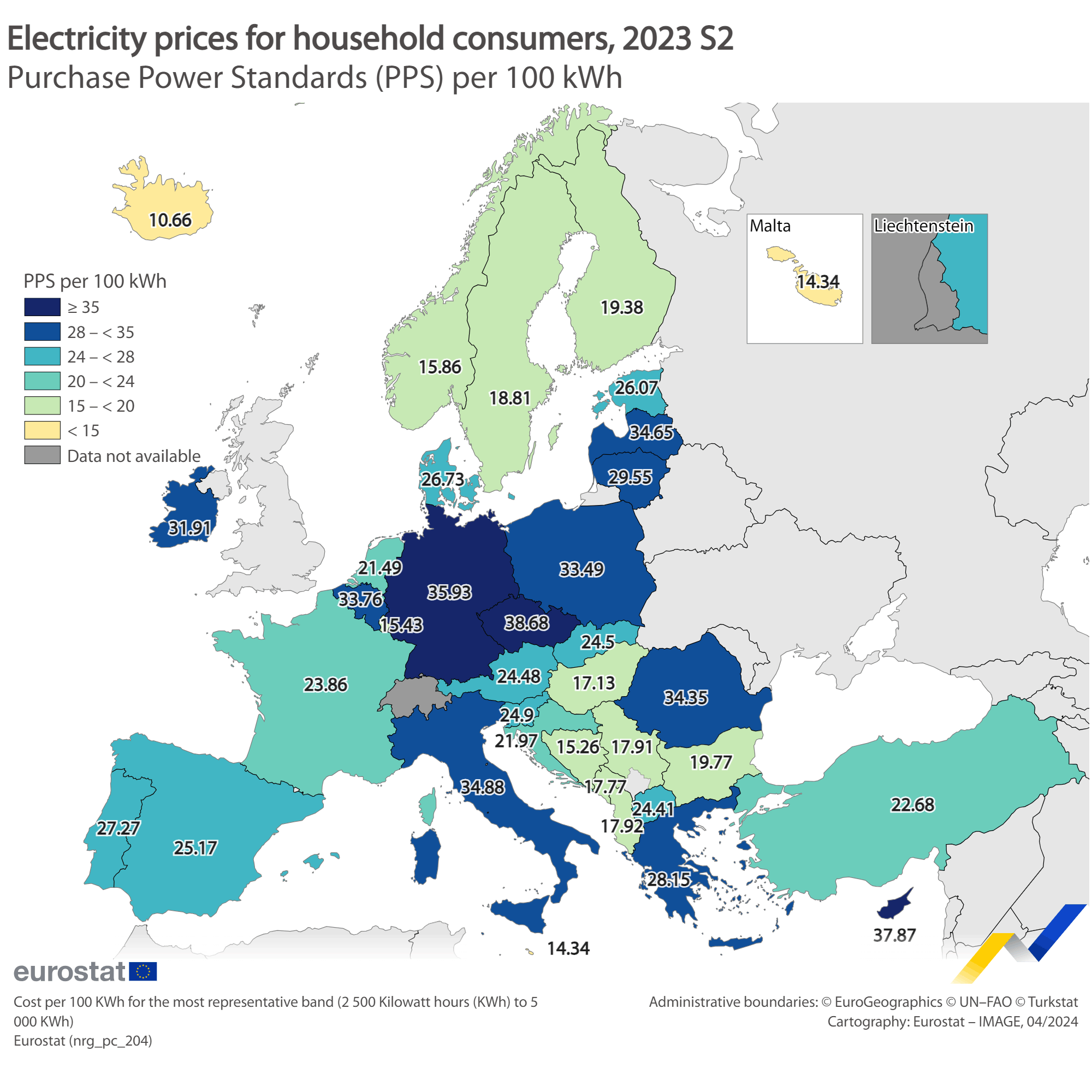


You must be logged in to post a comment.