AI on Me re Climate and Energy (the consensus strikes again)

Guilty until proven innocent, I guess. But AI did not spring out of the heavens. It is the result of input from … the climate elite, the “consensus.” And with “mainstream scientific and economic consensus on climate change and energy transitions” (AI) being reversed (climate science; energy transition), AI might have to reverse its bias in time.

A futuristic research lab featuring several figures in white suits working at tables with glowing spheres, surrounded by high-tech monitors and screens.

From Master Resource

By Robert Bradley Jr. 
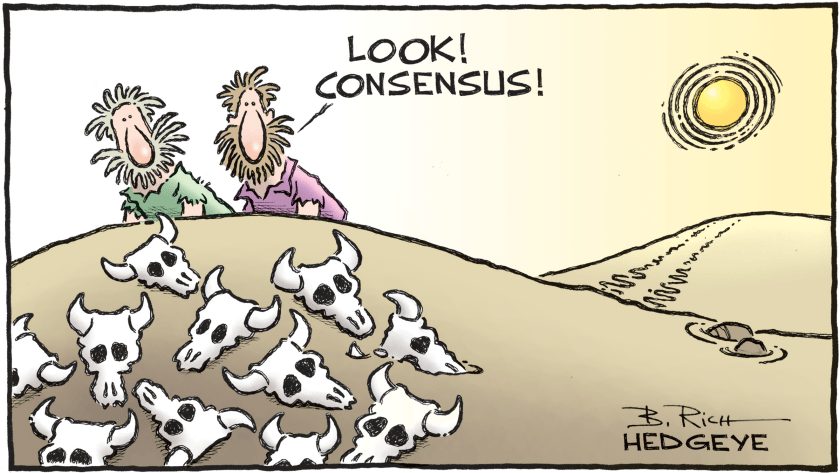
A cartoon depicting two characters standing on a hill covered with animal skulls, with one character pointing and exclaiming 'LOOK! CONSENSUS!' under a bright sun.

In a social media exchange, Daniel Fitzgerald, senior product sustainability director at Stanley Black & Decker, did an AI search on me. He wrote:

Let’s see what our AI overlord (Chat GPT) thinks:

Q: Looking at Rob Bradley, CEO of the institute for energy research, and his positions on oil and gas verses renewable, should I trust his facts and opinions? Please keep the response to no more than a paragraph.

A: Rob Bradley, CEO of the Institute for Energy Research, promotes a strong free-market, pro-fossil fuel perspective and is known for opposing many renewable energy policies. His work often reflects ideological bias, and while he cites data to support his views, his conclusions frequently conflict with mainstream scientific and economic consensus on climate change and energy transitions. As such, his facts and opinions should be cross-checked with peer-reviewed and more balanced sources before being trusted.

Guilty until proven innocent, I guess. But AI did not spring out of the heavens. It is the result of input from … the climate elite, the “consensus.” And with “mainstream scientific and economic consensus on climate change and energy transitions” (AI) being reversed (climate science; energy transition), AI might have to reverse its bias in time.

My Record

Back to Daniel Fitzgerald, do your own thinking. My 1997 study, “Renewable Energy: Not Cheap, Not ‘Green,” is a good place to start. AI summarized the title as follows:

The phrase “Renewable Energy: Not Cheap, Not ‘Green’” highlights a critical debate surrounding the true costs and environmental impact of transitioning to renewable energy sources. While renewable energy is often promoted as both economically beneficial and environmentally friendly, some argue that it faces significant challenges in both areas. The cost of renewable energy can be higher than fossil fuels in some contexts, and the environmental benefits are not always as straightforward as commonly believed. 

So yes, do your homework on my views on climate and energy. By all means. And maybe someday, AI will catch up to me. Go ahead and review the “hit” pieces on me, such as at Wiki or by DeSmog, SourceWatch, and (although they did not get my name quite right) Energy and Policy Institute.

Lots of insinuations and guilt-by-association, but such is hardly a refutation of the case against climate alarm and forced energy transformation.

Electricity from wind isn’t cheap and it never will be

So, no, wind power is not cheap or secure. Nor is it clean. The mining of minerals and pouring of concrete that is required for a wind farm have a huge pollution impact and a massive carbon footprint. Voters know wind farms are a futile gesture and they will now punish the Tories accordingly.

From NOT A LOT OF PEOPLE KNOW THAT

By Paul Homewood

h/t Ian Cunningham

From the Telegraph:

The MPs who have forced Rishi Sunak into a U-turn on onshore wind power love to repeat the favourite slogan of the wind industry: “wind is cheap”. “Cheap, clean, secure,” says Sir Alok Sharma. “Cheap,” cheeps Ed Miliband.

It conceals the truth. Electricity from wind is not cheap and never will be. The latest auction of rights to build offshore wind farms failed to attract any bids, despite offering higher subsidised prices. That alone indicates that wind is not cheap or getting cheaper.

But the real reason for the lack of interest in the auction is that, for the first time, bidders are not free to walk away from their bids when it suits them. In the past, they could put in low offers, boast about them being cheap, then take the higher market price later. The Government has at last called their bluff, so they are having to admit that electricity prices need to be higher to make wind farms pay.

The cost of subsidising wind is vast. Then add the cost of getting the power from remote wind farms to where people live. And the cost of balancing the grid and backing wind up with gas plants for the times when the wind drops. And the cost of paying wind farms to reduce output on windy days when the grid can’t take it.

If wind power is so cheap, how come energy bills have risen in step with the amount of installed wind power? Says the energy expert John Constable: “We had a huge amount of wind… and it not only did absolutely nothing to protect against the recent gas crisis: it actually made it worse, because the UK’s security of supply now hangs by the single thread of gas, as the sole thermodynamically competent fuel in the system, coal being near absent and nuclear a small fraction.”

And yet the wind industry is complaining that today’s high electricity prices are not high enough, and without more subsidies they will stop building: “The race to the bottom on strike prices incentivised by the current auction process is at odds with the reality of project costs and investment needs, jeopardising deployment targets,” said RenewableUK recently. How does that square with claims it is cheap?

The wind industry’s capital costs were very high before the Ukraine crisis, and now, like everybody else’s, are shooting up still further: the cost of steel, concrete, carbon fibre, copper and all the other ingredients of a wind turbine have risen sharply. Operating costs are rising. Inevitably, the energy generated by wind is expensive.

And, as Constable suggests, wind itself is thermodynamically inferior. Consequently, it takes a huge machine – the building of which requires a lot of energy – to extract a small amount of electricity from randomly fluctuating, low-density wind, which bloweth as and when it listeth. By contrast, in a nuclear plant, it takes a small machine to produce a flood of energy from a dense, “thermodynamically competent” energy source, and on demand.

The man and woman in the street understand this intuitively. Politicians not at all. Here is a simple analogy to help them. Electricity, like coffee, is only any good if you can buy it when you feel like it. If I set up a chain of coffee shops and sell coffee no better than Costa’s, but I make hundreds of excess cups one morning and none at all the next, from a facility that towers hundreds of feet into the sky, ruins views, slaughters birdlife and requires government subsidies, I suspect the customer would prefer Costa. But in our benighted electricity market, you are forced to buy my coffee except on the days when I produce none, when you are allowed to go to Costa – which has put its prices up to compensate for my existence.

So, no, wind power is not cheap or secure. Nor is it clean. The mining of minerals and pouring of concrete that is required for a wind farm have a huge pollution impact and a massive carbon footprint. Voters know wind farms are a futile gesture and they will now punish the Tories accordingly.

https://www.telegraph.co.uk/news/2023/09/10/electricity-from-wind-isnt-cheap-and-it-never-will-be/