Met Office Deletes Huge Chunks of Historic Temperature Data After Fabrication Claims

Last August, the Daily Sceptic drew attention to the UK Met Office inventing temperature data at its fictitious ‘open’ weather station at Lowestoft. Figures were said to be compiled from “well-correlated neighbouring stations”, but research by citizen sleuth Ray Sanders found there were no such operations within a 40-mile radius. At the time, the Daily Sceptic referred to the matter as a “smoking gun” and said that unless the Met Office could finally reveal its workings out, “the only realistic conclusion to draw is that the data are invented”.

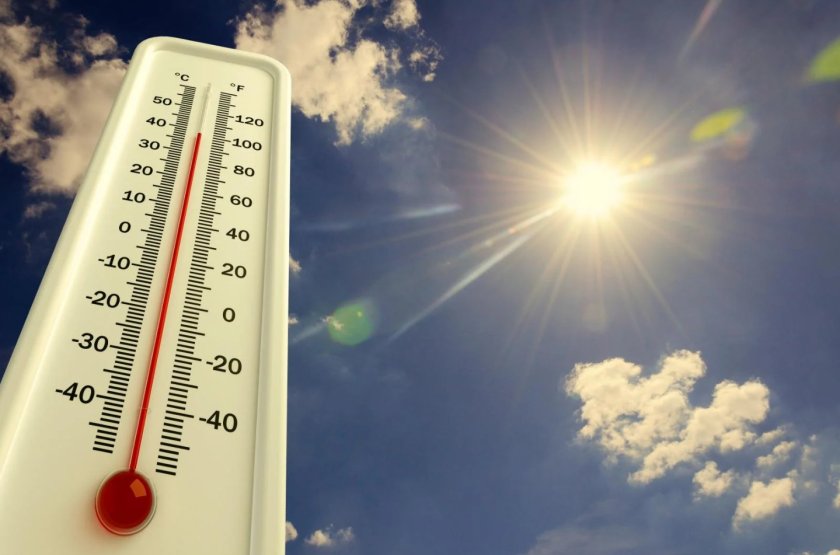
Close-up of a thermometer displaying temperature readings in Celsius and Fahrenheit against a sunny sky with clouds.

From The Daily Sceptic

By Chris Morrison

Last August, the Daily Sceptic drew attention to the UK Met Office inventing temperature data at its fictitious ‘open’ weather station at Lowestoft. Figures were said to be compiled from “well-correlated neighbouring stations”, but research by citizen sleuth Ray Sanders found there were no such operations within a 40-mile radius. At the time, the Daily Sceptic referred to the matter as a “smoking gun” and said that unless the Met Office could finally reveal its workings out, “the only realistic conclusion to draw is that the data are invented”. No explanation has been provided but in a shock unannounced move the Met Office has now withdrawn all the Lowestoft data from its historical record back to when the site closed in 2010. Similar withdrawals of data have also occurred in the stations at Nairm Druim and Paisley.

The move casts serious doubt over attempts by the Met Office to estimate temperature trends across many once open but now closed weather stations. Sanders is not inclined to minimise the scale of the problem facing the Met Office. When subject to “proper scrutiny”, the Met Office “could not substantiate its fabrication of false data and has had to delete them in their entirety”.

The practice of inventing temperature data from non-existent stations is not confined to the UK. In the USA, the weather service NOAA has been charged with fabricating data from more than 30% of its reporting sites. Data are retrieved from surrounding stations and the resulting averages are given an ‘E’ for estimate. The addition of the so-called ‘ghost’ station data means NOAA’s monthly and yearly reports are “not representative of reality”, states meteorologist Anthony Watts. If such evidence was presented in a court of law it would be thrown out, he adds.

Temperature measurements and estimates are a highly imprecise science. The dreadful mistake meteorological operations like the Met Office and NOAA make is to leverage their ‘trusted’ status to promote the political Net Zero fantasy by claiming an accuracy and precision that is simply not available in their rough-and-ready figures.

The problem with Lowestoft is that the Met Office has been unable to back up its widely promoted “well-correlated stations” explanation. The four nearby stations to Lowestoft supplied in a Met Office public domain database are all, alas, closed. Sanders dug further and found that the only open well-correlated sites available were Cromer, a Class 4 junk site with possible unnatural errors up to 2°C at 35 miles distance, and Class 2 Weybourne, 41 miles away. Well-correlated except for the fact they are too far away to provide a monthly estimate for Lowestoft to one tenth of a degree centigrade. For its part, the Met Office refuses to name well-correlated stations for any of its calculations, claiming “it is not retained information”. Sanders has expressed incredulity at this explanation, exclaiming: “What, not ever, not even for one day? Hands up anyone who believes that!” Freedom of Information requests to obtain station names have been met with the Met Officer stating that such attempts are “vexatious” and not in the public interest.

It might be suggested that the public interest is not best served by monthly temperature figures for Lowestoft being presented until a few days ago as follows (the two columns on the left after the year and month claim a monthly average based on daily highs and lows):

Monthly temperature data table from Lowestoft, showing recorded highs and lows from August 2024 to July 2025, marked with provisional notes.

All pretence at estimating these figures has now gone with the following now published. Similar cleansing has occurred at Nairm Drium  and Paisley and previous ‘open’ claims have been changed to ‘closed’.

Table of historical weather data for Lowestoft, UK, showing monthly temperature highs and lows from July to October 2010, with a note indicating the site is closed.

Meanwhile, the Met Office continues to invent data for about 100 non-existent stations that are used to provide ‘location-specific’ long-term average temperature data. Political pressure is mounting for the Met Office to make a full public statement about its temperature gathering operation – a public statement that addresses the many criticisms of fabrication now widespread on social media. Sanders is clear on the core issue that needs the urgent attention of the Met Office: “How would any reasonable observer know that the data were not real and simply ‘made up’ by a Government agency?” He has called for an “open declaration” of likely inaccuracy of existing published data, “to avoid other institutions and researchers using unreliable data and reaching erroneous conclusions”.

Erroneous conclusions seem to have been reached by the local council in the Welsh spa town of Llandrindod Wells. A few years ago, it declared a fashionable ‘climate emergency’ at a time when the Met Office was claiming the local maximum temperatures had risen by 1.07°C relative to the period 1960 to 1990. How did it know? Last month marked the 50th anniversary of the closing of the weather station at Llandrindod Wells. Precision to within one hundredth of a degree centigrade is the product of a computer model – the disclosure of the input details of which are said to be not in the public interest.

Hopefully any much needed explanation will be of a higher standard than that sent recently to Matt Ridley following a recent article in the Telegraph. The science journalist had criticised the Met Office’s exaggeration of warm weather and in passing noted that the meteorologist had been “embarrassingly duped by activists”. In a post on X, Ridley said the Met Office claimed that he was wrong in saying that it based its wildly unrealistic projection for the UK climate in 2070 on the extreme and implausible computer model scenario known as RCP8.5.

As exhibit 1, Ridley posted the following from the Met Office’s own site.

Infographic depicting the projected changes in UK climate by 2070 according to the Met Office.

Time for the Met Office to come clean on using junk computer models as well as invented and exaggerated temperature readings.

Chris Morrison is the Daily Sceptic’s Environment Editor. Follow him on X.

Science Shock: ‘Smoking Gun’ Evidence Emerges That the Met Office is Inventing Temperature Data

The UK Met Office has over 100 non-existent weather stations where it estimates temperature data using information from “well-correlated neighbouring sites”.

Four individuals in jackets discuss equipment in a desert setting under a dramatic sky with clouds and mountains in the background.

From The Daily Sceptic

By Chris Morrison

Map showing the location of Lowestoft on the east coast of the UK, near Great Yarmouth.

The UK Met Office has over 100 non-existent weather stations where it estimates temperature data using information from “well-correlated neighbouring sites”. However, it refuses to identify any of the sites used and bats away Freedom of Information (FOI) requests with the excuse that they are “vexatious” and not in the public interest. But today the Daily Sceptic can reveal recent work that shows how in the case of the fictitious site at Lowestoft there are no open weather stations for miles around, well-correlated or otherwise. Unless the Met Office can finally reveal its workings out, the only realistic conclusion to draw is that the data are invented. It is the ‘smoking gun’ that demands a full public explanation from the Met Office.

Temperature data at Lowestoft have been invented since 2010 when the station was closed. According to a Met Office public domain location temperature database, the nearest climate stations to Lowestoft are Hemsby (four miles away), Coltishall (25 miles), Scole (26 miles) and Morley St Botolph (30 miles). Given the distances from the coastal location of Lowestoft, these can hardly be considered well-correlated or neighbouring. The fact that every one of them is also closed might be considered another disqualifying feature, although, as we have seen with the Met Office, not necessarily so. What make Lowestoft particularly interesting is that it features as one of only 36 stations on the Met Office’s Historic Station database. Of even further interest is that it is still said to be open.

Search interface displaying location-specific long-term averages for Lowestoft, with a list of nearby climate stations and their distances.

Concern about the temperature data produced by the Met Office has grown since the Daily Sceptic revealed in March 2024 that around 80% of existing weather stations are so poorly sited that they’re given ‘junk’ Class 4 and 5 status by CIMO, being subject to considerable internationally recognised recording errors. The Met Office is a UK government department and, like many state-run operations around the world, it is at the forefront of climate alarm and the political promotion of the fashionable Net Zero fantasy. Recently, the science writer Matt Ridley charged in the Telegraph that the Met Office had been” embarrassingly duped by activists”. As its political role has grown, so it has been subjected to increasing scientific scrutiny. This led it to recently complain that the efforts of a small number of people to undermine the integrity of Met Office observations “is an attempt to undermine decades of robust science around the world’s changing climate”.

Pomposity and arrogance are rarely absent when the Met Office seeks to deflect criticism. It seems unaware that science is only “robust” when it emerges intact after relentless and forensic examination. While the traditional scientific method is often effectively banned in the ‘settled’ world of climate science, its processes still apply if data are to be accepted as robust.

One of the small number of people to have the temerity to question the Met Office is citizen sleuth Ray Sanders, whose work we have highlighted on a number of occasions. His latest effort has produced the ‘smoking gun’ that is the Lowestoft case. His FOIs have squeezed the excuse from the Met Office that it cannot name the up to six well-correlated sites behind closed-site climate averages, because “it is not retained information”. Sanders is incredulous: “What not ever, not even for one day? Hands up anyone who believes that!” he writes.

Sanders defines correlation as a mutual relationship or connection between two or more things. As he points out, any site the Met claims is providing data that are “well-correlated” with data that Lowestoft would be providing, were it still open, would need to have been operating alongside Lowestoft up until 2010 when it closed for the correlation to have been established – and of course be providing current data. Since the Met Office will not play ball, he investigated other temperature sites that might fit the bill.

There are no stations to the east of Lowestoft, for the simply reason it is the most easterly point of the UK. Neither are there any in the UK directly north and south, notes Sanders. The nearest open site to Lowestoft is Lingwood Strumpshaw Hill, a Class 5 with possible errors up to 5°C. Comparing this woodland site 14 miles from the coastal location at Lowestoft with only 18 months’ temperature overlap is not realistic. Next up is Neatishead with no overlap and 20 miles distance. Tibenham Airfield is 24 miles away but only opened in 2015. Charsfield is a possibility with temperature overlap, but it is 29 miles inland on a fruit farm, hardly a place replicating coastal weather characteristics. In the end, Sanders found just two realistic distant sites – Class 4 Cromer at 35 miles and Class 2 Weybourne, 41 miles away. All of them of course push the Met Office’s own ‘neighbouring’ claim to the limit – if not well beyond.

At a very large push, there are just two distant weather stations from which data might be considered to provide some rough guide to temperature in the Lowestoft area. As Sanders concludes: “This seems incredibly unlikely to produce even a vaguely close relationship, let alone one the Met Office quotes to the second decimal degree in its climate averages pages.”

Ray Sanders has produced solid evidence that suggests the Met Office is inventing temperature data that it is using for political Net Zero purposes. Claiming his thorough, well documented investigations are “vexatious” will no longer wash. It must reply with realistic explanations and evidence of its own to retain public trust in its work.

These are the charges that Sanders makes:

  1. The Met Office cannot substantiate any reasonable “correlation” of those operational sites that are actually used because there are almost certainly none. Any station’s data that are being used are not comparable and will artificially distort readings.
  2. The Met Office is actually using data that have already been fabricated to create averages for those closed sites which it then expands on. Averages of averages of averages almost ad infinitum.

Chris Morrison is the Daily Sceptic’s Environment Editor. Follow him on X.