A Wooden Stake To Alarmist Claims Europeโ€™s Pre-Industrial Climate Was Stable

Extremes hundreds of years agoโ€ฆscientific analysis of historical documents about the 16th-century climate of Transylvania, Romaniaโ€ฆ reveals a pattern of intense extreme weather events, frequent and intense heat waves and droughts.

An elderly man in a hooded cloak stands on cracked dry ground, holding a staff and a wooden bucket, with dark storm clouds and rays of sunlight in the background.

From No Trick Zone

Byย P Gosselin

Extremes hundreds of years agoโ€ฆscientific analysis of historical documents about the 16th-century climate of Transylvania, Romaniaโ€ฆ reveals a pattern of intense extreme weather events, frequent and intense heat waves and droughts.

A presenter in a white suit discusses a research article on the 16th-century climate of Transylvania, with stormy background visuals and a title in German about extreme weather during the Little Ice Age.
Kleine Eiszeit verursachte Wetterextreme โ€“ Klimaschau 232

The Germany-based European Institute for Climate and Energy (EIKE) presents it s latest video: โ€œKleine Eiszeit verursachte Wetterextreme โ€“ Klimaschau 232โ€œ (Little Ice Age Caused Weather Extremes โ€“ Climate Show 232).

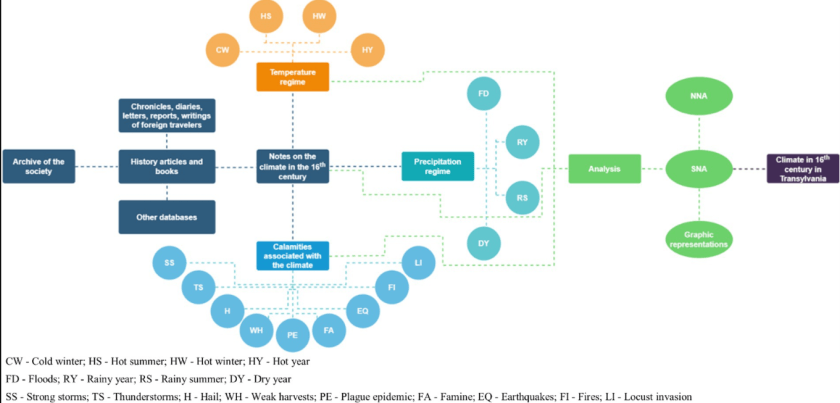
Flowchart illustrating the climate analysis in 16th-century Transylvania, Romania, detailing various temperature regimes and associated calamities.
Figure 3 ofย Gaceu et al 2025

The video addresses the effects of the Little Ice Age (approx. 1400โ€“1850) and argues that extreme weather events are not a new consequence of CO2-caused climate change, but are historically normal, especially during colder centuries.

These findings are based on a study by Romanian scientists who analyzed 500-year-old diaries and archival data from the 16th century in Transylvania (Siebenbรผrgen) to document how the Little Ice Age changed life in the region. Hereโ€™s what they found:

  • Initial Heat and Drought:ย In contrast to Western Europe, where temperatures dropped in the 16th century, Transylvania initially recorded more hot and dry weather in the first half of the century. A striking source describes the summer of 1540, during which springs dried up, rivers shrunk, and people prayed for rain.
  • Late 16th Century Extremes:ย The second half of the century was marked by heavy rainfall and floods, especially in the 1590s. Later writings document increasing cold waves and harsh winters, suggesting that the Little Ice Age may have manifested later in this part of Europe.
  • Climate-Related Catastrophes:ย Such weather changes often led to disasters directly or indirectly linked to the climate, including 30 years of plague, 23 years of famine and 9 years of locust plagues.
  • Human Adaptations:ย The weather extremes and catastrophes may have led to changes in settlement patterns, for example, through the introduction of flood-resistant infrastructure or migration to more favourable areas. Technological innovations such as improved irrigation systems or storage facilities may also have been advanced.

Summary

The Romanian authors reveal from an analysis of historical documents that reconstructed the 16th-century climate of Transylvania that there was a pattern of intense extreme weather events. There were frequent and intense heat waves and droughts in the first half of the century, contrasting with the climate in Western Europe.

Ultimately, these extremes, which later included increased rainfall and flooding, had a profound socio-economic impact, leading to famine, disease, and mortality.

The Transylvanian Climate Story

500-year-old Transylvanian diaries show how the Little Ice Age completely changed life and death in the region

Four cloaked figures stand by a fire in a snowy landscape, with a castle in the background under a gray sky.

From Watts Up With That?

By Anthony Watts

A group of individuals gathered around a campfire in a snowy village setting, with rustic stone houses and bare trees in the background.

500-year-old Transylvanian diaries show how the Little Ice Age completely changed life and death in the region

Tapping into โ€˜societyโ€™s archiveโ€™, researchers have examined written sources from the 16th century that chronicle famine, excessive flooding, and plagues in what today is Romania

From Frontiers in Science and the University of Oradea:

Glaciers, sediments, and pollen can be used to reconstruct the climate of the past. Beyond โ€˜natureโ€™s archive,โ€™, other sources, such as diaries, travel notes, parish or monastery registers, and other written documents โ€“ known at the โ€˜societyโ€™s archiveโ€™ โ€“ contain reports and observations about local climates in bygone centuries.

In contrast, the second half of the century was characterized by heavy rainfall and floods, particularly in the 1590s.

The western parts of the European continent cooled significantly when in the 16th century a period known as the โ€˜Little Ice Ageโ€™ intensified. During the second half of the century, temperatures dropped by 0.5ยฐC. In Transylvania, however, hot weather was recorded much more frequently than cold weather during the 16th century. โ€œThis makes us believe that the Little Ice Age could have manifested itself later in this part of Europe,โ€ said Caciora. Later writings, in which more cold waves and severe winters are mentioned, support this thesis.

Delayed ice age

The sources tell of a particularly hot and dry first half of the century. โ€œOne compelling passage comes from a historical document describing the summer of 1540. โ€˜The springs dried up, and the rivers dwindled to mere trickles. Livestock fell in the fields, and the air was thick with despair as the people gathered in processions, praying for rain,โ€™โ€ said Caciora. โ€œThis vivid account underscores the emotional and spiritual dimensions of living through climatic extremes.โ€

In contrast, the second half of the century was characterized by heavy rainfall and floods, particularly in the 1590s. Compared to the western parts of the European continent, which cooled significantly when in the 16th century a period known as the โ€˜Little Ice Ageโ€™, intensified. During the second half of the century, temperatures dropped by 0.5ยฐC.

In Transylvania, however, hot weather was recorded much more frequently than cold weather during the 16th century. โ€œThis makes us believe that the Little Ice Age could have manifested itself later in this part of Europe,โ€ said Caciora. Later writings, in which more cold waves and severe winters are mentioned, support this thesis.

Climate catastrophes

Such weather variations often resulted in catastrophes, related directly or indirectly to the climate. These included 30 years during which the Black Death ravaged the land, 23 years or famine, and nine years during which locust invasions were recorded.

However tragic, weather extremes and resulting calamities could have driven changes in settlement patterns, the researchers said. โ€œTowns might have adopted flood-resistant infrastructure or migrated to more favorable areas. The challenges might also have spurred technological innovations, such as improved irrigation systems or storage facilities,โ€ Caciora explained.

The human element

โ€œChronicles and diaries reveal how people perceived, responded to, and were impacted by these events,โ€ Caciora continued.

An old book page with text in Hungarian, titled 'Cancionale, az Historiรกs Ene kes kรถnyv,' dated 1574, featuring intricate printed letters and decorative elements.
The โ€˜societyโ€™s archiveโ€™ โ€“ contain reports and observations about local climates in bygone centuries. Credit: Gaceu et al., 2024.

Despite the insights it provides, the study faces several limitations, the researchers pointed out. Few people were literate, reports are often subjective, or only true on local scales. In addition, the records are fragmented. For example, the researchers were not able to include any records about 15 years of the 16th century, either because no records existed, or they were too contradictory for inclusion.  

Nevertheless, these writings not only provide a glimpse into how people in the past might have lived, but are also relevant for modern climate resilience strategies, particularly in understanding the socio-economic consequences of extreme weather events and their role in shaping human history. โ€œStudying climate records from the societyโ€™s archive is as crucial as analyzing natural proxies,โ€ Caciora explained. โ€œIt provides a human-centric perspective on past climatic events.โ€


Journal

Frontiers in Climate DOI 10.3389/fclim.2024.1507143 

Fact Checking Reuters Wildfireย Misinformation

Throughout the summer so far, wildfires have been bumbling along at a low level. However, cumulative fire area in Europe is well above average because of a spike in fire activity in February and March, which occurred in Romania, not around the Med.

Aerial view of wildfires engulfing a forested area with flames and smoke rising as the sun sets in the background.

From NOT A LOT OF PEOPLE KNOW THAT

By Paul Homewood

The latest fraud from Reuters:

Screenshot of an article titled 'How climate change fuels wildfires in Europe' by Kate Abnett on Reuters.com
https://www.reuters.com/sustainability/cop/how-climate-change-is-fuelling-wildfires-europe-2025-07-15/

They claim that:

โ€œWildfires have burnt 227,000 hectares of land since the beginning of the year โ€“ more than double the average for this time of year over the past two decades.

While far above average, itโ€™s not the highest in EFFISโ€™ records, which go back to 2002. Europe had particularly bad fire seasons in 2003 and 2017, when blazes burnt more than 1,100,000 hectares in each year โ€“ an area equivalent to the island of Jamaica.

Itโ€™s not yet clear if 2025 will be a record year, as that will depend on how the fire season evolves in the coming months.

The number of fires in Europe has also surged this year so far, with 1,118 blazes detected as of July 8, versus 716 in the same period last year, EFFIS said.โ€

They naturally blame it all on climate change:

โ€œScientists say the Mediterranean regionโ€™s hotter, drier summers put it at high risk of wildfires. Once fires start, plentiful dry vegetation and strong winds in the region can cause them to spread rapidly and burn out of control.โ€

The actual data shows they are lying through their back teeth.

Two line graphs depicting weekly burnt areas and cumulative burnt areas due to wildfires in Europe from 2006 to 2025.
https://forest-fire.emergency.copernicus.eu/apps/effis.statistics/seasonaltrend

Throughout the summer so far, wildfires have been bumbling along at a low level. However, cumulative fire area in Europe is well above average because of a spike in fire activity in February and March, which occurred in Romania, not around the Med.

84000 hectares burnt in three major fire outbreaks there at the time.

Romania of course does not have a Mediterranean climate, it has a temperate continental one, meaning it is not prone to wildfires. The fires in March had nothing to do with climate change, but were deliberately set for land clearing, as Romania-Insider reported at the time:

The authorities have linked the fires to intentional actions by residents attempting to clear land, a practice that has led to blazes spreading across vast areas, often in difficult-to-reach locations.

DSU head Raed Arafat emphasized that the wildfires were not caused by weather phenomena such as lightning but were intentionally set. โ€œAt this moment, we cannot attribute these forest fires to high temperatures or lightning. They are solely the result of deliberate actions by individuals โ€“ either those who have been doing this for a long time or those who intentionally set fires to clear fields or burn dry vegetation,โ€ he stated, as quoted by Digi24.

https://www.romania-insider.com/wildfires-romania-victims-march-2025

So much for โ€œInformation you can trustโ€!