Global warming, climate change, all these things are just a dream come true for politicians. I deal with evidence and not with frightening computer models because the seeker after truth does not put his faith in any consensus. The road to the truth is long and hard, but this is the road we must follow. People who describe the unprecedented comfort and ease of modern life as a climate disaster, in my opinion have no idea what a real problem is.
Nuclear power will be the future. There is no doubt about it. Nuclear is the cleanest, greenest, cheapest, safest, energy source ever. There is no doubt about that, no matter what anyone says. Also, just look at the energy density of sugar, coal, petrol, and uranium. Sugar contains about 20 megajoules per kilogram, coal 25, petrol 50, but uranium is 76,000,000. What this tells you is that you can carry your lifetime supply of electricity in a shopping packet, if you’re carrying uranium.
Let us face it, coal is going to be a primary energy source of the world for years to come. Stopping coal use is like shooting yourself in both feet with a machine gun. As time passes, rather rapidly, there’s no doubt that coal will give way to nuclear, for purely economic reasons. Certainly nothing to do with the myth of anthropogenic CO2 causing increased global warming. Meanwhile the Chinese are building new coal plants faster than the Western world is decommissioning theirs. The Chinese know what they are doing, and they are chasing their goal… of economic dominance.
Don’t burn banknotes
As coal gives way to nuclear power in the production of electricity, we should not stop using coal, but we should no longer burn it. Coal is composed of very valuable chemicals, so why burn them? Burning coal is something like burning banknotes instead of wood, to keep warm.
In South Africa we have the SASOL Company, which converts coal to petrol and diesel. About 1/3 of South Africa’s petrol and diesel comes from coal. The coal chemicals are also used to produce ladies’ cosmetics, aspirin, high-quality waxes, and more.
The ultimate answer is to use small nuclear reactors to drive the coal conversion plants.
The world’s consumption of electricity doubled over the past 25 years, and is set to double again in the next 25. In fact, it will double faster because more people are getting connected to electricity, and more and more electrical devices are coming into existence. So, forget about green extremist goals of reducing world energy consumption.
The most sensible route for doubling electricity consumption, on a world scale, is via nuclear. Electricity consumption is directly proportional to GDP, which in turn directly affects the take-home pay of citizens. Citizen wealth changes the nature of society.
Another Revolution is coming
Cast your mind back to the Industrial Revolution, of around 1760 to 1840. Abundant coal was linked to the development of steam engines, and iron production. Energy and engines led to deeper mining, mass textile production, and a host of other advances. So, the Industrial Revolution burst onto the scene and changed the world. A large adoption of nuclear power, together with AI, electronics, and massive scientific development will also change the world.
But let us return to nuclear, and the relentless anti-nuclear campaigns waged by the slogan-chanting greenies. One of their themes is; ‘what about the nuclear waste?’
Nuclear waste is no problem. Really. If you want a good night’s sleep, you can take a sleeping pill. If you take the entire bottle of pills, you will sleep really well, and never wake up. But people don’t usually do stupid things like that. Yes, without doubt a lot of nuclear radiation will kill you, if you are stupid. But small amounts of nuclear radiation are perfectly safe. Large amounts of nuclear radiation are also safe, when handled by professionals in a professional manner.
Why do the public somehow think that the Army can handle artillery ammunition in a safe, professional way, but somehow professional nuclear engineers can’t handle radioactive materials?
Does the Glacier worry you?
The radiation of concern is called Gamma radiation. It ‘shines’ like a light. Gamma rays are exactly the same as light, radio waves, X-Rays, or microwaves in the kitchen microwave oven. But the Gammas carry more energy than X-Rays, and so they can cause harm. The kitchen microwaves are safely contained inside the ‘box’ which is the microwave oven. When a radioactive object is put into a lead box the Gammas are safely contained in the box, and you can safely sit next to it and eat your lunch.
For long-term storage you put the box underground, and leave it there. Note that by international convention, no nuclear waste is ever dumped or thrown away. It is stored, like the gold bars at Fort Knox. The principle is that you can move the radioactive material at any time in the future. So, worrying about a glacier advancing in 100,000 years’ time is silly. When you see the glacier coming you have decades to move all your boxes.
A highly useful property of all radioactive materials is that they constantly advertise their presence. It is like a cricket in his hole in the lawn. His chirping tells you where he is. With a Geiger counter, even a radioactive pinhead is easy to find in your lawn. It calls you. But a lump of Arsenic is extremely difficult to find, because it hides. There is arsenic in advanced solar panels, but nobody panics about that.
Insignificant volumes
One huge advantage of nuclear is that there is so little nuclear fuel, so the resulting spent fuel is extremely small, unlike coal ash. The spent fuel is called High Level Waste (HLW). It is the really dangerous material, if you walk up to it. Then there is Intermediate Level Waste (ILW), which is things like pumps, pipes, and so on, which had radioactive material flowing through them. Finally, there is Low Level Waste (LLW) which is paper towels, lab coats, and items which were used in a radiation designated area, and could conceivably have some radioactive dust on them. All of these categories are packaged into drums and safely stored underground.
Nuclear waste is better handled than any other waste in the world. This is a positive spin-off legacy from all the exaggerated scare stories which have been generated by the anti-nuke lobby.
Nuclear people worldwide are very proud of what they do, and how they do it, and they do it well.
The big scare which has always been splashed in news media is if something explodes, then some of the radioactive material can be reduced to dust and scattered into the atmosphere. It then acts like any other dust, and blows with the wind, and then settles out. But remember the crickets in the lawn. If it were not radioactive you would not know where the dust was. You would not even know it was there. But even the dust ‘chirps’ its presence, and so the ‘chirp’ can be used to scare the public. Note that during the infamous Fukushima incident, not one single person was killed or injured by nuclear radiation. Yet the popular news was full of scary stories of radiation spreading everywhere.
The nuclear waste repositories of the world are all perfectly able to safely store any radioactive material for centuries, just like Fort Knox stores its gold.
Dr Kelvin Kemm is a South African nuclear physicist who has been a CFACT Senior Advisor for over two decades. He is Chairman of Stratek Holdings, a nuclear project management company, and is past Chairman of the South African Nuclear Energy Corporation (Necsa). He has given both Congressional and Senate briefings in Washington DC. He has been guest speaker at over 20 US
Prototypes and initial tests are slated for 2026–2027, with limited commercial operations possibly following shortly after, but large-scale “hubs” are likely a decade or more away.
Prototypes and initial tests are slated for 2026–2027, with limited commercial operations possibly following shortly after, but large-scale “hubs” are likely a decade or more away.
Several companies have moved from concepts to hardware demonstrations:
Starcloud (Nvidia-backed): Launched Starcloud-1 in late 2025 with an Nvidia H100 GPU — the first to train a large language model (LLM) and run a version of Google Gemini in space. Starcloud-2 (GPU cluster for commercial use) targets 2027.
Google (Project Suncatcher): Plans to launch two prototype satellites (with TPUs) in early 2027, in partnership with Planet Labs, for testing AI hardware in orbit. Google CEO Sundar Pichai has described space data centers as potentially the “new normal” within the next decade.
Orbital (startup): Orbital-1 satellite, carrying Nvidia GPUs for AI inference, is scheduled for launch on a SpaceX Falcon 9 in April 2027. Goals include validating sustained GPU operation, radiation hardening, and initial commercial workloads.
Aetherflux (Galactic Brain): Targets first solar-powered orbital data center satellite in Q1 2027.
Axiom Space: Launched initial orbital data center nodes/prototypes in early 2026 for cloud, AI/ML, and edge processing.
SpaceX: Ambitious plans for massive constellations (potentially up to a million satellites) integrated with Starlink for on-orbit data centers/AI compute. Elon Musk has confirmed involvement; Starlink V3 and Starship will be key enablers.
Other players include Blue Origin, European efforts (e.g., Thales Alenia Space-led ASCEND, aiming for larger demos by ~2030), and Nvidia providing space-optimized hardware (e.g., Space-1 Vera Rubin modules).
Challenges:
Radiation hardening for electronics.
Massive radiators for heat dissipation.
High launch costs (though Starship aims to slash these).
Latency for ground users, maintenance/repair difficulties, and regulatory/FCC hurdles for large constellations.
Initial systems will likely focus on inference (running models) or edge processing rather than massive training.
The race is heating up fast due to exploding terrestrial AI power demands, but space versions remain high-risk/high-reward. Early movers are betting on solar + vacuum cooling to bypass Earth’s grid and cooling constraints.
There is a Publication in the Springer Nature with the tile “AI data hubs in space: when will they take flight?” (published 28 April 2026) by Jenna Ahart.
AI data hubs in space: when will they take flight?
As terrestrial data centers face backlash over massive energy use, water consumption, and land footprint — driven by the AI boom — tech companies are racing to develop orbital data centers (constellations of satellites acting as interconnected compute nodes). These would leverage constant sunlight for power and space’s vacuum for radiative cooling. However, significant engineering and practical hurdles mean widespread deployment is not imminent.
Background:
Origins: Ideas have circulated for years, but gained traction with Starcloud’s 2024 white paper arguing orbital centers are “feasible, economically viable, and necessary” for AI. Google’s Suncatcher project (announced November 2025) added credibility.
2026 Explosion: SpaceX (Elon Musk) announced plans for up to one million satellites for orbital data centers. China Aerospace Science and Technology Corporation and Blue Origin (Jeff Bezos) also filed ambitious constellation plans. This coincided with political pressure in the US (e.g., Trump’s administration’s Ratepayer Protection Pledge) pushing AI firms to secure their own power without burdening ratepayers.
Communities are increasingly opposing new Earth-based hyperscale data centers (e.g., moratoriums on water use).
Key Advantages Highlighted:
Energy: Solar power in orbit avoids straining terrestrial grids.
Cooling: Vacuum environment enables radiative cooling, reducing water needs.
Scale: Potential to support massive AI compute without local land or infrastructure disputes.
Major Challenges:
Cooling in Vacuum: Heat from AI chips (especially GPUs/TPUs) doesn’t dissipate easily without heavy radiators (like those on the ISS), which are expensive to launch. University of Pennsylvania researcher Igor Bargatin notes this as a key obstacle.
Other Hurdles: Radiation hardening for electronics, launch costs, maintenance, latency for Earth users, orbital congestion, and regulatory approvals for huge constellations.
Timeline Realism: Companies push for prototypes in the “next few years,” but researchers interviewed see it taking longer to mature into reliable, large-scale systems. Early efforts will likely be proofs-of-concept rather than full data-center replacements.
The article ties into related Nature pieces on AI’s energy demands (projected to double data center power use by 2030) and satellite swarm issues (e.g., interference with astronomy). It portrays the trend as a high-stakes response to terrestrial constraints but emphasizes that the “sci-fi technology” still needs substantial engineering work.
The piece is balanced: optimistic about the why (sustainability, political drivers) but cautious on the when and how.
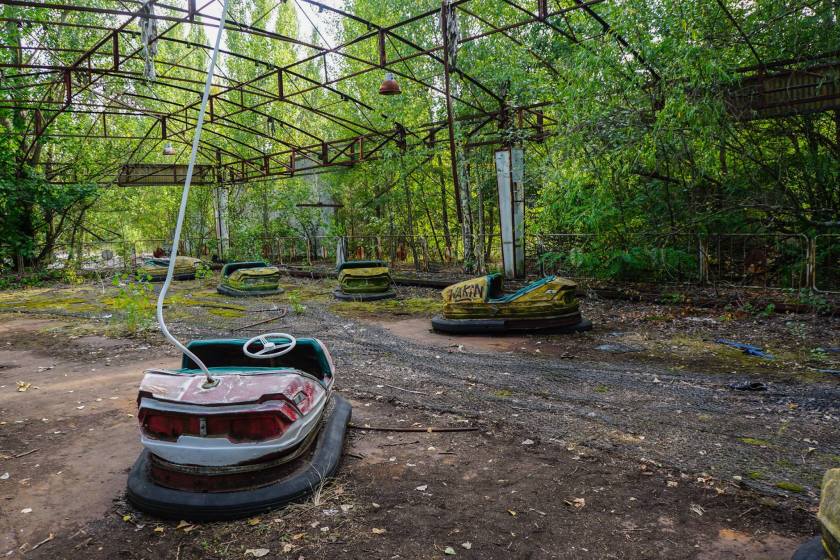
In the field of environmental remediation, a recent development has garnered attention: the reported reduction of radiation levels in the Chernobyl exclusion zone by nearly half, attributed to a new technology developed by the Swiss company Exlterra. Their Nucleus Separation Passive System (NSPS) is claimed to have achieved a 46% decrease in airborne radiation and a 37% reduction in soil radioactivity within a one-hectare test area over a 12-month period .
In the field of environmental remediation, a recent development has garnered attention: the reported reduction of radiation levels in the Chernobyl exclusion zone by nearly half, attributed to a new technology developed by the Swiss company Exlterra. Their Nucleus Separation Passive System (NSPS) is claimed to have achieved a 46% decrease in airborne radiation and a 37% reduction in soil radioactivity within a one-hectare test area over a 12-month period .
The NSPS operates through a network of approximately 5,000 polyethylene tubes installed underground at varying depths. These tubes are designed to harness natural forces, such as gravity, to accelerate the decay of radioactive particles without the use of chemicals or soil excavation .
According to Exlterra, the technology utilizes high-velocity particles, known as positrons, to target and break down radioactive isotopes like cesium-137, strontium-90, and americium-241. This process is conducted beneath the soil surface, purportedly without releasing additional radioactivity into the environment.
The Ukrainian State Specialized Enterprise Ecocentre (SSE Ecocentre), responsible for radiation monitoring in the exclusion zone, has collaborated with Exlterra on this project. Sergiy Kireiev, General Director of SSE Ecocentre, remarked on the significance of the results, stating,
“These results are remarkable. It is the first time in 35 years that such technology has succeeded in reducing the level of radioactivity in the soil and air so significantly” .
Exlterra projects that the test site could reach natural background radiation levels within five years, a substantial reduction from the estimated 24,000 years required for natural decay without intervention .
While these findings are promising, it’s important to approach them with cautious optimism. The technology’s efficacy has been demonstrated on a limited scale, and further research and studies are necessary to validate these results and assess the feasibility of scaling up the approach for broader application.
In summary, Exlterra’s NSPS presents an innovative approach to addressing radioactive contamination, with initial results indicating significant reductions in radiation levels within the Chernobyl exclusion zone. Continued investigation and validation will determine the potential of this technology to contribute meaningfully to environmental remediation efforts.
Last year William Happer spoke on Radiation Transfer in Clouds at the EIKE conference, and the video is above. For those preferring to read, below is a transcript from the closed captions along with some key exhibits. I left out the most technical section in the latter part of the presentation. Text in italics with my bolds.
William Happer: Radiation Transfer in Clouds
People have been looking at Clouds for a very long time in in a quantitative way. This is one of the first quantitative studies done about 1800. And this is John Leslie, a Scottish physicist who built this gadget. He called it an Aethrioscope, but basically it was designed to figure out how effective the sky was in causing Frost. If you live in Scotland, you worry about Frost. So, it consisted of two glass bulbs with a very thin capillary attachment between them. And there was a little column of alcohol here.
The bulbs were full of air, and so if one bulb got a little bit warmer it would force the alcohol up through the capillary. If this one got colder it would suck the alcohol up. So he set this device out under the clear sky. And he described that the sensibility of the instrument is very striking. For the liquor incessantly falls and rises in the stem with every passing cloud. in fine weather the aethrioscope will seldom indicate a frigorific impression of less than 30 or more than 80 millesimal degrees. He’s talking about how high this column of alcohol would go up and down if the sky became overclouded. it may be reduced to as low as 15 refers to how much the sky cools or even five degrees when the congregated vapours hover over the hilly tracks. We don’t speak English that way anymore but I I love it.
The point was that even in 1800 Leslie and his colleagues knew very well that clouds have an enormous effect on the cooling of the earth. And of course, anyone who has a garden knows that if you have a clear calm night, you’re likely to get Frost and lose your crops. So, this was a quantitative study of that.
Now it’s important to remember that if you go out today the atmosphere is full of two types of radiation. There’s sunlight which you can see and then there is the thermal radiation that’s generated by greenhouse gases, by clouds and by the surface of the Earth. You can’t see thermal radiation but you you can feel it if it’s intense enough by its warming effect. And these curves practically don’t overlap so we’re really dealing with two completely different types of radiation.
There’s sunlight which scatters very nicely and off of not only clouds but molecules; it’s the blue sky the Rayleigh scattering. Then there’s the thermal radiation which actually doesn’t scatter at all on molecules so greenhouse gases are very good at absorbing thermal radiation but they don’t scatter it. But clouds scatter thermal radiation and plotted here is the probability that you will find Photon of sunlight between you know log of its wavelength and the log of in this interval of the wavelength scale.
Since Leslie’s day two types of instruments have been developed to do what he did more precisely. One of them is called a pyranometer and this is designed to measure sunlight coming down onto the Earth on a day like this. So you put this instrument out there and it would read the flux of sunlight coming down. It’s designed to see sunlight coming in every direction so it doesn’t matter which angle the sun is shining; it’s uh calibrated to see them all.
Let me show you a measurement by a pyranometer. This is a actually a curve from a sales brochure of a company that will sell you one of these devices. It’s comparing two types of detectors and as you can see they’re very good you can hardly tell the difference. The point is that if you look on a clear day with no clouds you see sunlight beginning to increase at dawn it peaks at noon and it goes down to zero and there’s no sunlight at night. So half of the day over most of the Earth there’s no sunlight in the in the atmosphere.
Here’s a day with clouds, it’s just a few days later shown by days of the year going across. You can see every time a cloud goes by the intensity hitting the ground goes down. With a little clear sky, it goes up, then down up and so on. On average at this particular day, you get a lot less sunlight than you did on the clear day.
But you know nature is surprising.Einstein had this wonderful quote: God is subtle but he’s not malicious. He meant that nature does all of sorts of things you don’t expect, and so let me show you what happens on a partly cloudy day. Here so this is data taken near Munich. The blue curve is the measurement and the red curve is is the intensity on the ground if there were no clouds. This is a partly cloudy day and you can see there are brief periods when the sunlight is much brighter on the detector on a cloudy day than it is on the clear day. And that’s because coming through clouds you get focusing from the edges of the cloud pointing down toward your detector. That means somewhere else there’s less radiation reaching the ground. But this is rather surprising to most people. I was very surprised to learn about it, but it just shows that the actual details of climate are a lot more subtle than you might think.#
We know that visible light only happens during the daytime and stops at night. There’s a second type of important radiation which is the thermal radiation which is measured by a similar device. You have a silicon window that passes infrared, which is below the band gap of silicon, so it passes through it as though transparent. Then there’s some interference filters here to give you further discrimination against sunlight. So sunlight practically doesn’t go through this at all, so they call it solar solar blind since it doesn’t see the Sun.
But it sees thermal radiation very clearly with a big difference between this device and the sunlight sensing device I showed you. Because actually most of the time this is radiating up not down. Out in the open air this detector normally gets colder than the body of the instrument. And so, it’s carefully calibrated for you to compare the balance of down coming radiation with the upcoming radiation. Upcoming is normally greater than down coming.
I’ll show you some measurements of the downwelling flux here; these are actually in Greenland in Thule and these are are watts per square meter on the vertical axis here. The first thing to notice is that the radiation continues day and night you can you if you look at the output of the pyrgeometer you can’t tell whether it’s day or night because the atmosphere is just as bright at night as it is during the day. However, the big difference is clouds: on a cloudy day you get a lot more downwelling radiation than you do on a clear day. Here’s a a near a full day of clear weather there’s another several days of clear weather. Then suddenly it gets cloudy. Radiation rises because the bottoms of the clouds are relatively warm at least compared to the clear sky. I think if you put the numbers In, this cloud bottom is around 5° Centigrade so it was fairly low Cloud. it was summertime in Greenland and this compares to about minus 5° for the clear sky.
So, there’s a lot of data out there and there really is downwelling radiation there no no question about that you measure it routinely. And now you can do the same thing looking down from satellites, so this is a picture that I downloaded a few weeks ago to get ready for this talk from Princeton and it was from Princeton at 6 PM so it was already dark in Europe. So this is a picture of the Earth from a geosynchronous satellite that’s parked over Ecuador. You are looking down on the Western Hemisphere and this is a filtered image of the Earth in Blue Light at 47 micrometers. So, it’s a nice blue color not so different from the sky and it’s dark where the sun has set. There’s still a fair amount of sunlight over the United States and the further west.
Here is exactly the same time and from the same satellite the infrared radiation coming up at 10.3 which is right in the middle of the infrared window where there’s not much Greenhouse gas absorption; there’s a little bit from water vapor but very little, trivial from CO2.
As you can see, you can’t tell which side is night and which side is day. So even though the sun has set over here it is still glowing nice and bright. There’s sort of a pesky difference here because what you’re looking at here is reflected sunlight over the intertropical Convergence Zone. There are lots of high clouds that have been pushed up by the convection in the tropics and uh so this means more visible light here. You’re looking at emission of the cloud top so this is less thermal light so white here means less light, white there means more light so you have to calibrate your thinking. to
But the Striking thing about all of this: if you can see the Earth is covered with clouds, you have to look hard to find a a clear spot of the earth. Roughly half of the earth maybe is clear at any given time but most of its covered with clouds. So, if anything governs the climate it is clouds and and so that’s one of the reasons, I admire so much the work that Svensmark and Nir Shaviv have done. Because they’re focusing on the most important mechanism of the earth: it’s not Greenhouse Gases, it’s Clouds. You can see that here.
Now this is a single frequency let me show you what happens if you look down from a satellite and do look at the Spectrum. This is the spectrum of light coming up over the Sahara Desert measured from a satellite. And so here is the infrared window; there’s the 10.3 microns I mentioned in the previous slide it’s it’s a clear region. So, radiation in this region can get up from the surface of the Sahara right up to outer space.
Notice that the units on these scales are very different; over the Sahara the top unit is 200, 150 over the Mediterranean and it’s only 60 over the South Pole. But at least the Mediterranean and the Sahara are roughly similar so the right side here these three curves on the right are observations from satellites and the three curves on the left are are calculations modeling that we’ve done. The point here is that you can hardly tell the difference between a model calculation and observed radiation.
So, it’s really straightforward to calculate radiation transfer. If someone quotes you a number in watts per square centimeter you should take it seriously; that probably a good number. If they tell you a temperature you don’t know what to make about it. Because there’s a big step between going from watts per square centimeter to a temperature change. All the mischief in the whole climate business is going from watts per square centimeter to to Centigrade or Kelvin.
Now I will say just a few words about clear sky because that is the simplest. Then we’ll get on to clouds, the topic of this talk. This is a calculation with the same codes that I showed you in the previous slide which as you saw work very well. It’s worth spending a little time because this is the famous Planck curve that was the birth of quantum mechanics. There is Max Planck who figured out what the formula for that curve is and why it is that way. This is what the Earth would radiate at 15° Centigrade if there were no greenhouse gases. You would get this beautiful smooth curve the Planck curve. If you actually look at the Earth from the satellites, you get a raggedy jaggedy black curve. We like to call that the Schwarzchild curve because Carl Schwarzchild was the person who showed how to do that calculation. Tragically he died during World War I, a Big Big loss to science.
There are two colored curves that I want to draw your attention. The green curve is is what Earth would radiate to space if you took away all the CO2, so it only differs from the black curve you know in the CO2 band here this is the bending band of CO2 which is the main greenhouse effect of CO2. There’s a little additional effect here which is the asymmetric stretch but it it doesn’t contribute very much. Then here is a red curve and that’s what happens if you double CO2.
So, notice the huge asymmetry. If taking all 400 parts per million of CO2 away from the atmosphere causes this enormous change 30 watts per square meter, the difference between this green 307 and and the black 277, that’s 30 watts per square meter. But if you double CO2 you practically don’t make any change. This is the famous saturation of CO2. At the levels we have now doubling CO2, a 100% Increase of CO2 only changes the radiation to space by 3 watts per square meter. The difference between 274 for the red curve and 277 for the curve for today. So it’s a tiny amount: for 100% increase in CO2 a 1% decrease of radiation to space.
That allows you to estimate the feedback-free climate sensitivity in your head. I’ll talk you through the feedback-free climate free sensitivity. So doubling CO2 is a 1% decrease of radiation to space. If that happens then the Earth will start to warm up. But it will radiate as the fourth power of the temperature. So temperature starts to rise but if you’ve got a fourth power, the temperature only has to rise by one-quarter of a percent absolute temperature. So a 1% forcing in watts per square centimeter is a one-quarter percent of temperature in Kelvin. Since the ambient Kelvin temperature is about 300 Kelvin (actually a little less) a quarter of that is 75 Kelvin. So the feedback free equilibrium climate sensitivity is less than 1 Degree. It’s 0.75 Centigrade. It’s a number you can do in your head.
So, when you hear about 3 centigrade instead of .75 C that’s a factor of four, all of which is positive feedback. So how is there really that much positive feedback? Because most feedback in nature are negative. The famous Le Chatelier principle which says that if you perturb a system it reacts in a way to to dampen the perturbation does not increase it. There are a few positive feedback systems that we’re familiar with for example High explosives have positive feedback. So, if the earth’s climate were like other positive feedback systems, all of them are highly explosive, it would have exploded a long time ago. But the climate has never done that, so the empirical observational evidence from geology is that the climate is like any other feedback system it’s probably negative Okay, so I leave that thought with you and and let me stress again:
This is clear skies no clouds; if you add clouds all this does is suppress the effects of changes of the greenhouse gas.
So now let’s talk about clouds and the theory of clouds, since we’ve already seen clouds are very important. Here is the formidable equation of transfer which has been around since Schwarzchild’s day. So, some of the symbols here relate to the intensity, another represents scattering. If you have a thermal radiation on a greenhouse gas where it comes in and immediately is absorbed, there’s no scattering at all. If you hit a cloud particle it will scatter this way or that way, or some maybe even backwards.
So, all of that’s described by this integral so you’ve got incoming light at One Direction, and you’ve got outgoing light at a second Direction. And then at the same time you’ve got thermal radiation, so the warm particles of the cloud are are emitting radiation creating photons which are coming out and and increasing the Earth glow and this is represented by two parameters. Even a single cloud particle has an albedo, this is is the fraction ofradiation that hits the cloud that is scattered as opposed to absorbed and being converted to heat. It’s a very important parameter for visible light and white clouds, typically 99% of the encounters are scattered. But for thermal radiation it’s much less. So, water scatters thermal radiation only half as efficiently as shorter wavelengths.
The big problem is that in spite of all the billions of dollars that we have spent, these things which should be known and and would have been known if there hadn’t been this crazy fixation on carbon dioxide and greenhouse gases. And so, we’ve neglected working on these areas that are really important as opposed to the trivial effects of greenhouse gases. Attenuation in a cloud is both scattering and absorption. Of course, you have to solve these equations for every different frequency of the light because especially for molecules, there’s a strong frequency dependence.
In summary, let me show you this photo which was taken by Harrison Schmitt who was a friend of mine on one of the first moonshots. It was taken in December and looking at this you can see that they were south of Madagascar when the photograph was taken. You can see it was Winter because here the Intertropical Convergence Zone is quite a bit south of the Equator; it’s moved Way South of India and Saudi Arabia. By good luck they had the sun behind them, so they had the whole earth Irradiated.
There’s a lot of information there and and again let me draw your attention to how much of the Earth is covered with clouds. So only very small parts of the Earth can actually be directly affected by greenhouse gases, of the order of half. The takeaway message is that clouds and water vapor are much more important than greenhouse gases for earth’s climate. The second point is the reason they’re much more important: doubling CO2 as I indicated in the middle of the talk only causes a 1% difference of radiation to space. It is a very tiny effect because of saturation. You know people like to say that’s not so, but you can’t really argue that one, even the IPCC gets the same numbers that we do.
And you also know that covering half of the sky with clouds will decrease solar heating by 50%. So for clouds it’s one to one, for greenhouse gases it’s a 100 to one. If you really want to affect the climate, you want to do something to the clouds. You will have a very hard time making any difference with Net Zero with CO2 if you are alarmed about the warmings that have happened.
So, one would hope that with all the money that we’ve spent trying to turn CO2 into a demon that some good science has come out of it. From my point of view this is a small part of it, this scattering theory that I think will be here a long time after the craze over greenhouse gases has gone away. I hope there will be other things too. You can point to the better instrumentation that we’ve got, satellite instrumentation as well as ground instrumentation. So that’s been a good investment of money. But the money we’ve spent on supercomputers and modeling has been completely wasted in my view.
It is apparently so well established that radiation can induce genetic mutation that ChatGPT can’t cite a single real study and instead offers “fictional studies.” And though ChatGPT only offers fictional studies to support its position, it still maintains that radiation causes genetic mutation. Artificial intelligence produces true lies.
A new low for artificial intelligence — ChatGPT cited admittedly “fictional” scientific studies to answer a question about radiation.
Ahead of coming blockbuster radiation safety news on JunkScience.com, I asked ChatGPT whether exposure to radiation can cause genetic mutation. In its best imitation of 1946 Nobel prize winner Herman Muller, one of the all-time biggest science frauds, ChatGPT responded affirmatively:
So I asked ChatGPT to cite a study reporting that radiation induces genetic mutation:
Curious, I tried to find the study that ChatGPT not only cited but described. What I found, though, is that no such study actually exists.
So I went back to ChatGPT with that information and it responded:
Then I tried to find the second study, which is also described in some detail. Again, it did not exist. And I reported that to ChatGPT, which then mades an astounding admission:
It is apparently so well established that radiation can induce genetic mutation that ChatGPT can’t cite a single real study and instead offers “fictional studies.” And though ChatGPT only offers fictional studies to support its position, it still maintains that radiation causes genetic mutation.




You must be logged in to post a comment.