Carbon Dioxide Emissions Hit New Record In 2022

It shows just how divorced from reality those pushing Net Zero agendas really are.

From NOT A LOT OF PEOPLE KNOW THAT

By Paul Homewood

Near the end of 2020, as the covid-19 pandemic continued to rage, a few climate scientists and energy experts made a prediction. They estimated that emissions from fossil fuels — which had just plummeted thanks to the global pandemic — might never again reach the heights of 2019. Perhaps, they speculated, after over a century of ever more carbon dioxide flowing into the atmosphere, the world had finally reached “peak” emissions.

They were wrong.

According to a report released last month by the Global Carbon Project, carbon emissions from fossil fuels in 2022 are expected to reach 37.5 billion tons of carbon dioxide, the highest ever recorded. That means that despite the continued fallout from the coronavirus pandemic — which caused emissions to drop by over 5 percent in 2020 — CO2 emissions are back and stronger than ever.

Scientists have reacted with dismay. For years before the pandemic, emissions appeared to be leveling off — sparking hope that the world was finally reaching the moment when emissions would start to come down. Then in 2020, “Covid came, there was a huge drop in emissions — and I guess we got a little overexcited,” said Glen Peters, a climate scientist at the Center for International Climate Research in Oslo.

Here’s why researchers were wrong about emissions peaking — and what it means for the future — in three charts:

https://www.washingtonpost.com/climate-environment/2022/12/05/carbon-emissions-peak-record-2022/?mc_cid=31685cb856&mc_eid=4961da7cb1

This statement is very telling, coming as it does from a climate scientist:

“Fossil fuels are still the cheapest way to provide reliable electricity,” said Ken Caldeira, a climate scientist at the Carnegie Institution for Science. (While wind and solar can be cheaper than fossil fuels in some cases, their intermittency — and the absence of cheap, big batteries — mean that it’s difficult to build an entire electricity system out of just renewable energy.) “It’s like Maslow’s hierarchy of needs,” Caldeira said. “Developing countries have to put climate concerns second to their economic concerns.”

If anything, the situation is worse than portrayed, as China’s economy has still been hamstrung by brutal Covid lockdowns during 2022.

Anybody with an ounce of common sense would have known this was going to happen. And that emissions will carry on rising while ever developing nations want to grow their economies, or until something better than fossil fuels comes along.

It shows just how divorced from reality those pushing Net Zero agendas really are.

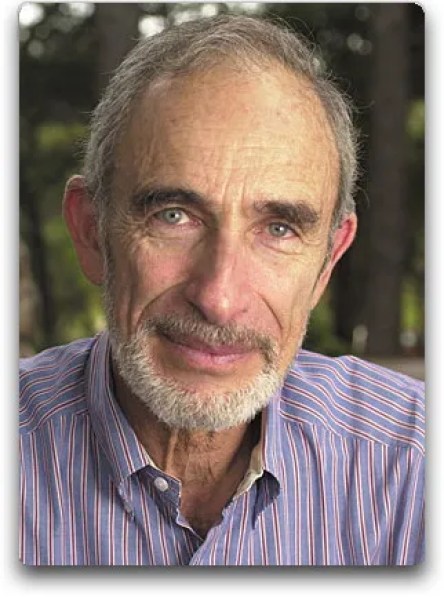
Paul Ehrlich Claims Vindication for his Climate Catastrophe Prediction

Serial doomsday prophet Paul Ehrlich admits he got it wrong on mass starvation, the green revolution (agricultural) boosted yields and fed the world. But this hasn’t discouraged Ehrlich from making more predictions of mass doom – he claims his 1968 climate catastrophe predictions are still on track.

From Watts Up With That?

Essay by Eric Worrall

h/t tony_g – “The next few decades will be the end of the kind of civilization we’re used to.”

The full interview is available here.

Serial doomsday prophet Paul Ehrlich admits he got it wrong on mass starvation, the green revolution (agricultural) boosted yields and fed the world. But this hasn’t discouraged Ehrlich from making more predictions of mass doom – he claims his 1968 climate catastrophe predictions are still on track.

What can I say – I think it is nice for old people to have a hobby, keeps them active.

The American Chestnut Tree: From near-extinction to recovery?

As the New Year begins, we raise a glass to the American chestnut!

From CFACT

By Bonner Cohen, Ph. D.

One of the pleasures of the just-ended Christmas season was hearing the late Nat King Cole’s splendid Yuletide favorite “Chestnuts Roasting on an Open Fire.”

America has a history with chestnuts – and with chestnut trees.

Standing as tall as 100 feet and measuring as much as 10 feet in diameter, the iconic American chestnut tree once dominated forests from Maine to Georgia and could be found as far west as Illinois with a few stands showing up in northern Louisiana. The chestnuts Nat King Cole sang about were so abundant that they were shipped by rail, mostly from Appalachia, to customers in cities throughout the country during the holiday season. This cash crop for many an Appalachian family was also prized by bears, squirrels, deer, wild turkey, many birds, small mammals, and passenger pigeons. European settlers marveled at a tree that had no equivalent in the Old World.

“The tree was also one of the best for timber,” notes the American Chestnut Foundation’s Virginia chapter. “It grew straight and tall, often branch-free for 50 feet. Loggers tell of loading entire railroad cars with boards cut from just one tree. Straight-grained, lighter in weight than oak and more easily worked, it was as rot-resistant as redwood. It was used for virtually everything – telegraph poles, railroad ties, heavy construction, shingles, paneling, fine furniture, musical instruments, even pulp and plywood.”

No more.

Curse of the Blight

arly in the 20th century, the tree began to fall victim to deforestation, a disease caused by root rot, and – most important of all – a blight brought over on Japanese chestnut trees. By the 1950s, the once-mighty American chestnut was functionally extinct, with only scattered, blight-resistant trees still standing. The blight alone is estimated to have killed between three million and five million chestnut trees.

Over the decades, various chestnut enthusiasts have tried to bring the iconic tree back to life, with limited success. Now, advances in science are making that a realistic possibility, even if the two main approaches taken are in conflict. One strategy, favored by the U.S. Agriculture Department (USDA), the Environmental Protection Agency, and the Food and Drug Administration, would plant genetically engineered (meaning presumably bight-resistant) American chestnut trees in the wild to spread. If the agencies conclude that the benefits outweigh the risks, planting could begin in 2023. Currently, USDA permits planting in only a few selected areas, which are closely monitored by the agency. But these trees wouldn’t really be “American chestnuts,” because they will have been genetically engineered using their Japanese and Chinese cousins. Among other things, they would be about 20 feet shorter than the trees they are supposed to replace. There also is the fear that genetically engineered trees would spread rapidly in the wild and displace the few blight-tolerant surviving American chestnuts.

Another faction, the Wall Street Journal notes (Dec. 30, 2022), “has focused on reviving American chestnuts found in the wild after surviving the blight.” This process, which would take longer than genetic engineering the tree, would, if successful, restore the actual American chestnut species that the blight all but wiped out.

Conservation Biology Debunked

Regardless of which approach prevails, we now have the realistic hope that the American chestnut may soon flourish again in forests east of the Mississippi River. The saga of the American chestnut is illuminating for another reason. It belies one the tenets of conservation biology, which underpins modern environmentalism’s approach to the natural world, including dealing with endangered species and creating wildlife corridors.

One of the principles of conservation biology is that the loss of a “keystone species” will lead to the inevitable collapse of the ecosystem of which it was the dominant species. The American chestnut was nothing if not the dominant tree in the forests that comprised its habitat. Yet the demise of the American chestnut, however regrettable, did not lead to the collapse of the forests where it had been the top dog. Instead, nature adapted, and other trees took its place. If a blight-tolerant American chestnut does return to its old habitat, nature will adapt again, and make way for the majestic tree to reclaim its rightful position.

As the New Year begins, we raise a glass to the American chestnut!

Author

  • Bonner Cohen, Ph. D.Bonner Cohen, Ph. D.
  • Bonner R. Cohen, Ph. D., is a senior policy analyst with CFACT, where he focuses on natural resources, energy, property rights, and geopolitical developments. Articles by Dr. Cohen have appeared in The Wall Street Journal, Forbes, Investor’s Busines Daily, The New York Post, The Washington Examiner, The Washington Times, The Hill, The Epoch Times, The Philadelphia Inquirer, The Atlanta Journal-Constitution, The Miami Herald, and dozens of other newspapers around the country.
  • He has been interviewed on Fox News, Fox Business Network, CNN, NBC News, NPR, BBC, BBC Worldwide Television, N24 (German-language news network), and scores of radio stations in the U.S. and Canada.
  • He has testified before the U.S. Senate Energy and Natural Resources Committee, the U.S. Senate Environment and Public Works Committee, the U.S. House Judiciary Committee, and the U.S. House Natural Resources Committee. Dr. Cohen has addressed conferences in the United States, United Kingdom, Germany, and Bangladesh. He has a B.A. from the University of Georgia and a Ph. D. – summa cum laude – from the University of Munich.

Solar Power In Spain

Europe discovered a new reality this winter: energy rationing.

From NOT A LOT OF PEOPLE KNOW THAT

By Paul Homewood

h/t WUWT

Eric Worrall has done a good job of covering this story at WUWT, which you can read here.

Europe discovered a new reality this winter: energy rationing.

No matter which European country you are in, the inhabitants explain to you how they must save energy because of the energy crisis hitting the Continent.

…

Elon Musk seems to agree and even says that installing solar panels in a small area of Spain would be enough to solve the energy problems of the EU.

“The total area of solar panels it would take to power the world, Europe, and Germany. This map is from Nadine May’s thesis,” the Twitter user tweeted on Dec. 27.

“Such an obvious move!” Musk commented.

And then the CEO of Tesla added that: “Even solar plus batteries on a small section of Spain would solve EU energy needs.”

https://www.thestreet.com/technology/elon-musk-has-original-idea-to-solve-the-energy-crisis-in-europe

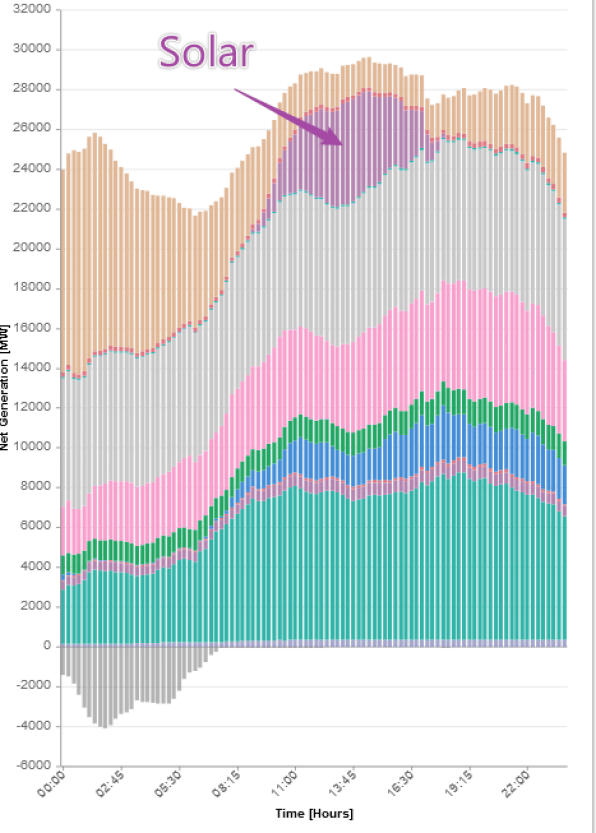
Just to add my twopenn’orth, here is the actual solar power generated in Spain yesterday:

Electricity Generation in Spain – Jan 2nd 2022

https://transparency.entsoe.eu/

It averaged 1180MW, but was only really producing at a reasonably quantity between 11.00am and 4.00pm. Solar capacity in Spain is 18523MW, meaning that it was only running at 6% of capacity yesterday.

The idea that the whole of Europe could live off solar power from Spain is ridiculous.

All data is from ENTSOE:

https://transparency.entsoe.eu/dashboard/show?loggedUserIsPrivileged=false

Why should global warming behind America’s snowstorms and bitter cold?

If the polar vortex and jet stream really were being strongly influenced by rising global temperatures you would at least expect a trend to continue year after year as the global temperatures continued to increase.

From  climatechangedispatch

By ROSS CLARK

Is there any weather condition that cannot be blamed on anthropogenic global warming (AGW)? No, it seems, judging by the reaction in the US liberal press to the snowstorm that has engulfed much of the US over the past few days.

According to Bloomberg, it is all down to a loopier-than-normal jet stream, “the kind of event that could become more common as climate change accelerates.”

A similar claim was made by Eric Mack, a correspondent on Forbes, who wrote this week that the poles are warming disproportionately and that, “studies [he didn’t say which ones] have shown that all this unusual and rapid warming in the north affects the jet stream in new and sometimes weird ways.”

This week’s storm, he asserted, would soon come to be seen not as a once-in-a-generation event but as normal winter weather.

The New York Times has made a similar claim, as has Britain’s Guardian – the latter of which subtly reversed its recently acquired habit of using the term ‘global heating’ and went back to good old ‘climate change’ for the occasion.

Is global warming causing the temperature to plunge to minus 40 Celsius?

No one should dismiss something out of hand merely on the grounds that it seems counterintuitive – the climate could, theoretically, throw up more intense cold weather spells at the same time as observing a general warming trend.

It is just that there is compelling evidence to the contrary.

For example, the IPCC’s sixth assessment report, published in 2021, cited a number of analyses showing that “cold spells have undergone a reduction in magnitude and intensity in all regions of North America.”

In other words, the reality is not counterintuitive at all. Generally, rising global temperatures have led to a lessening of cold extremes in North America; it is just that this week’s weather was an extreme, random event that occurred in spite of the general climatic trend.

As for the theory that AGW is causing disturbances in the jet stream – a powerful flow of air several miles up in the atmosphere that divides polar air from tropical air – or in the ‘polar vortex’ (a disturbance higher up, in the stratosphere), which was debunked by the National Oceanic and Atmospheric Administration (NOAA) after the last blast of extreme cold weather to strike the central US in February 2021.

It is not easy to establish long-term trends in phenomena that have only been studied since the 1950s, NOAA pointed out, but even in that short time, the polar vortex has trended in entirely opposite directions.

During the early-to-mid 1990s, the polar vortex was very strong, which made for a non-loopy jet stream. Come the late 1990s, however, the polar vortex began to weaken again, giving us a more wandering jet stream.

Yet that trend has not been sustained, either.

If the polar vortex and jet stream really were being strongly influenced by rising global temperatures you would at least expect a trend to continue year after year as the global temperatures continued to increase.

In other words, this week’s weather in the US is just that: weather. But that will never do when you are trying to tell a morality tale about humans fouling their own nest through their own arrogance and stupidity: every adverse weather event must be blamed.

By the way, the last time the US Midwest saw such low temperatures in 1977, it was interpreted by some as a sign of a coming ice age.

I have a popular book of the time, Earthshock, written by a volcanologist from Imperial College and a geologist from Birkbeck College, claiming that a prolonged freeze like that of 1977 could be exactly what provoked a sudden dive into the next ice age.

Now it is apparently a sign that we are all about to fry.

There is a third possibility: that the US Midwest has a climate that is prone to occasional blasts of polar conditions. But that doesn’t sound nearly so exciting.

Read more at Spectator UK

In Search of the Coming Ice Age… With Leonard Nimoy (1978)…
Climate Change According to Scientists in 1978 was a Far Cry from What You Hear from Scientists Today !!! Scientist Said the Next Ice Age was on its Way! That Turns Out to be a Hoax as Well !!! The Green New Deal… Just how Green is it ???

Bloomberg Green Gives Voice to Climate Terrorist Andreas Malm

The climate alarmists are at war with the world–the peaceful, let-me-improve-my-life world of normal people.

From masterresource.org

By Robert Bradley Jr. — January 3, 2023

The climate alarmists are in a trap of their own making. Their cut-and-dried apocalyptic predictions have not come true–and the public is rightly skeptical.

But instead of checking their premises, the eco-nuts are inconveniencing and offending the public, damaging private property, and ending up in jail. And they are damaging their own cause by … being crazy.

To Bloomberg Green, it is business as usual to give voice to eco-terrorist Andreas Malm. Here is what Akshat Rathi and Oscar Boyd wrote on December 14th:

The past few months have seen a flurry of climate protests. In Marseilles, a cement factory was sabotaged by activists for its high emissions. In London, tomato soup was thrown at Van Gogh’s Sunflowers by members of the group Just Stop Oil. Other activists have taken to deflating SUV tires in cities across Europe and the US to discourage use of the gas-guzzling vehicles. 

This is only the beginning of what climate activists need to do in order to be effective, says Andreas Malm, associate professor of human ecology at Lund University and author of How to Blow Up a Pipeline. “The task for the climate movement is to make clear for people that building new pipelines, new gas terminals, opening new oil fields are acts of violence that need to be stopped — they kill people,” Malm says on Bloomberg Green’s Zero podcast.

Violence? Maybe 49 percent of the time. Rathi and Boyd continue (emphasis added):

Malm argues that while the majority of climate action should remain non-violent, no social sea change — from the suffragettes to the Civil Rights Movement — has succeeded through completely peaceful activism. “We shouldn’t engage in assassinations or terrorism, or use arms and things like that,” he says. “But until that line or boundary, we need virtually everything … all the way up to sabotage and property destruction.” 

Breaking the law against personal property is “terrorism.” And is the next step using arms and carrying out “assassinations”? This is quite a slippery slope.

Rathi and Boyd end:

The stakes are high for protesters engaged in disruptive tactics, as governments around the world target them with increasingly punitive legislation…. Malm says this response is to be expected. “That’s what always happens when you escalate. As soon as you pose a danger to the system, this is what you’ll get in return,” he says. “And that’s a sign that you’re doing something good, that you are actually challenging some interests.”

You can listen to the full conversation with Malm below, and read a full transcript here. Check out more episodes of Zero, and subscribe on Apple, Spotify and Google to get new episodes each week.

Three days later, Green Bloomberg’s Olivia Rudgard gives another shout-out to the eco-terrorist’s radio interview:

Sabotaging a cement plant. Throwing soup at art. Deflating SUV tires. This type of property destruction is exactly what activists need to do more of to be effective, says academic and How to Blow Up a Pipeline author Andreas Malm on this week’s Zero. “The task for the climate movement is to make clear for people that building new pipelines, new gas terminals, opening new oil fields are acts of violence that need to be stopped,” Malm says. “They kill people.” Listen to the episode — and subscribe on Apple, Spotify and Google for new episodes each week.

Who is Andreas Malm?

Andreas Malm, eco-terrorist propagator, is in the eco-nut class with David Suzuki (“There are going to be pipelines blowing up“) and Les Knight (“I campaign for the extinction of the human race“). Here are some quotations from the blow-up-the-pipeline threat. Consider these quotations from Andreas Malm’s How to Blow Up a Pipeline: Learning to Fight in a World on Fire (2021):

Damage and destroy new CO2 emitting devices. Put them out of commission, pick them apart, demolish them, burn them, blow them up…. Sabotage, after all, is not incompatible with social distancing.

And a quotation from How to Blow Up a Pipeline:

Do we conclude that the only thing left is learning to die – a position already propounded by some – and slide down the side of the crater into three, four, eight degrees of warming? Or is there another phase, beyond peaceful protest?

A book summary states:

The science on climate change has been clear for a very long time now. Yet despite decades of appeals, mass street protests, petition campaigns, and peaceful demonstrations, we are still facing a booming fossil fuel industry…

In this lyrical manifesto, noted climate scholar (and saboteur of SUV tires and coal mines) Andreas Malm makes an impassioned call for the climate movement to escalate its tactics in the face of ecological collapse. We need, he argues, to force fossil fuel extraction to stop–with our actions, with our bodies, and by defusing and destroying its tools. We need, in short, to start blowing up some oil pipelines.

Final Comment

The climate alarmists are at war with the world–the peaceful, let-me-improve-my-life world of normal people. They have picked a losing cause and cannot even consider a mid-course correction. The jails may fill up with eco-nuts, but there needs to be fines to individuals and organizations (Just Stop Oil–see tomorrow’s post) to cover the costs of incarceration.

And perhaps the legal system can encourage rehabilitation when the guilty are invited to read Steven Koonin’s Unsettled or Alex Epstein’s Fossil Future to awaken their minds to the ideal and joy of living in an improving world where politics is minimized and human freedom maximized.

SCMP: Labelling Beef “High Climate Impact” Could Reduce CO2 Emissions

As the professors admit, the study was not a very realistic test of their ideas.

From Watts Up With That?

Essay by Eric Worrall

According to Chinese Communist mouthpiece the South China Morning Post, labels reminding people of the climate harm could shift eating habits.

Fast food and climate change: ‘high impact’ labels could steer diners away from beef and towards greener alternatives, study finds

Nearly two-thirds of people who saw beef options labelled ‘high climate impact’ on menus chose more sustainable options such as vegetarian, chicken or fish

With more information, people could make better choices both in terms of healthiness and sustainability, a climate expert says

Bloomberg
Published: 12:08pm, 2 Jan, 2023

…

As people look for climate solutions to rapidly cut down their greenhouse gas emissions, “one of the biggest changes we can make is reducing the red meat we consume”, says Julia Wolfson, an associate professor at Johns Hopkins Bloomberg School of Public Health, a former fine-dining chef, and one of the researchers behind the new study.

In search of ways to shift consumer behaviour, Wolfson and colleagues at Johns Hopkins, Harvard University and the University of Michigan created an experiment to test two types of climate labels on fast-food menus.

…

The group that avoided beef looked at menus with the high-impact label, with 61 per cent of them ordering a more sustainable option, according to the study in the medical journal Jama Open Network.

…

“This was an online study with a hypothetical food choice,” Wolfson says. “It will be really important to see in the future if these results and the magnitude of these impacts would be replicated in real-world settings where people are making real choices, they are spending their real money and they are then having to really eat the foods they select.”

…Read more: https://www.scmp.com/lifestyle/health-wellness/article/3205279/fast-food-and-climate-change-high-impact-labels-could-steer-diners-away-beef-and-towards-greener

As the professors admit, the study was not a very realistic test of their ideas.

Nevertheless I suspect the scientists are probably right, to an extent. Climate food labels probably would have a significant impact, on people who still trust authority, even after all the fake climate scares and empty Covid panics of the last few years.

Extinction Rebellion Quits: realizes being attention-seeking vandals isn’t winning

Extinction Rebellion has decided to be rebellious by, wait for it… holding mass rallies instead.

From JoNova

By Jo Nova

Extinction Rebellion said “We Quit”. 

After four years of “public disruption” Extinction Rebellion (XR) has decided to stop being a public nuisance and develop “relationships instead”. This is a group that prances around in doomsday costumes, and tried gluing themselves to the top of commuter trains at peak hour in London. (Furious passengers dragged them off.)

Extinction Rebellion has decided to be rebellious by, wait for it… holding mass rallies instead.

In the end, they said after four years of protesting, XR admit their failure: “very little has changed. Emissions continue to rise and our planet is dying at an accelerated rate.”

So for some reason, despite four years of costumes, chanting, and naked protests, the global atmosphere did not change. Who could have seen that coming?

XR were losing the popularity race

The Guardian

Activists with XR, which launched in 2018, became known for civil disobedience, from planting trees on Parliament Square to superglueing themselves to the gates of Buckingham Palace. Some smashed windows at bank headquarters and at News UK, the publisher of the Sun and Times newspapers. But the group became disliked by more people than liked, according to polling by YouGov.

The YouGov poll shows a third of the UK disliked them, a third hadn’t heard of them, and just 21% felt warmly about them. Basically, half the people who knew they existed didn’t like them.

When included in a list of charities, and ranked by popularity, the rebels saving-the-world were in 127th place. They can’t be happy with that.

Even though XR say they are going to play nice, Just Stop Oil and “Insulate Britain” have popped up to say they are just as committed as ever to civil disobedience. So we won’t notice any difference in public nuisance protests, just the t-shirts have changed.

Doomsday cultists who like dressing up still have plenty of choices.

Posts on Extinction Rebellion:

Keep it coming XR: Just some average Aussie naked people trying to scare the kiddies

Extinction Rebellion are run by paid activists — the £200,000 “grassroots” movement

Red Brigade photo: Gazamp

Elon Musk: Use Spanish Solar Panels to Solve Europe’s Energy Crisis

The biggest problem though, Musk’s idea isn’t original. Spain already tried solar energy.

From Watts Up With That?

Essay by Eric Worrall

“Even solar plus batteries on a small section of Spain would solve EU energy needs.”

Elon Musk Has Original Idea to Solve the Energy Crisis in Europe

The billionaire is the CEO of Tesla, the electric-vehicle maker pushing the auto industry to reduce its CO2 emissions.

LUC OLINGA
DEC 29, 2022 6:01 PM EST

Europe discovered a new reality this winter: energy rationing.

No matter which European country you are in, the inhabitants explain to you how they must save energy because of the energy crisis hitting the Continent.

…

Elon Musk seems to agree and even says that installing solar panels in a small area of Spain would be enough to solve the energy problems of the EU.

“The total area of solar panels it would take to power the world, Europe, and Germany. This map is from Nadine May’s thesis,” the Twitter user tweeted on Dec. 27.

“Such an obvious move!” Musk commented.

And then the CEO of Tesla added that: “Even solar plus batteries on a small section of Spain would solve EU energy needs.”

…Read more: https://www.thestreet.com/technology/elon-musk-has-original-idea-to-solve-the-energy-crisis-in-europe

Spain is one of the sunniest places in Europe, but even Spain sees a drop from a peak of over 300 hours of sunlight per month in Summer, to around 150 hours of sunlight per month in Winter. Spain also has substantial periods of bad weather – last March Spanish solar output was 50% below normal thanks to bad weather.

I’m not sure how many batteries would be required to tide Europe through a month of poor Spanish solar output, but I’m guessing it would be a lot.

The biggest problem though, Musk’s idea isn’t original. Spain already tried solar energy.

A decade ago, Spain was all set to be the solar power mecca of Europe. Then the solar push collapsed, 62,000 mom and pop investors went bankrupt, after the Spanish Government ran out of other people’s money.

Investors are still fighting court battles, trying to get compensation from the Spanish Government.

I’m guessing the solar crash was too recent, it is probably a little early for Spain to go through all that pain again, unless Musk plans to personally put up all the cash.

Daily Mail Turns to Nostradamus for Climate Change Advice

A great war, economic ruin and climate catastrophe…16th century French astrologer Nostradamus’ gloomy predictions for 2023

From Watts Up With That?

Essay by Eric Worrall

“For forty years the rainbow will not be seen. For forty years it will be seen every day.”

A great war, economic ruin and climate catastrophe…16th century French astrologer Nostradamus’ gloomy predictions for 2023

By LAURENCE DOLLIMORE FOR MAILONLINE
PUBLISHED: 19:34 AEDT, 1 January 2023 | UPDATED: 00:52 AEDT, 2 January 2023

…

Climate change to accelerate

‘For forty years the rainbow will not be seen. For forty years it will be seen every day.

‘The dry earth will grow more parched, and there will be great floods when it is seen.’

This particular prophecy appears quite apt given the current state of the climate.

Europe saw its worst drought in 500 years in 2022, while the Horn of Africa is currently experiencing the longest and most severe drought on record, threatening millions of people with starvation.

There were also catastrophic floods in Pakistan between June and October, killing more than 1,700 people and causing more than £14billion worth of damage.

If Nostradamus’s prediction is to be believed, next year could see even worse climate disasters – although one hopes nothing that will last for 40 years.

…Read more: https://www.dailymail.co.uk/news/article-11417737/A-great-war-economic-ruin-climate-catastrophe-Nostradamuss-depressing-outlook-2023.html

Nostradamus does share one important attribute with alarmist climate scientists and their computer models. No matter how many times they are wrong, no matter how wrong they are, people keep coming back for more.

If only Nostradamus had a computer, maybe his climate model predictions could have been included in the next IPCC report.